
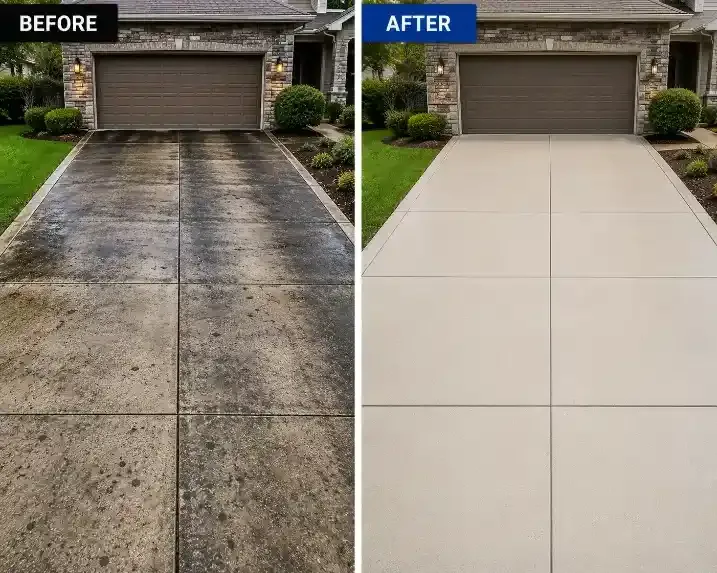
How Much Does Pressure Washing Cost in Jacksonville, FL?
Realistic 2026 price ranges for house washing, driveways, concrete and commercial work in Jacksonville — and what drives the price up or down.
Read More →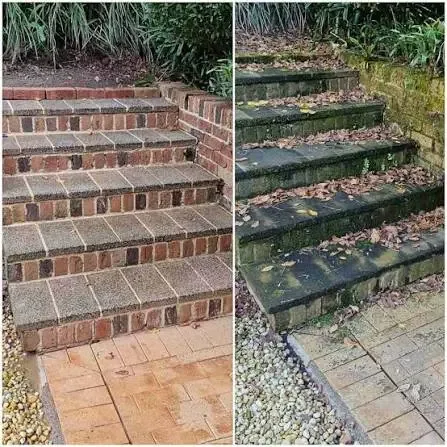
That green film isn't dirt — it's alive. Here's what's growing on Jacksonville homes and how to actually get rid of it.
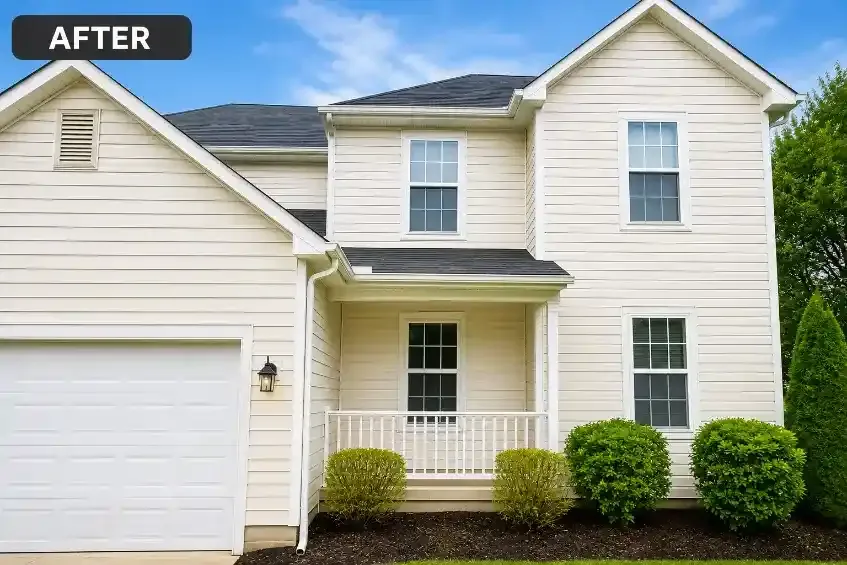
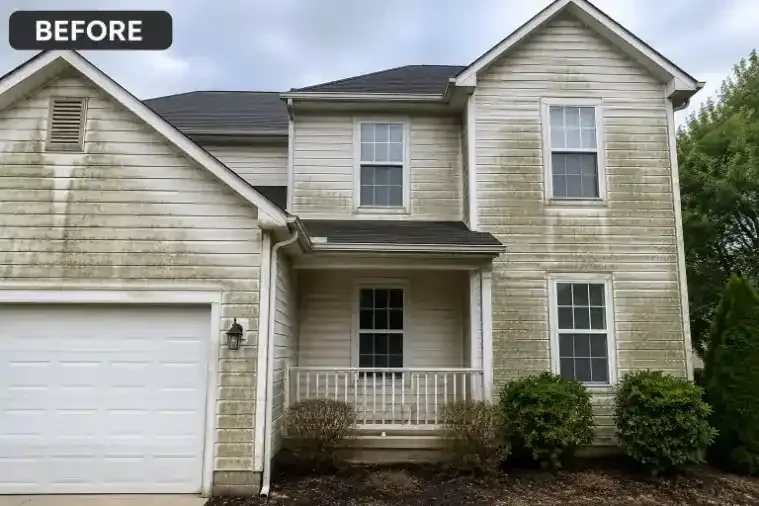 BEFOREAFTER
Drag to compare
BEFOREAFTER
Drag to compareThe green — and the black streaks often mixed with it — is usually Gloeocapsa magma, a blue-green algae that thrives in warm, humid climates. It feeds on moisture and organic material, spreads through the air, and colonizes siding, stucco, brick, fences and even concrete. Jacksonville's year-round humidity makes it a permanent resident.
It starts on north-facing walls and shaded areas, then spreads. What looks like a little discoloration this spring becomes a full green wall by fall if ignored.
Algae anchors into porous surfaces with microscopic root-like structures. A rinse — or even high-pressure water — shears off the visible top but leaves the roots. Within weeks, it's back, often worse, because the disturbance spreads spores.
This is the core reason soft washing exists: the cleaning solution kills the organism down to the root, then a gentle rinse removes the residue. Treated properly, siding stays clean for years, not weeks.
Walk around your home and compare sides. In Jacksonville, the north and east elevations — the ones that stay shaded longest — almost always show growth first. If those walls are green or streaked while the sunny side looks fine, that's textbook algae colonization, not a siding defect.
The same pattern shows up on fences, garden walls and the shaded half of driveways. Wherever moisture lingers, algae follows.
After a proper soft wash: trim vegetation back from walls for airflow, redirect sprinklers that spray the house, keep gutters clear so overflow doesn't streak siding, and plan on a maintenance wash every 1–2 years. You can't change Florida's humidity — but you can deny algae the foothold it wants.
It's primarily a cosmetic and surface-damage issue, but heavy mold and mildew growth can aggravate allergies. Removing it is good for both the house and the household.
Eventually — Florida's climate guarantees that. But a proper soft wash keeps siding clean 2–4x longer than pressure-only cleaning, typically 1–3 years depending on shade and vegetation.
DIY bleach mixes are risky: wrong dilutions damage siding, kill landscaping and leave streaks. Professional soft-wash solutions are formulated for the job and applied with plant protection.
Realistic 2026 price ranges for house washing, driveways, concrete and commercial work in Jacksonville — and what drives the price up or down.
Read More →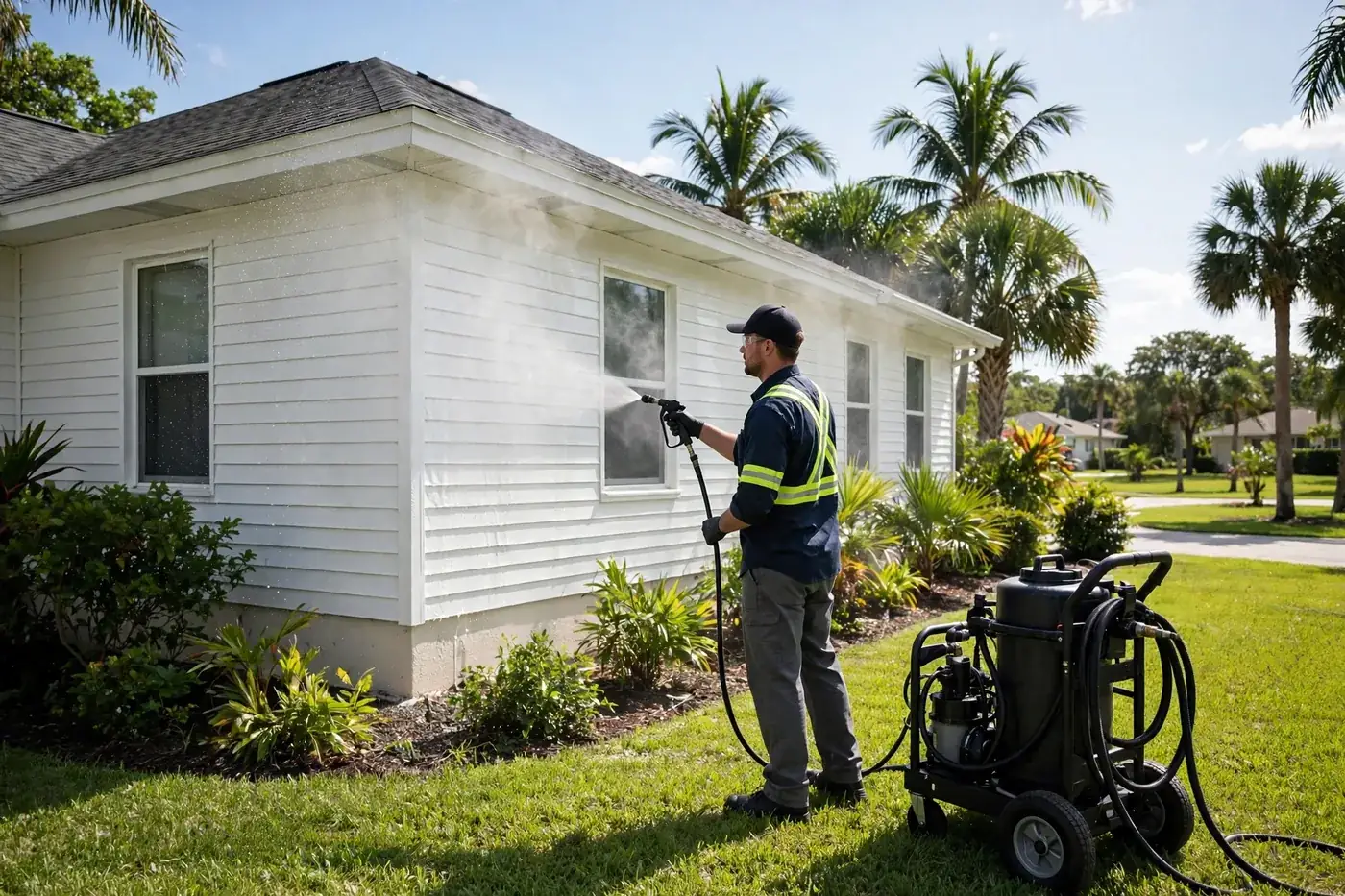
High pressure isn't always the answer — and in Jacksonville's climate, the wrong method can damage your home. Here's how to choose.
Read More →Florida's humidity rewrites the rules. Here's a realistic washing schedule for Jacksonville homes and businesses.
Read More →Call now for a free estimate and same-day service in Jacksonville, FL. Open 24/7.