
Pressure Washing in San Marco: Brick, Stucco & Historic Homes
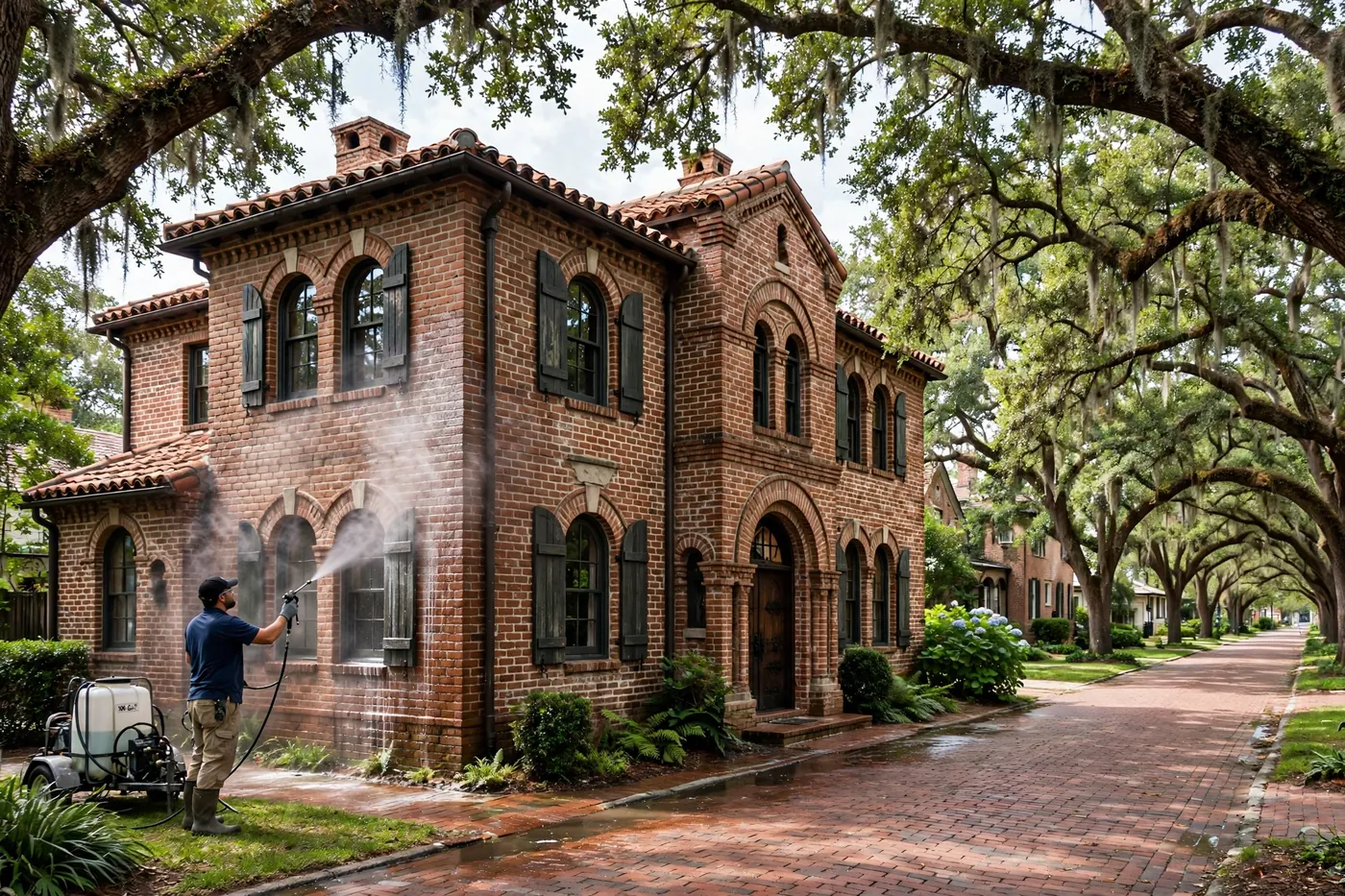
San Marco's 1920s–40s Mediterranean Revival homes need a gentle touch. Here's how to clean brick, stucco and historic wood without damage.
Read More →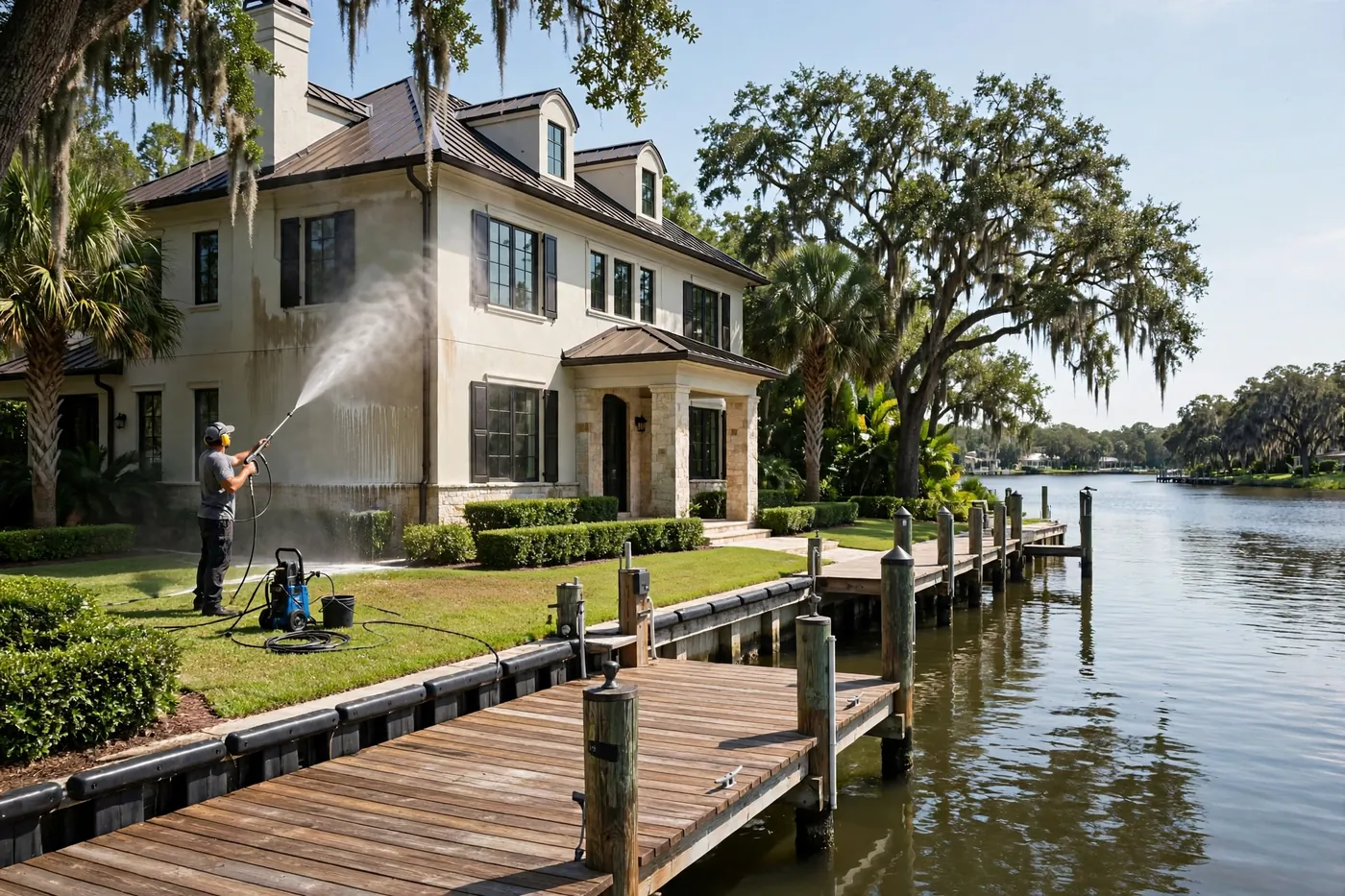
Ortega's riverfront estates face salt air, river humidity and dock grime. A complete guide to waterfront exterior cleaning.
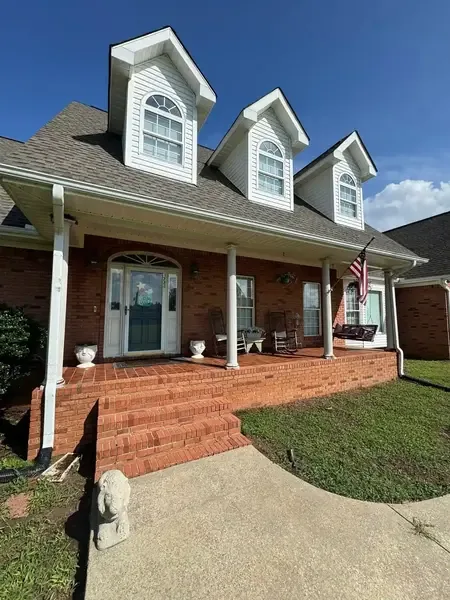
 BEFOREAFTER
Drag to compare
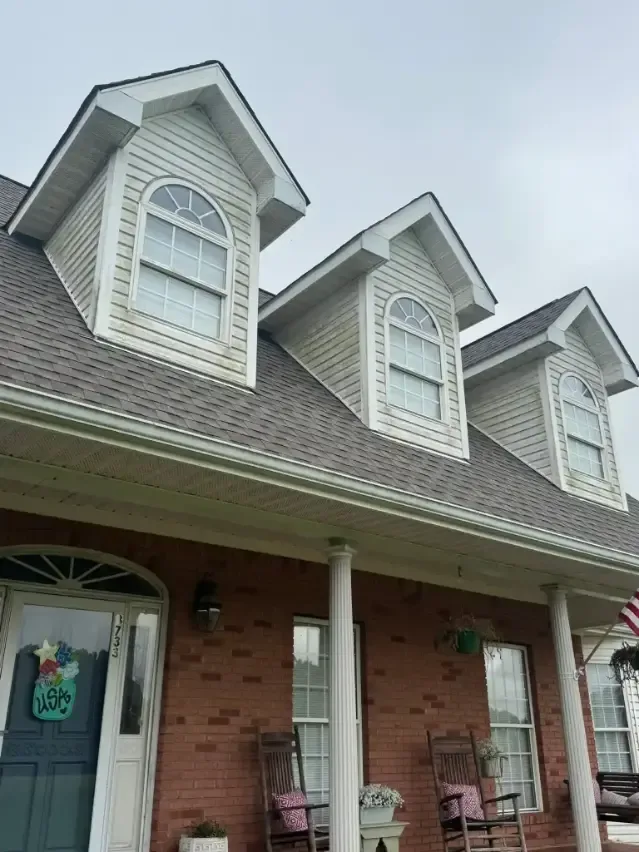
BEFOREAFTER
Drag to compareOrtega — especially Old Ortega, with its winding oak-lined streets and riverfront estates along the St. Johns and Ortega Rivers — offers some of the most desirable waterfront living in Jacksonville. But that same water that makes the sunsets spectacular is quietly working against your home's exterior around the clock. River humidity hangs in the air long after the sun comes up, salt air drifts in from the Intracoastal and the ocean beyond, and the combination keeps every exterior surface damp enough for algae and mildew to thrive nearly year-round.
This one-two punch is what makes Ortega different from inland neighborhoods. A home in Mandarin deals with humidity; a home at the Beaches deals with salt. An Ortega waterfront home deals with both at once — plus the reflected moisture off the river itself, which can keep dockside walls and lower siding wet even on days it never rains. We've seen river-facing walls grow visible algae within six months of cleaning, while the street-facing side of the same house still looks fresh.
Pressure washing Ortega waterfront homes, then, is less about annual spring cleaning and more about managing a continuous environmental assault. The goal isn't just to make things look good for a weekend — it's to break the growth cycle with the right chemistry, protect vulnerable materials from salt corrosion, and set up a maintenance rhythm that matches what the river actually does to your property.
Here's where waterfront work gets serious — and where most pressure washing companies either overpromise or walk away. Docks, boathouses, and seawalls sit directly over or in the St. Johns River, which means every drop of wash water and cleaning solution has a direct path into the waterway. Jacksonville's environmental regulations, enforced through the St. Johns River Water Management District, take that seriously, and so should your contractor.
The responsible approach starts with containment and chemistry. We use biodegradable, phosphate-free cleaning solutions on all over-water surfaces, applied at low pressure with controlled dwell time — never blasted at full force, which just aerosolizes contaminants into the river. Where the job calls for it, we deploy containment berms and vacuum recovery to capture wash water before it reaches the water. It's more work, and it costs more than a guy with a wand — but it's the difference between cleaning your dock and polluting the river your home sits on.
For the structures themselves, material matters enormously. Pressure-treated dock lumber that's gone gray and slick needs a different approach than composite decking, which can be scarred by aggressive pressure. Concrete seawalls take green algae readily but clean up beautifully with soft washing. And metal dock hardware — cleats, ladders, lift components — needs salt corrosion addressed, not just cosmetic cleaning. A contractor who treats your dock like a driveway is a contractor to avoid.
Beyond the waterline, salt air is the slow killer of Ortega exteriors. It doesn't just dirty surfaces — salt is hygroscopic, meaning it pulls moisture out of the air and holds it against your siding, stucco, and trim. That perpetual dampness is why riverfront homes grow algae faster, why paint fails sooner on the river side, and why outdoor fixtures, railings, and light housings corrode years ahead of their inland counterparts.
The fix is regular removal, not stronger chemicals. A soft wash every 12 months strips the salt film before it can do structural damage, and it's dramatically cheaper than repainting stucco or replacing corroded fixtures. Pay special attention to the details most companies skip: the undersides of eaves, outdoor ceiling fans, lanai screens, and pool enclosures, where salt accumulates out of sight. On one Ortega estate we service, the pool enclosure screens were the worst part of the property — invisible from the street, but green with algae up close.
Outdoor living spaces deserve the same attention as the house itself. Riverfront patios, summer kitchens, and pool decks in Ortega take the same salt-and-humidity beating, and they're where you actually spend your time. A clean pool deck isn't just prettier — algae-slick travertine around a pool is a genuine slip hazard, and we've seen it cause real injuries.
For most Ortega waterfront homes, the honest answer is once a year for the full exterior, with docks and high-exposure river-facing walls on a six-to-nine-month touch-up cycle. That's more frequent than inland Jacksonville, and any contractor who tells you otherwise either hasn't worked the river or is telling you what you want to hear. The river doesn't negotiate.
Timing matters too. Late spring — after oak pollen season but before the worst of summer humidity — is the sweet spot for the annual wash. It clears the spring's organic load and lays down algaecide protection for the brutal months ahead. Dock cleaning is best done in the same visit when possible, since mobilization over water is the expensive part; bundling dock and house in one appointment saves real money versus two separate trips.
Between professional washes, a garden-hose rinse of salt-exposed surfaces every month or two genuinely helps — it won't replace a soft wash, but it slows the salt buildup that drives corrosion. Just don't use a pressure washer yourself on docks or seawalls without understanding the runoff rules; the environmental liability isn't worth the savings.
Not every pressure washing company should be working over the St. Johns River. Before you hire anyone for waterfront work in Ortega, ask three questions. First: what cleaning solutions do you use over water, and are they biodegradable and phosphate-free? Second: how do you handle wash-water runoff on docks and seawalls? Third: can you show me waterfront jobs you've actually completed — not just driveways?
At Professor Pressure Washing, waterfront work is a core part of what we've done since 2015, from Ortega estates to Intracoastal docks. We carry the containment and recovery equipment that over-water jobs require, and we're honest about what we can't do — if a dock's structural issues go beyond cleaning, we'll tell you to call a marine contractor before spending money on a wash. That honesty has earned us repeat clients up and down the river.
If your Ortega home's river side is looking green, or your dock has gone gray and slick, call (904) 938-5900. We'll walk the property — house, dock, seawall, all of it — and give you a straight assessment of what it needs and what it doesn't. No pressure, no upsell, just ten years of riverfront experience applied to your home.
We use only biodegradable, phosphate-free cleaning solutions on over-water surfaces, applied at low pressure with controlled dwell time rather than blasted at full force. Where the job requires it, we deploy containment berms and vacuum recovery equipment to capture wash water before it can reach the river. This approach satisfies St. Johns River Water Management District expectations for responsible waterfront work, and it's simply the right thing to do for the waterway your home sits on.
Yes — measurably. River humidity keeps exterior surfaces damp far longer than inland air, and when you add windblown salt (which pulls even more moisture out of the air), you get near-continuous dampness on river-facing walls. That sustained moisture is what lets algae, mildew, and mold colonize in months instead of years, and over time it accelerates paint failure and wood rot. It's the main reason waterfront homes need washing roughly twice as often as inland ones.
Plan on a full exterior soft wash once a year, ideally in late spring after pollen season. Docks, seawalls, and directly river-facing walls usually need touch-ups every six to nine months because of the constant moisture and salt exposure. Bundling the dock cleaning with the annual house wash in a single visit is the most cost-effective approach, since mobilizing over-water equipment is the expensive part of the job.
San Marco's 1920s–40s Mediterranean Revival homes need a gentle touch. Here's how to clean brick, stucco and historic wood without damage.
Read More →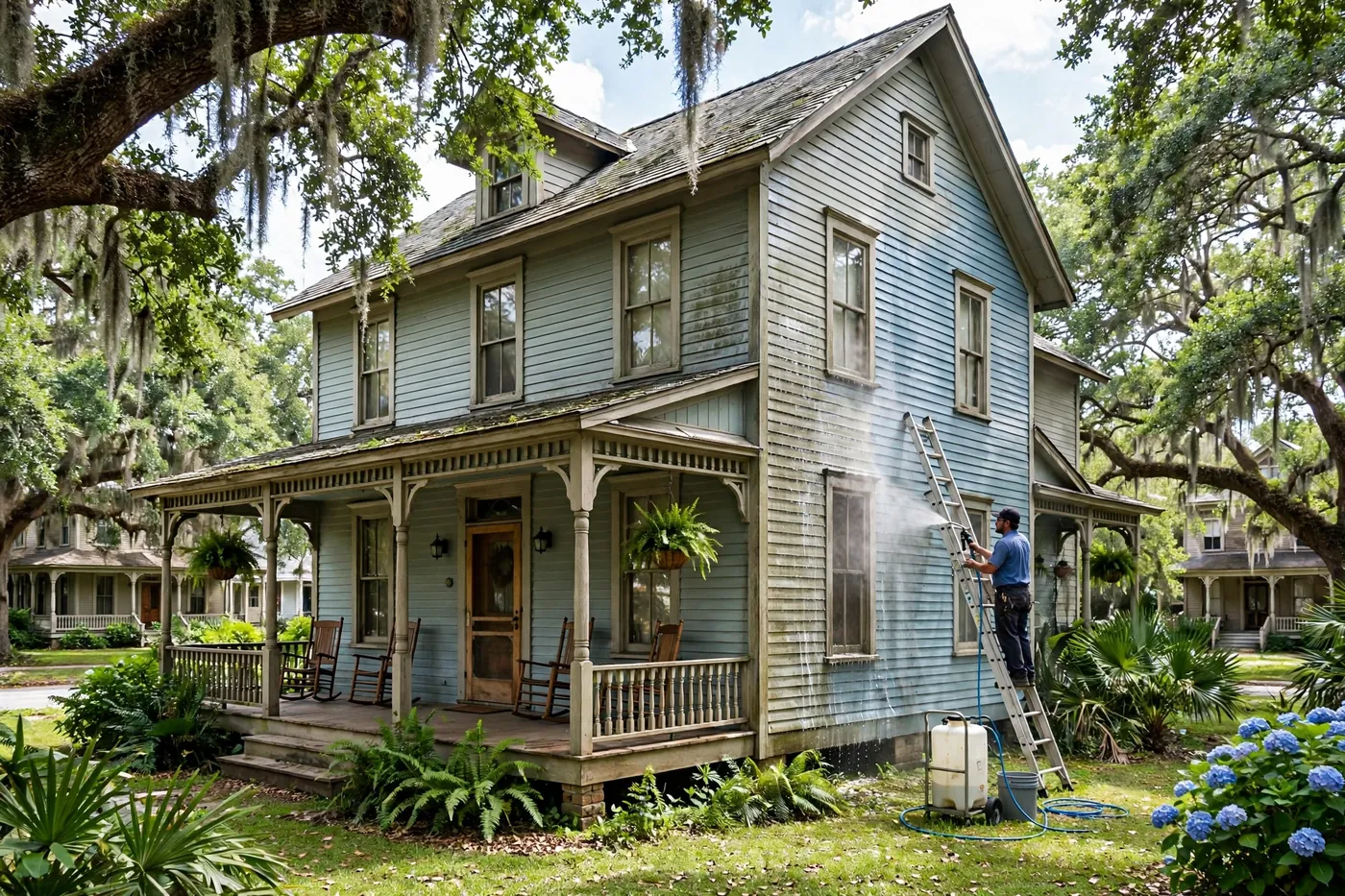
Springfield's century-old homes need soft washing, not brute force. How to restore historic siding safely.
Read More →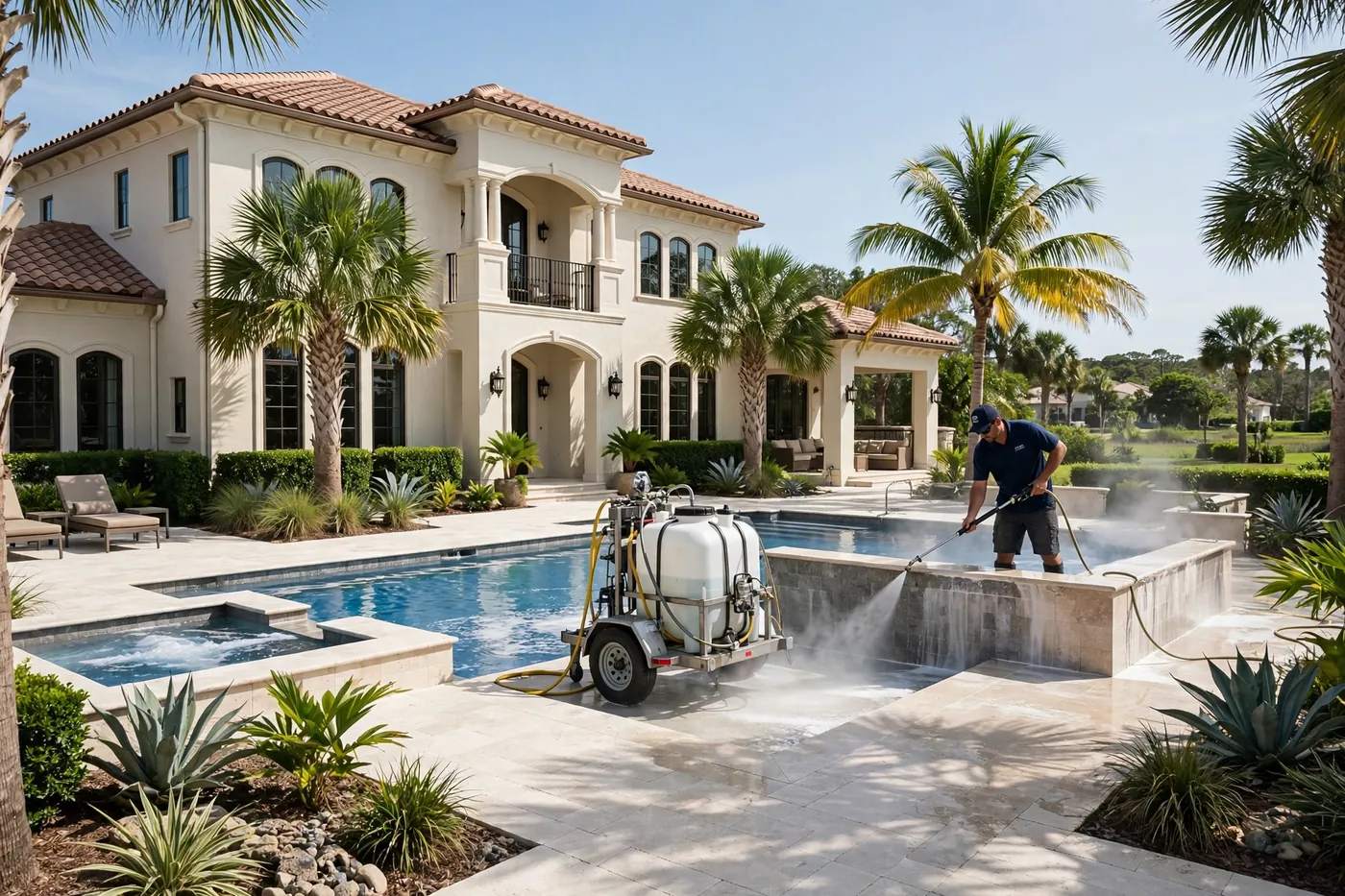
Ponte Vedra's luxury homes and strict HOAs demand white-glove exterior care. Maintenance schedules for coastal estates.
Read More →Call now for a free estimate and same-day service in Jacksonville, FL. Open 24/7.