
Ortega Waterfront Homes: Salt Air, River Humidity & Dock Cleaning
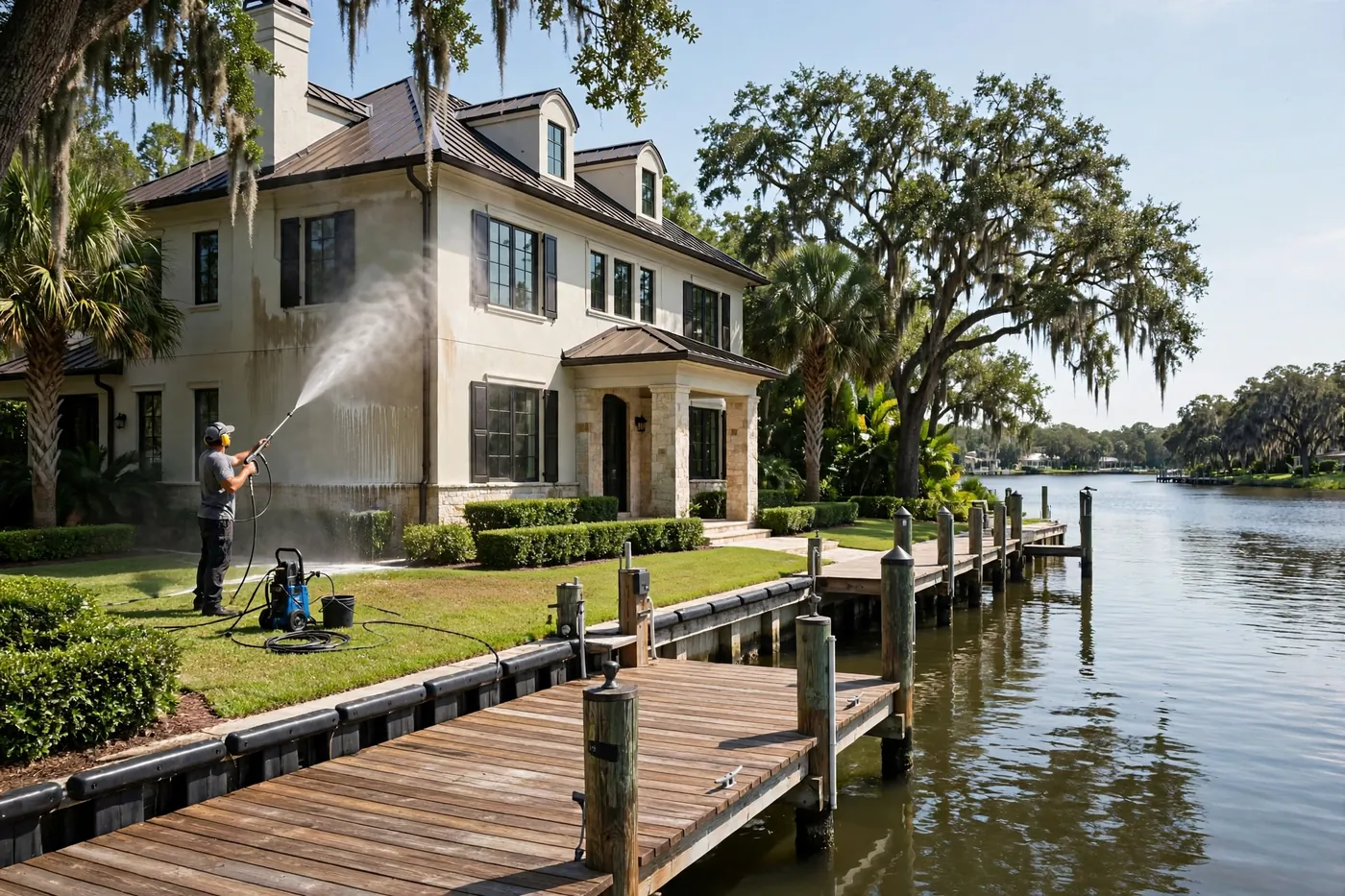
Ortega's riverfront estates face salt air, river humidity and dock grime. A complete guide to waterfront exterior cleaning.
Read More →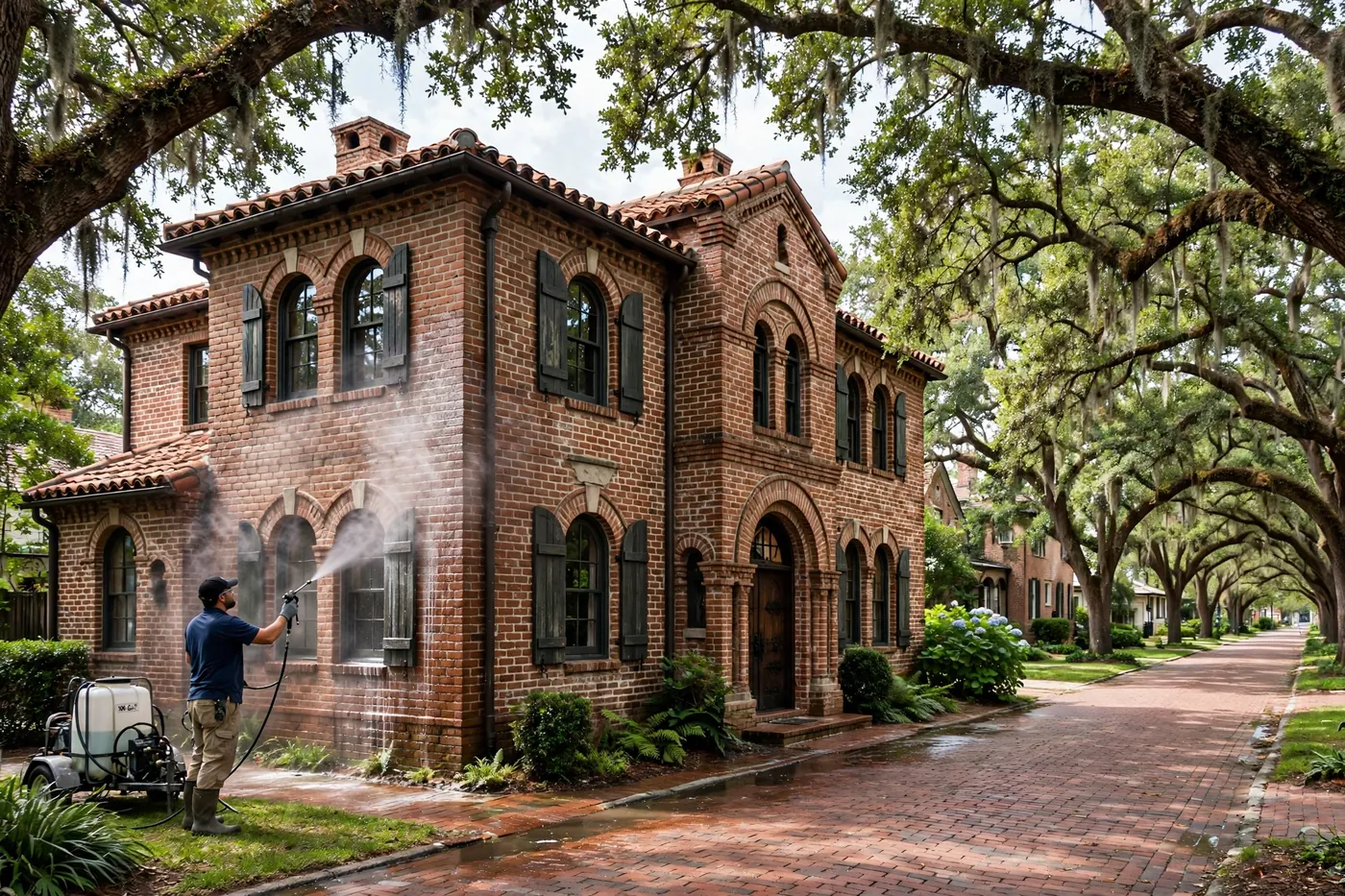
San Marco's 1920s–40s Mediterranean Revival homes need a gentle touch. Here's how to clean brick, stucco and historic wood without damage.
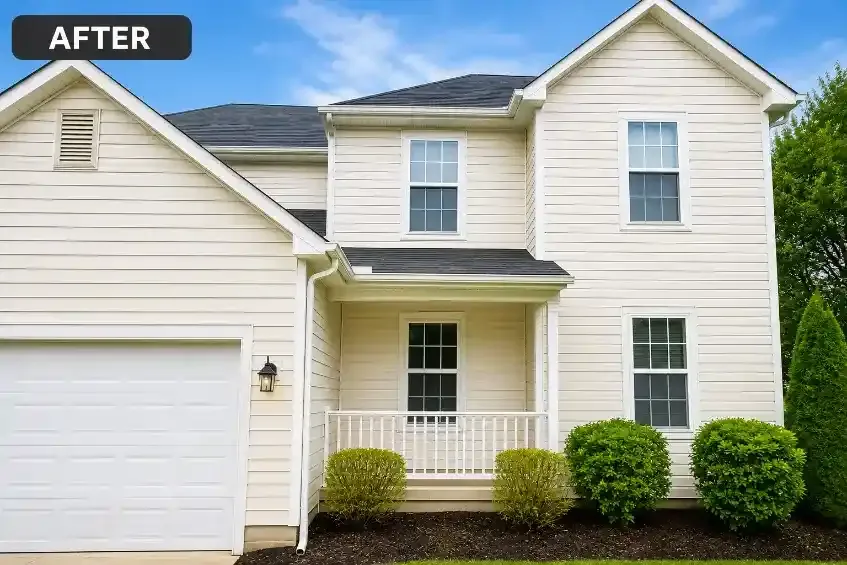
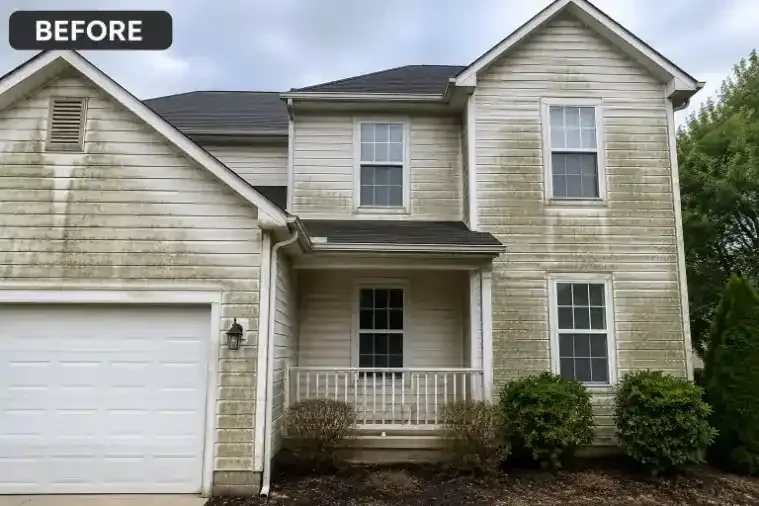 BEFOREAFTER
Drag to compare
BEFOREAFTER
Drag to compareDrive down San Marco Boulevard under the canopy of live oaks, past the brick streets around San Marco Square, and you'll see some of Jacksonville's most beautiful architecture — Mediterranean Revival homes from the 1920s through the 1940s, with barrel tile roofs, arched windows, and stucco walls that have weathered nearly a century of Florida summers. These homes were built to last, but they age differently than the vinyl-sided subdivisions going up across the river.
The combination of original materials, mature tree cover, and Jacksonville's relentless humidity creates a perfect environment for algae, mildew, and lichen. North-facing walls stay damp for days after a summer storm. Oak pollen blankets everything each spring, and that yellow film traps moisture against the surface underneath. What looks like simple dirt is usually a living layer of organic growth — and on historic materials, removing it takes knowledge, not just pressure.
That's why pressure washing in San Marco isn't the same job as washing a five-year-old home in the suburbs. The methods that work on modern concrete can scar century-old brick, force water behind original wood siding, or strip the patina off historic stucco. A proper San Marco wash starts with identifying what you're actually cleaning — and choosing the gentlest method that gets the job done.
Walk any block near Hendricks Avenue and you'll see all three of San Marco's signature materials, sometimes on the same house. The brick — often original wire-cut or Chicago-style brick from the 1920s — is softer than modern brick, and its mortar joints are softer still. High-pressure water can cut lines into old mortar and etch the face of the brick itself. We clean historic brick with low-pressure soft washing: a biodegradable cleaning solution applied at garden-hose pressure, given time to kill the algae and mildew at the root, then rinsed gently.
Stucco from this era is typically traditional cement stucco over wood lath — durable, but prone to hairline cracking as the house settles over decades. Blasting it with high pressure drives water into those cracks and behind the stucco, where it feeds mold inside the wall. Soft washing lets the cleaning solution do the work chemically, so the rinse needs only enough pressure to wash the dead growth away. The result is a uniform, streak-free finish without the tiger-striping that aggressive pressure leaves behind.
Original wood windows, trim, and siding — still present on many San Marco homes — are the most delicate of all. Old-growth wood is denser than today's lumber, but a century of sun has made the surface fibers brittle. Direct high pressure fuzzes the wood, raising fibers that will never lay flat again and creating a rough surface that grabs dirt faster. We treat historic wood like a restoration project: low pressure, wide fan patterns, and patience.
San Marco's live oaks are the neighborhood's crown jewel — and its biggest exterior-maintenance headache. Streets around San Marco Square and the blocks near Fletcher Park sit under nearly continuous canopy, which means many homes never get direct sun on their north and east walls. Without UV light to dry things out, algae and black mold colonize siding, roofs, and driveways within a year or two of cleaning.
Then there's the pollen. Every March and April, the oaks release clouds of yellow-green pollen that coat every horizontal surface in the neighborhood. It's more than a nuisance — pollen is organic matter, and when it sits on damp siding through Jacksonville's humid summer, it becomes food for the next wave of mildew. Homeowners who skip the spring wash often find their siding greener by August than it was in February.
The practical answer is timing. In San Marco, we recommend a full exterior wash every 12 to 18 months for most homes — closer to 12 if you're under heavy canopy or near the river, where morning fog adds extra moisture. A spring wash right after pollen season clears the slate, and the algaecide in professional soft-wash solutions keeps regrowth slow through the brutal summer months.
A real historic-home wash starts before any water flows. We walk the property looking for the things that matter on old houses: cracked stucco, loose mortar, peeling paint, original wood that's gone soft, and landscaping you don't want trampled or chemically burned. Plants get pre-wet and covered where needed, because even biodegradable cleaning solutions can stress leaves in Jacksonville's heat.
The wash itself is methodical rather than dramatic. Cleaning solution goes on first — dwell time does the heavy lifting, killing algae, mildew, and lichen down to the root so they don't grow back in weeks. Then comes the rinse: controlled, even, and deliberately low-pressure on historic surfaces. Driveways and brick pavers can take more pressure, so hardscapes get a deeper clean while the house itself gets the gentle treatment. A typical San Marco home takes three to five hours, not the 45-minute blast-and-go some companies sell.
At Professor Pressure Washing, we've been cleaning Jacksonville's older neighborhoods since 2015, and we've learned that the cheapest wash is rarely the cheapest in the long run. A rushed high-pressure job on a 1920s stucco home can force water into walls, etch brick, and void paint warranties — damage that costs thousands to fix. If you're comparing quotes in San Marco, ask every contractor what pressure they'll use on your siding and how they'll protect your landscaping. The answers tell you everything.
You can't stop Jacksonville's humidity, but you can slow what it grows. Trim tree limbs back from the roofline and walls — even two feet of clearance dramatically improves airflow and drying. Keep gutters clean and downspouts extended, because the number-one cause of green streaks on San Marco stucco is water cascading down the wall every time it rains. And if your irrigation hits the house, redirect it; constant wetting is an open invitation to algae.
For the brick driveways that give San Marco its character, a penetrating sealer applied after cleaning keeps oil, rust, and organic stains from soaking back in. It's not necessary every year, but on a freshly cleaned historic brick driveway, sealing buys you visibly cleaner results for much longer. Just make sure the surface is fully dry and the sealer is rated for historic masonry — big-box sealers aren't always the right chemistry for century-old brick.
When the green starts creeping back — and in San Marco, it will — don't wait until the whole house is covered. Spot growth is cheaper and easier to handle than a full restoration clean, and catching it early protects your paint and mortar. If you'd like an honest assessment of what your home needs, call (904) 938-5900. We'll tell you straight whether it's time for a wash or whether a few maintenance steps will carry you through the season.
Yes — when it's done as soft washing, not high-pressure blasting. Century-old brick and its mortar joints are softer than modern masonry, so we apply a cleaning solution at low pressure and rinse gently, letting chemistry do the work instead of force. Done this way, it's completely safe — and far safer than letting acidic organic growth eat into the mortar for years. What you want to avoid is anyone pointing a zero-degree nozzle or 3,000+ PSI directly at historic brick, which can cut mortar joints and etch the brick face permanently.
Most San Marco homes need a full exterior wash every 12 to 18 months. Homes under heavy oak canopy, on north-facing lots, or near the St. Johns River — where fog and shade keep things damp — trend toward the 12-month end. The best rhythm for most homeowners is a wash each spring after pollen season, which clears the year's biggest deposit of organic matter before summer humidity turns it into mildew.
Routine pressure washing and soft washing don't require permits in Jacksonville, even in historic areas. Permits generally come into play only for structural changes, additions, or work on locally designated landmark properties that alters the exterior appearance. If your home is in a historic district overlay, it's still wise to check with the city's Historic Preservation Section before any major exterior project — but standard cleaning is not a regulated activity.
Ortega's riverfront estates face salt air, river humidity and dock grime. A complete guide to waterfront exterior cleaning.
Read More →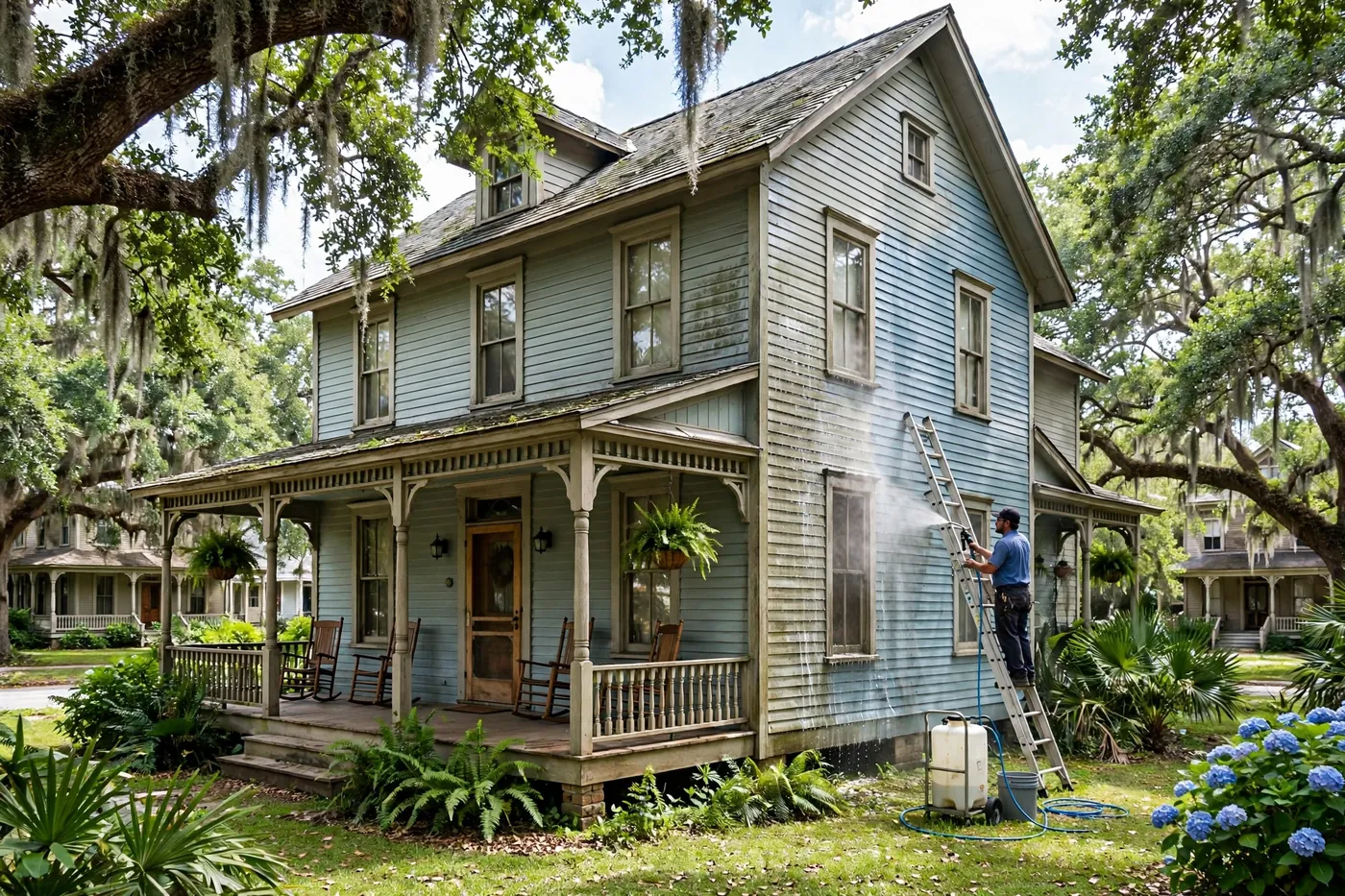
Springfield's century-old homes need soft washing, not brute force. How to restore historic siding safely.
Read More →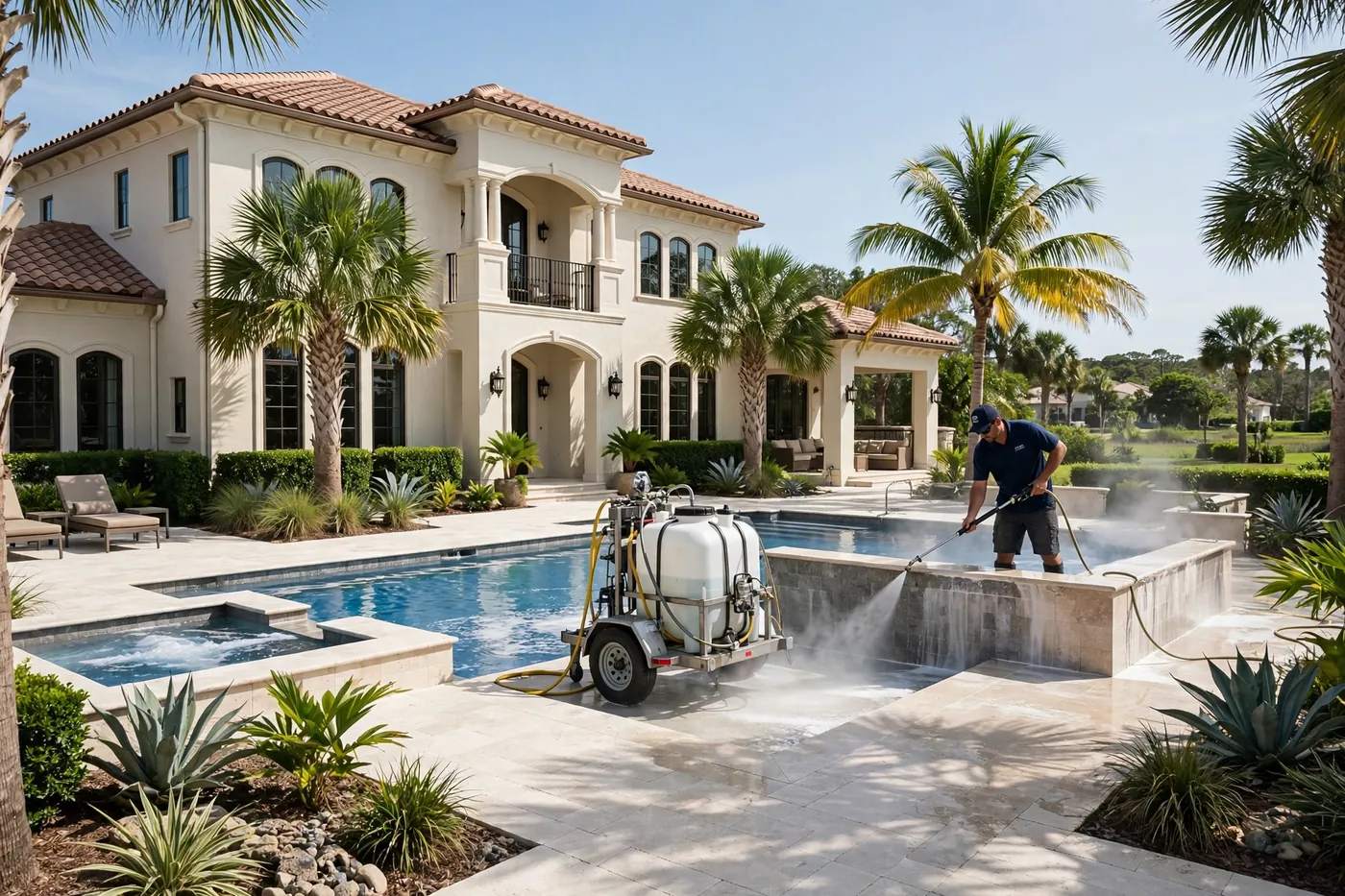
Ponte Vedra's luxury homes and strict HOAs demand white-glove exterior care. Maintenance schedules for coastal estates.
Read More →Call now for a free estimate and same-day service in Jacksonville, FL. Open 24/7.