
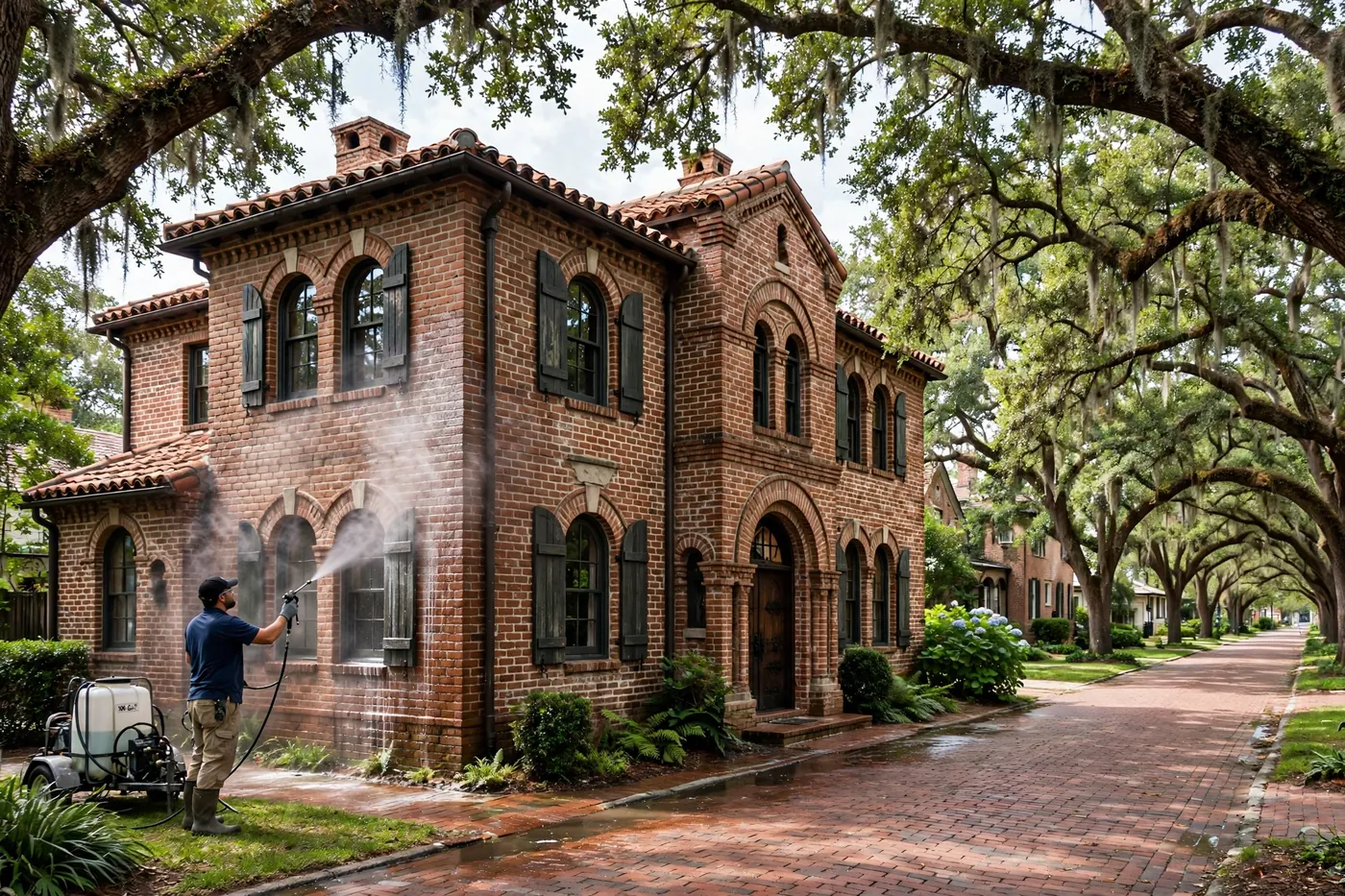
Pressure Washing in San Marco: Brick, Stucco & Historic Homes
San Marco's 1920s–40s Mediterranean Revival homes need a gentle touch. Here's how to clean brick, stucco and historic wood without damage.
Read More →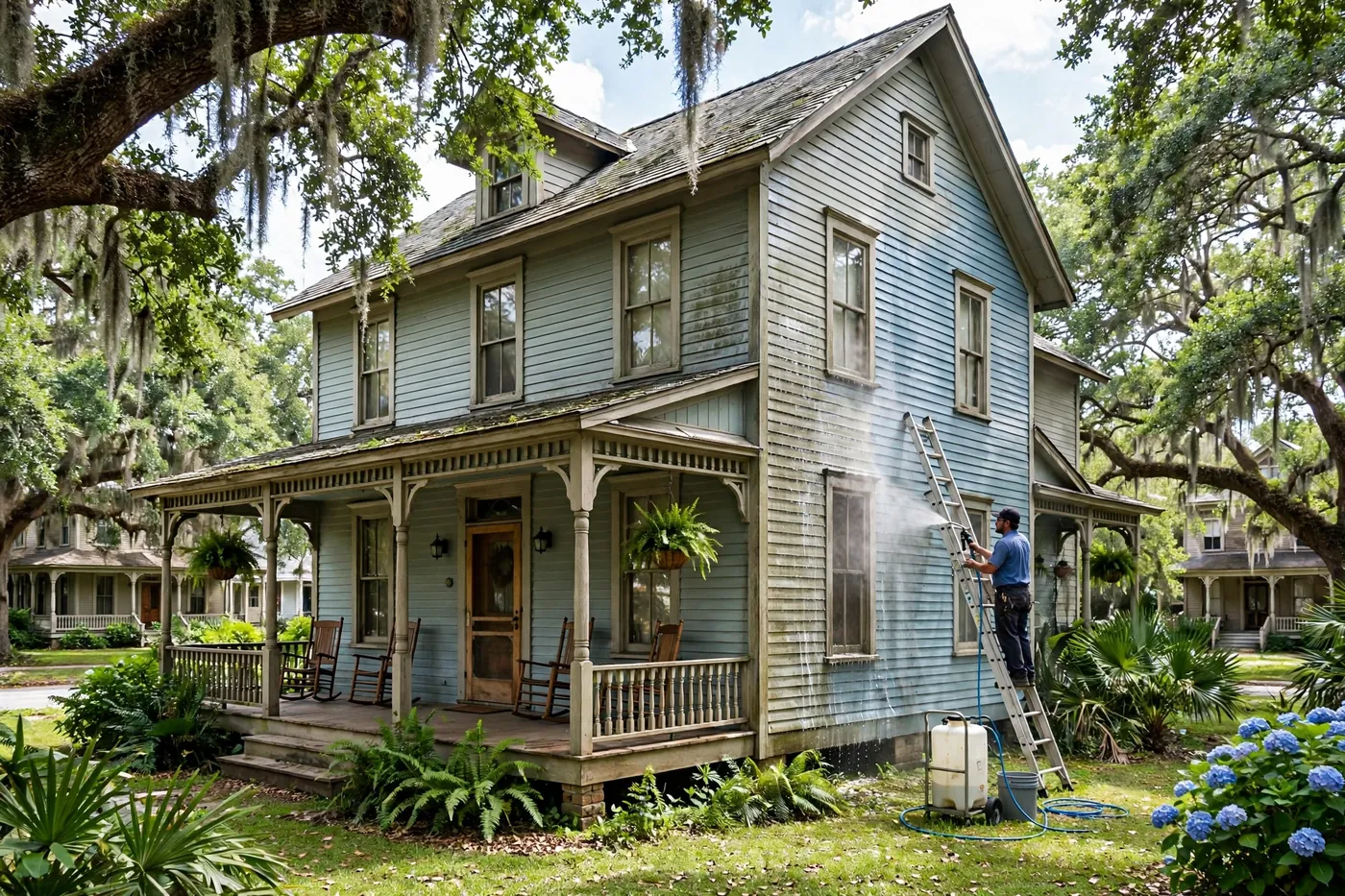
Springfield's century-old homes need soft washing, not brute force. How to restore historic siding safely.
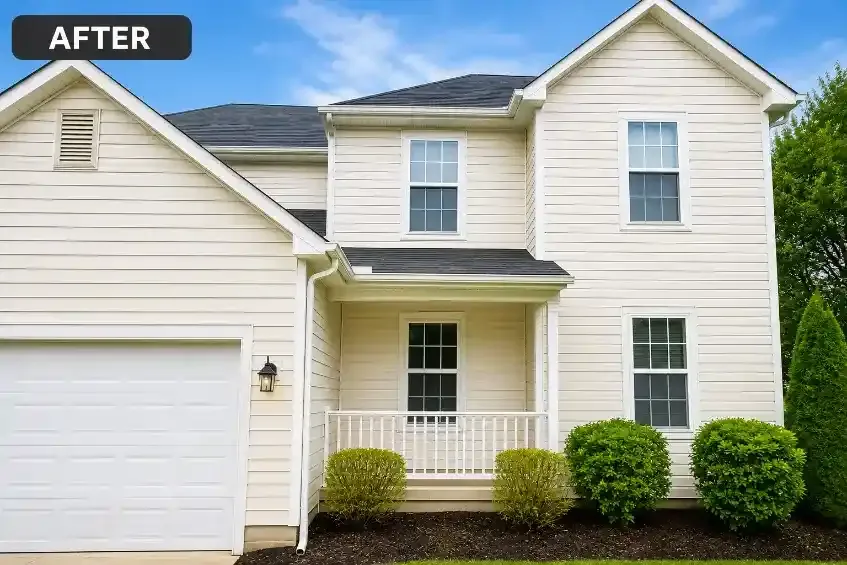
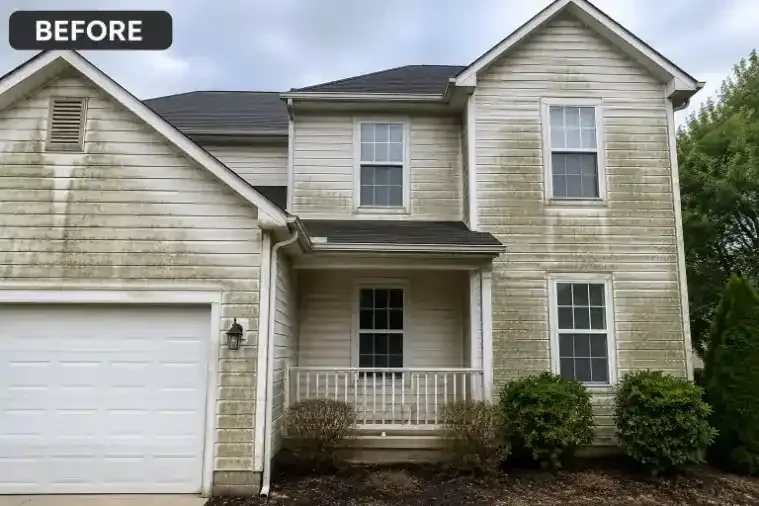 BEFOREAFTER
Drag to compare
BEFOREAFTER
Drag to compareSpringfield is one of Jacksonville's great comeback stories. The historic district — roughly bounded by 1st Street, Main Street, and the Hogans Creek corridor — holds one of the largest collections of early-1900s homes in Florida: Queen Annes, Colonial Revivals, and Craftsman bungalows built between 1900 and the 1920s, many with their original wood siding still intact. After decades of decline, the neighborhood's revitalization has brought careful restorations back to block after block.
But a hundred years of Florida weather leaves its mark. These homes have endured a century of hurricanes, summer deluges, and the slow, relentless chemistry of heat plus humidity. The original wood siding — old-growth pine and cypress, far denser than anything milled today — has been painted and repainted dozens of times. Underneath the latest coat, there's often a century of paint history, and on top of it, the usual Jacksonville cocktail: algae, mildew, lichen, and oak pollen ground into every crevice.
For Springfield homeowners, exterior cleaning isn't cosmetic maintenance — it's preservation. Done right, it extends the life of irreplaceable original materials. Done wrong, with too much pressure or the wrong chemistry, it can destroy in an afternoon what survived a hundred years. The difference is entirely in the method.
Here's the physics nobody tells you at the hardware store: a standard pressure washer running 3,000 PSI through a narrow nozzle concentrates more cutting force per square inch than you might expect — enough to carve lines into soft, aged wood. On new pressure-treated lumber, that's a cosmetic problem. On 100-year-old siding, it's permanent damage. The surface fibers of century-old wood are sun-brittle and paint-fatigued; high pressure doesn't just clean them, it shreds them.
The damage has a name in the restoration world: furring. The wood surface comes up fuzzy, like a peach, and no amount of sanding fully restores the original smooth face. Worse, furred wood is more porous — it grabs dirt and holds moisture, which means it gets dirty faster and rots sooner. A homeowner who blasts their 1915 bungalow to save money on a professional wash often ends up needing premature siding repair or repainting, at ten times the cost of doing it right the first time.
There's a second, sneakier risk: water intrusion. Old siding wasn't installed with modern house wrap and flashing details. High-pressure water driven upward under laps finds its way behind the siding, where it soaks the sheathing and framing. In Jacksonville's climate, trapped wall moisture becomes mold and rot with frightening speed. We've opened up walls on historic homes where a single aggressive wash started rot that took years to discover.
Soft washing flips the equation: instead of relying on pressure, it relies on chemistry and dwell time. A biodegradable cleaning solution — typically a measured sodium hypochlorite blend with surfactants — is applied to the siding at roughly garden-hose pressure. The solution kills algae, mildew, moss, and lichen down to the root over 10 to 20 minutes of dwell time. Then everything is rinsed away with low-pressure water, usually under 500 PSI with a wide fan tip.
On Springfield's old wood, the difference is night and day. Nothing gets shredded, no water gets forced behind laps, and the kill-at-the-root chemistry means regrowth takes far longer than after a pressure-only wash. The surfactants in the mix are the unsung heroes — they let the solution cling to vertical siding long enough to work, instead of running straight off onto your foundation plantings.
A word on the chemistry, because Springfield homeowners rightly ask: yes, the cleaning solution contains bleach, but at controlled dilutions (typically 1-3% applied strength for siding) it's the same approach recommended by the siding manufacturers themselves. We pre-wet and cover landscaping, neutralize after the rinse, and in ten years of doing this across Jacksonville's historic neighborhoods, we've never damaged a planting bed. The dose makes the poison, and ours is measured.
Let's talk about the thing many contractors won't mention: any Springfield home built before 1978 almost certainly has lead paint somewhere in its paint history. Pressure washing — especially aggressive pressure washing — can disturb lead paint and create lead-contaminated runoff and chips, which is a genuine health hazard and an EPA concern under the Renovation, Repair, and Painting (RRP) rule. This is another reason high pressure has no business on these homes.
Soft washing is far less likely to disturb intact paint, because it doesn't mechanically abrade the surface. But honesty requires the caveat: if your paint is already failing — peeling, flaking, alligatoring — no wash method will save it, and washing may reveal the full extent of the failure. That's actually useful information, not a problem with the wash; it tells you it's time to budget for proper prep and repainting rather than discovering it mid-project.
If your Springfield home still has its original windows, be extra cautious about who you hire. Old window glazing is brittle, and putty that's survived since the Taft administration won't survive a direct hit from a pressure wand. We mask and avoid direct spray on original glazing, and any contractor working your home should do the same without being asked.
There's a particular joy in watching a Springfield historic home come clean — the original siding profile re-emerging from under decades of grime, the true color of the paint showing through for the first time in years, the porch columns and brackets reading crisp again. Done right, a wash doesn't make an old house look new. It makes it look like itself, the way its builders intended.
That's the standard we hold at Professor Pressure Washing. Since 2015, we've cleaned historic homes across Jacksonville — Springfield, Riverside, Avondale, San Marco — and we've built our methods around preservation first. We'll tell you honestly when a surface is too far gone for washing and needs restoration instead, because selling you a wash that can't help is worse than no sale at all.
If your Springfield home is wearing a century of Jacksonville weather on its siding, call (904) 938-5900. We'll walk the property, identify what you're actually dealing with — algae, failing paint, or just honest dirt — and give you a straight answer about what soft washing can and can't do for your house. No pressure tactics, just ten years of historic-home experience.
You can clean it, but you should never blast it. Century-old wood siding needs soft washing — a biodegradable cleaning solution applied at low pressure that kills algae and mildew chemically, followed by a gentle rinse. High-pressure washing fuzzes the wood surface permanently (called furring), drives water behind the siding where it causes rot, and can disturb old lead paint. The method matters more than the machine.
Soft washing uses cleaning chemistry instead of pressure: a measured solution is applied at garden-hose pressure, given 10-20 minutes of dwell time to kill organic growth at the root, then rinsed gently. Historic homes need it because their materials — old-growth wood, century-old paint, original glazing — can't survive the mechanical force that modern siding shrugs off. It's the manufacturer-recommended method for delicate surfaces, and regrowth takes far longer than after pressure-only cleaning.
Soft washing won't damage sound, well-adhered paint — it doesn't abrade the surface the way pressure does. However, if paint is already failing (peeling, flaking, alligatoring), washing will reveal that failure rather than cause it, which is actually valuable diagnostic information. We always assess paint condition before starting and will tell you honestly if your home needs repainting rather than just cleaning.
San Marco's 1920s–40s Mediterranean Revival homes need a gentle touch. Here's how to clean brick, stucco and historic wood without damage.
Read More →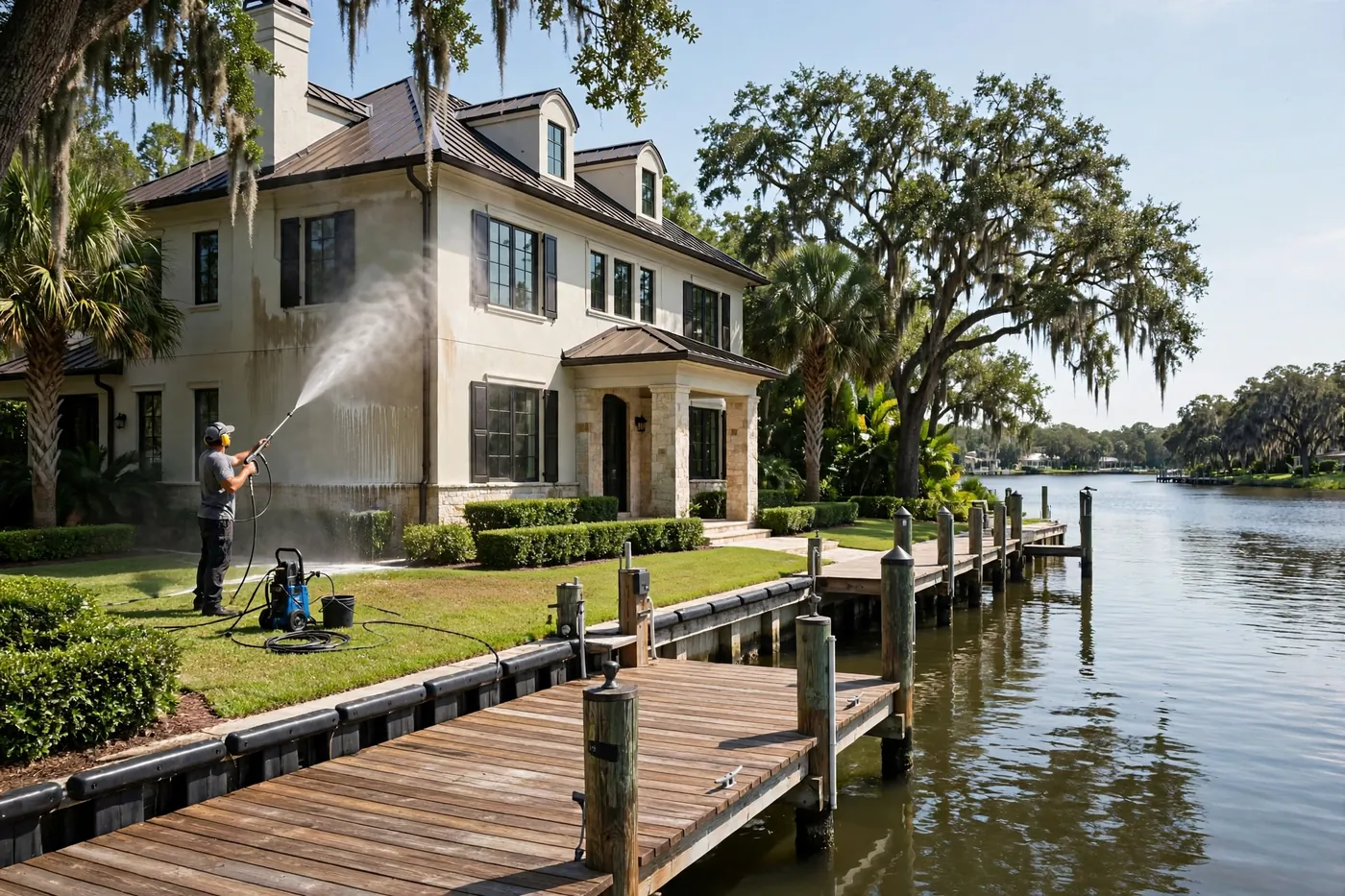
Ortega's riverfront estates face salt air, river humidity and dock grime. A complete guide to waterfront exterior cleaning.
Read More →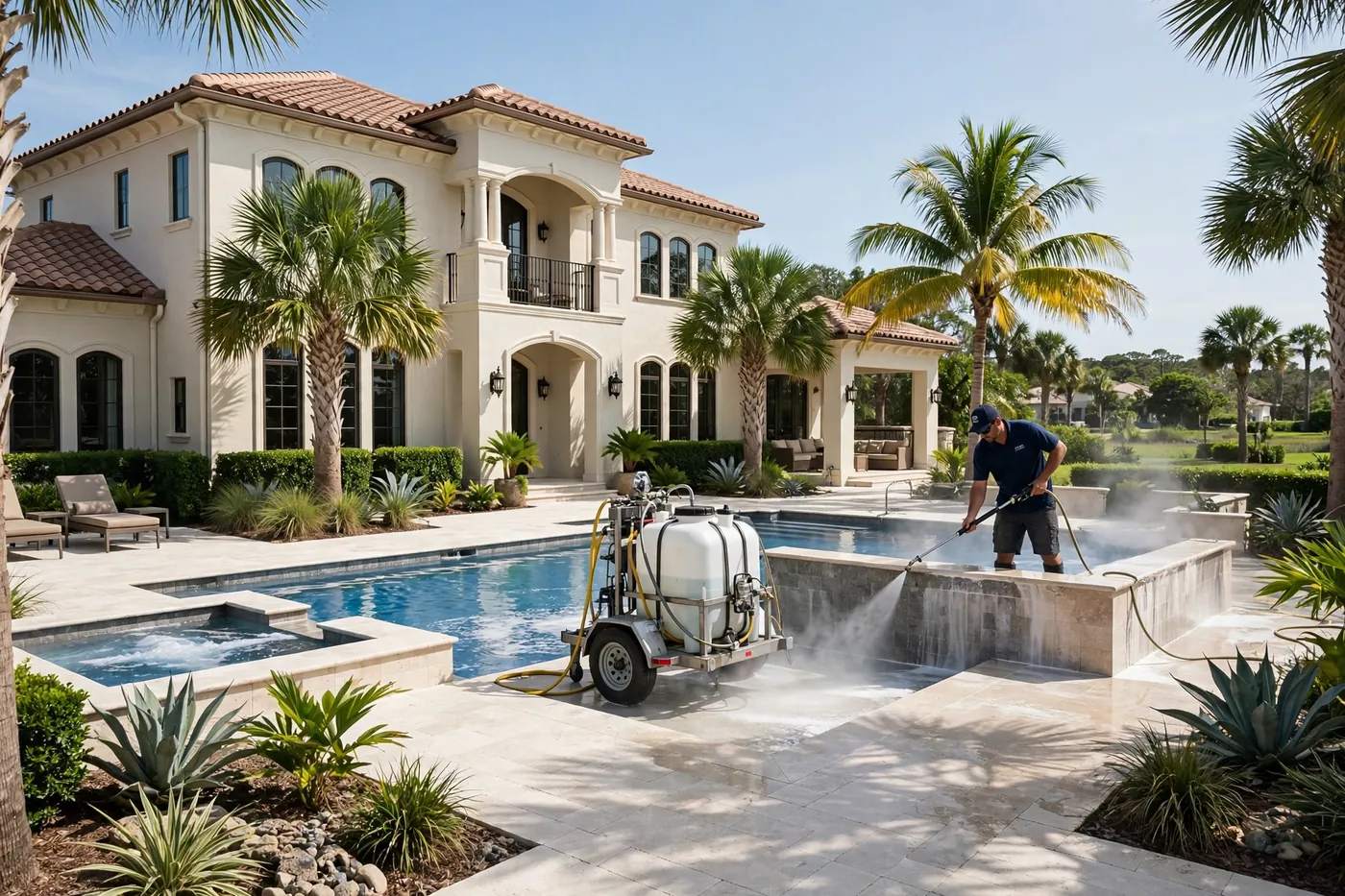
Ponte Vedra's luxury homes and strict HOAs demand white-glove exterior care. Maintenance schedules for coastal estates.
Read More →Call now for a free estimate and same-day service in Jacksonville, FL. Open 24/7.