
Pressure Washing in San Marco: Brick, Stucco & Historic Homes
San Marco's 1920s–40s Mediterranean Revival homes need a gentle touch. Here's how to clean brick, stucco and historic wood without damage.
Read More →
Even brand-new Nocatee homes need cleaning. Builder dust, red clay and first-year HOA standards explained.
 BEFOREAFTER
Drag to compare
BEFOREAFTER
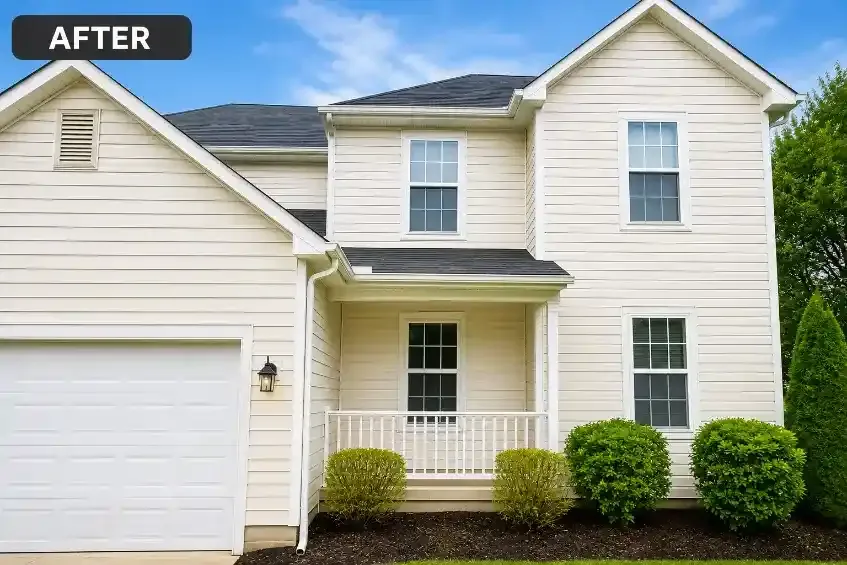
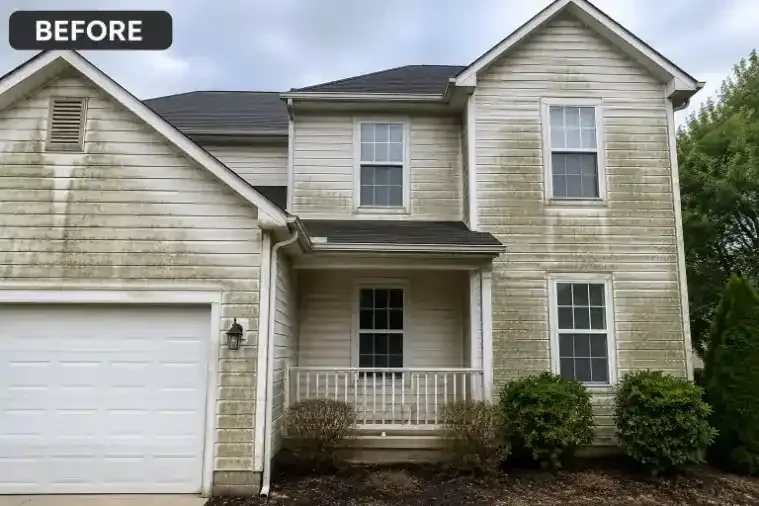
Drag to compareCongratulations on the new Nocatee home — now look closely at it. Walk the perimeter of any six-month-old build in communities like Twenty Mile, Crosswater, or Seabrook Village and you'll find the same thing: a fine film of construction dust ground into the siding, concrete splatter on the foundation, paint overspray on the windows, and stucco that's already duller than the model home you fell in love with. Brand-new doesn't mean clean; it means nobody's cleaned it yet.
Construction residue is a special category of dirt. Drywall dust, sawdust, concrete slurry from the foundation pour, stucco overspray, and months of red clay tracked across the lot by every trade's boots — it all bakes onto surfaces through a full Northeast Florida summer before you ever get the keys. A standard rain won't touch it. In fact, the first few rains often make it look worse, streaking the baked-on dust into visible patterns down the siding.
This is why the first wash on a new-construction home is really a post-construction cleanup, not maintenance. It takes different chemistry and more dwell time than a routine annual wash, because you're dissolving months of accumulated jobsite grime, not just this season's algae. Done right, it's the wash that finally makes your home look like the day you bought it — or better.
If you've lived in the Jacksonville area through one rainy season, you know red clay. The soil across Duval and St. Johns counties runs heavy with iron-rich clay that stains everything it touches a distinctive rusty orange — siding, concrete, pavers, fences, even your car's lower panels. During construction, with the lot scraped bare and no sod yet, every rain sends sheets of clay-laden water across your foundation, driveway, and the bottom two feet of siding.
Here's what most new homeowners learn the hard way: red clay stains are not dirt, and they don't respond to normal house washing. They're iron oxide deposits, chemically closer to rust than to mud. A standard soft wash will lighten them but leave the orange shadow behind. Full removal requires a dedicated treatment — typically an oxalic or buffered acid-based brightener applied specifically to the stained areas, then neutralized and rinsed. It's a separate step from the house wash, and any contractor who promises the stains will 'come right off' in a standard wash is guessing.
The good news: once the lot is sodded and landscaped, the clay assault drops dramatically. Grass and mulch beds capture the soil before it reaches your hardscapes. That's why we recommend the full new-construction cleanup — including clay treatment — after final grading and sod are in, not the week you close. Timing it right means you treat the stains once instead of watching them come back with every storm.
Nocatee's production builders do solid work, but the materials are chosen for cost efficiency at scale — and they need correspondingly careful maintenance. Builder-grade vinyl siding is thinner than premium grades, which means it flexes and can crack under aggressive pressure. The concrete tile or architectural shingle roofs carry algae-resistant warranties that high-pressure washing can void. And the stucco accents, where present, are often a thinner application than custom-home stucco.
The practical upshot: your new home should never see high pressure on its siding or roof, period. Soft washing is the correct method from day one — it's what the siding and roofing manufacturers specify, and it's what keeps your warranties intact. This matters more than most homeowners realize: a single high-pressure roof cleaning can void a 30-year shingle warranty, turning a $400 wash into a five-figure liability.
When you're getting quotes, ask specifically what pressure will touch your siding and roof, and whether the contractor's method complies with manufacturer warranty requirements. At Professor Pressure Washing, soft washing is our default for every new-construction home — we've been doing it since 2015, and we've never voided a warranty or damaged builder-grade materials. It's simply the right way to clean a new home.
Nocatee's master HOA and the individual community CDDs take exterior appearance seriously — that's part of what you're paying for. The standards typically require siding, driveways, sidewalks, and roofs to be kept free of visible dirt, mold, mildew, and staining. New homeowners are sometimes surprised to get a courtesy notice in the first year, but between construction residue and the speed at which Jacksonville humidity grows algae on fresh surfaces, it's common.
The first year is actually when your home gets dirty fastest. Fresh concrete and pavers are more porous before they've fully cured and sealed, so they absorb stains readily. New sod means daily irrigation, which mists the lower siding constantly. And the bare lots still under construction around you generate dust that settles on everything. Most Nocatee homeowners find they need their first real wash at 12 to 18 months — not because anything's wrong, but because that's the rhythm of a new home in this climate.
Pro tip: schedule your first wash for after your builder's one-year warranty walkthrough, not before. The walkthrough often generates touch-up painting and caulking, and you want the wash to come after that work, not before. Then you're starting your maintenance cycle with a truly clean baseline.
The ideal window for a Nocatee new-construction cleanup is after final grading, sod, and landscaping are complete — usually 2 to 4 months after closing, though it varies by builder and phase. Earlier than that and you're washing a still-active jobsite; much later and the clay stains and construction film get harder to remove with each passing month.
Spring is the sweet spot in most years: after oak pollen season, before the worst summer humidity, and timed so the algaecide in the cleaning solution protects your fresh surfaces through the brutal months. If you closed in fall, don't wait until spring while clay stains set deeper — a fall wash handles the construction cleanup, and you can settle into a normal annual rhythm the following spring.
If you're staring at orange clay shadows on your foundation or a film of jobsite dust that won't rinse off, call (904) 938-5900. We'll assess whether you need the full new-construction treatment including clay remediation, or whether a standard soft wash will do — and we'll give you that answer honestly before you spend a dollar. Ten years serving Jacksonville's growth corridors has taught us exactly what new homes need, and what they don't.
Because 'new' and 'clean' aren't the same thing. Your home accumulated months of construction residue — drywall dust, concrete slurry, stucco overspray, paint overspray, and red clay tracked across the bare lot — before you ever got the keys, and a Florida summer baked it all on. The first wash on a new build is really a post-construction cleanup requiring different chemistry and more dwell time than routine maintenance. Once that's done, you're starting from a true clean baseline.
Red clay stains are iron oxide deposits from Northeast Florida's iron-rich soil — chemically closer to rust than to mud, which is why normal house washing only lightens them. Full removal needs a dedicated treatment, typically an oxalic or buffered acid-based brightener applied to the stained areas, then neutralized and rinsed. It's a separate step from the house wash. Once your lot is sodded and landscaped, new clay staining drops dramatically, so timing the treatment after final grading means you do it once.
Ideally 2 to 4 months after closing, once final grading, sod, and landscaping are complete — washing earlier means cleaning an active jobsite, and waiting much longer lets clay stains and construction film set harder. Spring is the best season in most years: post-pollen, pre-summer-humidity. Also schedule it after your builder's one-year warranty walkthrough if possible, so the wash follows any touch-up painting rather than preceding it.
San Marco's 1920s–40s Mediterranean Revival homes need a gentle touch. Here's how to clean brick, stucco and historic wood without damage.
Read More →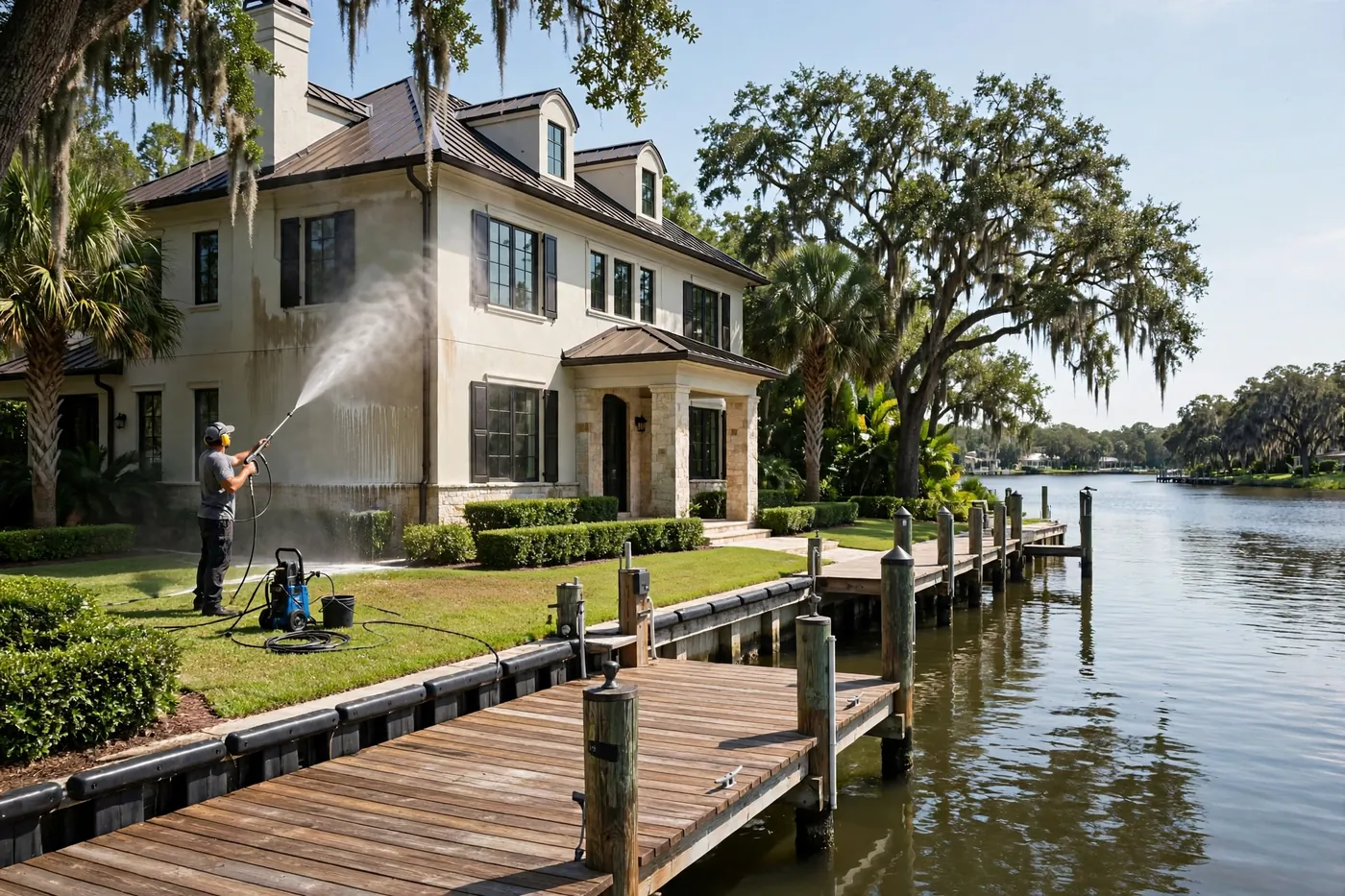
Ortega's riverfront estates face salt air, river humidity and dock grime. A complete guide to waterfront exterior cleaning.
Read More →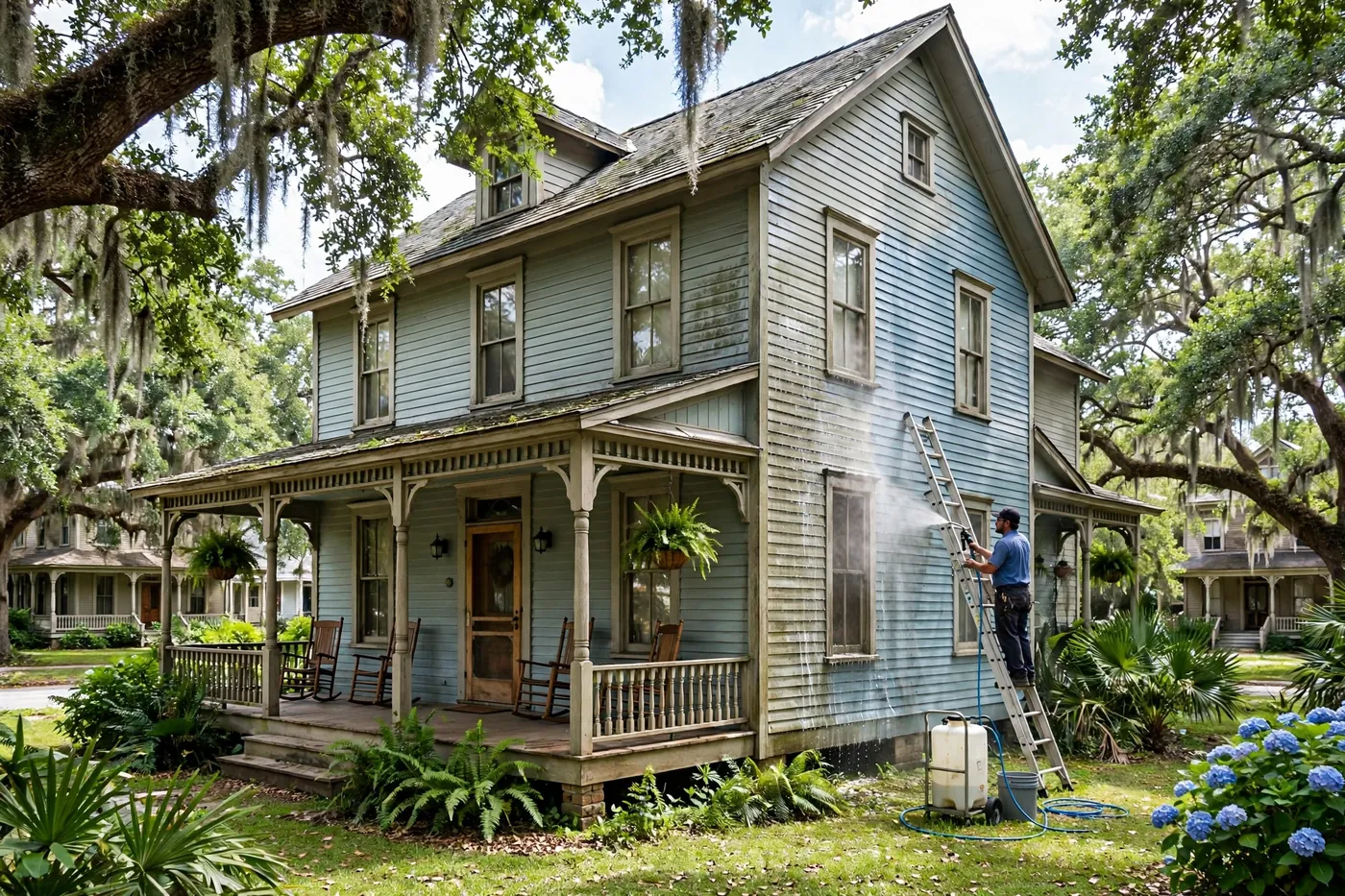
Springfield's century-old homes need soft washing, not brute force. How to restore historic siding safely.
Read More →Call now for a free estimate and same-day service in Jacksonville, FL. Open 24/7.