
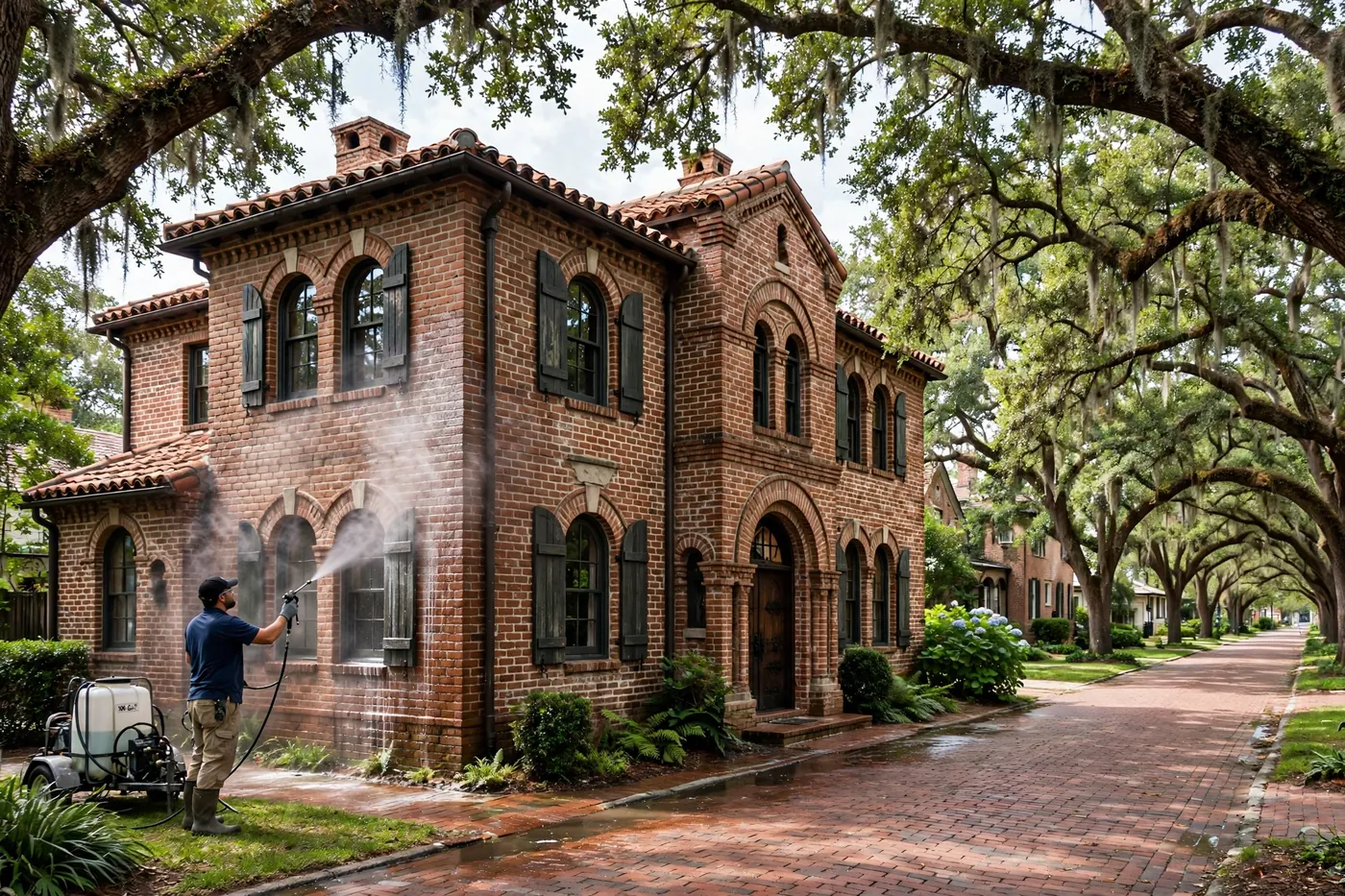
Pressure Washing in San Marco: Brick, Stucco & Historic Homes
San Marco's 1920s–40s Mediterranean Revival homes need a gentle touch. Here's how to clean brick, stucco and historic wood without damage.
Read More →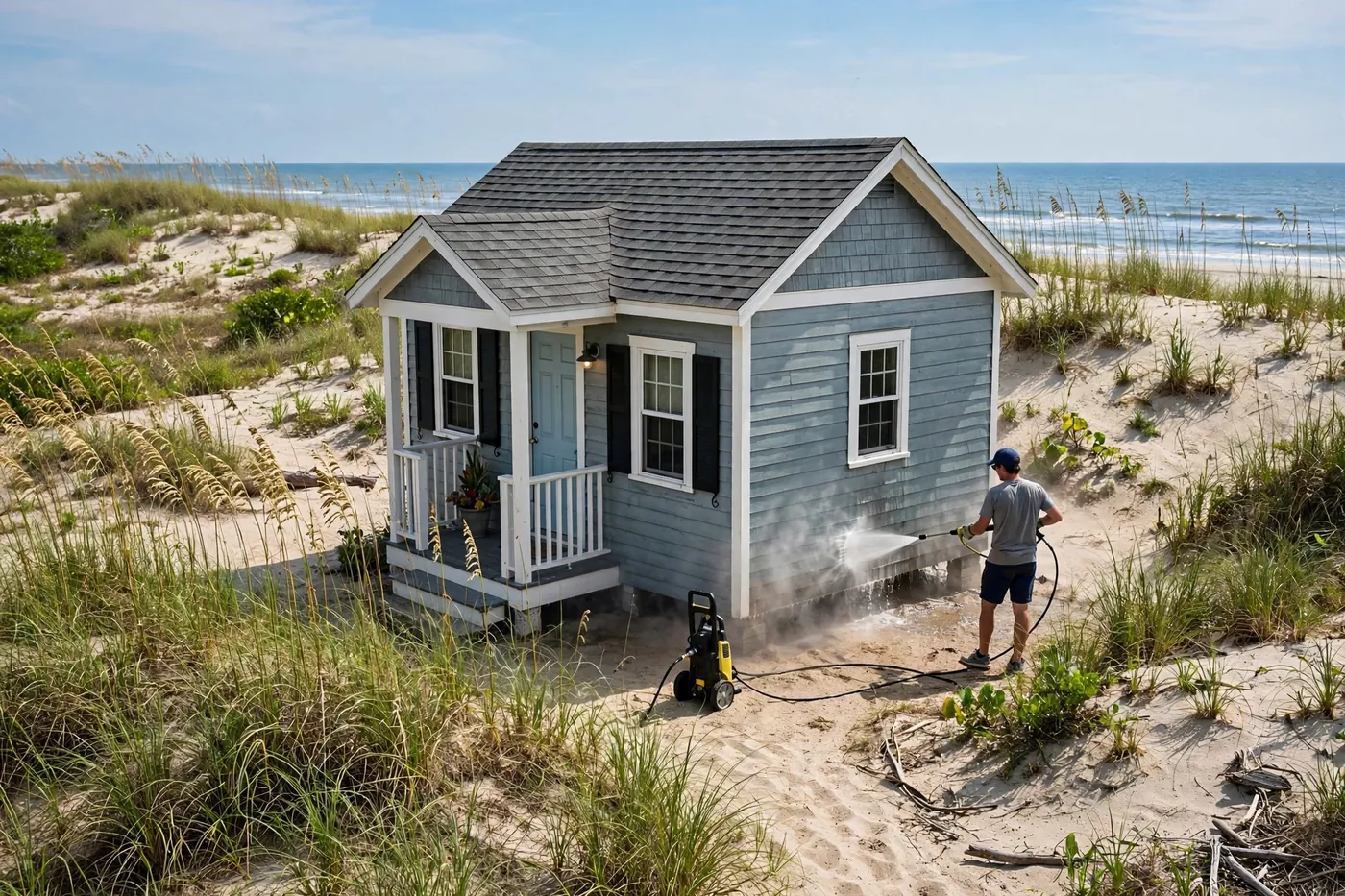
Beach cottages battle salt film, windblown sand and storm residue. The complete coastal cleaning guide.
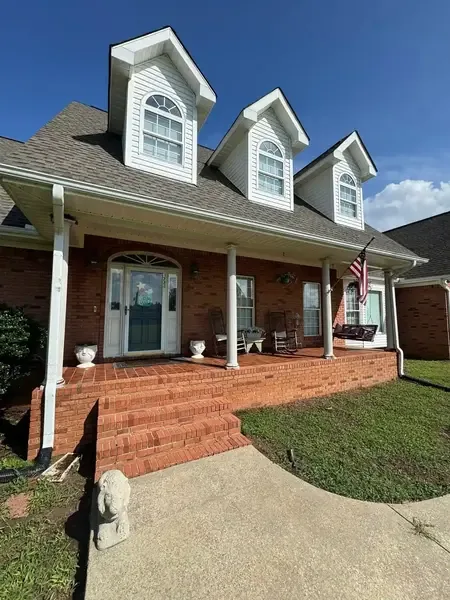
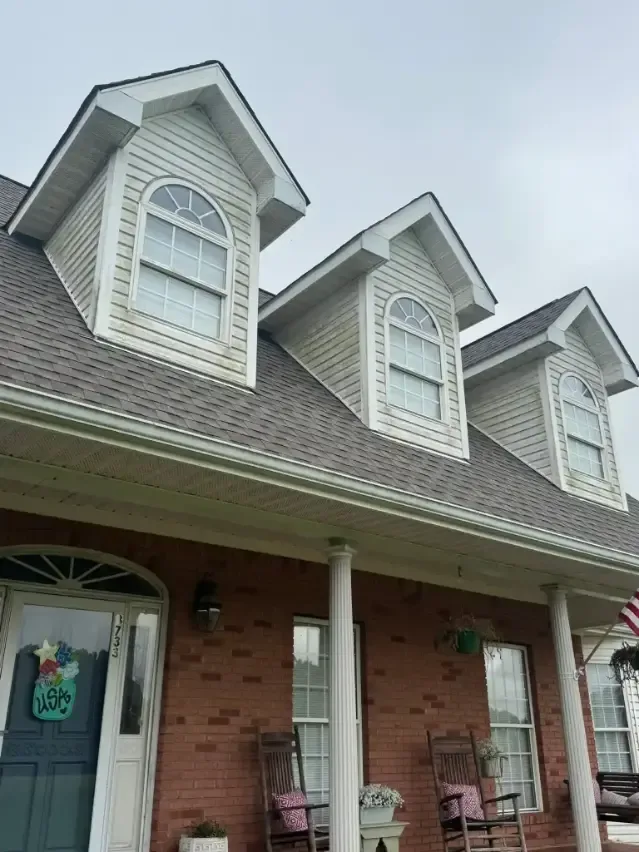 BEFOREAFTER
Drag to compare
BEFOREAFTER
Drag to compareAtlantic Beach and Neptune Beach occupy one of the narrowest, most exposed strips of coastline in Northeast Florida — in places barely half a mile separates the Atlantic from the Intracoastal Waterway. The cottages and bungalows here, many dating to the mid-20th century beach-town era, sit directly in the path of everything the ocean sends ashore: salt spray, windblown sand, storm surge residue, and humidity that rarely takes a day off.
This isn't Ponte Vedra luxury coastal or Amelia Island resort coastal. The Beaches have their own character — smaller lots, older construction, a mix of full-time residents and vacation rentals, and homes that were built for beach life rather than to impress it. That character is exactly what makes exterior maintenance here different. You're not protecting a showpiece; you're preserving a working beach house against the most corrosive residential environment in the Jacksonville area.
The good news is that beach cottages respond beautifully to proper cleaning. Salt film, sand infiltration, and storm grime are all removable — and because the problems are environmental rather than structural, a good wash on the right schedule keeps these homes looking sharp indefinitely. The bad news is that the schedule is relentless. At the Beaches, exterior cleaning is a way of life, not an occasional chore.
You can't always see salt film, but it's always there. Every onshore breeze deposits microscopic salt crystals on every exterior surface — siding, windows, railings, outdoor furniture, pool enclosures, cars. Salt is hygroscopic: it pulls moisture from the humid air and holds it against the surface, creating a perpetually damp microclimate that's perfect for algae, mildew, and corrosion. It's why a beach cottage can look hazy and feel gritty just weeks after washing.
The damage goes beyond cosmetics. Salt accelerates corrosion on everything metal: outdoor light fixtures, railing hardware, HVAC condenser coils, garage door components, even the fasteners holding your deck together. It etches glass over time — those permanently cloudy windows on older beach homes are usually salt damage, not dirt. And it shortens paint life dramatically; a paint job that lasts ten years inland might last six at the Beaches.
Regular salt-film removal is the single highest-value maintenance a beach homeowner can do. A professional soft wash every 9 to 12 months strips the accumulated salt before it causes permanent damage, and it's a fraction of the cost of replacing corroded fixtures or repainting prematurely. Between washes, a monthly freshwater rinse of railings, windows, and outdoor living areas — just a garden hose, no chemicals — meaningfully slows the accumulation. At Professor Pressure Washing, we've kept Beaches homes on this rhythm since 2015, and the difference in long-term condition is dramatic.
Ask any Beaches homeowner about sand and you'll get a laugh and an eye-roll. It comes off the beach on feet, paws, and sea breezes, works its way into every joint and crevice, and once it's in your paver driveway or walkway, it doesn't leave on its own. Windblown sand abrades surfaces, holds moisture against them, and provides a perfect seedbed for weeds and algae in paver joints.
Paver driveways and walkways — common in Atlantic and Neptune Beach — need a specific approach. The sand in the joints isn't just dirt; it's often the original joint sand, now contaminated with organic matter and weed seeds. A proper paver cleaning uses controlled pressure to flush the joints without blasting out all the sand, followed by a weed-inhibiting treatment. If the joints are badly depleted, re-sanding and sealing after cleaning restores the driveway structurally, not just cosmetically.
Here's a question we get constantly: can you clean sand out of paver joints without ruining them? Yes — with a surface cleaner at the right pressure and distance, not a zero-degree nozzle dug into the joints. The goal is to remove the contaminated top layer of sand and organic matter while leaving the structural joint sand intact. It's finesse work, and it's one of the clearest differences between a pro and a guy with a rented machine.
Hurricane season gets the headlines, but for the Beaches, nor'easters are the workhorse storms — multi-day wind events that drive salt spray, sand, and rain horizontally into every east-facing surface. A strong nor'easter can undo six months of exterior maintenance in three days, packing salt and sand into places rain never reaches. After any significant storm, beach homes need at least an assessment, and usually a wash.
Post-storm cleaning has its own priorities. First, remove the salt and sand load quickly — within a few weeks, not months — because storm-driven salt accelerates corrosion fast. Second, check for organic debris packed into gutters, behind shutters, and under deck boards, where it holds moisture against the house. Third, look at the roof: storms strip the granular surface of shingles and deposit salt deep into tile and shingle textures, and a soft wash with algaecide prevents the post-storm algae bloom that follows every major wind event.
We keep a storm-response rhythm for our Beaches clients: after any named storm or significant nor'easter, we check in and prioritize cleanups for waterfront and east-facing properties. It's part of serving a coastal community for a decade — you learn that the work doesn't follow a calendar, it follows the weather. If a storm just rearranged your exterior, call (904) 938-5900 and we'll get you assessed quickly.
A huge share of Atlantic and Neptune Beach cottages are vacation rentals, and for rental owners, exterior condition is directly tied to revenue. Guests photograph everything, reviews mention curb appeal, and a green-streaked cottage in the listing photos costs bookings — while a crisp, clean exterior lets you command premium rates in a competitive market. The math is simple: a few hundred dollars in turnover cleaning protects thousands in rental income.
The rental rhythm is different from owner-occupied maintenance. Instead of one annual wash, successful rental owners do a deep clean at season start (late spring, before the summer rush) and quick turnover touch-ups between peak bookings as needed. Focus the money where guests look: the entry, the outdoor shower area, the pool deck, the driveway, and anywhere visible in listing photos. The north side nobody photographs can wait; the front elevation cannot.
We work with rental owners and property managers across the Beaches on exactly this schedule — including coordinating around check-in/check-out times so cleanings never disrupt a stay. If your cottage's exterior is costing you stars, call (904) 938-5900. We'll put together a seasonal plan that keeps the place photo-ready without wasting money on work guests will never see.
Salt air damages beach homes three ways: it's hygroscopic, so it holds moisture against surfaces and accelerates algae, mildew, and paint failure; it's corrosive, attacking metal fixtures, railings, fasteners, and HVAC components years ahead of inland timelines; and over time it etches glass, permanently clouding windows. Regular professional washing — every 9 to 12 months at the Beaches — strips the salt film before the damage becomes permanent, at a fraction of the cost of replacing corroded components or repainting early.
Every 9 to 12 months for a full exterior wash — more frequently than inland Jacksonville because of the constant salt load. East-facing and oceanfront walls may need touch-ups on a shorter cycle. After any significant storm or nor'easter, get an assessment within a few weeks; storm-driven salt and sand accelerate corrosion fast. Vacation rentals should add a pre-season deep clean and touch-ups timed to the booking calendar.
Yes, with the right technique. A surface cleaner at controlled pressure flushes contaminated sand, weed seeds, and organic matter from paver joints without blasting out the structural joint sand underneath. What you must avoid is a zero-degree nozzle dug into the joints, which excavates them. After cleaning, we can apply weed-inhibiting treatment, and if joints are badly depleted, re-sanding and sealing restores the driveway properly.
San Marco's 1920s–40s Mediterranean Revival homes need a gentle touch. Here's how to clean brick, stucco and historic wood without damage.
Read More →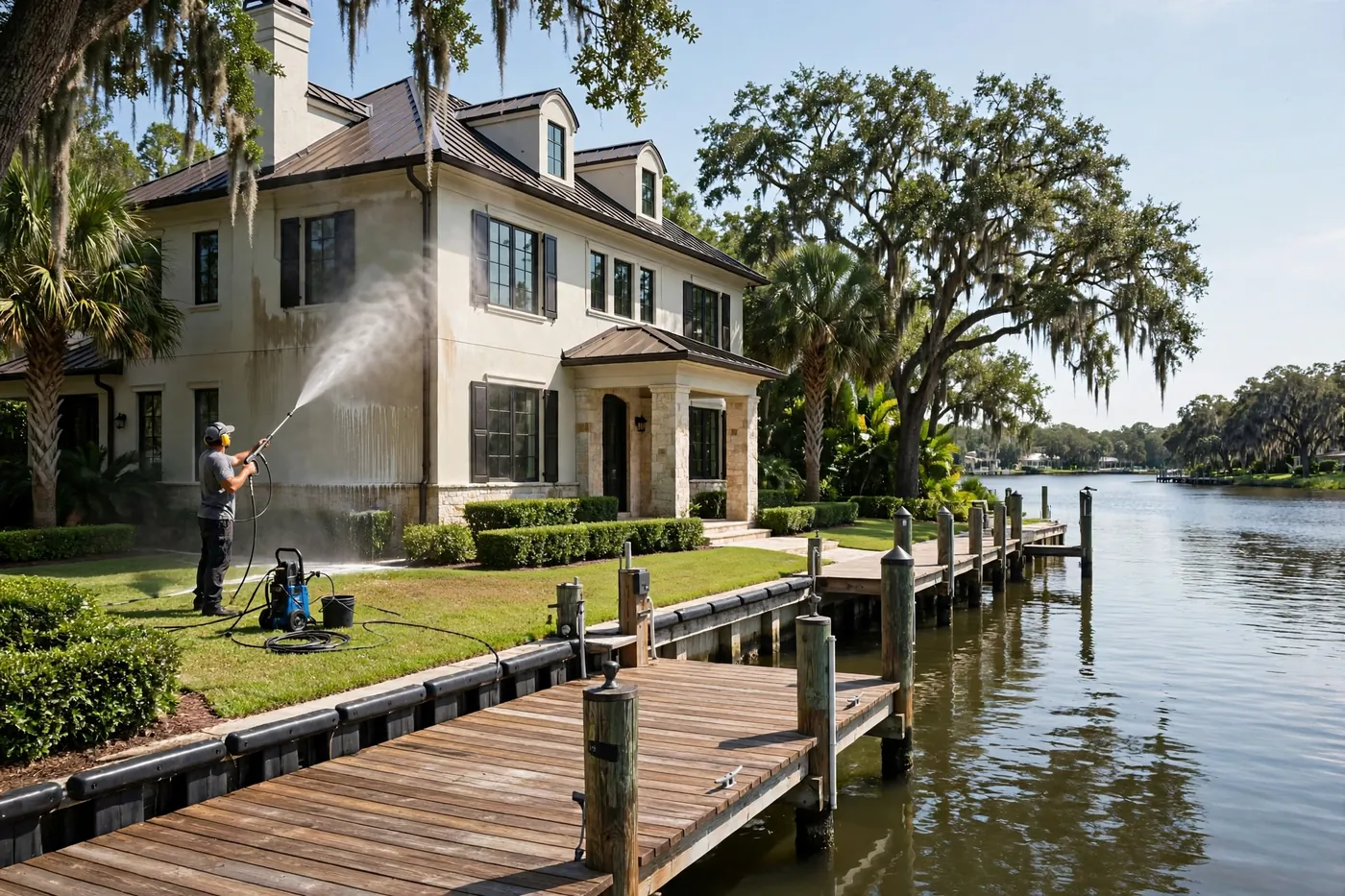
Ortega's riverfront estates face salt air, river humidity and dock grime. A complete guide to waterfront exterior cleaning.
Read More →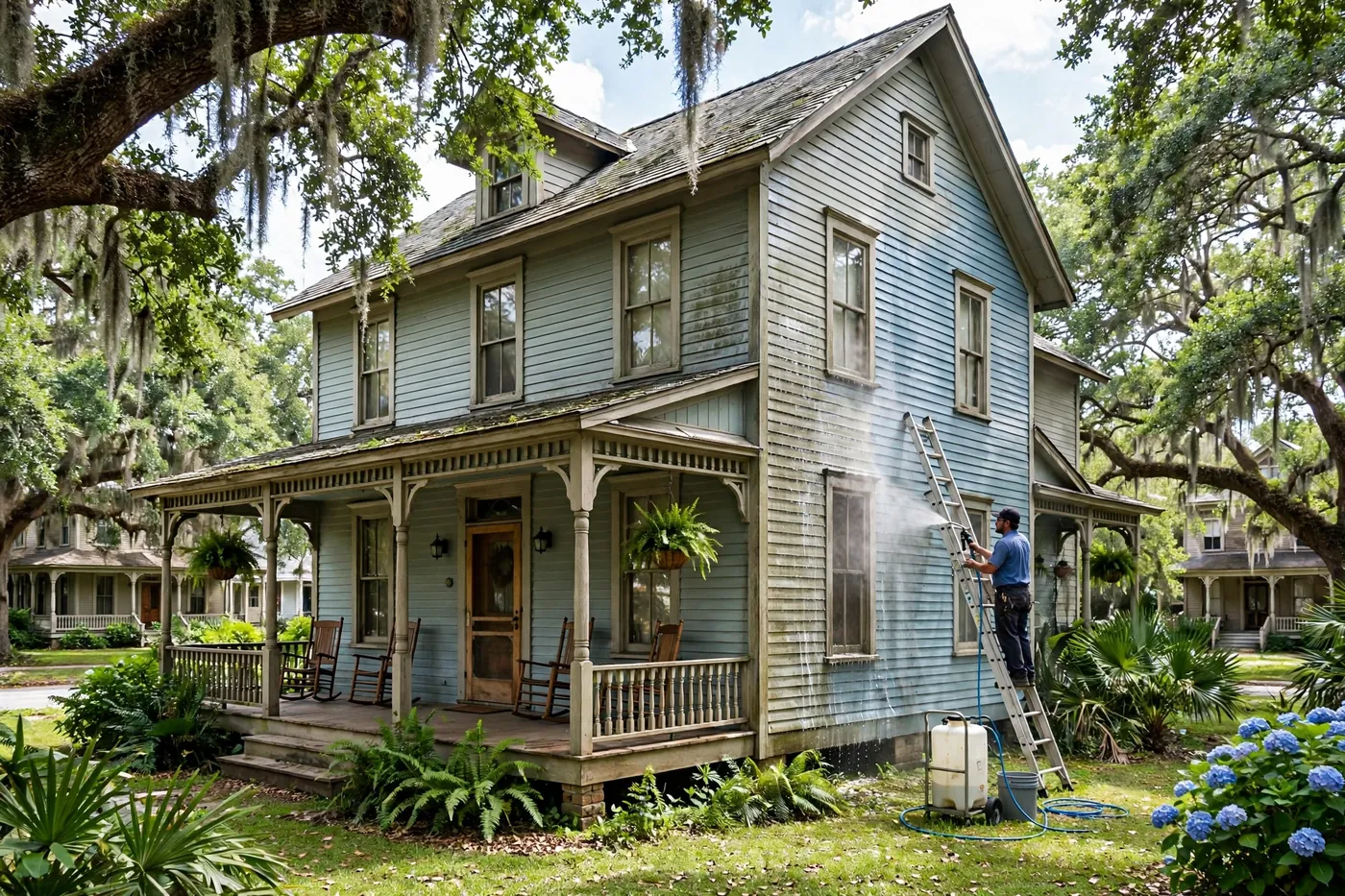
Springfield's century-old homes need soft washing, not brute force. How to restore historic siding safely.
Read More →Call now for a free estimate and same-day service in Jacksonville, FL. Open 24/7.