
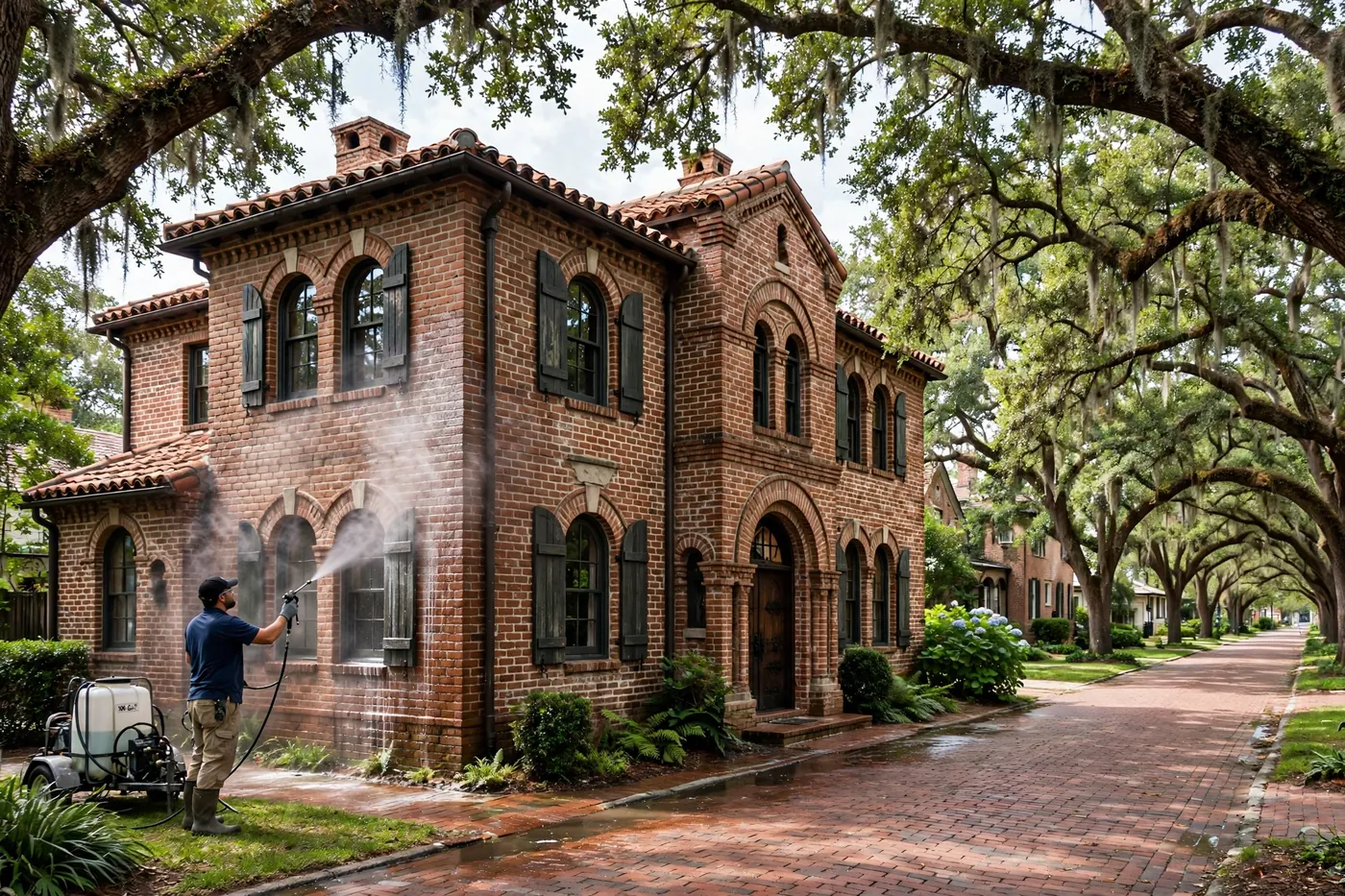
Pressure Washing in San Marco: Brick, Stucco & Historic Homes
San Marco's 1920s–40s Mediterranean Revival homes need a gentle touch. Here's how to clean brick, stucco and historic wood without damage.
Read More →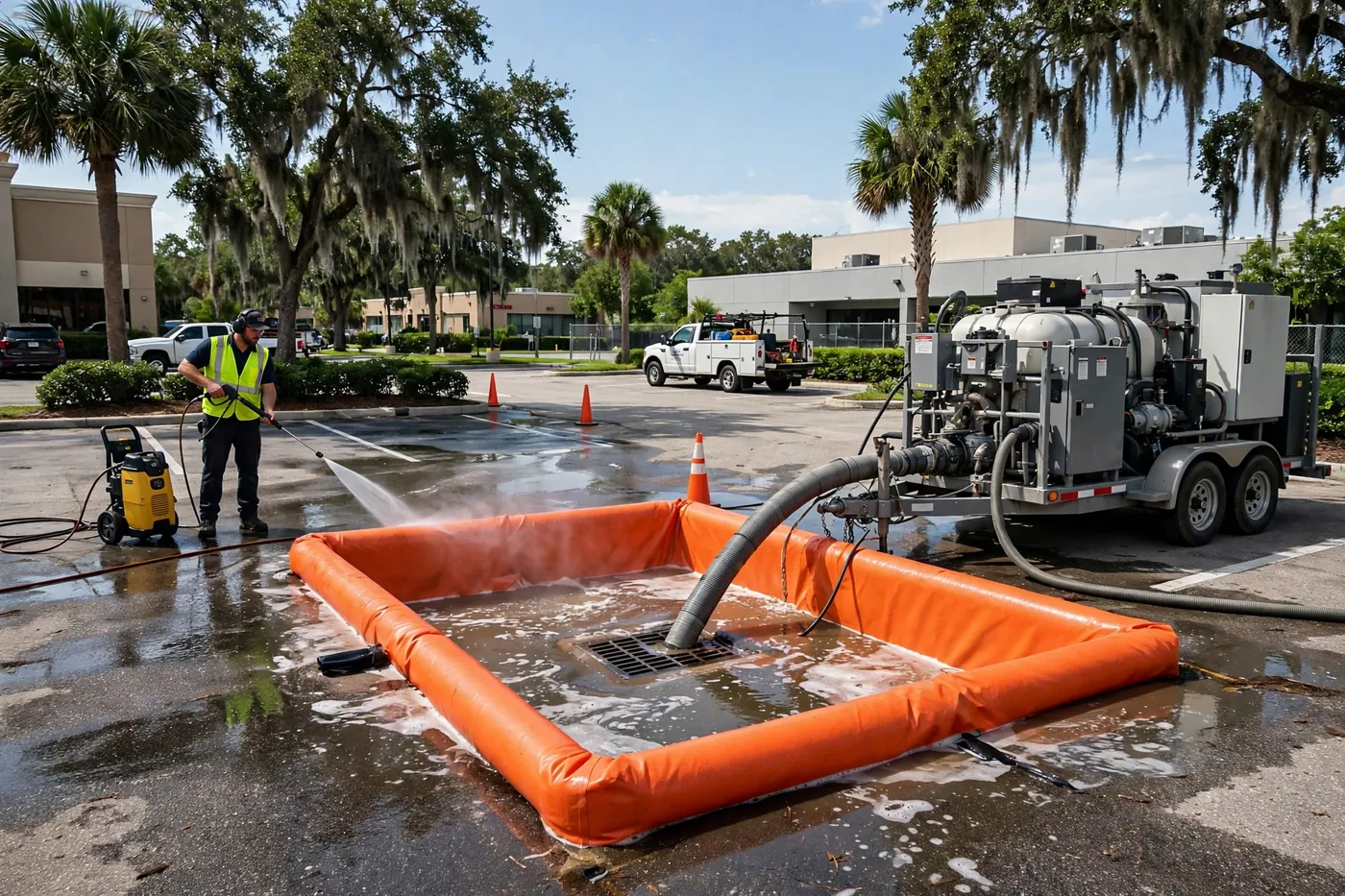
Wash water can't go down the storm drain. SJRWMD rules, EPA compliance and what pros do differently.
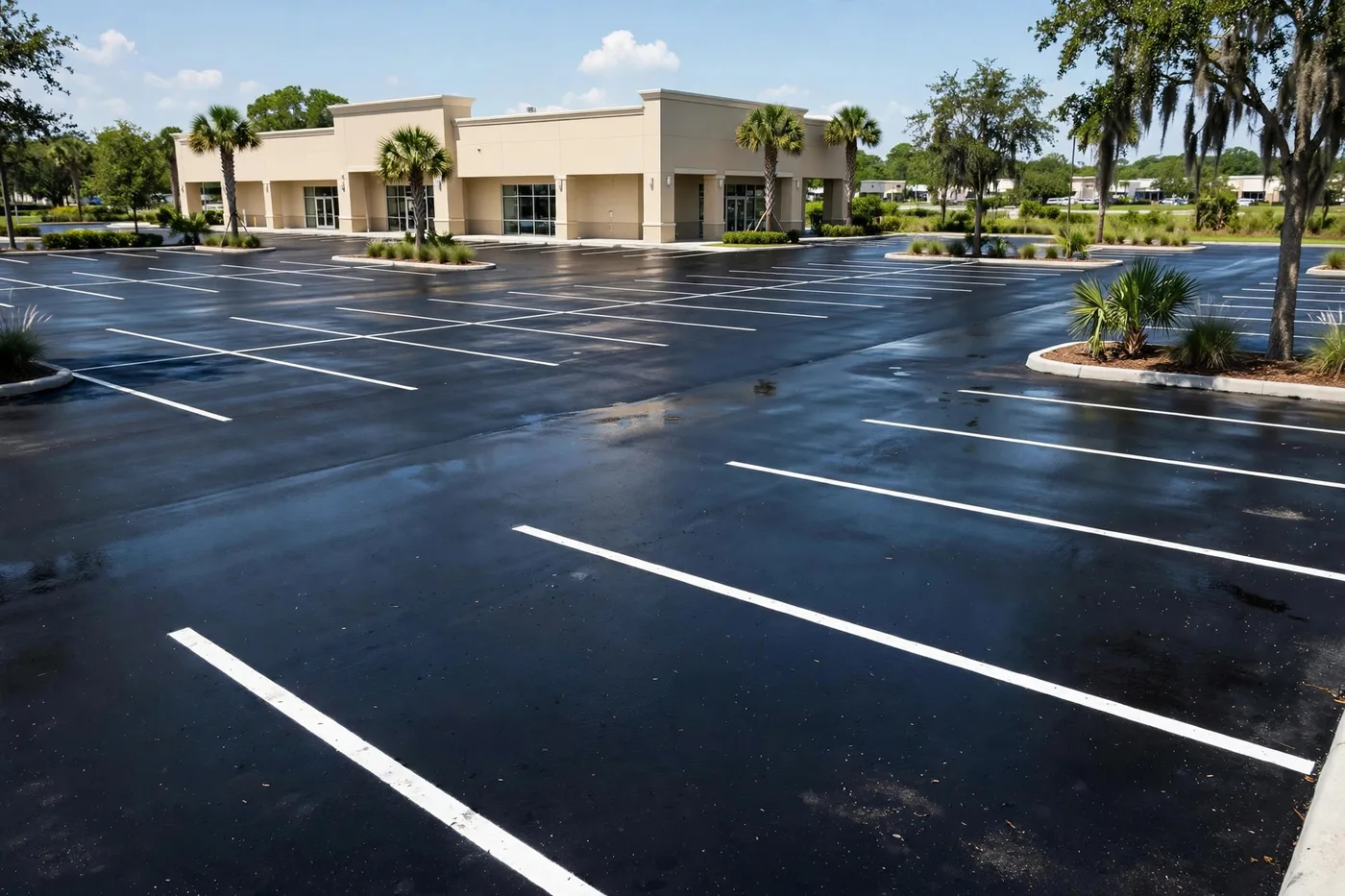
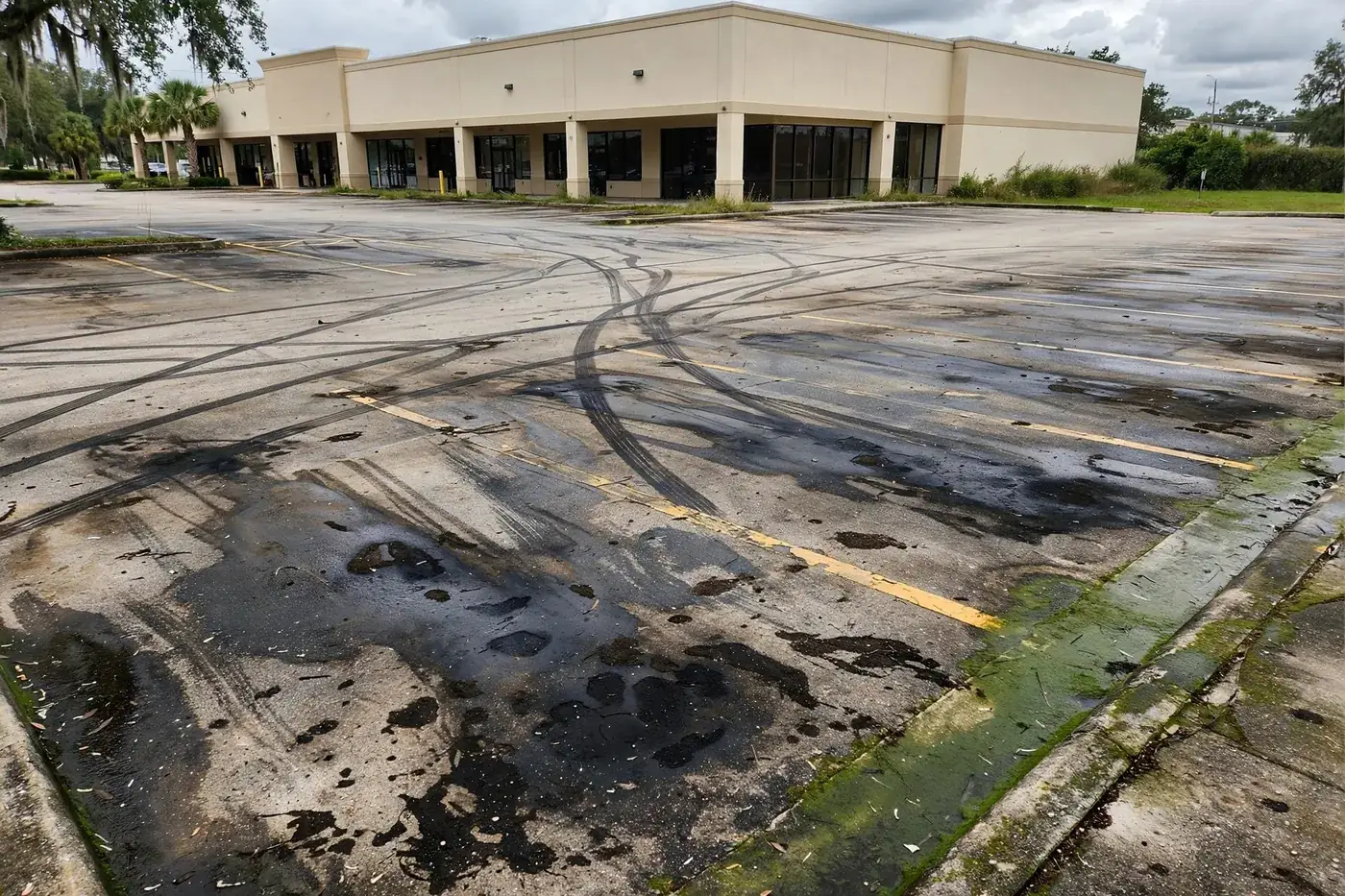 BEFOREAFTER
Drag to compare
BEFOREAFTER
Drag to compareStand at the curb in any Jacksonville neighborhood and look down: that grate in the gutter is a storm drain, and it leads — with no treatment, no filter, nothing — directly to the nearest creek, the St. Johns River, or the Intracoastal. Everything that washes off your driveway during a pressure washing job — the algae, the oil drips, the brake dust, the cleaning chemicals, the paint chips — goes straight into the waterway if nobody stops it.
This surprises most homeowners, because it's counterintuitive. The sanitary sewer (your toilets and sinks) goes to a treatment plant. The storm drain system is completely separate, and it's designed to move rainwater fast, not to clean anything. When a pressure washer blasts a grimy commercial parking lot and the runoff flows to the curb drain, that's functionally the same as dumping those pollutants directly into the river.
Jacksonville takes this seriously because the St. Johns is both an ecological treasure and the city's defining feature. The river has spent decades recovering from industrial-era pollution, and stormwater runoff is now the largest remaining source of water-quality problems. That's why the rules exist — and why the gap between a responsible contractor and a careless one matters so much.
The regulatory framework starts at the federal level with the Clean Water Act, administered by the EPA, which prohibits discharging pollutants into waters of the United States without a permit. In Florida, the Department of Environmental Protection (DEP) implements these requirements, and regionally the St. Johns River Water Management District (SJRWMD) oversees water resources across 18 counties including Duval. Jacksonville itself enforces local stormwater ordinances through the city's public works and environmental compliance programs.
For pressure washing specifically, the key principle is simple: wash water containing pollutants — detergents, oils, heavy metals, paint, or high concentrations of organic matter — cannot be discharged to the storm drain system or directly to surface waters. Residential house washing with plain water and biodegradable cleaners, where runoff soaks into the lawn, is generally considered low-risk and isn't the enforcement target. But commercial work, fleet washing, parking lots, and any job using harsh chemicals are squarely in the regulated zone.
Penalties are real. The EPA and Florida DEP can levy fines reaching tens of thousands of dollars per day per violation for knowing discharges, and Jacksonville's local code enforcement can cite contractors for illicit discharges to the storm system. These aren't theoretical — enforcement actions against pressure washing operators happen regularly in Florida. When you hire a contractor, you're not liable for their violations, but you are hiring someone whose business practices tell you a lot about their professionalism.
BMP stands for Best Management Practices — the practical playbook for keeping wash water out of the storm system. For pressure washing, the core BMPs are straightforward: first, keep wash water out of storm drains by blocking or diverting flow with berms, sandbags, or absorbent socks. Second, direct runoff onto vegetated areas where soil can filter it, when the water is clean enough for that. Third, minimize chemical use — use the mildest effective cleaner, at the lowest effective concentration.
Fourth, and most important for bigger jobs: capture and reclaim. Water reclamation means vacuuming up wash water as you work — with a surface cleaner connected to a vacuum recovery system, or with portable berms and a wet vacuum — and either discharging it to the sanitary sewer (with permission) or hauling it for proper disposal. For commercial parking lots, gas stations, and fleet yards, reclamation isn't optional best practice; it's the expected standard.
Fifth: protect the drains you can't avoid. Storm drain covers and filter inserts (those fabric catch-basin filters) are cheap insurance on any job near a curb inlet. They don't make discharge legal by themselves, but they're part of a responsible setup. When a contractor shows up with berms, drain covers, and a recovery plan, you're looking at a professional. When they show up with just a wand and a shrug, you're looking at a liability.
For typical residential house washing in Duval County — siding, driveway, pool deck, with biodegradable cleaners and runoff going onto the lawn — full vacuum reclamation is generally not required. The soil acts as a natural filter, the pollutant load is low, and regulators focus their attention elsewhere. That's the good news for homeowners: your house wash doesn't need a hazmat setup.
The line moves for commercial work. Parking lots with oil staining, restaurant dumpster pads with grease, gas stations, auto shops, fleet washing operations, and any job involving degreasers or harsh chemicals should use reclamation as standard practice. Many commercial property managers in Jacksonville now require it in their vendor specifications, and some municipal and government contracts mandate it outright. If you're a property manager, ask your vendor specifically about their reclamation equipment — 'we try to keep it out of the drains' is not a plan.
There's also a middle ground that responsible residential contractors observe: on waterfront properties, near wetlands, or where the driveway slopes directly to a curb inlet with no lawn buffer, we deploy containment even on residential jobs. The regulation might not strictly require it, but the river doesn't care about technicalities. This is part of what separates a $99 driveway special from a professional service.
Here's the honest truth about our industry: environmental compliance is one of the clearest dividing lines between professionals and fly-by-nights, precisely because doing it right costs money. Containment berms, vacuum recovery systems, drain covers, and biodegradable chemicals all add cost and time. The contractor who skips them can undercut the responsible one by 30 percent — and the customer rarely knows what they're not getting.
At Professor Pressure Washing, we've done this the right way since 2015 — not because an inspector was watching, but because we live here too. Our kids swim in the same river. We carry containment and recovery equipment on commercial jobs, use biodegradable chemistry as standard, and train every tech on where wash water is allowed to go. It's more work. It's also the only way we'd want it done on our own street.
If you're a homeowner, the takeaway is simple: ask your contractor what happens to the wash water. If the answer is a blank stare, keep looking. If you're a property manager dealing with compliance requirements, call (904) 938-5900 — we'll walk your site, document our BMP plan in writing, and give you the compliance documentation your files need. Doing it right isn't the cheapest option. It's the only option we'd put our name on.
It depends on what's in the water, but in most commercial scenarios, yes. The Clean Water Act prohibits discharging pollutants to waters of the United States without a permit, and storm drains flow untreated directly to creeks, the St. Johns River, and the Intracoastal. Wash water carrying detergents, oils, heavy metals, or paint residue qualifies as a pollutant discharge. Residential house washing with biodegradable cleaners where runoff soaks into the lawn is generally low-risk, but letting commercial wash water flow to a curb inlet can draw EPA, Florida DEP, or city enforcement with fines reaching tens of thousands per day.
BMP stands for Best Management Practices — the standard playbook for keeping wash water out of the storm system. Key BMPs include blocking or diverting flow from storm drains with berms or absorbent socks, directing clean-enough runoff onto vegetated areas for natural filtration, minimizing chemical strength, using drain covers or catch-basin filters near inlets, and capturing wash water with vacuum recovery on larger or dirtier jobs. Together they form the compliance baseline that regulators and commercial property managers expect.
For a typical residential house wash with biodegradable cleaners and runoff going onto the lawn — generally no; the soil filters the low pollutant load and regulators focus elsewhere. For commercial work — parking lots, restaurants, gas stations, fleets, or any job with degreasers or heavy oil — yes, vacuum reclamation is the expected standard, and many Jacksonville property managers and municipal contracts require it. On waterfront or wetland-adjacent residential properties, responsible contractors deploy containment even when not strictly required.
San Marco's 1920s–40s Mediterranean Revival homes need a gentle touch. Here's how to clean brick, stucco and historic wood without damage.
Read More →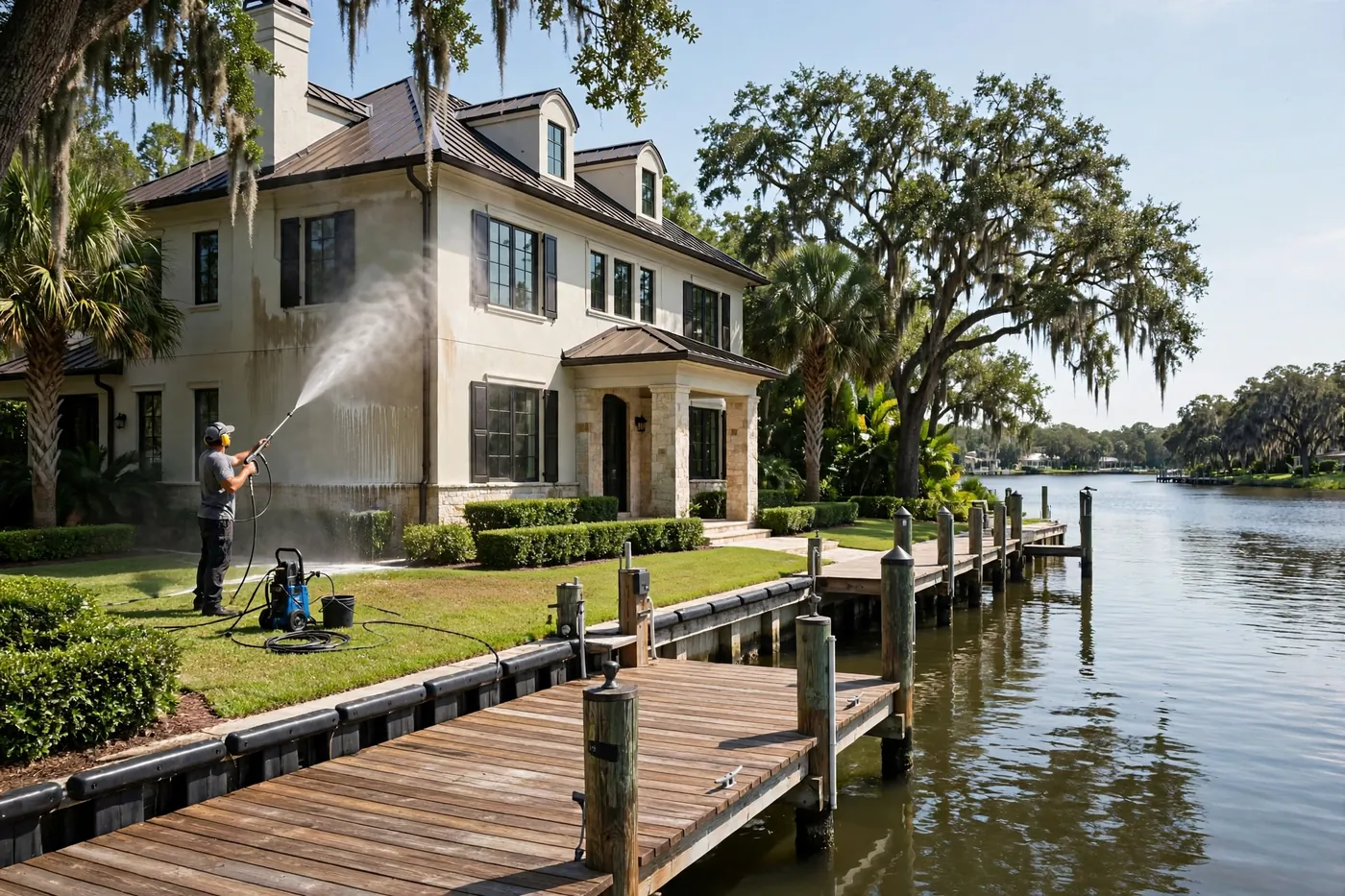
Ortega's riverfront estates face salt air, river humidity and dock grime. A complete guide to waterfront exterior cleaning.
Read More →
Springfield's century-old homes need soft washing, not brute force. How to restore historic siding safely.
Read More →Call now for a free estimate and same-day service in Jacksonville, FL. Open 24/7.