
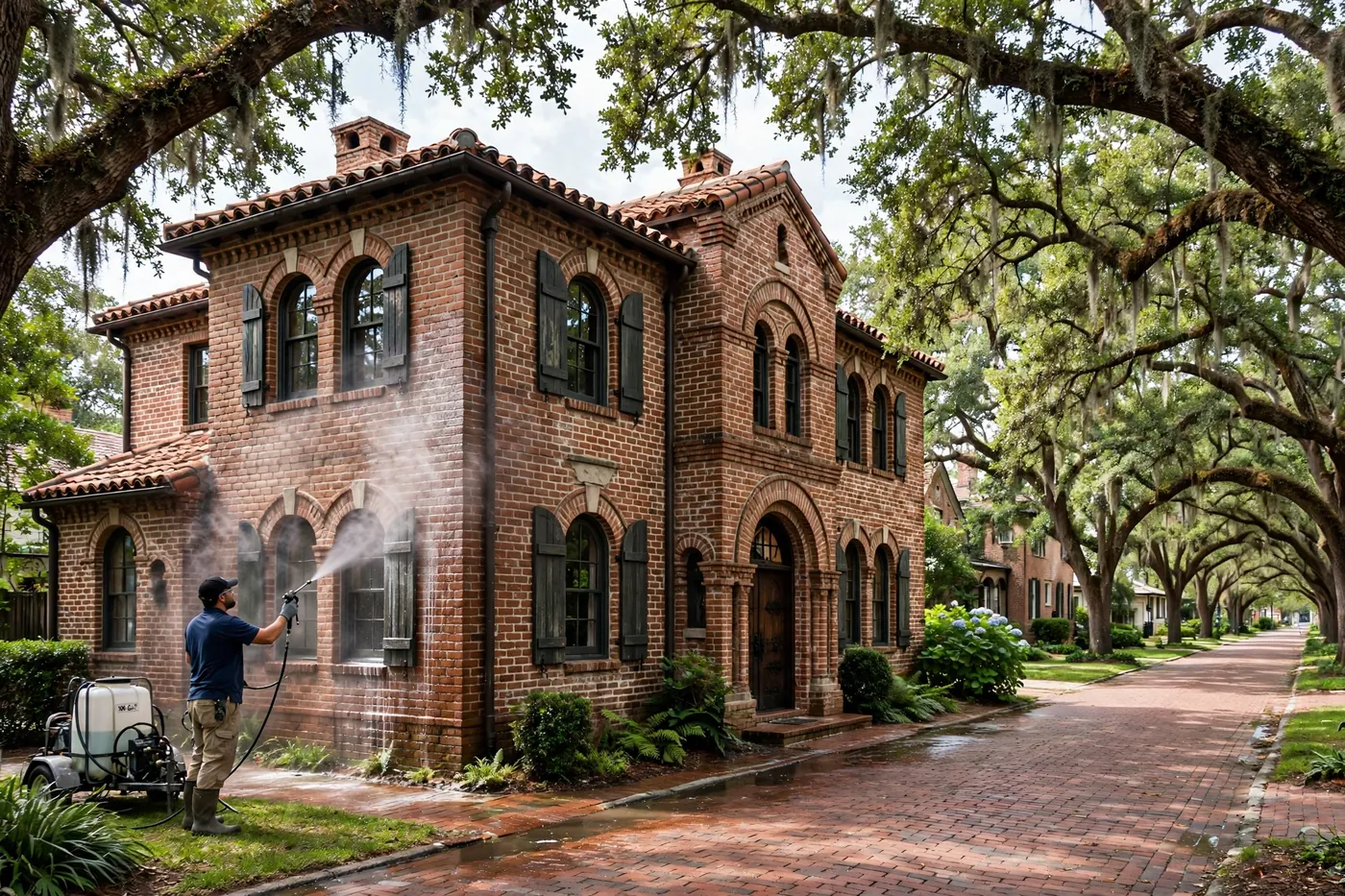
Pressure Washing in San Marco: Brick, Stucco & Historic Homes
San Marco's 1920s–40s Mediterranean Revival homes need a gentle touch. Here's how to clean brick, stucco and historic wood without damage.
Read More →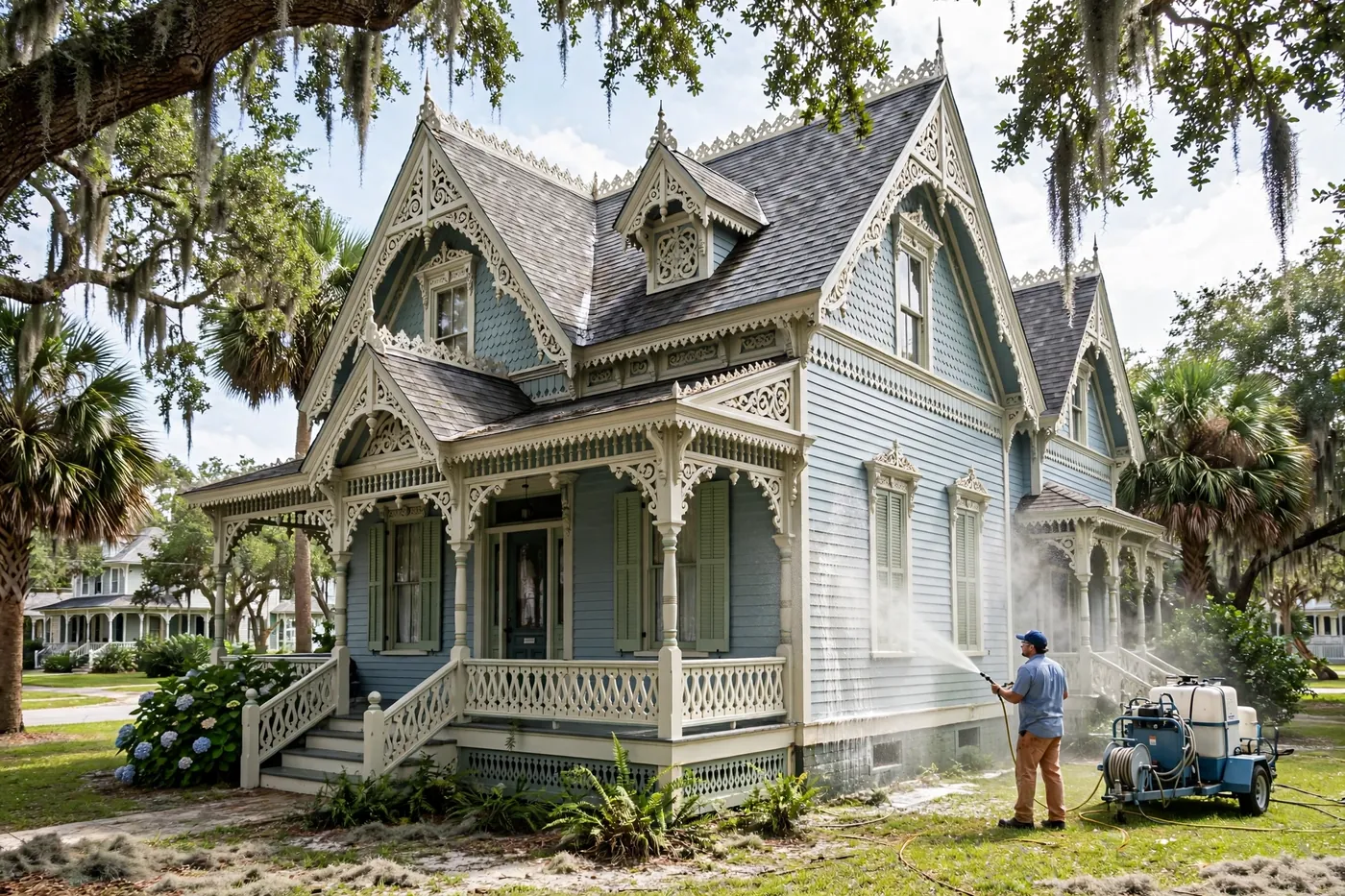
Amelia Island's Victorian homes and historic downtown face island-specific salt and sand challenges.
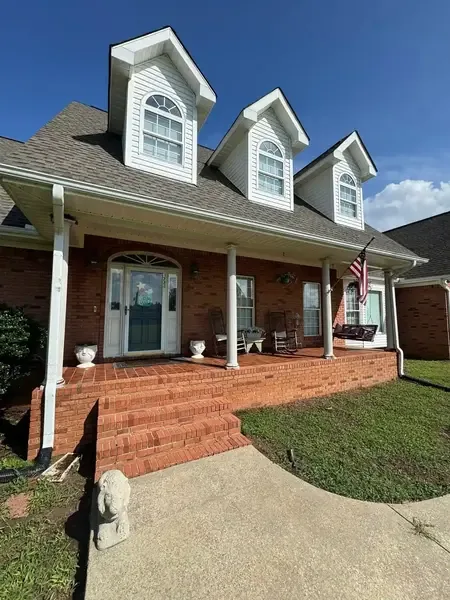
 BEFOREAFTER
Drag to compare
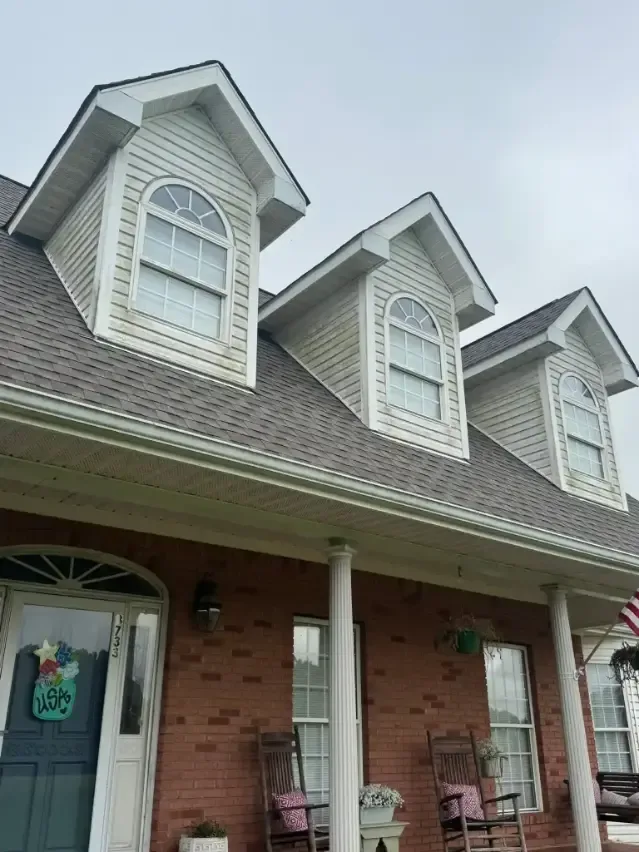
BEFOREAFTER
Drag to compareEvery coastal town gets salt air, but an island gets it from every direction. Fernandina Beach sits at the northern tip of Amelia Island with the Atlantic on one side and the Amelia River and marsh on the other, which means there is no upwind side — salt-laden air wraps the whole town. Anyone searching for pressure washing Fernandina Beach FL is dealing with a heavier, more constant salt load than even Jacksonville Beach sees.
What salt actually does to exteriors is insidious. It is hygroscopic, meaning it pulls moisture out of the air and holds it against the surface, so salted siding stays damp longer after every rain and every humid morning. That extended dampness is what feeds the mildew and algae that turn island homes green and gray. Salt also accelerates corrosion on anything metal — light fixtures, railings, hurricane shutters, door hardware — and it dulls paint faster than sun alone.
The practical upshot: island homes need washing more often than identical homes ten miles inland, and the wash needs to actually remove the salt film, not just the visible mildew. Detergents that break down salt deposits matter here in a way they do not in Mandarin. If your last wash looked good for three months and then the green came roaring back, salt was probably still in the pores.
The historic district's Victorians — the gingerbread trim, the ornate brackets, the century-old heart-pine siding on streets like Ash and Beech — are irreplaceable, and they demand the gentlest methods we own. This is exclusively soft-wash territory: detergents applied at low pressure, dwell time doing the work, and a rinse so gentle it would not disturb a spiderweb. Anything stronger risks carving into old wood, blowing apart fragile trim joints, and forcing water into wall cavities where it becomes tomorrow's rot.
Old paint is the other consideration. Many of these homes wear paint that is decades old and chalking, and washing will reveal exactly how much life is left in it. We always test first and we are blunt about what we find: if the paint is powdering off on your hand, washing will take the loose paint with it, and the right sequence is paint first, wash later — or wash gently now knowing a paint job is in your near future. We would rather have that honest conversation upfront than surprise you mid-job.
Wood rot gets the same honesty. Soft, punky trim boards and window sills need a carpenter, not a pressure washer, and we will point out what we see. Catching rot early is the difference between replacing a six-inch section of trim and rebuilding a whole corner.
Centre Street is the economic heart of the island, and its historic brick and stucco storefronts take a beating from the specific cocktail of tourism: foot traffic grinding sand into sidewalks, cooking grease near the restaurants, and the general film that thousands of visitors a week leave behind. For a shop or restaurant here, the storefront is the advertisement — and the competition two doors down just washed theirs.
We do downtown commercial work in the early morning hours, typically starting before sunrise and finished before the breakfast crowds. Sidewalks get the surface cleaner for an even finish without stripes, facades get soft washed to protect old brick and stucco, and we pay special attention to entryways and outdoor dining areas where grease and gum concentrate. The shrimp docks and working waterfront nearby add their own character — and their own grime — to the south end of downtown, and we factor that in.
For property managers with multiple island buildings, we can put the whole portfolio on a rotating schedule so something is always freshly done. Consistency beats intensity for commercial curb appeal.
Beyond salt, the island's daily grime has its own local flavor. Windblown sand works into every textured surface — stucco, tabby, paver joints — and acts like sandpaper on paint every time the wind blows. Near the waterfront and the shrimp docks, there is an additional organic film from the working harbor that settles on everything downwind. And the live oaks that shade so many island streets contribute their usual tannin and shade-algae.
Sand is worth taking seriously because it is abrasive, not just dirty. Letting it accumulate on painted surfaces measurably shortens paint life as wind grinds it against the finish. Regular washing that actually removes the embedded sand — not just the surface dust — protects the paint underneath. This is one of those cases where the wash is genuinely preventive maintenance, not cosmetic.
Pool decks and outdoor living spaces take the same beating, with the added insult of sunscreen and salt from swimmers. If your island pool deck is slippery, that slickness is biofilm, and it is a fall risk. It washes off completely and the deck stays safer for months.
For a Fernandina Beach home, plan on every twelve months as the baseline — the island's salt load simply does not allow the eighteen-to-twenty-four-month intervals that work inland. Homes right on the beach or the river, and homes under heavy oak canopy, trend toward every nine to twelve months. Commercial properties on Centre Street do best on a six-to-twelve-month rotation depending on foot traffic.
Late spring is the island's sweet spot: after the oak pollen apocalypse, before hurricane season, and ahead of the summer visitor rush when you want everything looking its best. Professor Pressure Washing is family-owned and has served Northeast Florida since 2015 — the island is familiar ground for us. Call (904) 938-5900 and we will give you an honest assessment and a straightforward quote, no pressure and no upsell.
Amelia Island gets salt from every direction — Atlantic on one side, river and marsh on the other — with no upwind side. Salt holds moisture against surfaces longer, feeding faster mildew growth and corroding metal fixtures, so island homes need washing more often and need the salt film actually removed, not just the visible growth.
Yes, we do Centre Street commercial work in the early morning before businesses open. Sidewalks, facades, entryways, and outdoor dining areas are the usual scope, with methods matched to historic brick and stucco. Multi-property portfolios can go on a rotating schedule.
Twelve months is the baseline for most island homes; beachfront, riverfront, or heavily shaded properties trend toward nine to twelve. Late spring — after pollen season, before hurricane season — is the ideal window.
San Marco's 1920s–40s Mediterranean Revival homes need a gentle touch. Here's how to clean brick, stucco and historic wood without damage.
Read More →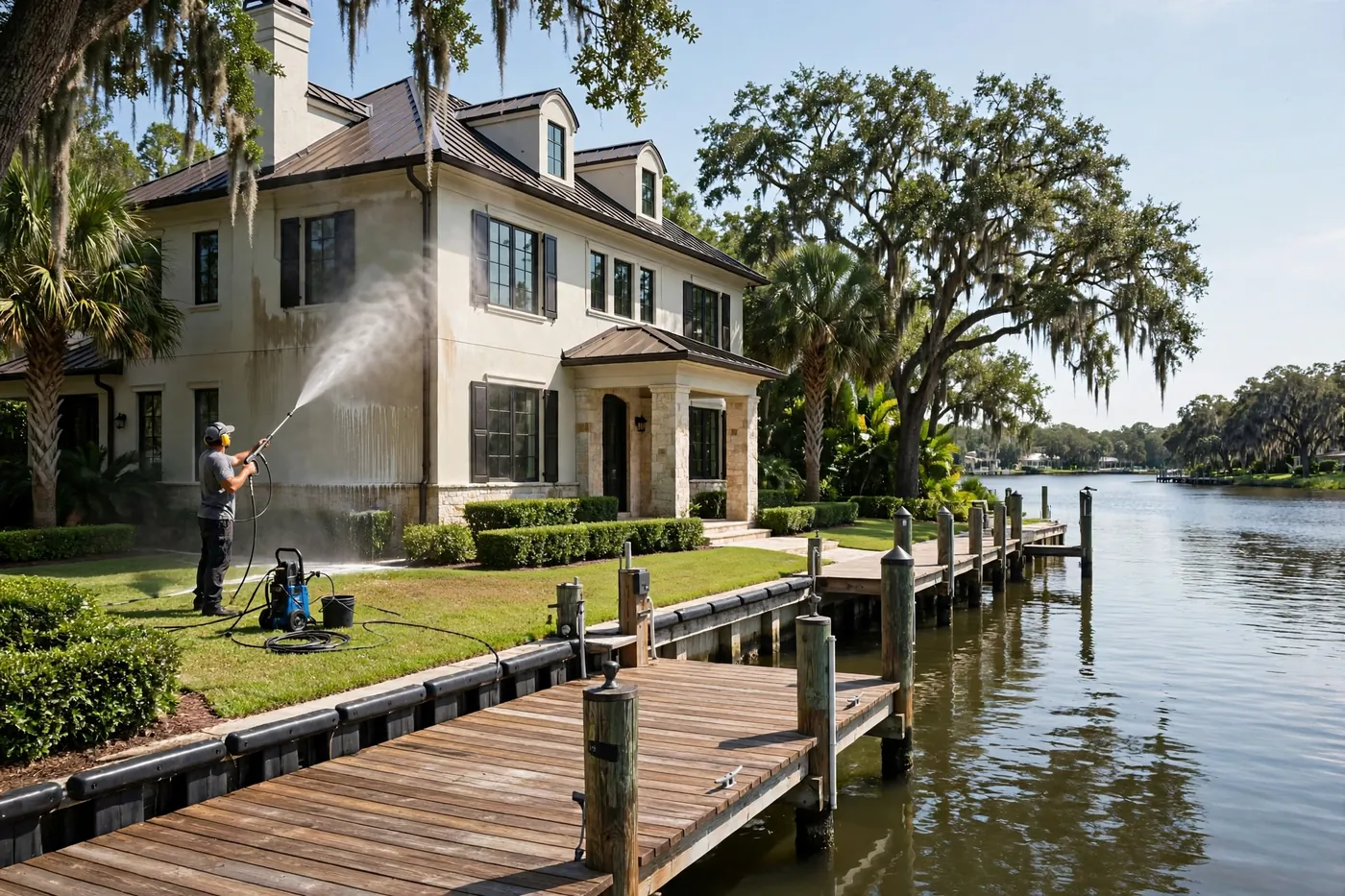
Ortega's riverfront estates face salt air, river humidity and dock grime. A complete guide to waterfront exterior cleaning.
Read More →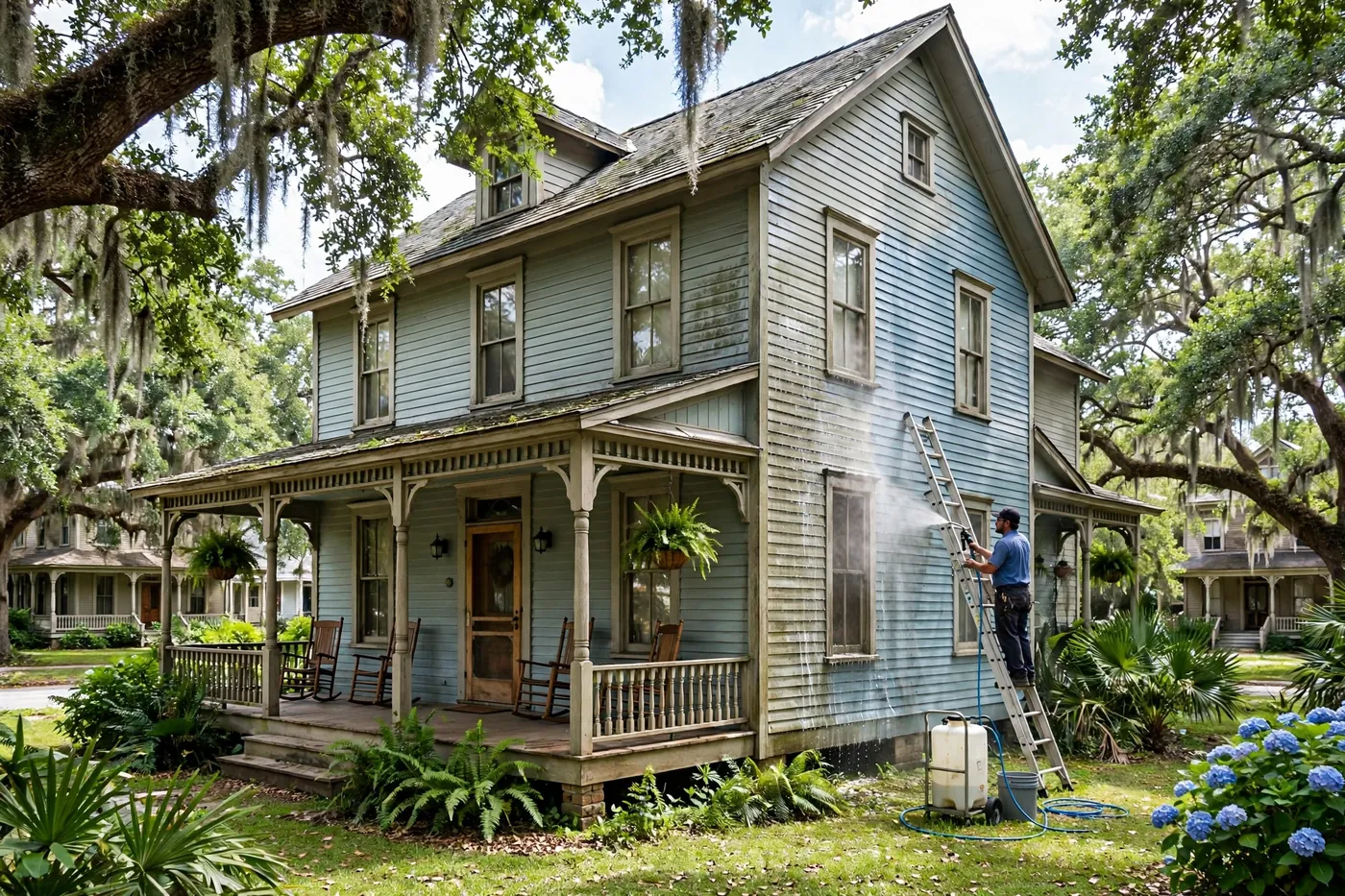
Springfield's century-old homes need soft washing, not brute force. How to restore historic siding safely.
Read More →Call now for a free estimate and same-day service in Jacksonville, FL. Open 24/7.