
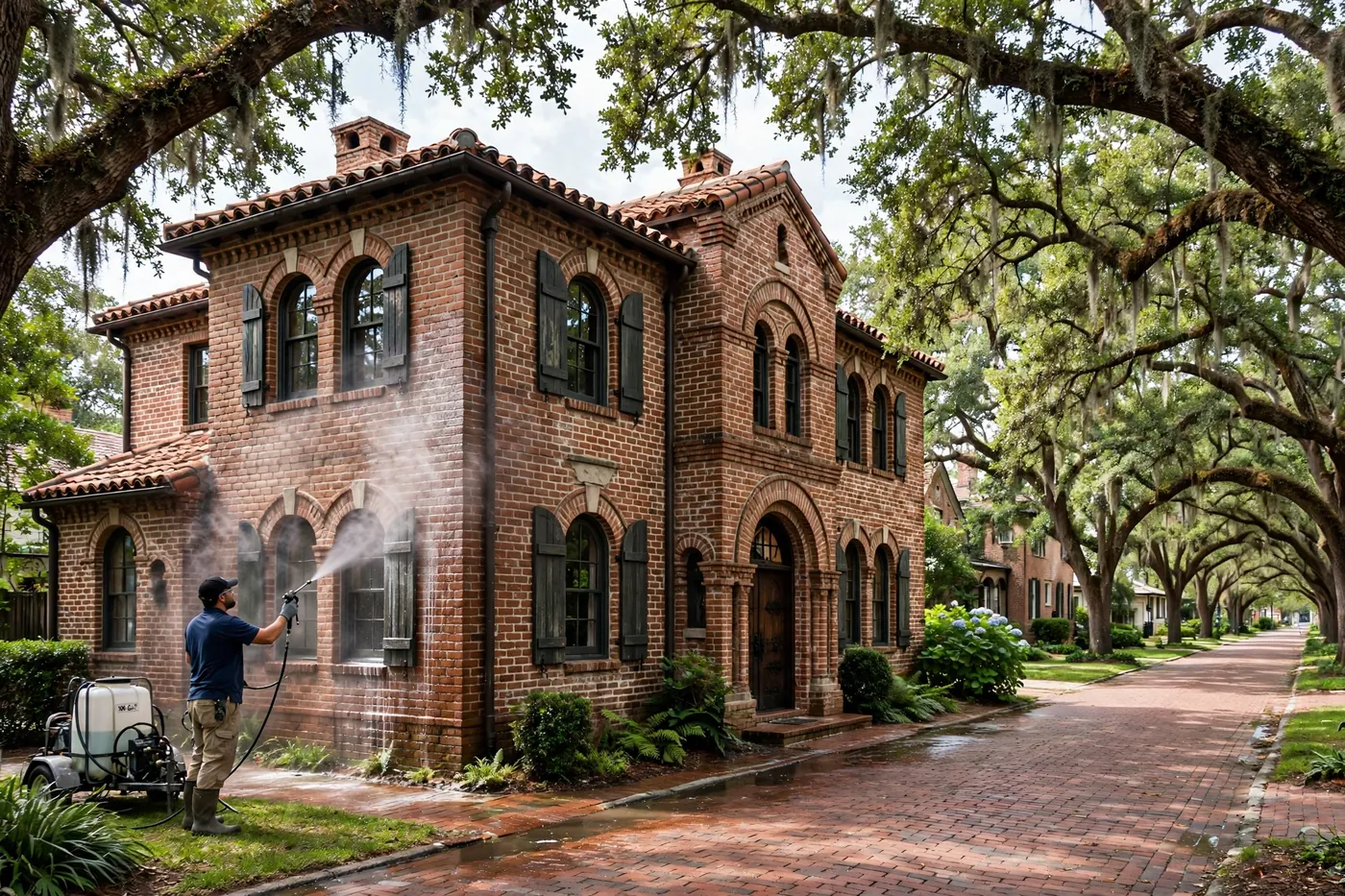
Pressure Washing in San Marco: Brick, Stucco & Historic Homes
San Marco's 1920s–40s Mediterranean Revival homes need a gentle touch. Here's how to clean brick, stucco and historic wood without damage.
Read More →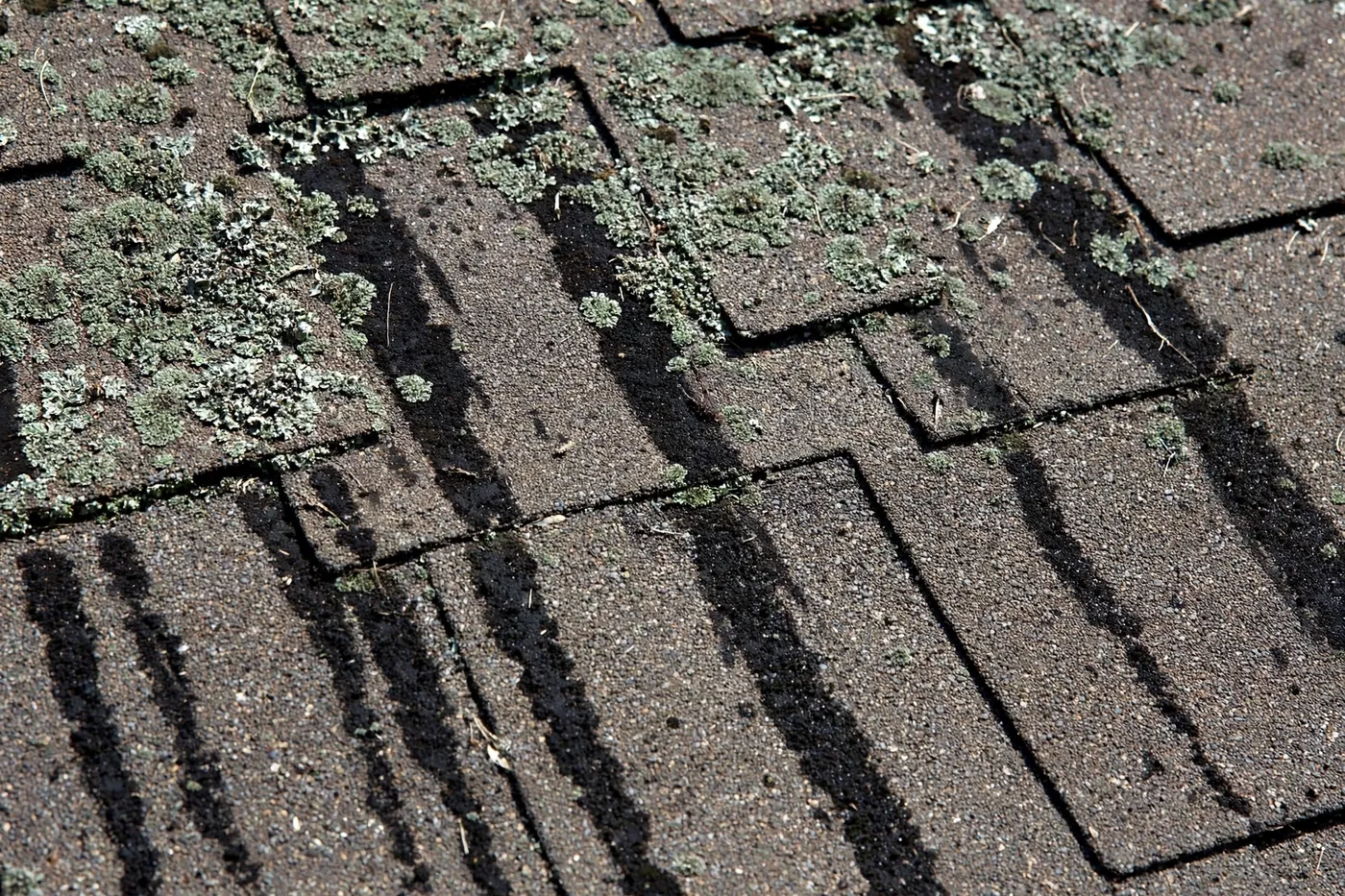
Everyone talks about black algae. Lichen is the tougher, crustier cousin — and it needs different treatment.
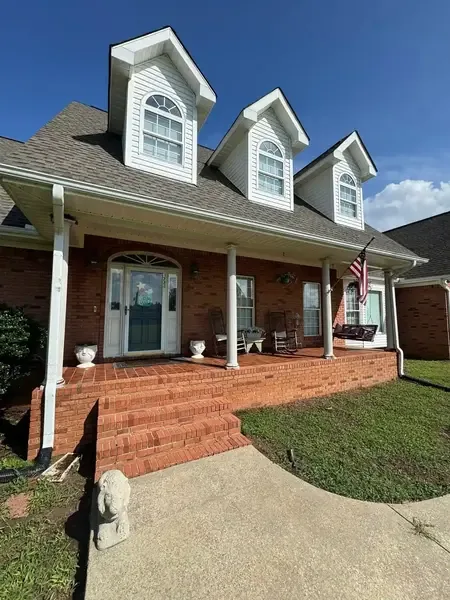
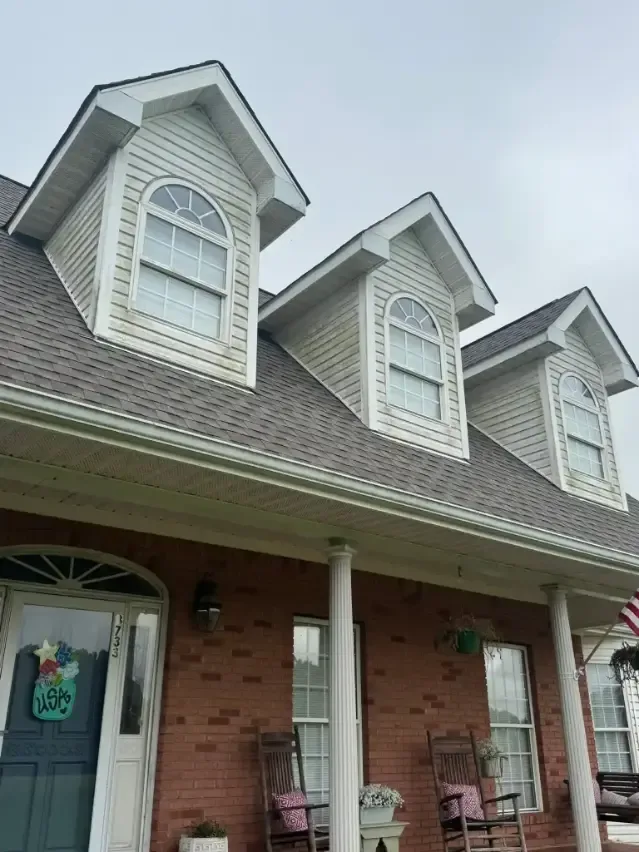 BEFOREAFTER
Drag to compare
BEFOREAFTER
Drag to compareLichen is not a single organism but a partnership — a fungus and an alga living together in a symbiotic crust that can survive just about anything. On Jacksonville roofs, driveways, and headstones you will see it as roundish spots in crusty green-gray, sage, or pale blue-green, often with a darker rim. Run your finger over it and it feels dry and rough, like sandpaper. Try to scrape it and it clings — lichen anchors itself to the surface with tiny root-like structures called rhizines.
What makes lichen remarkable is its toughness. It can go dormant through drought and heat, then reactivate with the next rain. It does not need soil. It grows on shingles, concrete, pavers, wood, and even metal given enough time and moisture. In Jacksonville's climate — humid, warm, with daily summer rains — lichen thrives on any surface that stays undisturbed, which is why you see it most on north-facing roof slopes and shaded concrete that nobody walks on.
The key thing to understand: lichen is fundamentally different from the black algae streaks everyone knows, and treating it like algae is why so many DIY attempts fail. Algae sits on the surface; lichen bonds to it. That difference drives everything about removal.
Black algae — technically the cyanobacterium Gloeocapsa magma — is the familiar villain: those black streaks running down roof slopes, the dark discoloration on siding, the slippery black film on shaded concrete. It feeds on the limestone filler in asphalt shingles and on organic dust everywhere else, and it spreads via airborne spores, which is why whole neighborhoods seem to get it at once. If your street in Mandarin or San Marco has streaky roofs, the spores are already visiting yours.
Unlike lichen, black algae is a surface dweller. It does not anchor into the material; it forms a dark biofilm on top of it. That is why it responds so well to soft-wash treatment — detergents kill it, and it rinses away cleanly, often revealing shingles that look years younger. The streaks are ugly and they do shorten shingle life by holding heat and moisture, but they are straightforward to eliminate.
Algae also tells you something useful about your property: where it grows heaviest is where moisture lingers longest. Those patterns — under overhanging branches, on the north side, below gutter overflows — are a moisture map of your home. Fix the moisture where you can, treat the algae everywhere, and you break the cycle.
Here is the field guide. Color and pattern: black algae forms streaks and broad patches, darkest black to dark brown, usually running vertically with water flow. Lichen forms discrete round or irregular spots — crusty, raised, in greens, grays, and sage tones — scattered like someone flicked paint. Texture: algae feels slimy or smooth when wet; lichen feels dry, rough, and crusty even in the rain.
The scrape test settles arguments: drag a fingernail across it. Algae smears or wipes away. Lichen resists — you will feel it anchored, and aggressive scraping takes surface material with it, which on a shingle means granules. Location also hints: algae dominates roofs and siding; lichen loves concrete, pavers, and older roofs, anywhere it can sit undisturbed for years.
Why does the distinction matter for someone searching lichen removal Jacksonville FL? Because the treatments differ significantly. Algae dies fast with standard soft-wash detergents. Lichen needs longer dwell times, sometimes repeat applications, and patience — it dies from the anchors outward, and dead lichen may take weeks of rain to fully release and wash away. A contractor who quotes you an algae price for a lichen problem is setting you both up for disappointment.
For black algae, the standard soft wash works beautifully: apply detergent, dwell fifteen to twenty minutes, rinse. The algae is dead on contact essentially, and the rinse reveals clean shingles. One visit, dramatic result, done. We do hundreds of these a year across Jacksonville and the method is dialed in.
Lichen is a longer conversation. The detergents still kill it — the biology dies — but the crust does not immediately let go. Those rhizine anchors hold the dead lichen in place, and it releases gradually over subsequent rains, typically over several weeks. We tell lichen customers upfront: the treatment works, but the full cosmetic result arrives on rain's schedule, not ours. Sometimes a second application six to eight weeks later finishes what the first started.
What we will not do is blast lichen off with high pressure. On shingles that strips granules and voids warranties; on concrete it etches permanent scars around every spot. Anyone who offers to pressure-wash lichen off your roof is offering to damage your roof. The chemistry is slower but it is the only safe way, and we would rather explain the timeline honestly than wreck your surfaces quickly.
You cannot change Jacksonville's humidity, but you can make surfaces less welcoming. Trim branches back from the roof — shade plus leaf litter is the lichen starter kit. Keep gutters clean so water does not sheet down siding in constant damp stripes. And consider zinc or copper strips near the roof ridge: rainwater carries trace metal ions down the slope, and both metals inhibit algae and lichen growth. They are not magic, but they measurably slow recolonization.
For concrete and pavers, the single best prevention is sealing after cleaning. Sealer fills the surface pores where lichen anchors, making it dramatically harder for new colonies to establish. On roofs, the prevention is mostly about that first treatment happening before lichen gets a multi-year head start — a roof soft-washed every few years never develops the entrenched colonies that take months to release.
If you are looking at your roof or driveway right now trying to decide which one you have, call Professor Pressure Washing at (904) 938-5900. We will identify it, explain the right treatment and the honest timeline, and give you a straight price. Family-owned in Jacksonville since 2015 — we have seen every variant of green and gray this climate produces.
Lichen is a symbiotic partnership of fungus and alga that forms dry, crusty, anchored spots in green-gray tones. Black algae (Gloeocapsa magma) is a surface biofilm that forms dark streaks. The critical difference: algae sits on the surface and rinses away easily, while lichen anchors into the material with root-like rhizines.
High-pressure washing should never be used on lichen — it damages shingles and scars concrete while the lichen often survives. Soft-wash detergents kill lichen safely, but the dead crust releases gradually over weeks of rain rather than rinsing off immediately. Patience plus chemistry beats pressure every time.
Lichen itself is mostly cosmetic, but it holds moisture against shingles and its anchors can dislodge granules over time, shortening roof life. The bigger risk is well-meaning removal: high-pressure cleaning damages roofs far worse than lichen ever could. Professional soft-wash treatment is the safe answer.
San Marco's 1920s–40s Mediterranean Revival homes need a gentle touch. Here's how to clean brick, stucco and historic wood without damage.
Read More →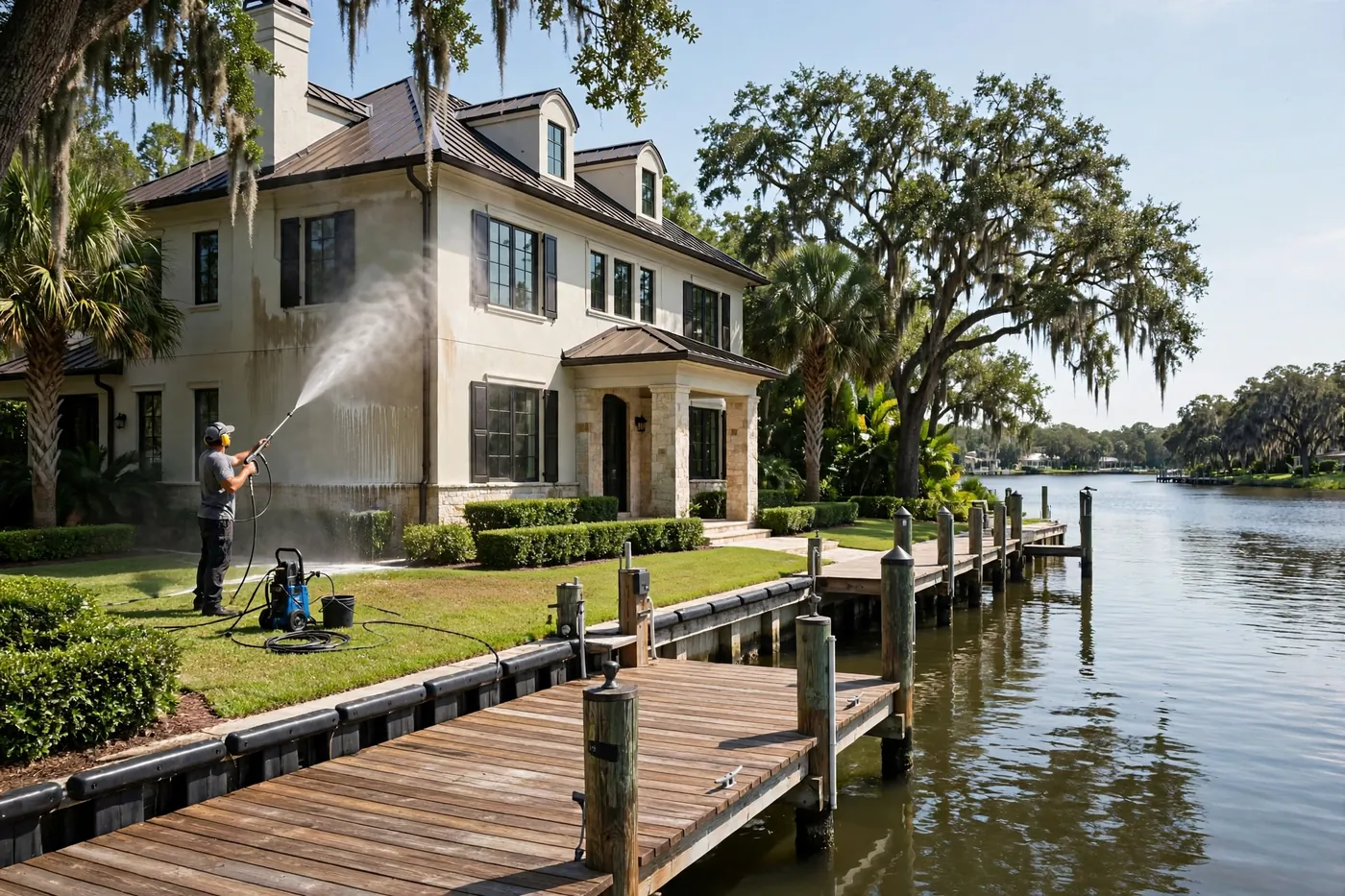
Ortega's riverfront estates face salt air, river humidity and dock grime. A complete guide to waterfront exterior cleaning.
Read More →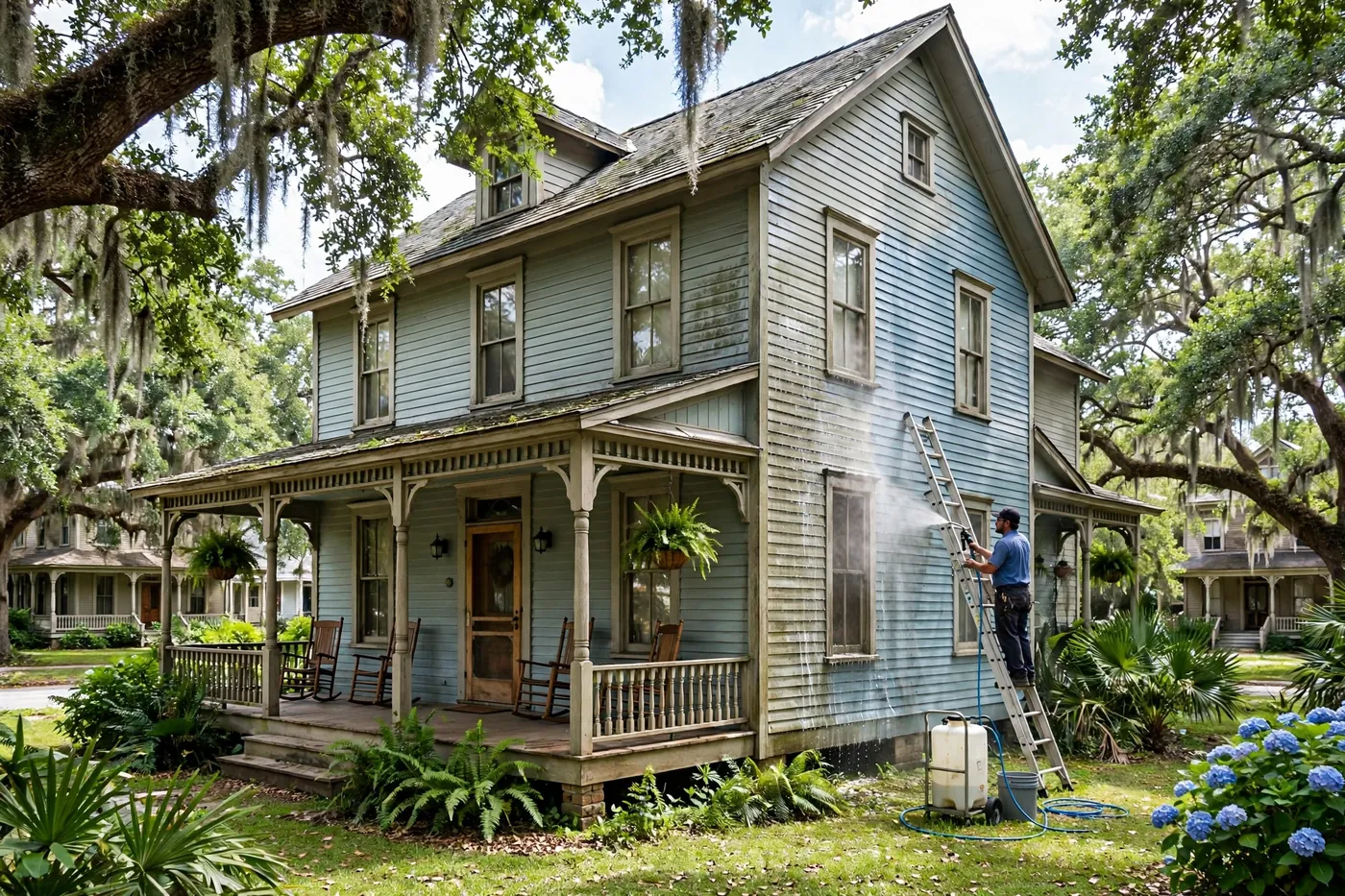
Springfield's century-old homes need soft washing, not brute force. How to restore historic siding safely.
Read More →Call now for a free estimate and same-day service in Jacksonville, FL. Open 24/7.