
Pressure Washing in San Marco: Brick, Stucco & Historic Homes
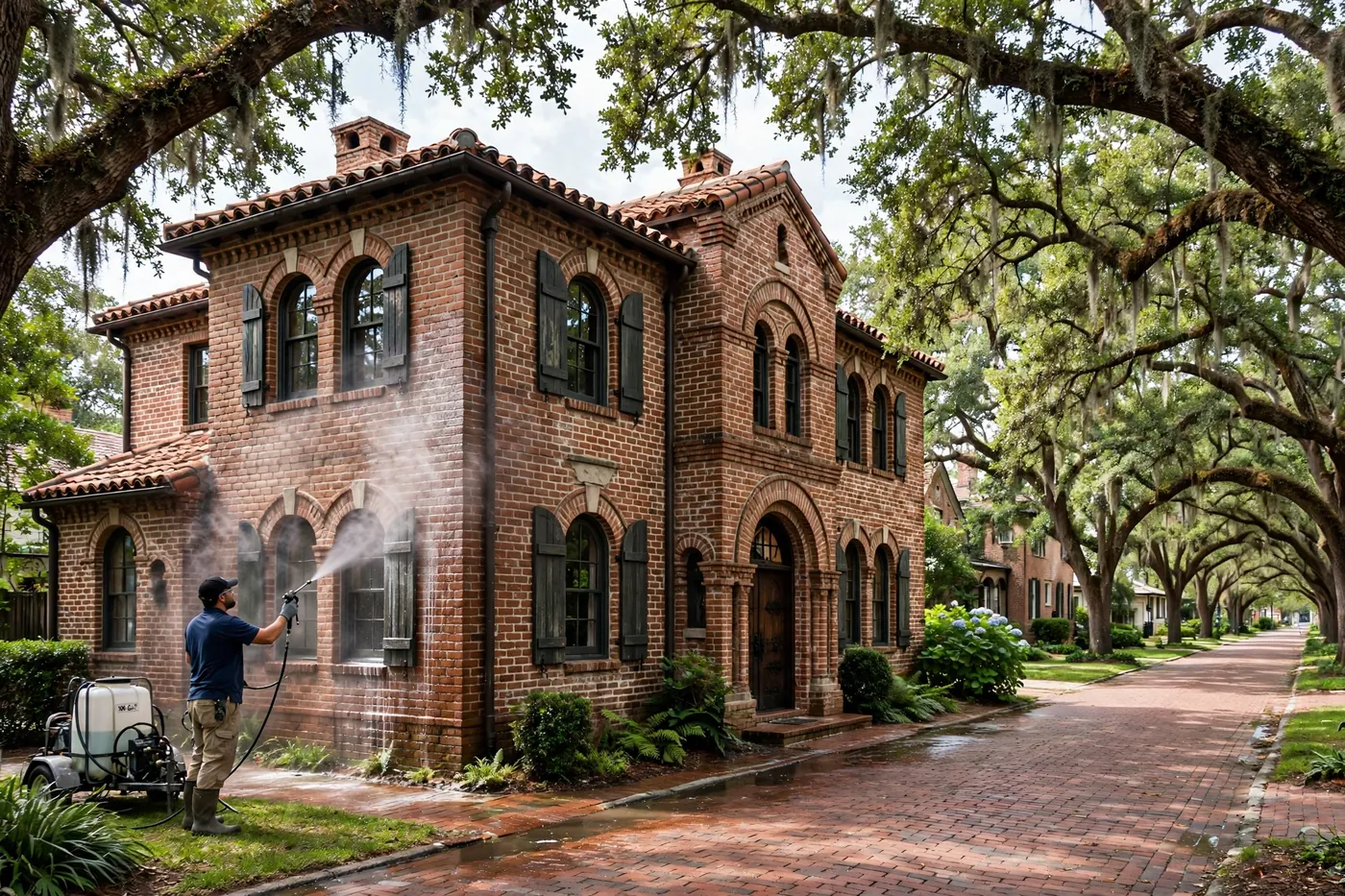
San Marco's 1920s–40s Mediterranean Revival homes need a gentle touch. Here's how to clean brick, stucco and historic wood without damage.
Read More →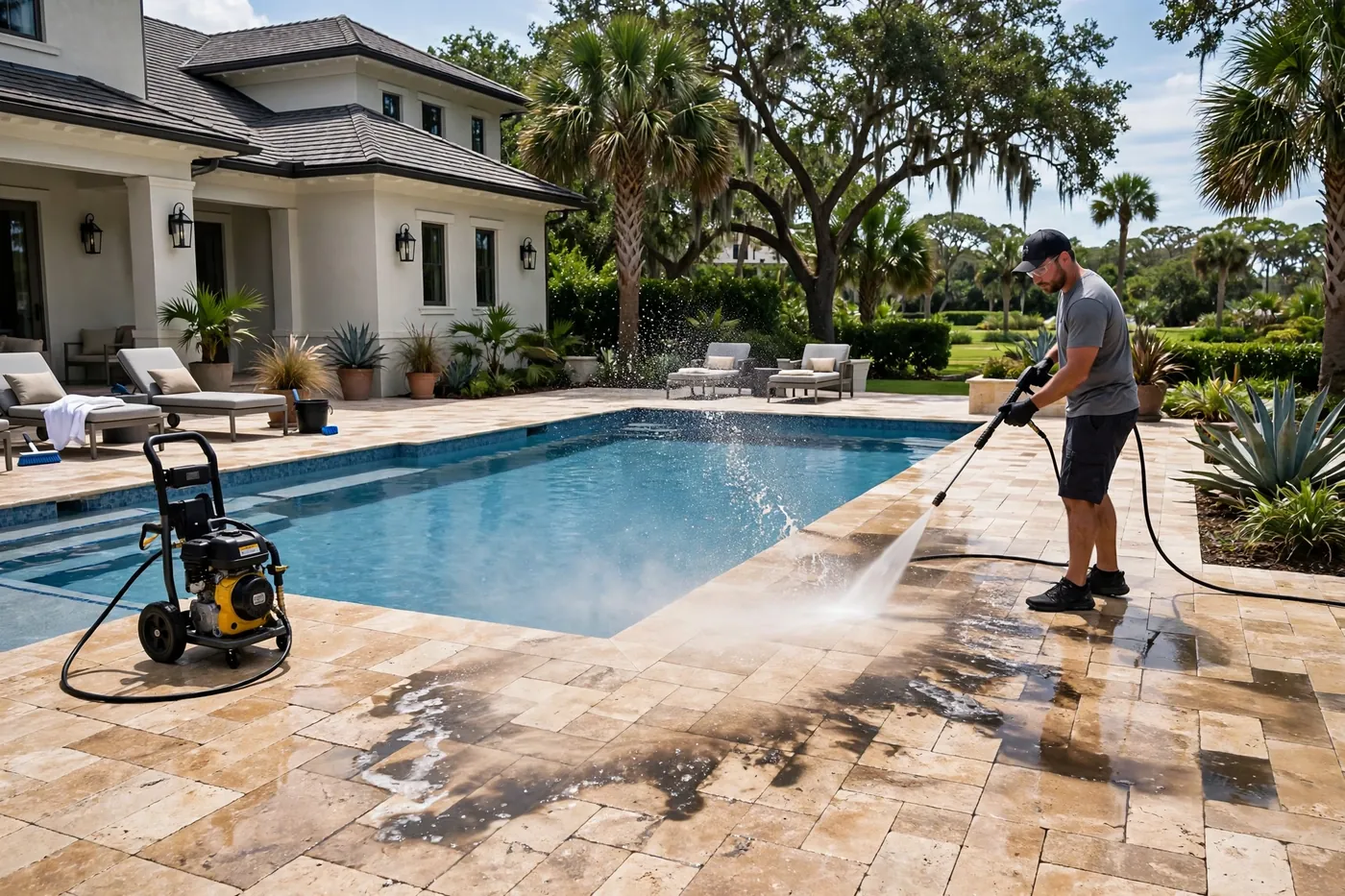
Travertine is luxury stone that needs expert care — cleaning, sealing and repair for high-end pool decks.
 BEFOREAFTER
Drag to compare
BEFOREAFTER
Drag to compareTravertine is the stone of Roman emperors — literally; the Colosseum is built of it — and it remains the premier choice for luxury pool decks across Nocatee, Ponte Vedra, and Jacksonville's finer neighborhoods. It stays cooler underfoot than concrete or pavers, its natural pitting provides grip when wet, and nothing else looks quite like it. But travertine is also a porous, calcium-based natural stone, which makes it one of the most damage-prone surfaces a pressure washer can touch.
That porosity is the whole story. Travertine drinks in everything: pool chemicals, sunscreen, leaf tannin from overhanging oaks, rust from furniture, and the calcium in our hard Florida water. Its surface pits — the characteristic texture — collect grime that no mop or garden hose will ever reach. And because it is calcium carbonate, the wrong chemicals etch it permanently while the wrong pressure carves it. Anyone searching for travertine pool deck cleaning Jacksonville is right to be picky about who touches this stone.
The stakes are financial as well as aesthetic. A travertine deck represents a five-figure investment, and replacing damaged sections means matching natural stone — an expensive, imperfect art. Professional cleaning by someone who understands the stone costs a fraction of one repair. This is not the surface to hand to the cheapest bidder or the neighbor with a rented machine.
Travertine cleaning is a low-pressure, high-knowledge job from start to finish. We begin with a thorough inspection: identifying stains by type (organic, rust, calcium, sunscreen), checking for loose or hollow tiles, and noting any previous sealer. Different stains need different chemistry, and travertine's calcium base rules out the acidic treatments we might use on concrete — acids and travertine are mortal enemies.
The wash itself uses moderate pressure at most, often just above garden-hose force, with stone-safe alkaline detergents and plenty of dwell time. We work in sections, keeping the stone wet so detergents never dry on the surface, and we rinse thoroughly — residue left in travertine's pores attracts dirt faster than if we had never come. Stubborn organic stains in the pits get targeted treatment rather than more pressure; patience replaces force at every step.
We also protect everything around the deck: pool water chemistry (we keep detergents and runoff out of the pool), landscaping, and any outdoor furniture. A travertine job done right leaves the deck dramatically cleaner, the pool chemistry untouched, and zero damage — which sounds basic until you have seen what the wrong approach does to this stone.
Cleaning is only half the job on travertine — sealing is what keeps it beautiful. An unsealed travertine deck in Jacksonville starts re-staining almost immediately: the first oak leaf, the first sunscreened foot, the first rain. A quality penetrating sealer soaks into the stone's pores and creates an invisible barrier that resists staining while still letting the stone breathe, which matters enormously in our humidity.
Sealer choice is critical and frequently botched. Topical, film-forming sealers that sit on top of the stone turn slippery when wet — the opposite of what you want around a pool — and they peel and flake in Florida's UV, creating a maintenance nightmare. We use penetrating sealers designed for travertine and pool environments: no surface film, no added slipperiness, no peeling. The stone looks natural, just richer, with the color deepened the way wet stone looks.
Timing matters too: sealer goes on clean, completely dry travertine, which in Jacksonville means scheduling around rain and giving the deck proper dry time after washing. We typically seal a day or two after cleaning, not the same afternoon. And plan on resealing every two to three years — it is straightforward maintenance that protects a major investment, and we offer maintenance scheduling so you never have to think about it.
Let us be specific about the failure modes, because travertine has several and they are all expensive. Acid etching: using the wrong cleaner dissolves the calcium surface, leaving dull white marks that cannot be washed away — only re-honed by a stone specialist. Pressure damage: too much PSI blows out the soft areas between the harder mineral deposits, leaving a permanently rough, pitted surface. Sealer disasters: wrong product or application over moisture causes whitening, peeling, or a skating-rink surface.
Every one of these is a contractor error, not a stone problem, which is why vetting matters more here than on any other surface we clean. Ask any contractor three questions before they touch your travertine: what pressure will you use, what chemicals, and what sealer. If they cannot answer specifically — numbers, product names — do not hire them. Vague answers on travertine mean someone who will learn on your deck.
We also carry the right insurance and we document pre-existing conditions with photos before starting, because natural stone always has some character — existing chips, color variation, old repairs — and you deserve a clear record of what was already there. It is the professional way to handle a luxury surface.
A sealed travertine deck in Nocatee or Ponte Vedra lives an easy life if you follow a simple rhythm: weekly blowing or light hosing to keep organic debris from sitting, prompt rinsing of sunscreen and chemical spills, and professional cleaning every twelve to twenty-four months depending on tree cover and use. Reseal when water stops beading — that is the sealer telling you it is tired, usually at the two-to-three-year mark.
Between visits, the two rules that matter most: never use acidic cleaners (no vinegar, no muriatic acid, no rust removers) and never let anyone pressure wash it at concrete pressures. A surprising amount of travertine damage we see was done by well-meaning pool guys or handymen, not weather. Put a note on the equipment pad if you have regular service people — it sounds fussy, but your stone will thank you.
Professor Pressure Washing has cared for Jacksonville's finest outdoor surfaces as a family-owned company since 2015. If your travertine deck has lost its luster — or if you want it sealed right the first time — call (904) 938-5900. We will assess the stone, explain exactly what it needs, and treat it like the investment it is.
Yes, but only at low to moderate pressure with stone-safe chemistry — travertine is porous calcium-based stone that high pressure carves and acids etch permanently. Our process uses gentle pressure, alkaline detergents, and dwell time instead of force. Anyone proposing concrete-level pressure on travertine should not touch your deck.
Absolutely — sealing is what keeps a cleaned deck beautiful. Use a penetrating sealer (never a topical film-former, which gets slippery and peels). Sealer goes on clean, dry stone a day or two after washing, and needs reapplication every two to three years.
Every twelve to twenty-four months professionally, depending on tree cover and use, with weekly blowing or light hosing between visits. Reseal when water stops beading on the surface. Never use acidic cleaners, and never let anyone use high pressure on it.
San Marco's 1920s–40s Mediterranean Revival homes need a gentle touch. Here's how to clean brick, stucco and historic wood without damage.
Read More →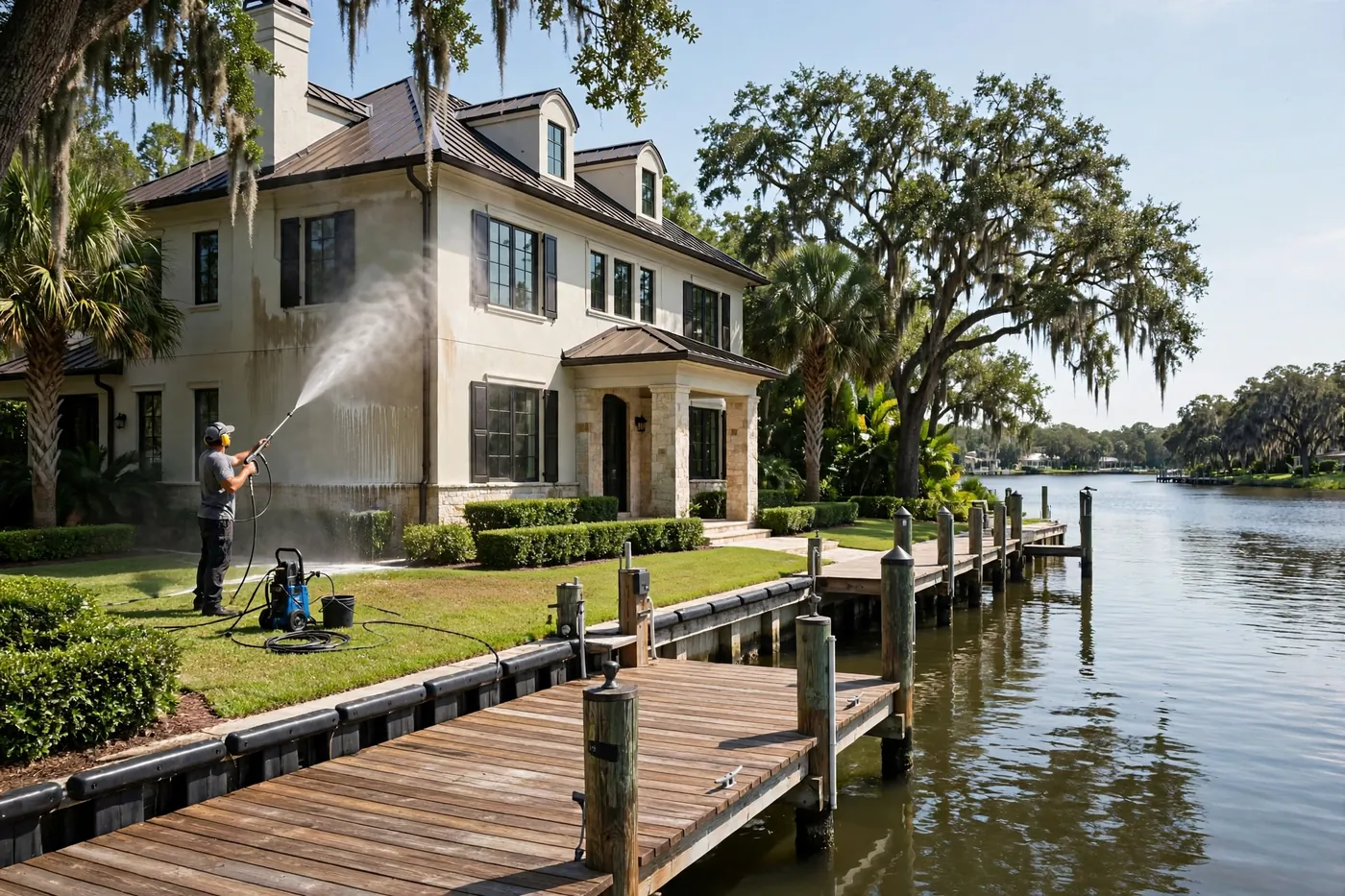
Ortega's riverfront estates face salt air, river humidity and dock grime. A complete guide to waterfront exterior cleaning.
Read More →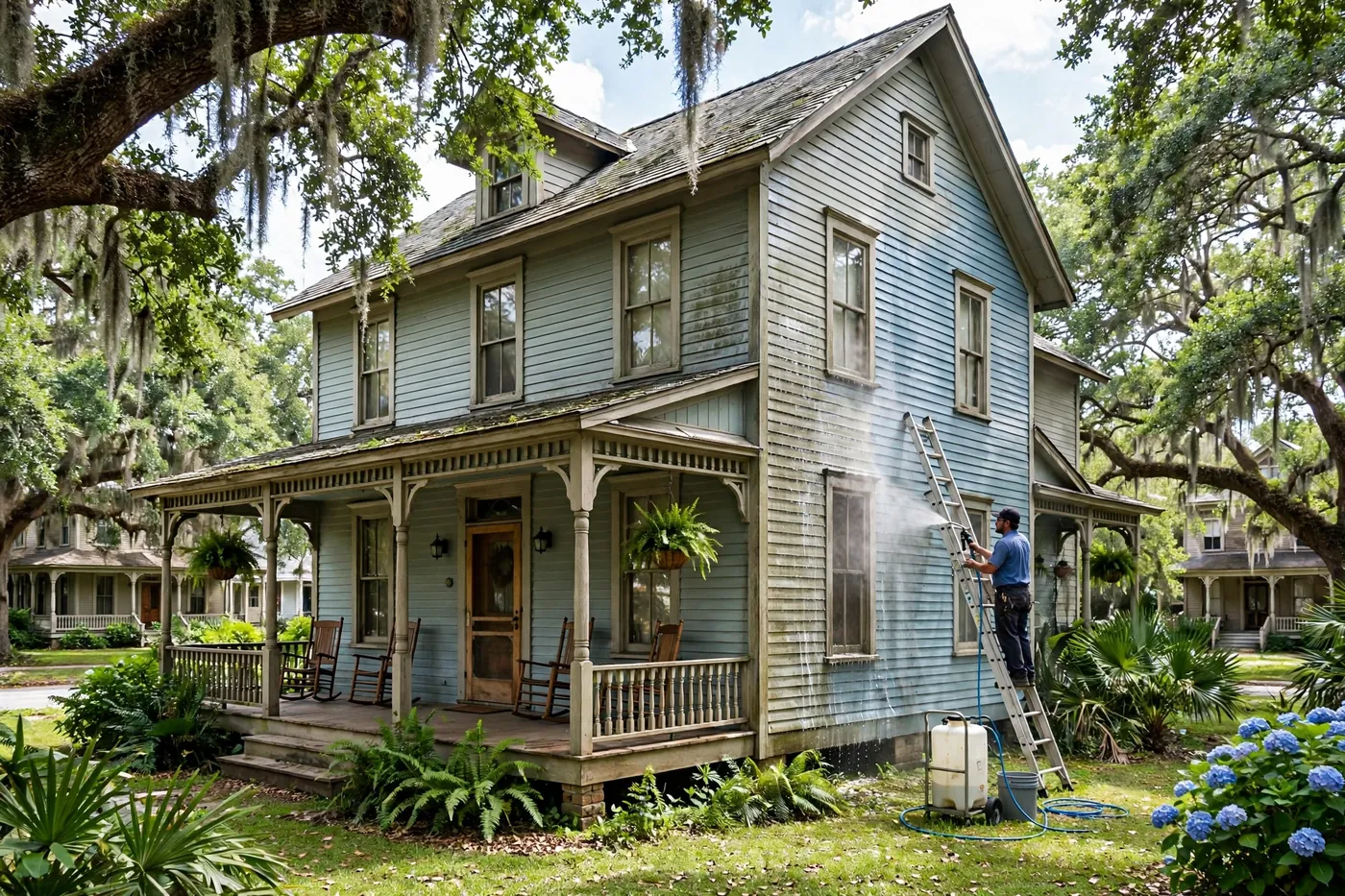
Springfield's century-old homes need soft washing, not brute force. How to restore historic siding safely.
Read More →Call now for a free estimate and same-day service in Jacksonville, FL. Open 24/7.