
Pressure Washing in San Marco: Brick, Stucco & Historic Homes
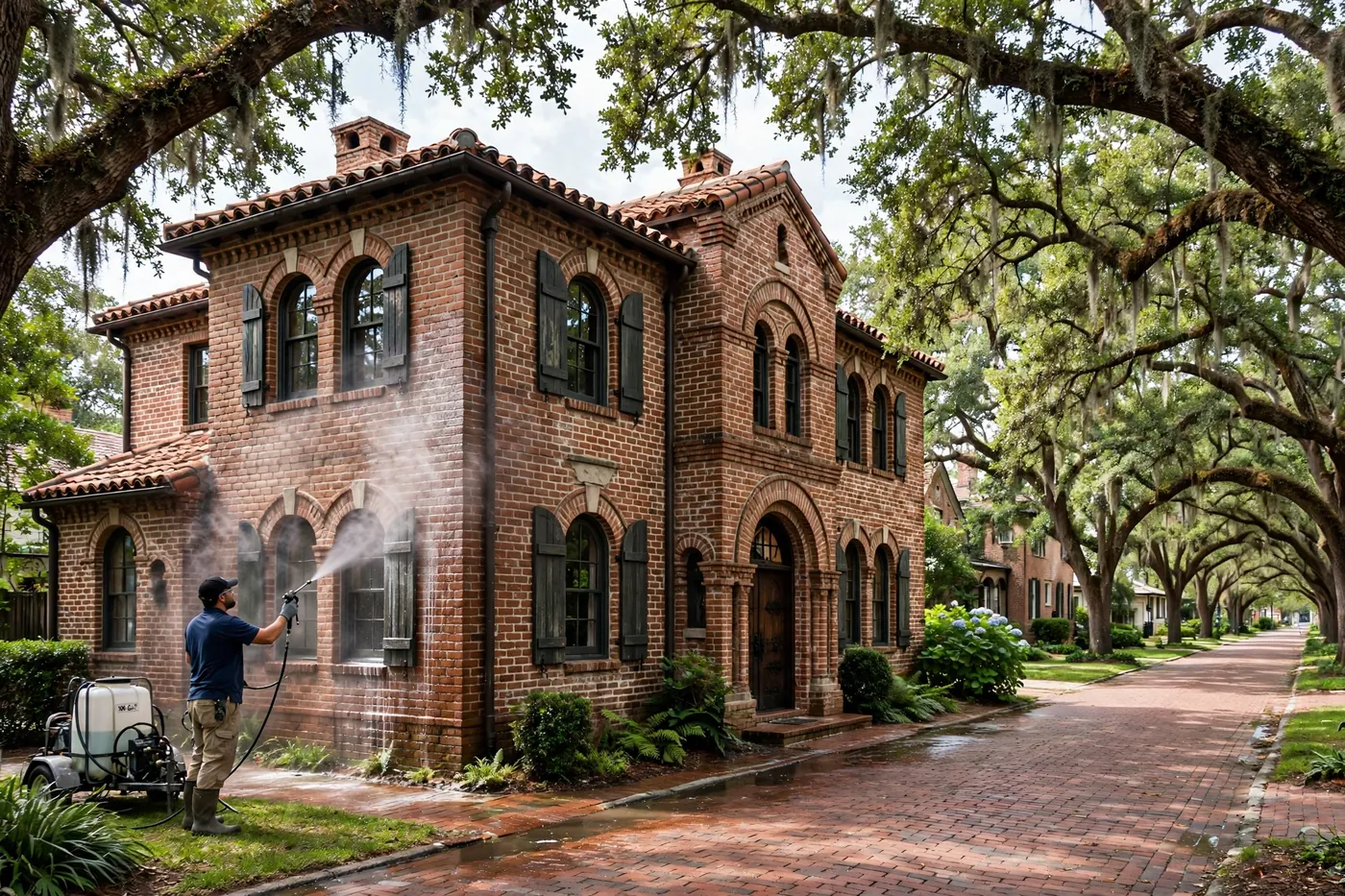
San Marco's 1920s–40s Mediterranean Revival homes need a gentle touch. Here's how to clean brick, stucco and historic wood without damage.
Read More →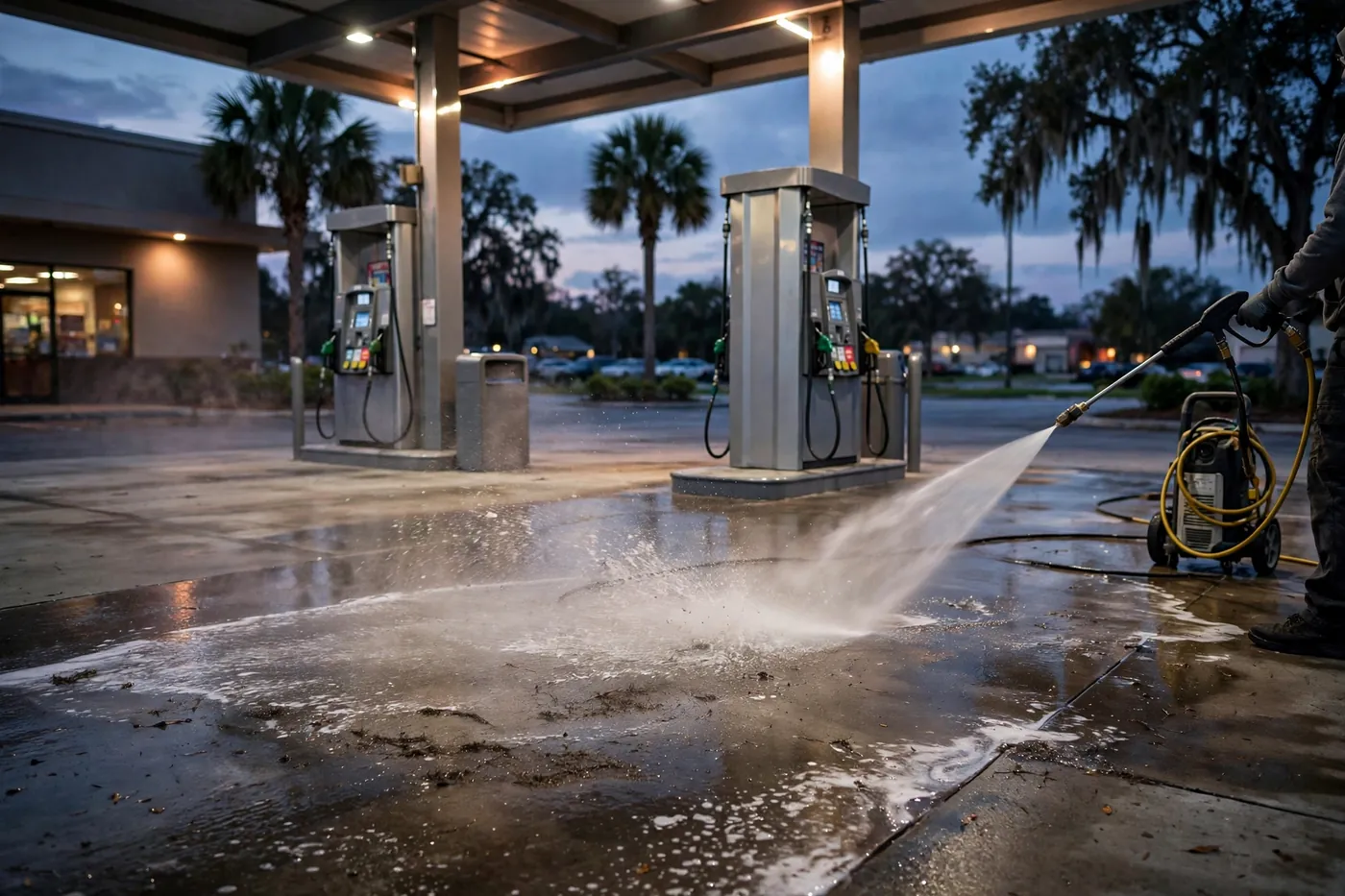
Fuel islands, canopies and concrete: compliance-grade cleaning for gas stations and c-stores.
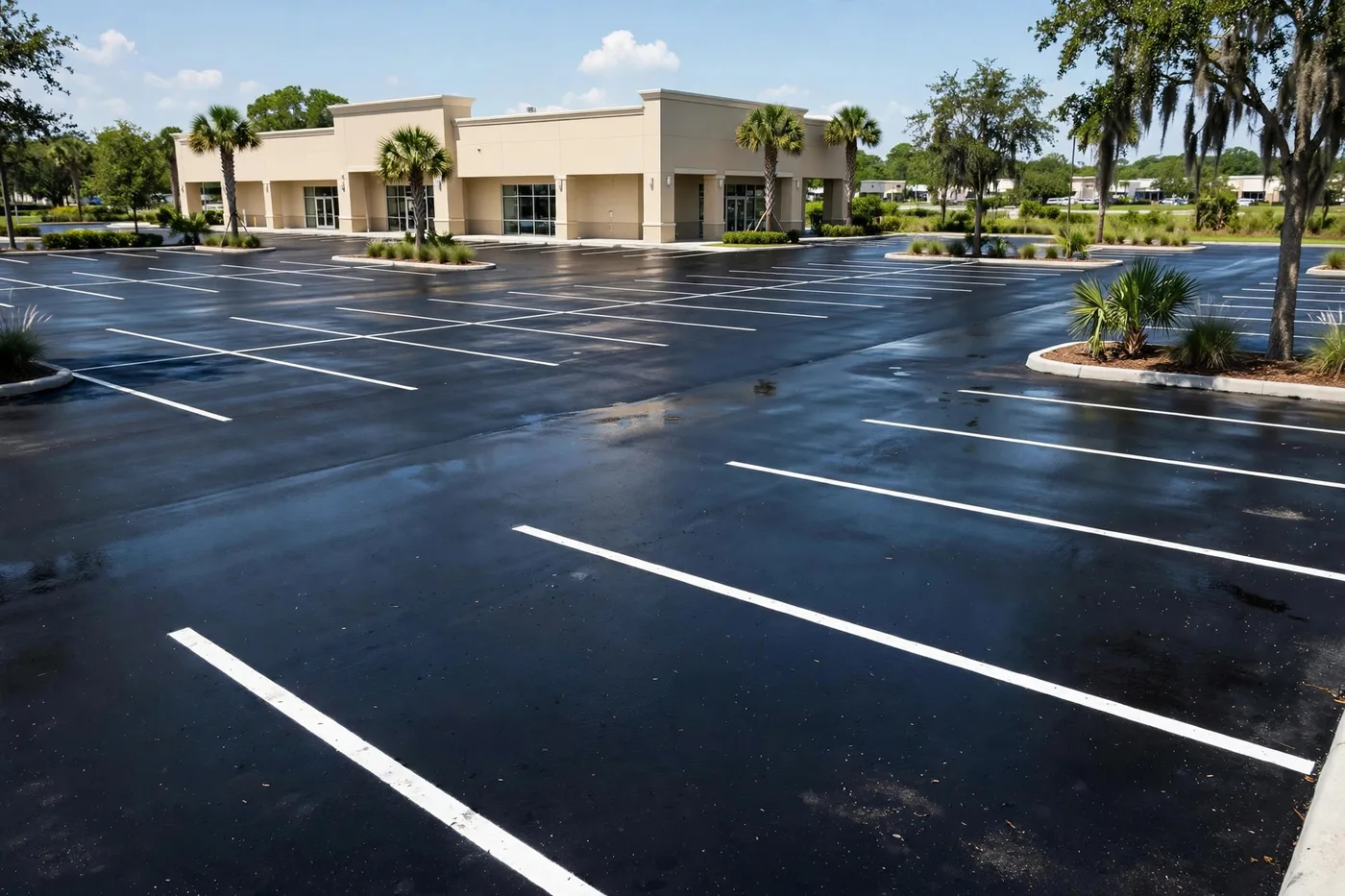
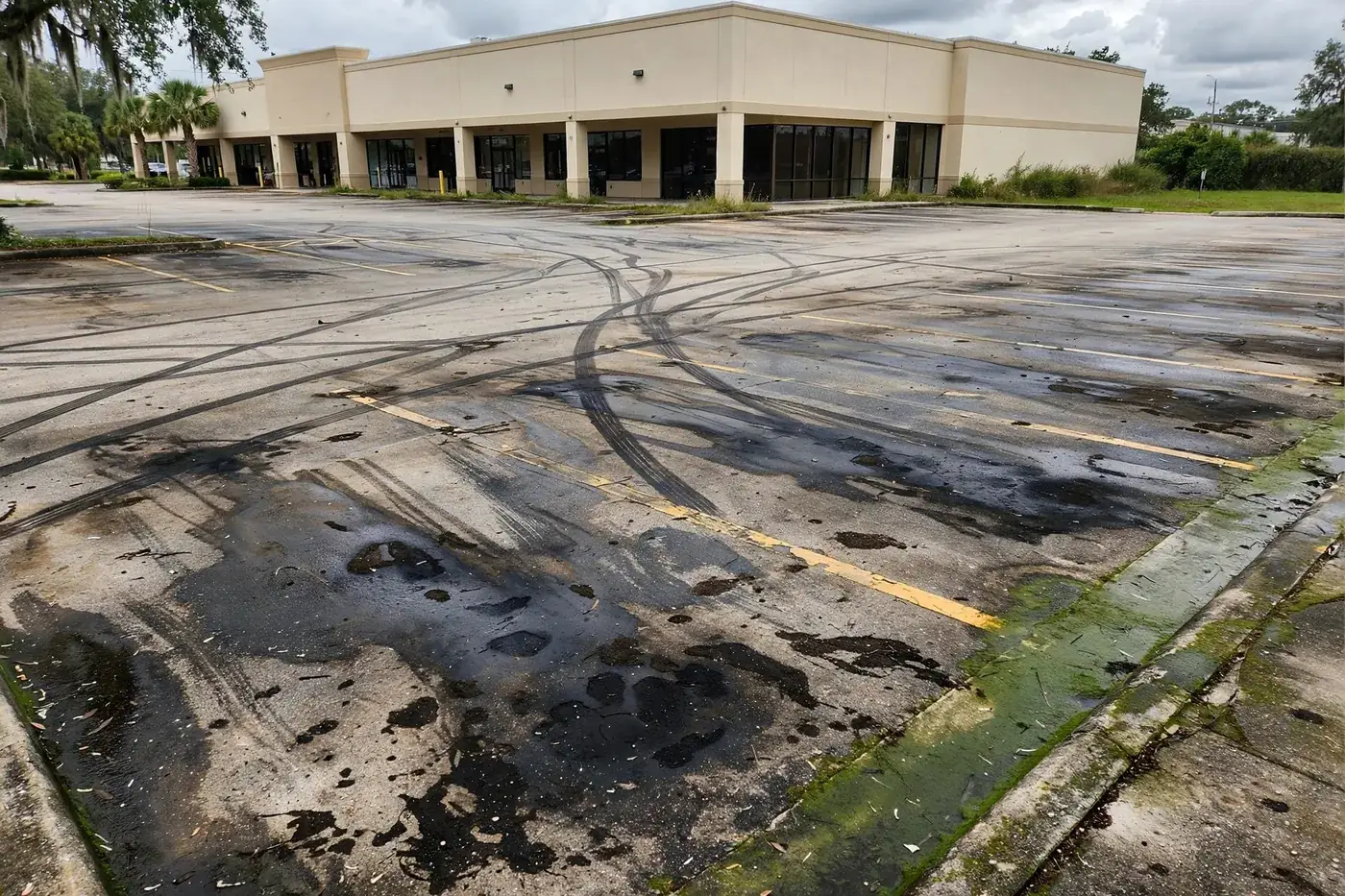 BEFOREAFTER
Drag to compare
BEFOREAFTER
Drag to compareJacksonville drivers choose where to stop in about three seconds, and the decision is almost entirely visual. A fuel island with blackened concrete, a canopy streaked with grime, and a storefront with filmed-over windows reads as neglected — and drivers heading to the next exit on I-295, I-95, or the I-10 corridor will simply keep going. On high-traffic corridors like Atlantic Boulevard, Blanding Boulevard, Beach Boulevard, and Philips Highway, where stations compete within sight of each other, exterior appearance is a direct revenue lever.
Beyond looks, there is liability. Fuel islands collect a cocktail of gasoline drips, diesel film, oil, and tire residue that turns slick in Jacksonville's near-daily summer downpours. A customer slip on a greasy island is the kind of incident that ruins a week. Regular professional cleaning keeps the concrete's traction and removes the petroleum film that makes wet pavement treacherous.
There is also the brand factor. Whether you fly a major flag or run an independent c-store, corporate image standards — and mystery shoppers — judge the forecourt. A consistent cleaning program is cheaper than the slow bleed of customers choosing the cleaner station across the street.
Fuel island concrete is the toughest cleaning challenge in retail. Years of drips bake petroleum into the pores of the concrete, and Jacksonville's heat accelerates the process. We attack it with hot water, commercial degreasers, and surface cleaners that lift contamination evenly — no wand marks, no striping. Fresh stains come up dramatically; older, deep-set staining lightens significantly, though we are honest that a decade of saturation can leave a shadow that no cleaning fully erases.
The approach matters as much as the equipment. Cold-water blasting alone just moves oily water around. Our process emulsifies petroleum first, then extracts it, so contaminants are lifted rather than spread across the lot. Concrete aprons around the pumps, spill bucket areas, and the drive lanes between islands all get the same treatment.
One thing we will not do is promise a showroom finish on twenty-year-old concrete. What we promise is the cleanest that concrete can honestly be, documented before and after, so you can see exactly what the service delivered.
Here is where gas station cleaning separates professionals from guys with a pressure washer. Wash water from a fuel island is contaminated with petroleum — letting it flow into a Jacksonville storm drain means it reaches the St. Johns River watershed, and that is an environmental violation with real teeth. Florida DEP and federal EPA rules treat petroleum runoff seriously, and the fines land on the property owner.
Professional fuel-island cleaning uses containment: berms and barriers keep wash water on the concrete, and vacuum recovery (reclaim) systems capture it for proper disposal. Many stations also have oil-water separators — underground units that separate petroleum from water before discharge — and wash water should be routed with those systems in mind, not blindly into the nearest drain.
When you hire a contractor, ask directly: how do you contain and reclaim wash water? If the answer is vague, keep looking. We reclaim fuel-island wash water as standard practice on every gas station job, and we can explain the process to your district manager or brand inspector without hand-waving.
The canopy is your billboard — visible from a quarter-mile down Blanding at 45 miles per hour — and its underside collects exhaust film, cobwebs, and grime that dulls the lighting drivers navigate by. We soft wash canopy fascias and undersides, clean pump toppers and bollards, and brighten the concrete beneath. The difference at night, when most c-store business happens, is dramatic: clean canopies reflect light instead of swallowing it.
Storefronts get the retail treatment: sidewalks scraped of gum, entry glass frames cleaned, and the inevitable film of road dust washed from brick and stucco. Dumpster and grease areas behind the store — often the worst-smelling corner of the property — are degreased and deodorized as part of a full program.
Signage deserves a mention: pylon and monument signs grow algae on their shaded sides in Jacksonville's humidity, and a green-tinged price sign undermines the whole brand. We include sign faces in our scope on request, using methods safe for illuminated cabinets.
Gas stations never close, so we work around your rush hours — typically late night through early morning, island by island, so you never lose more than one fueling position at a time. Our crews are self-contained with water and power, work fast, and leave each island ready for morning traffic. Convenience stores on the late-night corridors — from the Town Center to Normandy — stay fully operational while we work.
For multi-site operators, maintenance plans beat one-off cleanings on both price and consistency. Quarterly fuel-island service with monthly or bi-monthly storefront touch-ups is the cadence most Jacksonville operators land on; high-volume interstate exits may need more. Professor Pressure Washing is family-owned, serving Jacksonville since 2015, and we are set up for route work: one point of contact, consistent crews, and photo documentation after every visit.
Call (904) 938-5900 to scope a single site or a whole route. We will walk the forecourt, explain the reclaim process, and give you an itemized quote your operations team can approve with confidence.
We contain it and reclaim it — berms keep wash water on the concrete, and vacuum recovery systems capture it for proper disposal instead of letting it reach storm drains. Petroleum-contaminated runoff flowing to the St. Johns River watershed is an environmental violation, so reclaim is standard practice on every fuel-island job we do, not an upsell.
It is an underground unit, common at fueling sites, that separates petroleum from water before discharge — oil floats, water sinks, and each exits through its own path. Separators need periodic servicing to keep working, and wash water from cleaning should be managed with them in mind. If you are unsure whether your site has one or when it was last serviced, we can help you figure that out during our walkthrough.
Most Jacksonville stations do well with quarterly fuel-island cleaning and monthly or bi-monthly storefront and sidewalk touch-ups. High-volume sites on interstate exits or major corridors like Atlantic and Blanding may need monthly island service. We build the cadence around your traffic, your brand standards, and what the concrete actually needs — then put it on a route so you never have to think about it.
San Marco's 1920s–40s Mediterranean Revival homes need a gentle touch. Here's how to clean brick, stucco and historic wood without damage.
Read More →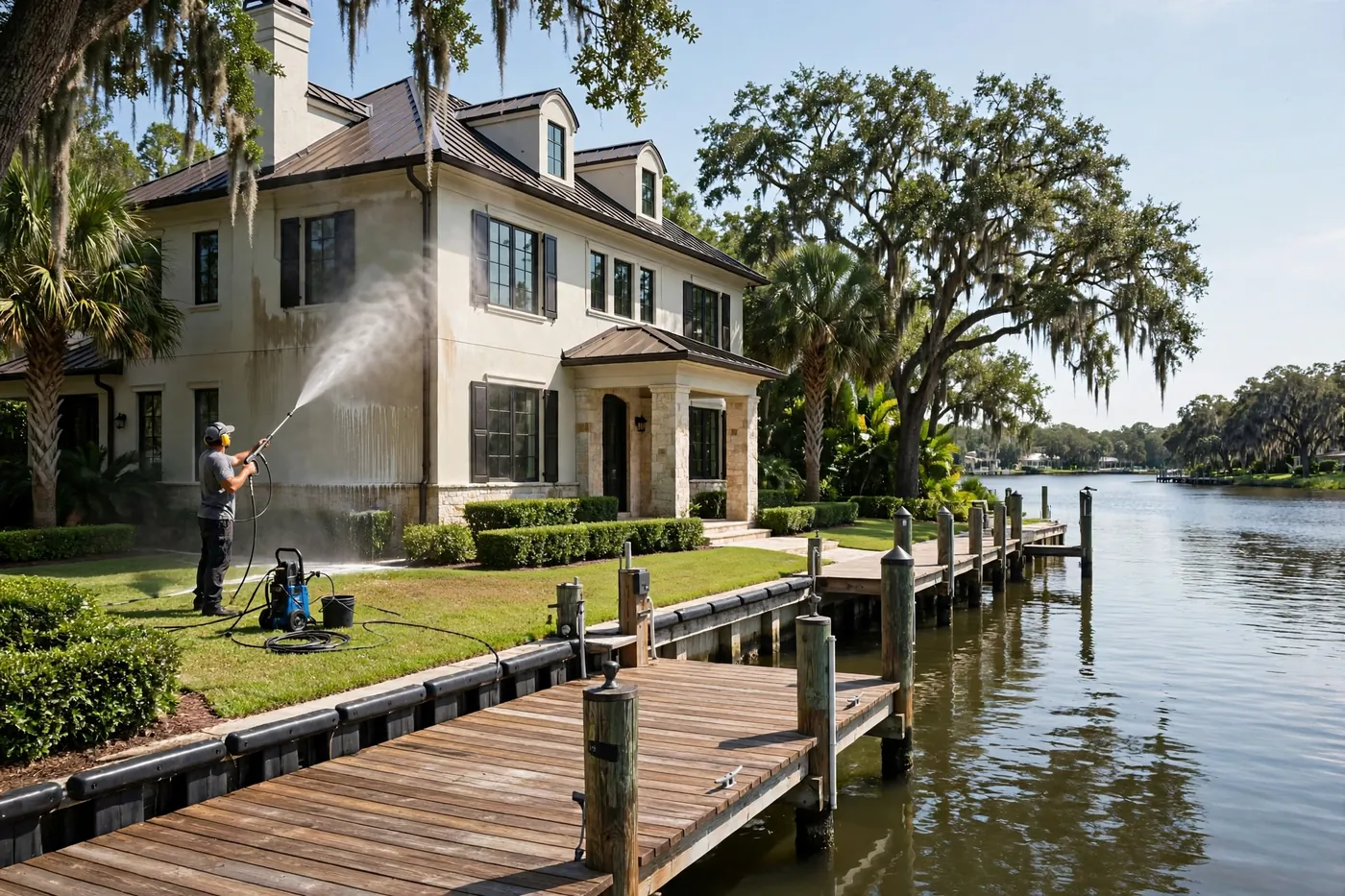
Ortega's riverfront estates face salt air, river humidity and dock grime. A complete guide to waterfront exterior cleaning.
Read More →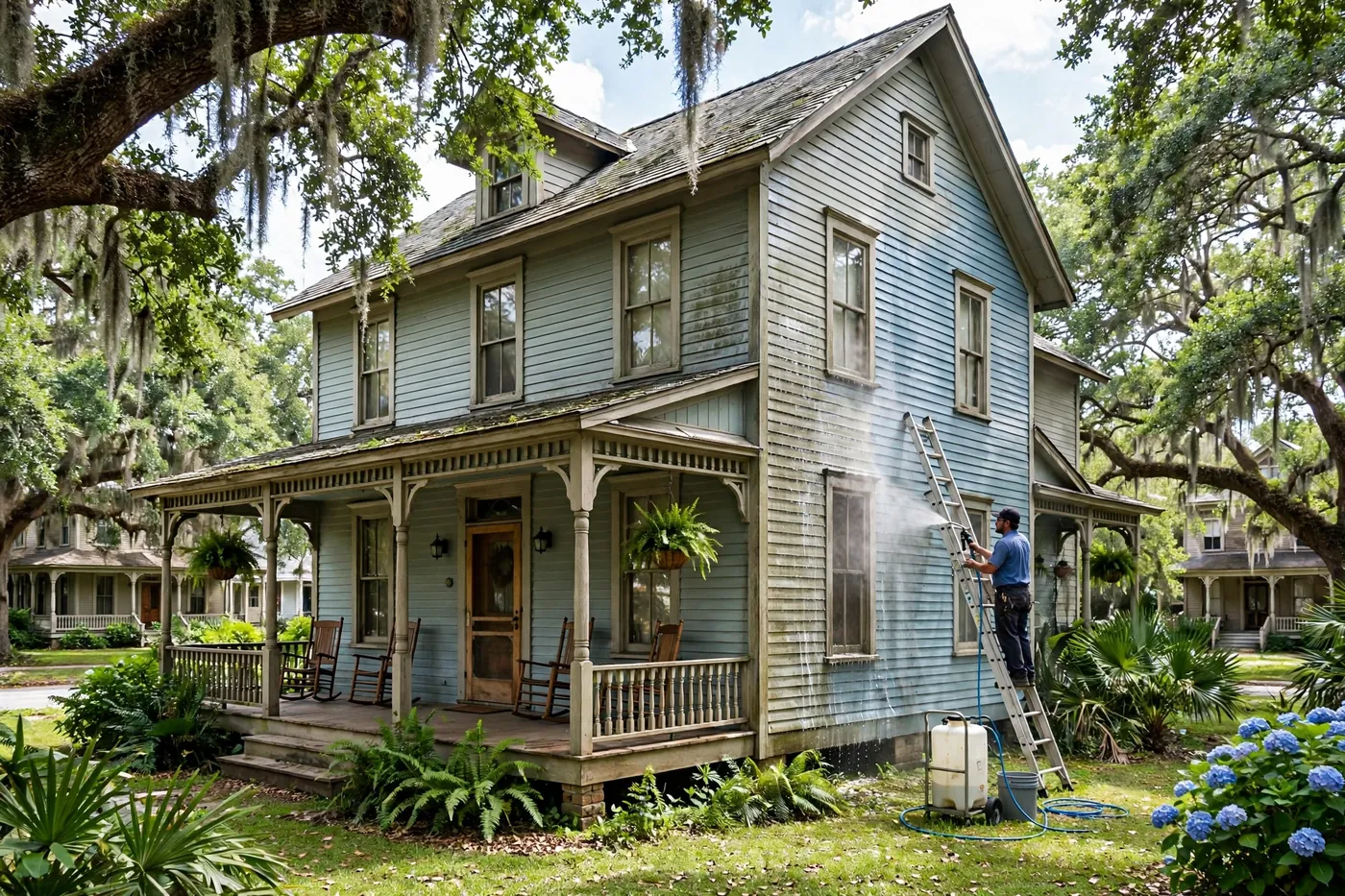
Springfield's century-old homes need soft washing, not brute force. How to restore historic siding safely.
Read More →Call now for a free estimate and same-day service in Jacksonville, FL. Open 24/7.