
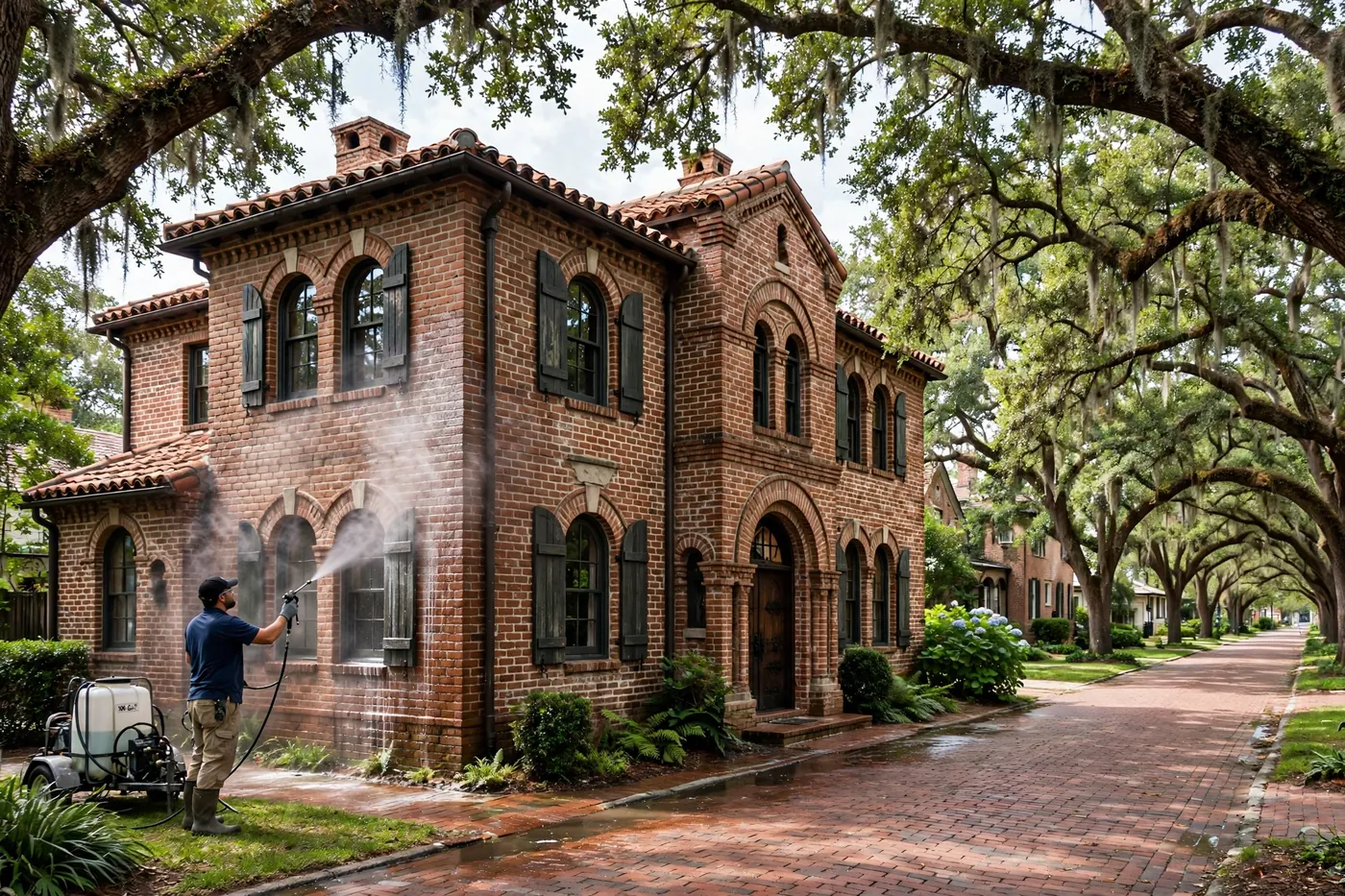
Pressure Washing in San Marco: Brick, Stucco & Historic Homes
San Marco's 1920s–40s Mediterranean Revival homes need a gentle touch. Here's how to clean brick, stucco and historic wood without damage.
Read More →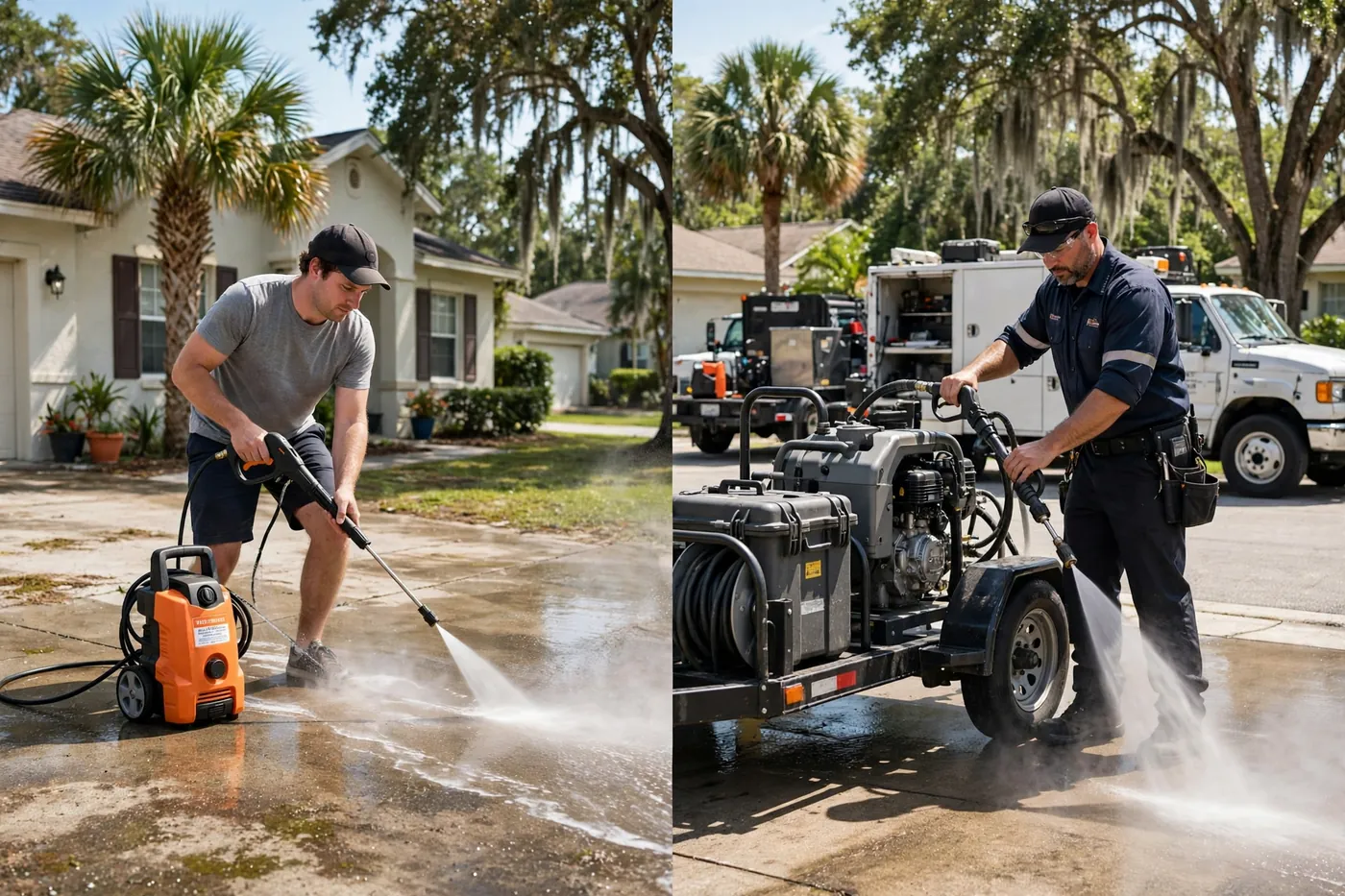
The honest math on renting vs hiring: equipment, water, time and the risks nobody mentions.
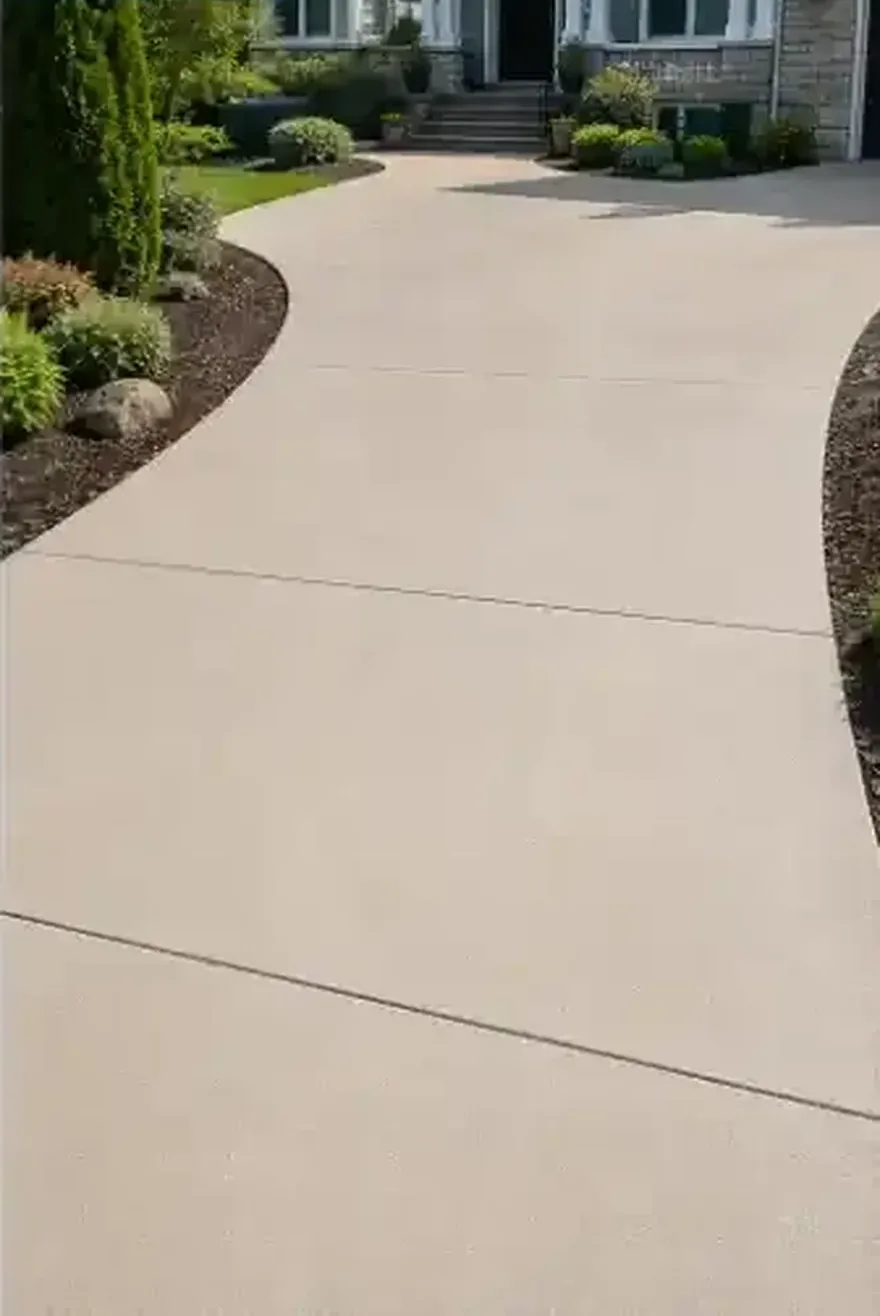
 BEFOREAFTER
Drag to compare
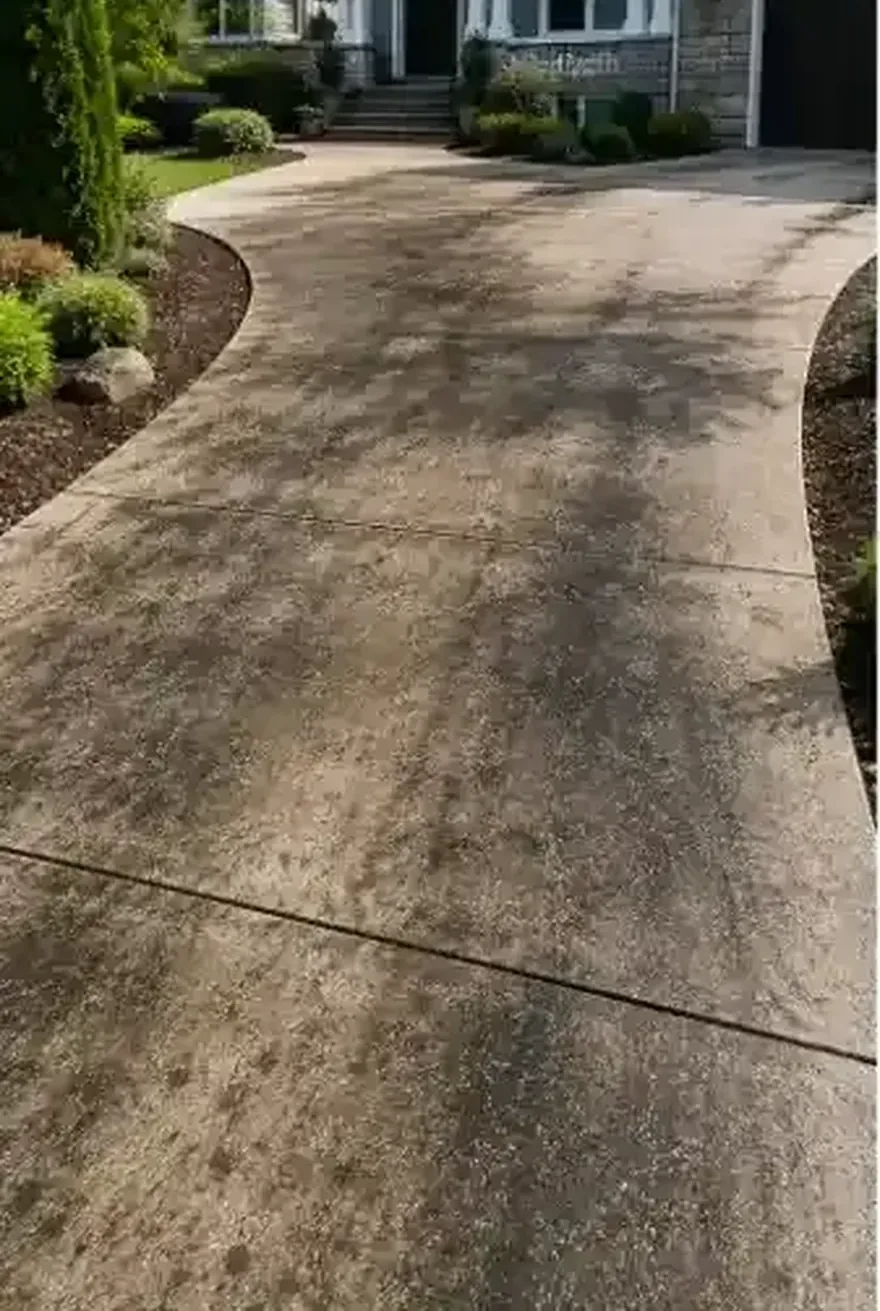
BEFOREAFTER
Drag to compareRenting a pressure washer in Jacksonville looks cheap until you add it all up. A gas-powered rental from the Home Depot on Beach Boulevard or the Lowe's in Mandarin runs about 90 to 150 dollars per day for a mid-range unit, and the good ones with enough power for a whole house are at the top of that range. Then you need detergent, which the rental counter sells in jugs for another 15 to 30 dollars, plus gas, plus the mileage if you are hauling it across town from Southside to the Beaches.
You also pay in water. A typical rental machine flows around 2.5 gallons per minute, and an average Jacksonville driveway and sidewalk job runs the trigger for two to three hours. That is 300 to 450 gallons, which shows up on your JEA bill. It is not a fortune, but it is not free either, and during the dry spring months when JEA asks everyone to conserve, running a rental all Saturday afternoon is worth thinking about.
Then there is the biggest cost: your weekend. A first-timer washing a 2,000-square-foot home, driveway, and walkways in the Jacksonville heat is looking at six to ten hours of work, including the learning curve, the trips back for more detergent, and the breaks. A professional crew does the same job in two to three hours. Your time has a value, and a lost Saturday in October weather is a real one.
Jacksonville homes punish the exact mistakes beginners make. Our stucco — which covers most homes from Nocatee to Ponte Vedra — cracks and chips under the narrow, high-pressure tips that rental machines ship with. One distracted pass along a stucco wall can carve a line you will see forever, and patching stucco to match a 10-year-old finish is never invisible. Screens are another casualty: pool enclosures and lanai screens tear at a fraction of the pressure concrete needs.
Water intrusion is the quiet disaster. Rental wands push water up under vinyl siding laps, behind window trim, and into soffits. In our humidity, trapped moisture turns into mold inside the wall cavity within weeks, and you will not see it until it bleeds through the drywall. Professionals use soft-wash methods — low pressure plus detergents that do the cleaning chemically — precisely to avoid forcing water where it does not belong.
Concrete tells on beginners too. Hold a rental wand too close in one spot and you etch a permanent swirl into the driveway. Move too fast and you leave zebra stripes of clean and dirty concrete that look worse than before. The older aggregate driveways in Arlington and the Beaches show every mistake. Pros use rotary surface cleaners that keep the distance and speed perfectly even, which is why their driveways look uniform and DIY ones often do not.
The gap between rental equipment and professional equipment is bigger than most people expect. A rental puts out roughly 2.5 gallons per minute at 3,000 PSI. A professional rig runs 5 to 8 gallons per minute, which means it rinses twice as fast and carries detergent through a dedicated soft-wash system. Higher flow with lower pressure is actually gentler and faster — the opposite of what the big PSI number on the rental suggests.
Chemicals are the other half of the equation. Professionals use commercial-grade detergents and algaecides mixed for Florida's specific growth — the Gloeocapsa algae that blackens roofs and siding from Mandarin to Mayport, the mold that thrives in St. Johns River humidity. These are not the blue jugs at the rental counter. Applied correctly through a soft-wash system, they kill growth at the root so surfaces stay clean for a year or more instead of a few months.
Then there is insurance and accountability. Professor Pressure Washing has served Jacksonville families since 2015, and a legitimate company carries general liability and workers' compensation. If a technician damages your siding or a ladder goes through a window, you are covered. If your brother-in-law does it with a rental, you are paying for it. That peace of mind is baked into every professional quote, and it is worth more than people realize until something goes wrong.
To be fair, there are jobs where renting is perfectly sensible. Washing your car, blasting patio furniture, or cleaning a small concrete pad by the grill — these are low-risk, low-skill tasks where a rental shines. If you already own a decent electric pressure washer, keeping the back patio and the trash can area tidy between professional visits is smart maintenance.
Small, ground-level concrete is the sweet spot: a 10-by-10 patio, the walkway to the mailbox, the area around the pool equipment. Keep the wand moving, stay back at least a foot, and use the widest tip. You will get acceptable results without much risk. Just stay away from the house itself, the screens, the roof, and anything painted.
The honest rule is height and material. If the job involves a ladder, a second story, stucco, wood siding, screens, or a roof, the risk-reward flips hard toward hiring out. Jacksonville's combination of delicate stucco, ubiquitous pool screens, and brutal humidity means the margin for error on houses is thin. Save the DIY energy for the ground-level concrete and let a pro handle the building envelope.
Take a typical 2,000-square-foot home in Orange Park with a two-car driveway, sidewalks, and a pool deck. DIY: 120 dollars for the rental, 25 for detergent, 20 in gas and water, and your entire Saturday — call it 165 dollars out of pocket plus eight hours of labor in 90-degree heat, with real risk to stucco and screens. If anything goes wrong, a stucco patch starts around 300 dollars and a rescreened pool panel runs 200 or more.
A professional whole-house package for that same home in Jacksonville typically runs 250 to 450 dollars depending on condition and square footage. The crew arrives with commercial equipment, treats the algae chemically so it stays clean longer, and is done before lunch. You spend the day doing literally anything else, and the result is warrantied.
So the honest math: DIY saves maybe 100 to 200 dollars on paper, costs you a full day, delivers a shorter-lasting result, and carries hundreds in damage risk. For ground-level concrete, rent away. For the house itself, hiring a pro is the better financial decision in almost every case. If you want a straight answer for your specific home, call Professor Pressure Washing at (904) 938-5900 — we will tell you honestly whether your job even needs us.
In Jacksonville, a gas-powered pressure washer rental runs about 90 to 150 dollars per day from home improvement stores, plus 15 to 30 dollars for detergent and the cost of gas and water. For a full weekend you are typically looking at 150 to 250 dollars all-in before your time is counted.
The most common damage we see is cracked stucco, torn pool screens, water forced behind siding, and etched concrete from holding the wand too close. Jacksonville's humidity also means any moisture driven into walls can become mold quickly. These repairs often cost more than hiring a professional in the first place.
Hiring saves money whenever the job involves the house itself — siding, stucco, screens, roofs, or anything above ground level. The damage risk on those surfaces is high and repairs are expensive. For a typical Jacksonville home, a pro job at 250 to 450 dollars beats a 165-dollar DIY day once you factor in your time, the shorter-lasting result, and the risk.
San Marco's 1920s–40s Mediterranean Revival homes need a gentle touch. Here's how to clean brick, stucco and historic wood without damage.
Read More →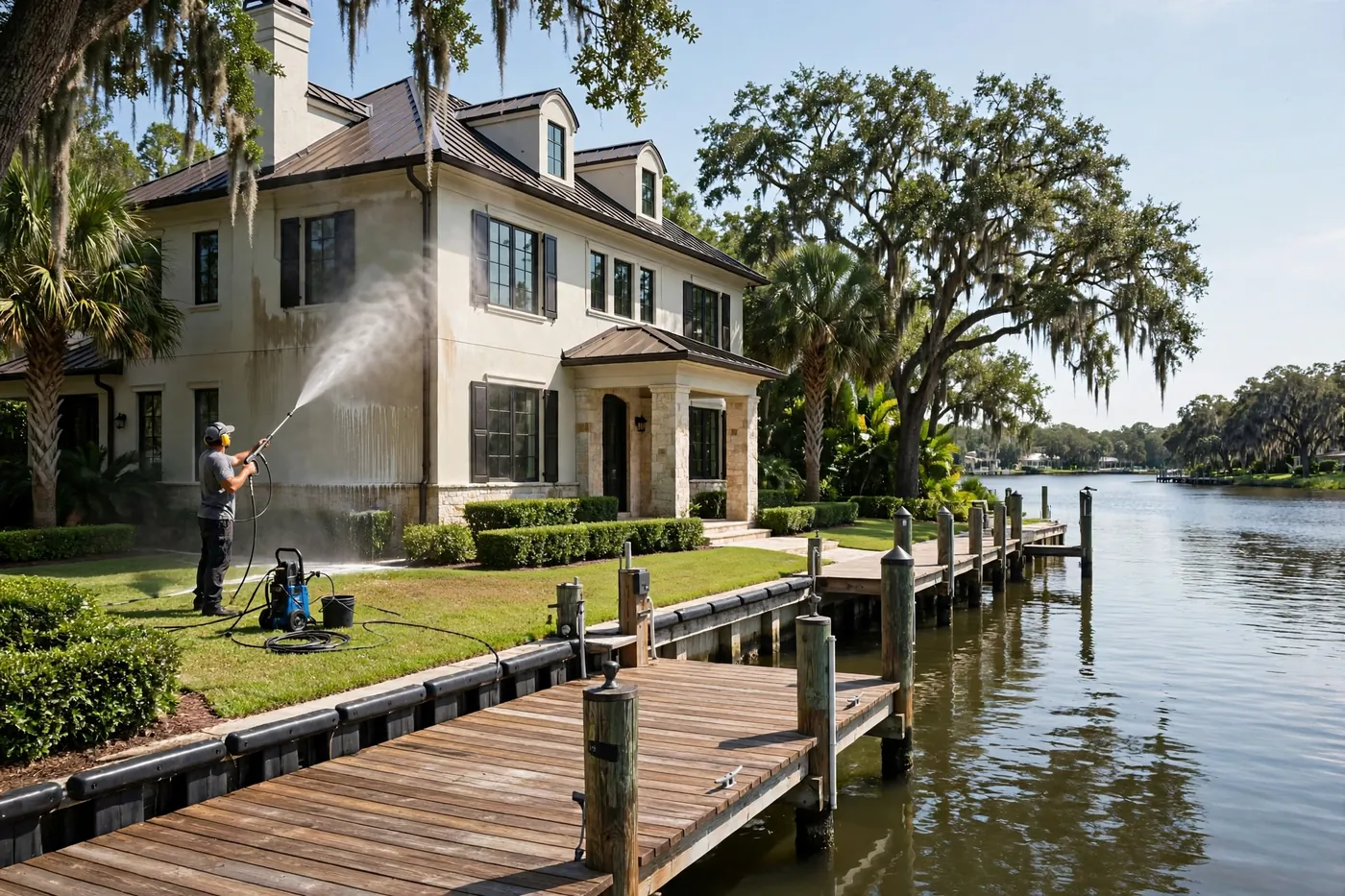
Ortega's riverfront estates face salt air, river humidity and dock grime. A complete guide to waterfront exterior cleaning.
Read More →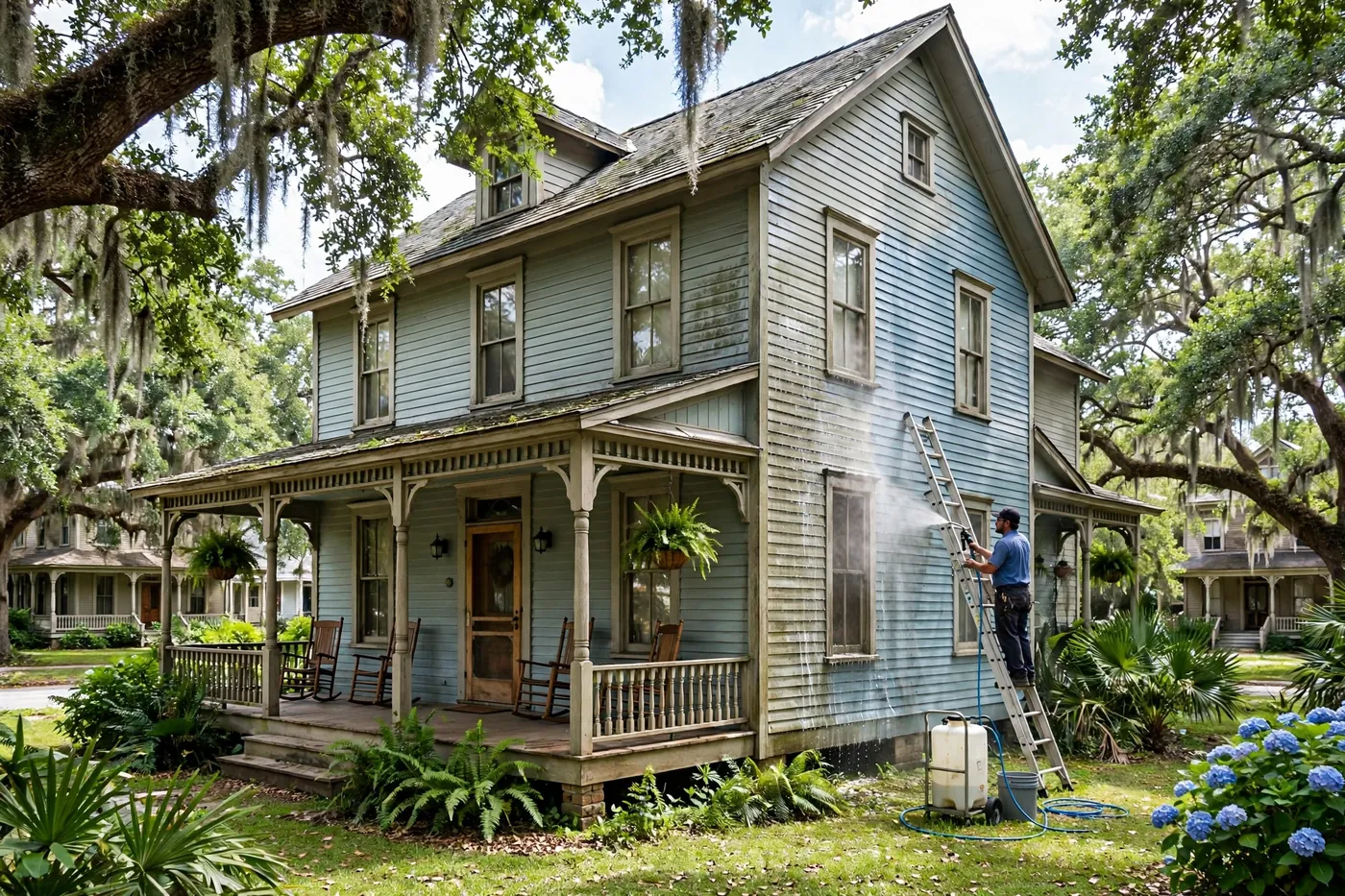
Springfield's century-old homes need soft washing, not brute force. How to restore historic siding safely.
Read More →Call now for a free estimate and same-day service in Jacksonville, FL. Open 24/7.