
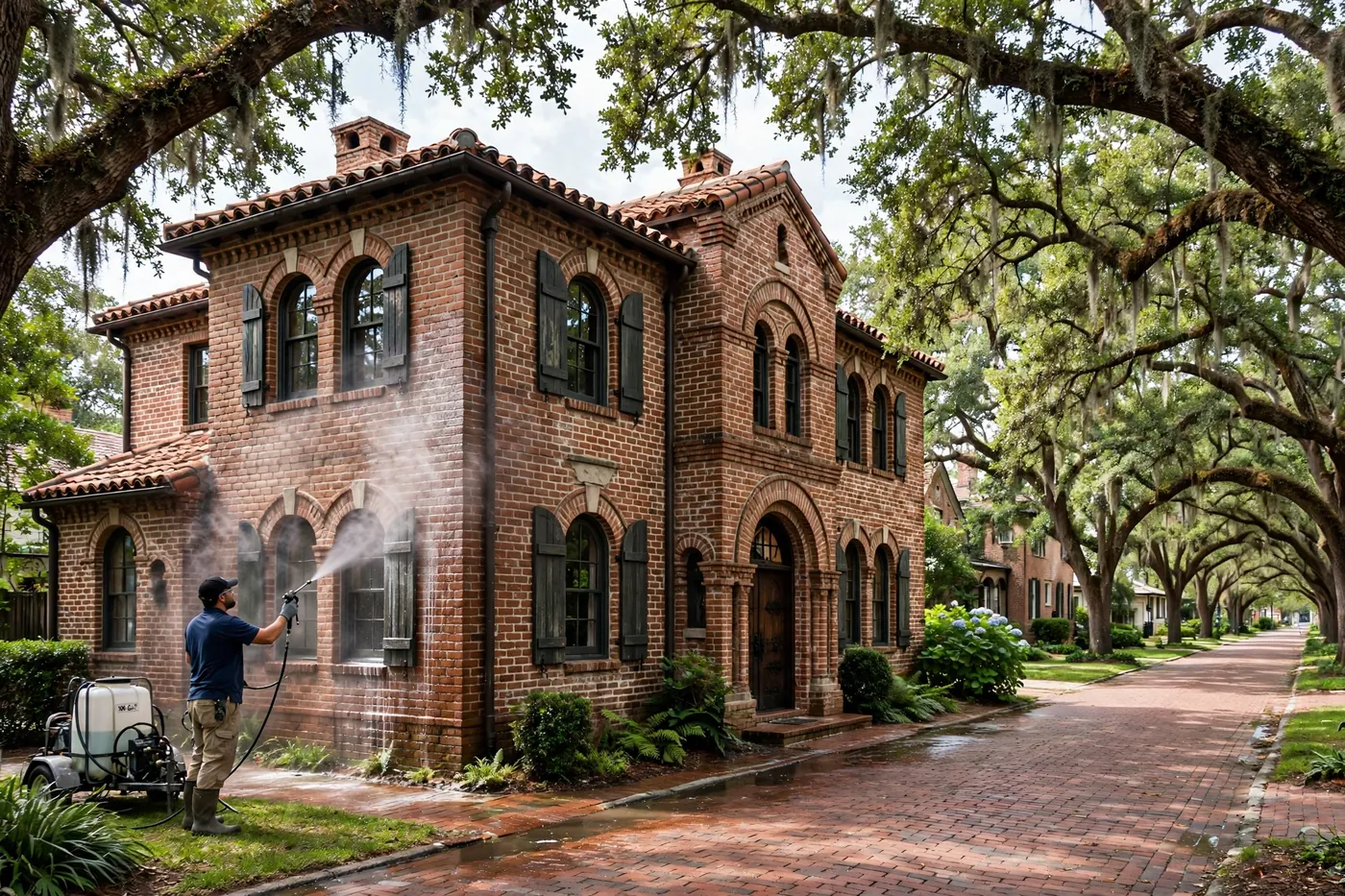
Pressure Washing in San Marco: Brick, Stucco & Historic Homes
San Marco's 1920s–40s Mediterranean Revival homes need a gentle touch. Here's how to clean brick, stucco and historic wood without damage.
Read More →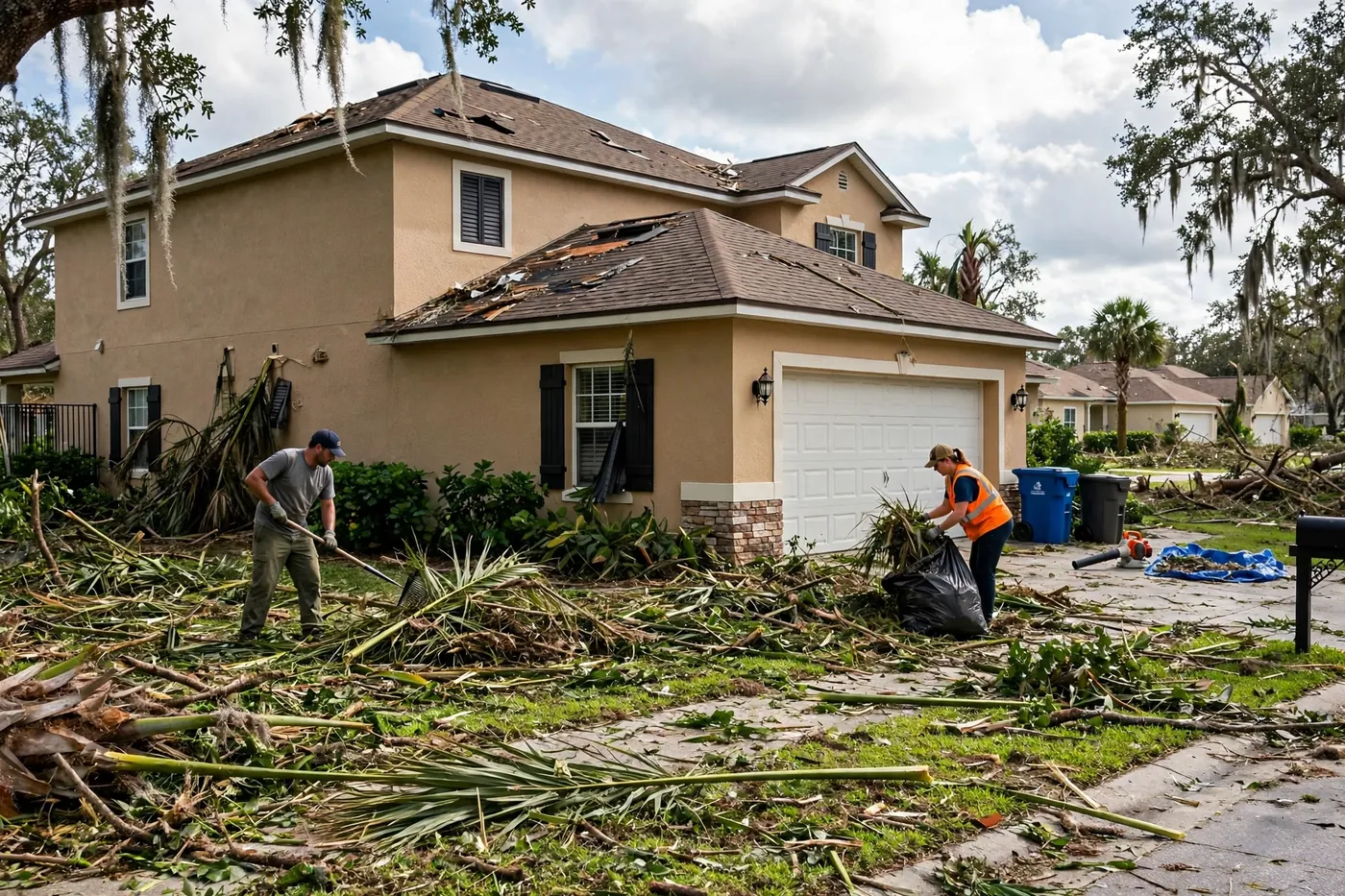
After the storm: salt spray, debris staining and the photos your insurance adjuster wants to see.
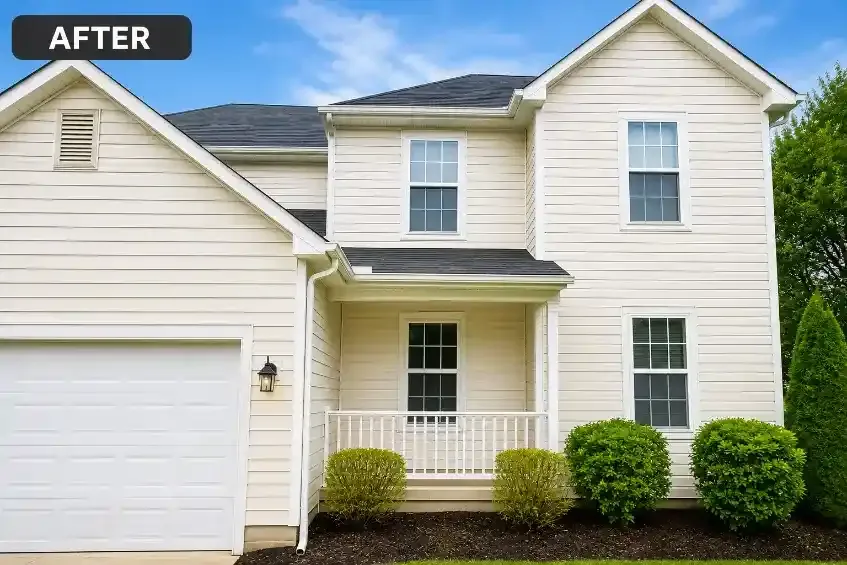
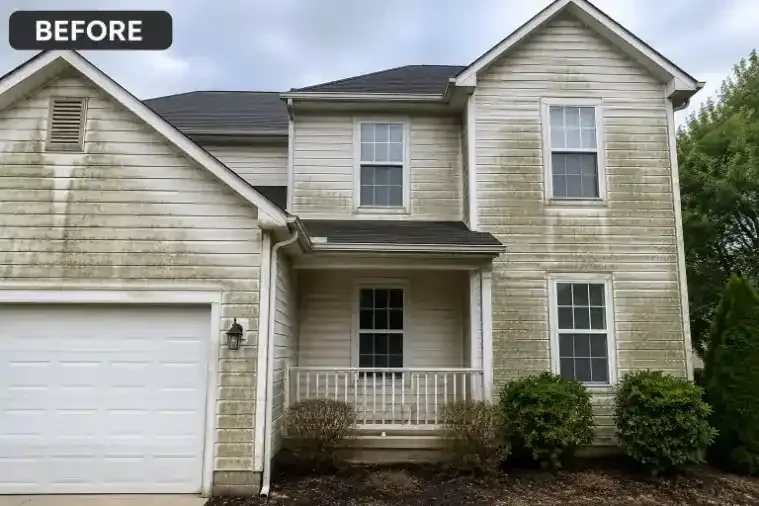 BEFOREAFTER
Drag to compare
BEFOREAFTER
Drag to compareEven when Jacksonville dodges a direct hit, tropical systems coat everything in a film of salt spray carried miles inland from the Atlantic. That salt film accelerates corrosion on fixtures, railings, and outdoor hardware, and it feeds the algae and mildew that explode in the weeks after a storm. Homes from Jacksonville Beach to Mandarin all get it — the salt does not care about your zip code.
Then there is the debris staining. Palm fronds, oak limbs, and leaf litter plastered against siding and fences for days leave tannin stains — brown streaks that look permanent but usually are not. Standing water lines on stucco and foundation walls mark where the yard flooded. And wind-driven rain forces moisture into every seam, which is why the mold bloom two weeks after a storm is practically a Jacksonville tradition.
The honest news: most of this is cosmetic and completely reversible with prompt professional cleaning. The dishonest news would be telling you to ignore it. Salt left on surfaces keeps corroding, tannin sets deeper over time, and post-storm mold establishes fast in our humidity. A recovery wash within a few weeks of the storm prevents temporary mess from becoming permanent damage.
After a storm, the exterior is a hazard zone, not a cleaning project. Downed power lines can energize fences, standing water, and even wet siding — treat every downed line as live and stay well clear. Do not touch metal fences, pool enclosures, or outdoor equipment until the utility has cleared the area. JEA publishes outage and hazard maps; check before you go outside to assess.
Structural damage comes before cosmetic cleaning, always. Loose soffits, lifted shingles, cracked stucco from wind-borne debris, leaning fences — document them, but do not pressure wash around them. High-pressure water forced into storm-damaged siding or roofing makes the damage worse and can complicate insurance claims. Tarps and temporary repairs first, cleaning second.
Also watch for wildlife displaced by flooding, especially near the St. Johns River and its creeks in Ortega, Mandarin, and Julington Creek. Snakes and fire ants relocate to high ground — which includes your porch and pool deck. A professional crew knows to scope the work area before starting, which is one more reason recovery cleaning is better left to pros in the immediate aftermath.
Before anything gets cleaned, photograph everything. Insurance adjusters need to see the damage as the storm left it, not after you have made it look nice. Walk the full perimeter with your phone: salt lines, debris staining, lifted shingles, cracked stucco, damaged screens, flooded areas. Timestamp everything — most phones do this automatically — and back the photos up to cloud storage the same day.
Take wide shots for context and close-ups for detail, and narrate what you are seeing if your carrier's app supports video claims. Note the date and the storm name. If you hire emergency mitigation — tarping, water extraction — keep every receipt; those costs are typically part of the claim. Do not throw away damaged materials like torn screens or broken fence pickets until the adjuster has seen them or explicitly released them.
Here is where professional cleaning actually helps your claim: a documented before-and-after from a licensed company establishes the extent of storm-related soiling versus pre-existing condition. When Professor Pressure Washing does post-storm recovery work, we photograph before and after as standard practice — call (904) 938-5900 and those photos become part of your file. Adjusters trust third-party documentation more than homeowner snapshots, and it costs you nothing extra.
Post-storm washing is not a standard house wash. The first pass is debris removal — fronds, limbs, and matted leaf litter cleared by hand so the wash water does not just push sludge around. Then comes a salt-neutralizing rinse; plain water moves salt around, while the right detergents actually lift it off surfaces and out of crevices where it keeps corroding.
Tannin and waterline stains need targeted treatment, not just pressure. Professionals apply specialized detergents that break down organic staining chemically, then rinse at controlled pressure. This is especially important on stucco, where aggressive pressure on storm-stressed walls can crack what the wind merely loosened. Soft-wash methods clean deeply without mechanical stress on already-battered surfaces.
Timing matters: aim for two to four weeks after the storm, once emergency repairs are done and the area is safe. Earlier is better for salt and tannin, which set with time and sun. If your neighborhood in Atlantic Beach or San Marco is still running on generators, wait — but put yourself on a pro's schedule now, because every reputable Jacksonville company books solid for weeks after a major storm. Early callers get early slots.
Yes, within a few weeks. Salt spray keeps corroding fixtures and feeds post-storm mold, tannin from debris sets deeper over time, and standing-water lines stain permanently if left. Wait until hazards are cleared and emergency repairs are done, then schedule a recovery wash.
Photograph all damage before cleaning — wide shots plus close-ups, timestamped, backed up to cloud. Keep receipts for emergency mitigation, do not discard damaged materials until released, and get professional before-and-after photos, which adjusters trust as third-party documentation.
Two to four weeks is the sweet spot: hazards cleared, emergency repairs done, but before salt and tannin set permanently. Book early — reputable Jacksonville companies fill their post-storm schedules fast. Call (904) 938-5900 to reserve a slot.
San Marco's 1920s–40s Mediterranean Revival homes need a gentle touch. Here's how to clean brick, stucco and historic wood without damage.
Read More →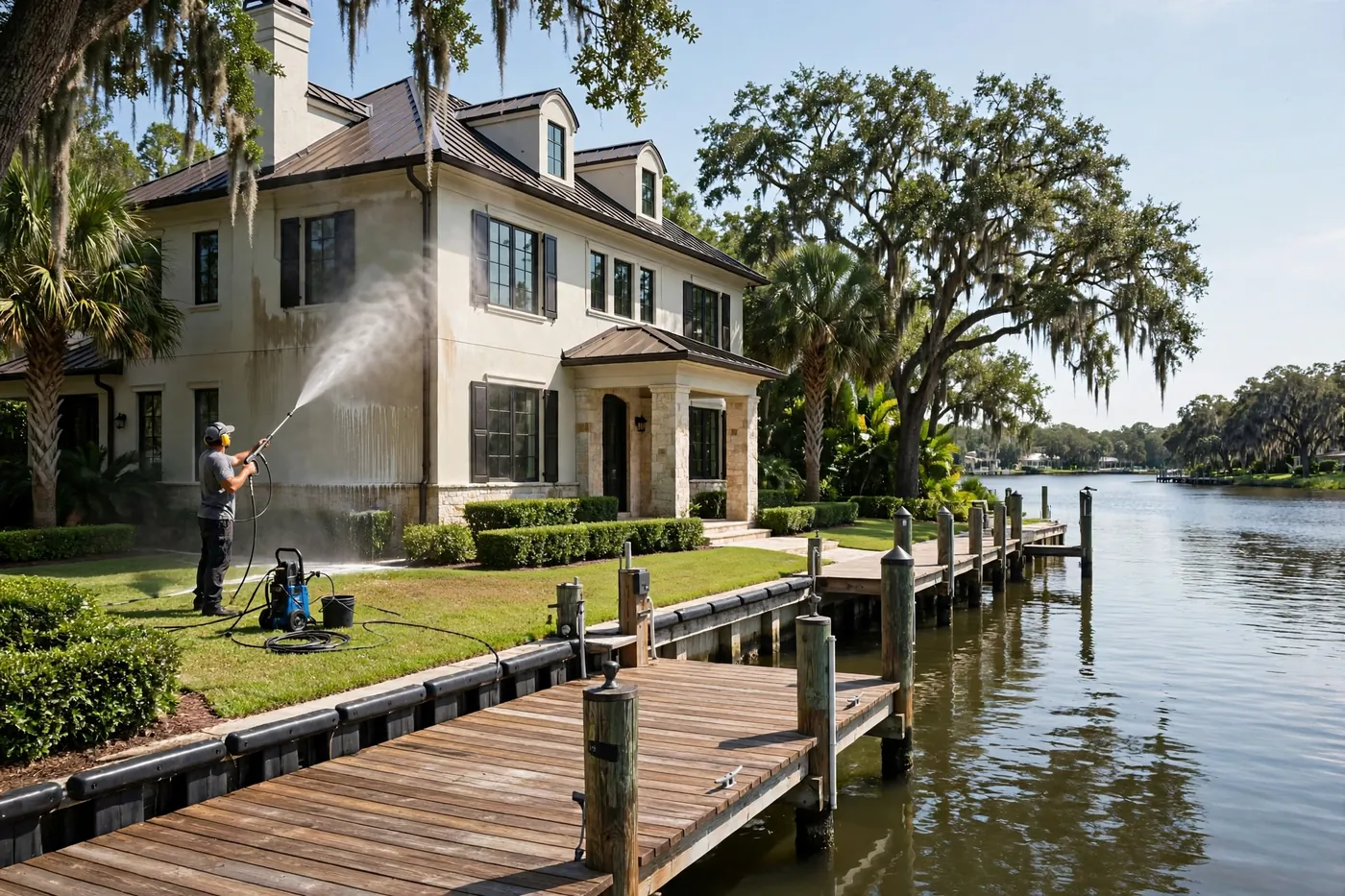
Ortega's riverfront estates face salt air, river humidity and dock grime. A complete guide to waterfront exterior cleaning.
Read More →
Springfield's century-old homes need soft washing, not brute force. How to restore historic siding safely.
Read More →Call now for a free estimate and same-day service in Jacksonville, FL. Open 24/7.