
Pressure Washing in San Marco: Brick, Stucco & Historic Homes
San Marco's 1920s–40s Mediterranean Revival homes need a gentle touch. Here's how to clean brick, stucco and historic wood without damage.
Read More →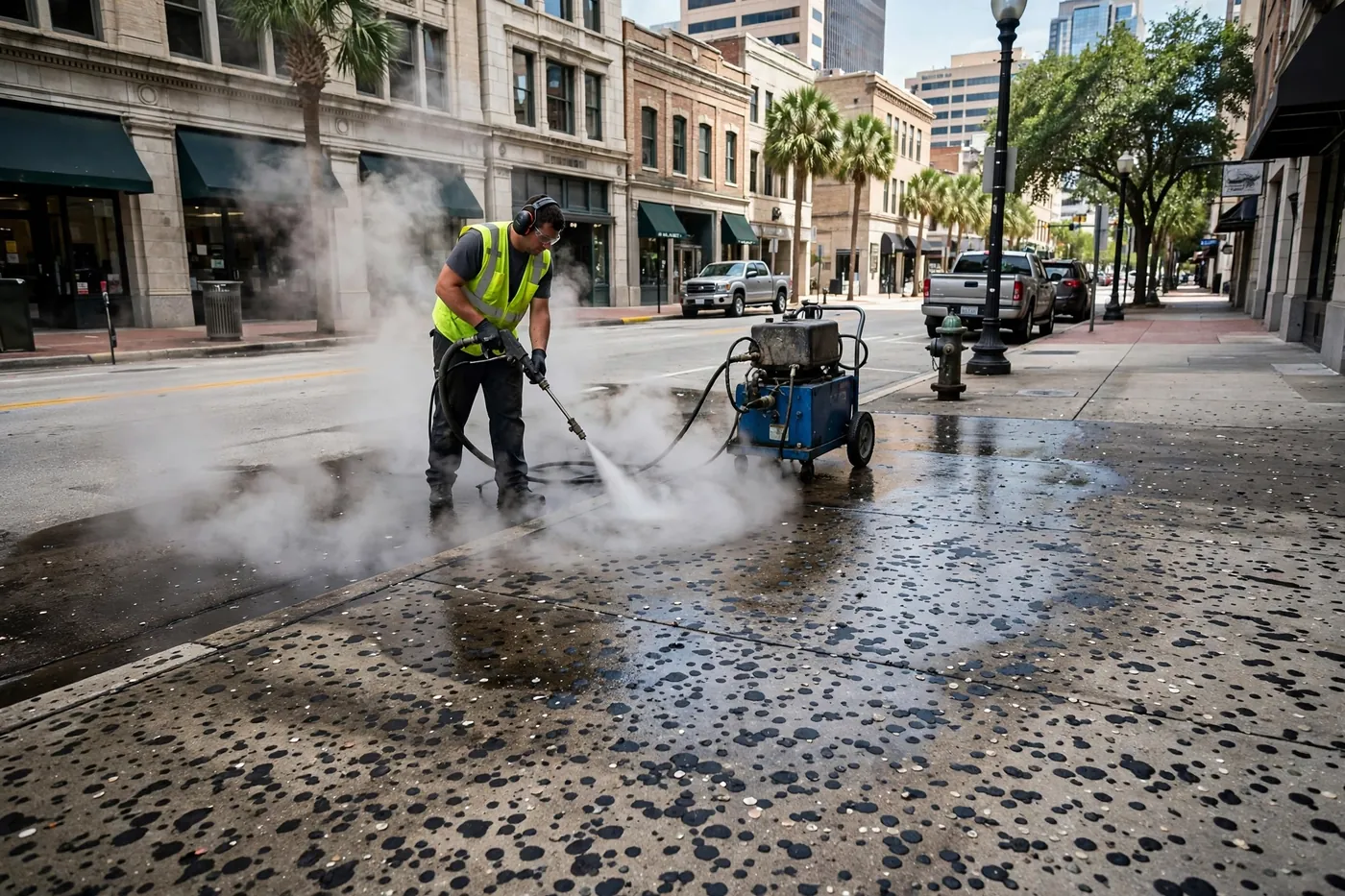
Those black dots on downtown sidewalks are chewing gum — and only hot water/steam truly removes them.
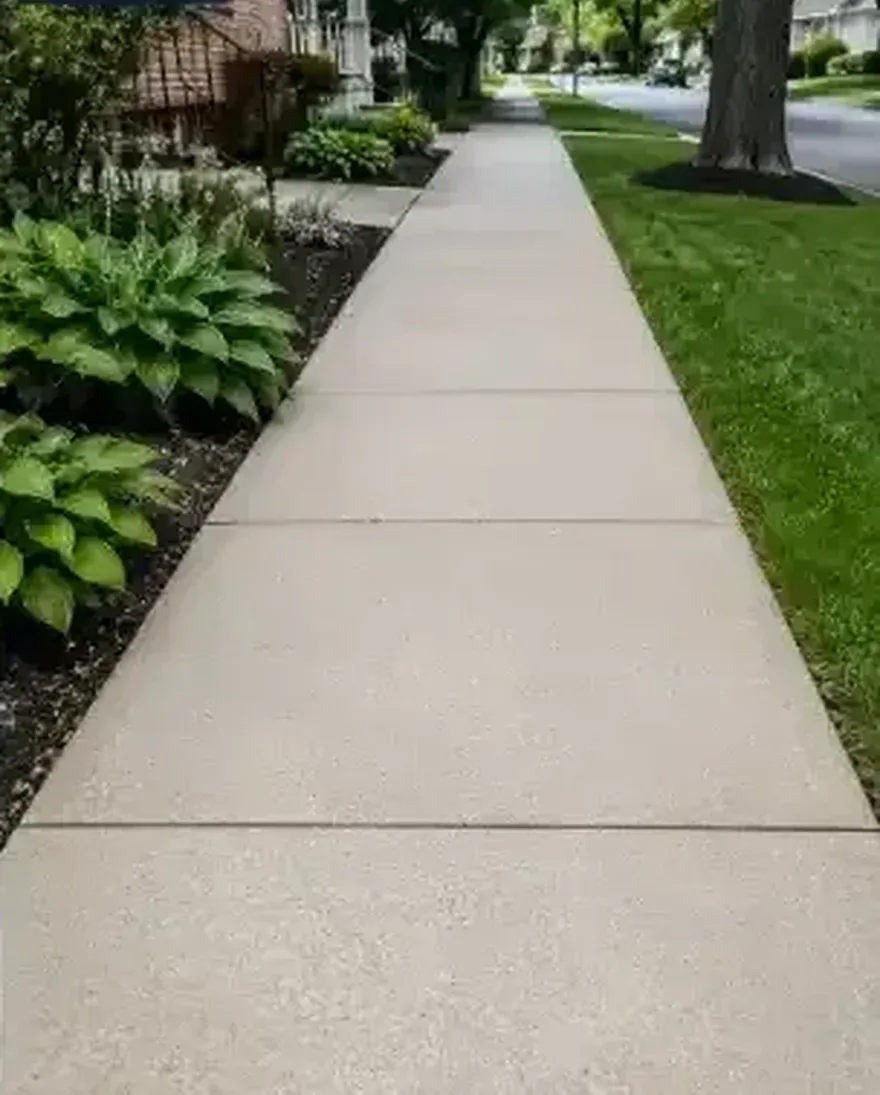
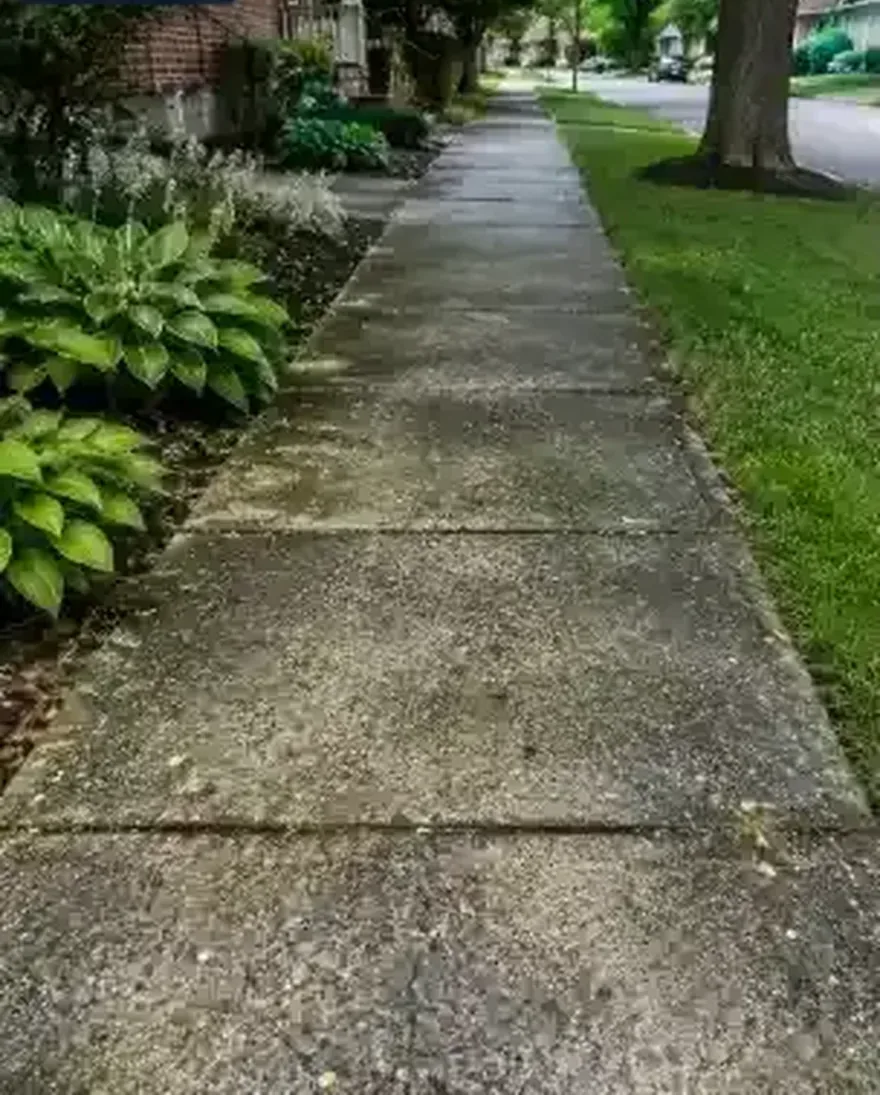 BEFOREAFTER
Drag to compare
BEFOREAFTER
Drag to compareThose black dots polka-dotting the sidewalks along Bay Street, in the Town Center, and outside every beach bar on 1st Street are chewing gum — hundreds of wads, flattened by foot traffic and baked by Florida sun into the concrete pores. Cold-water pressure washing barely touches them. You can blast a gum spot at 3,000 PSI and all you get is a cleaner black dot.
The chemistry is the problem. Gum is a polymer designed to stay flexible and sticky, and heat-fused into porous concrete it behaves more like part of the pavement than something sitting on it. Cold water cannot soften it, and pressure alone just polishes the top. Scraping each wad by hand works, but a commercial sidewalk has thousands — at that pace you would be out there for weeks.
This is why gum removal is its own specialty, not just pressure washing with extra effort. Jacksonville's tourism corridors, restaurant districts, and beach boardwalks all need it, and the properties that stay on top of it look dramatically better than the ones where the dots accumulate year after year. If your storefront sidewalk is more dot than concrete, regular washing was never going to fix it.
Real gum removal uses heat: professional hot-water pressure washers running 200 degrees plus, or dedicated steam systems, melt the gum's bond to the concrete while a rotary tool lifts it away. The heat softens the polymer, the pressure flushes it out of the pores, and the result is actual bare concrete — not a cleaner stain. It is the only method that works at commercial scale.
The equipment matters. A true hot-water rig with a steam-capable burner is a 5,000-dollar-plus machine, which is why most general pressure washing companies do not offer gum removal — their cold-water rigs physically cannot do it. Dedicated gum removal often uses specialized wands that concentrate superheated water in a small area, working spot by spot across the pavement.
Expectations should be honest: fresh gum comes off completely, while decade-old wads that have fully impregnated the concrete may leave a faint shadow — a ghost of the dot. Even then, the improvement is night and day. And going forward, the cleaned concrete can be sealed, which makes future gum sit on the surface instead of bonding into pores, cutting the next removal job dramatically.
Downtown Jacksonville — Bay Street, the riverwalk, the corridors around the arena and the stadiums — takes the heaviest gum load in the city, especially after events. The Sports District on game days deposits a fresh crop with every crowd. Property managers there treat gum removal as seasonal maintenance, not a one-time fix.
The Beaches have their own version: the boardwalk areas, beach access points, and the bar-and-restaurant strips in Jacksonville Beach and Atlantic Beach, where foot traffic is constant and the salt air does nothing to slow gum accumulation. Tourist-facing businesses feel it most — visitors absolutely judge a beach town by its sidewalks.
Then there are the everyday commercial zones: shopping centers along Southside Boulevard, the Town Center, restaurant rows in San Marco and Riverside, school campuses, and medical plazas. Anywhere hundreds of feet pass daily, gum accumulates. For these properties, gum removal is usually bundled into a broader commercial program — sidewalks, gum, building wash — scheduled quarterly or semi-annually. Professor Pressure Washing runs compliant commercial programs across Jacksonville; call (904) 938-5900 for a site assessment.
Gum removal is priced by area and density, not by the hour, because the work is so spot-intensive. As a rough Jacksonville guide: a small storefront sidewalk might run 150 to 300 dollars, while a full commercial block or shopping center frontage can run 800 to 2,000 dollars depending on how bad the accumulation is. First-time cleanings cost the most — years of buildup take hours. Maintenance passes are far cheaper.
That first-vs-maintenance gap is the key sales point for property managers. The initial restoration is the investment; quarterly maintenance keeps it pristine for a fraction of the cost. Most of our commercial gum clients in Jacksonville started with a shock at the first bill and then stayed on schedule because the maintenance number is so reasonable by comparison.
Scheduling is built around foot traffic: early mornings, overnight, or closed days. A restaurant on King Street gets cleaned at 6 a.m. before lunch prep; a downtown office plaza gets the overnight shift. Hot-water equipment is loud and the work area needs cones and signage, so pros plan the logistics, not just the washing. If gum is only part of your problem — and it usually is — bundle it with the building wash and parking lot for one mobilization instead of three.
With heat — professional hot-water or steam systems melt gum's bond to the concrete while rotary tools lift it out of the pores. Cold-water pressure washing cannot do it; the gum is heat-fused polymer that cold water just polishes. Only hot water or steam truly removes it.
No. Standard cold-water pressure washing, even at high PSI, leaves gum spots essentially intact — cleaner, but still there. Gum removal requires specialized hot-water or steam equipment that most general pressure washing companies do not carry.
In Jacksonville, a small storefront runs 150 to 300 dollars; larger commercial areas run 800 to 2,000 dollars depending on buildup density. First-time restorations cost most; scheduled maintenance passes are far cheaper, which is why commercial properties put it on a quarterly program.
San Marco's 1920s–40s Mediterranean Revival homes need a gentle touch. Here's how to clean brick, stucco and historic wood without damage.
Read More →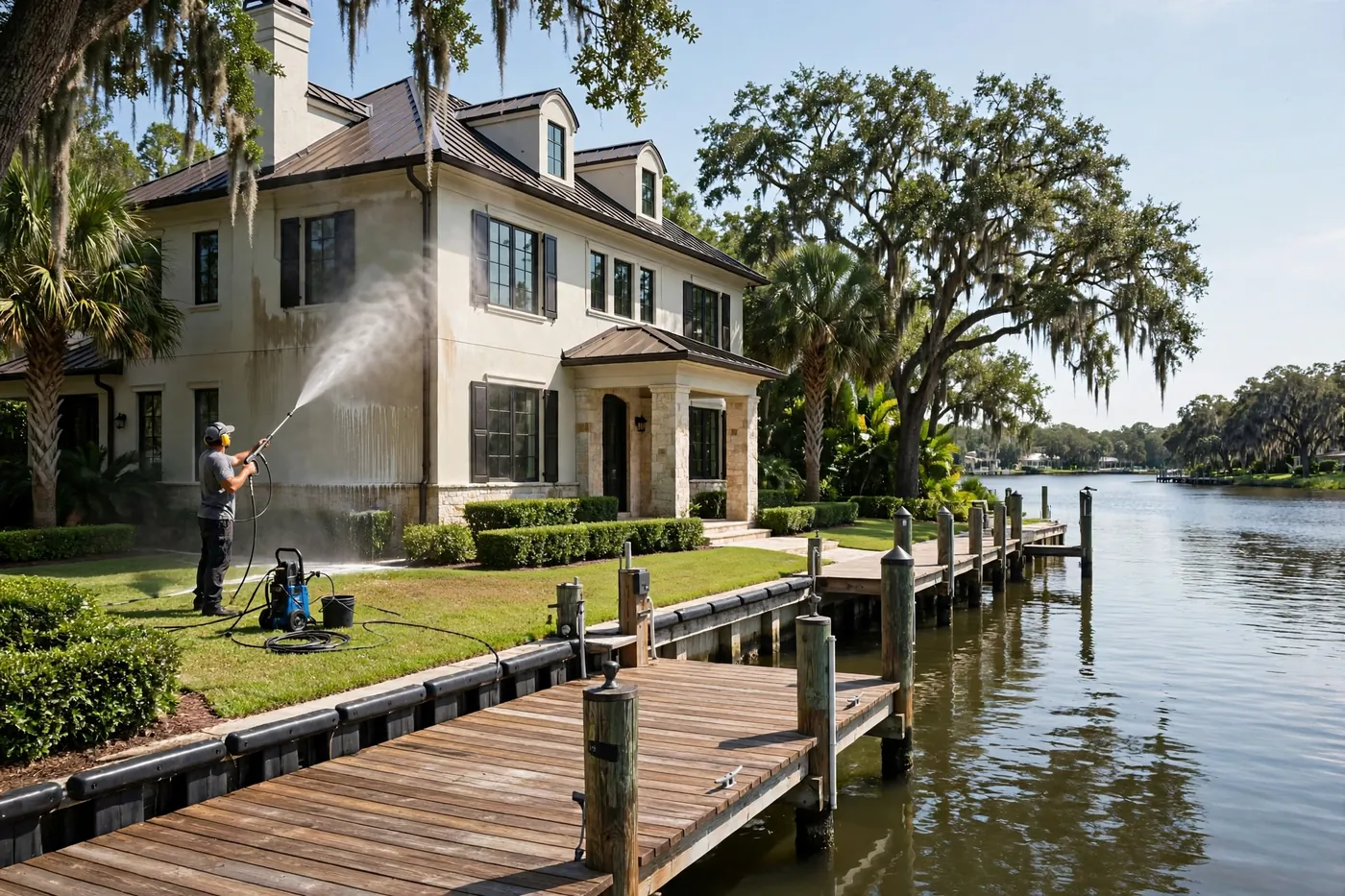
Ortega's riverfront estates face salt air, river humidity and dock grime. A complete guide to waterfront exterior cleaning.
Read More →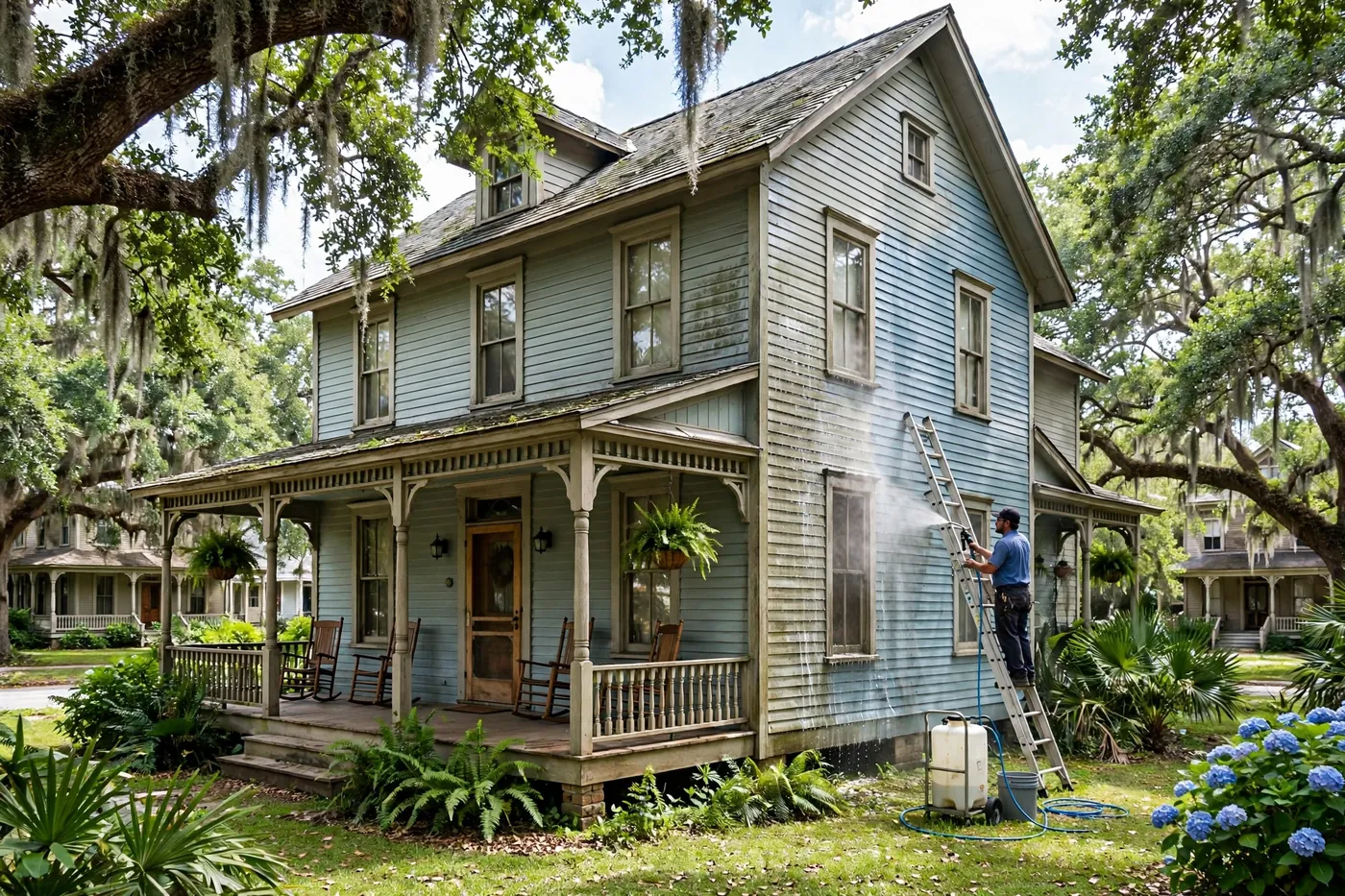
Springfield's century-old homes need soft washing, not brute force. How to restore historic siding safely.
Read More →Call now for a free estimate and same-day service in Jacksonville, FL. Open 24/7.