
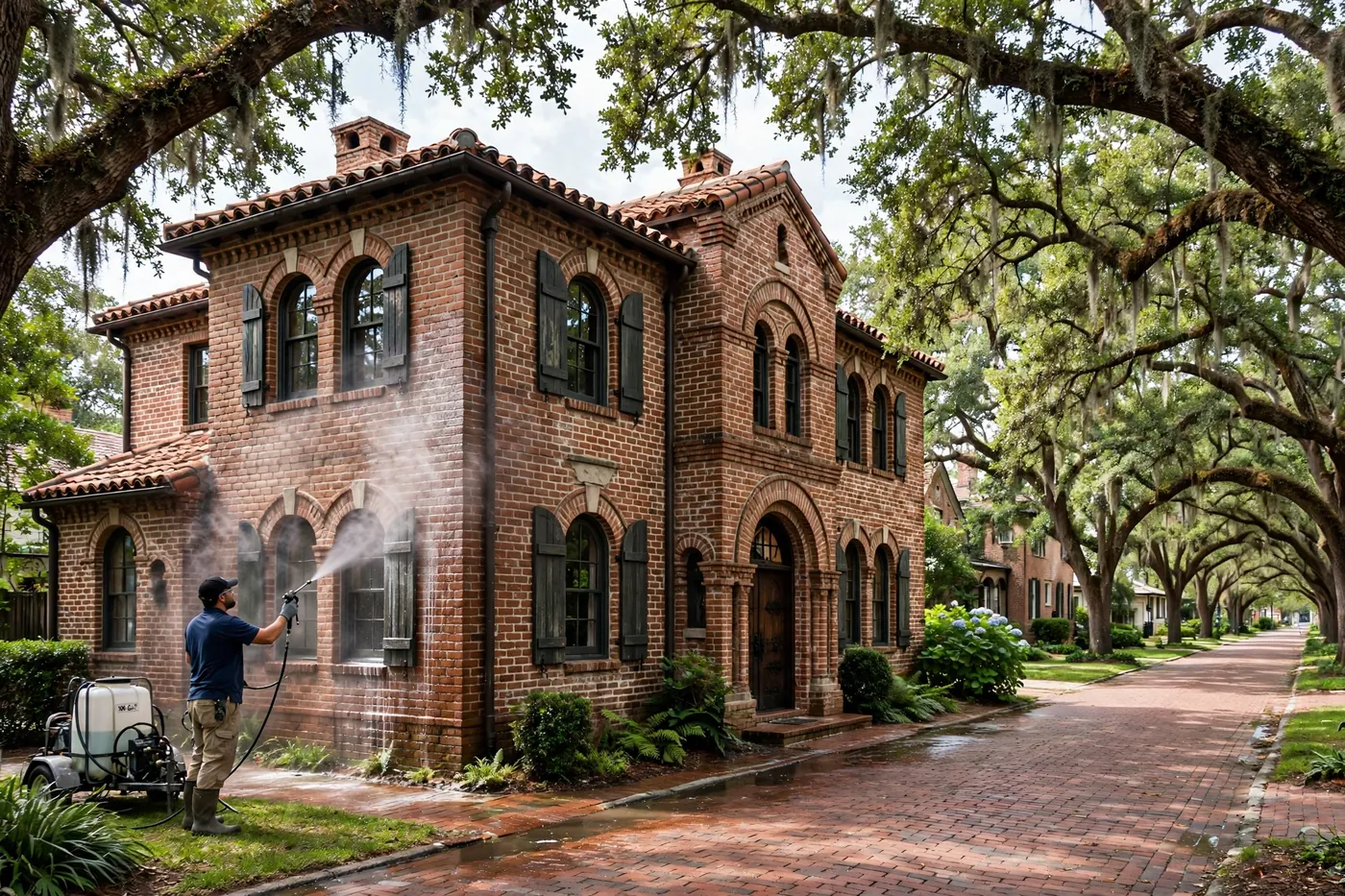
Pressure Washing in San Marco: Brick, Stucco & Historic Homes
San Marco's 1920s–40s Mediterranean Revival homes need a gentle touch. Here's how to clean brick, stucco and historic wood without damage.
Read More →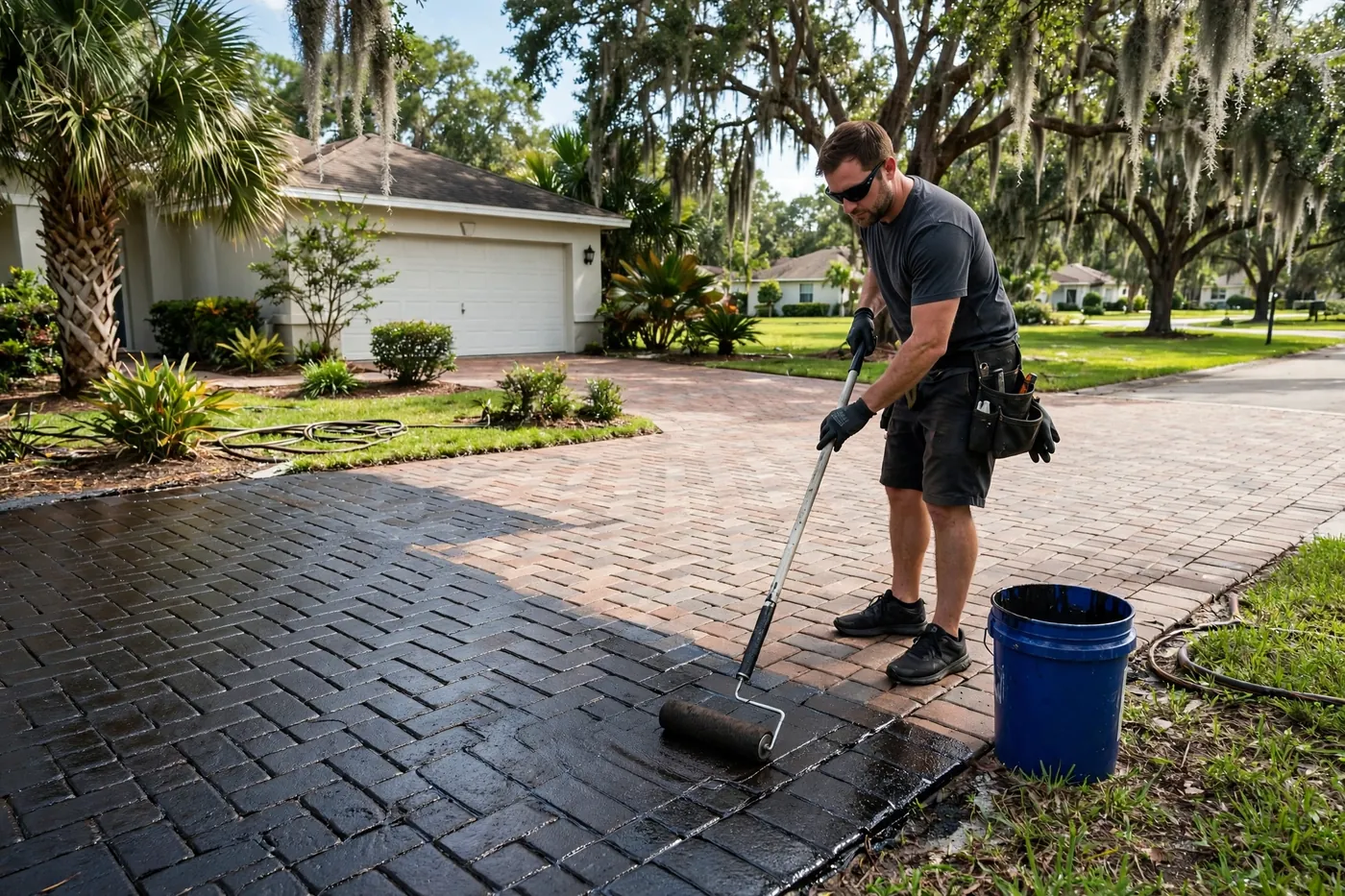
Cleaning is step one. Sealing locks out stains, weeds and sand loss — here's the full guide.
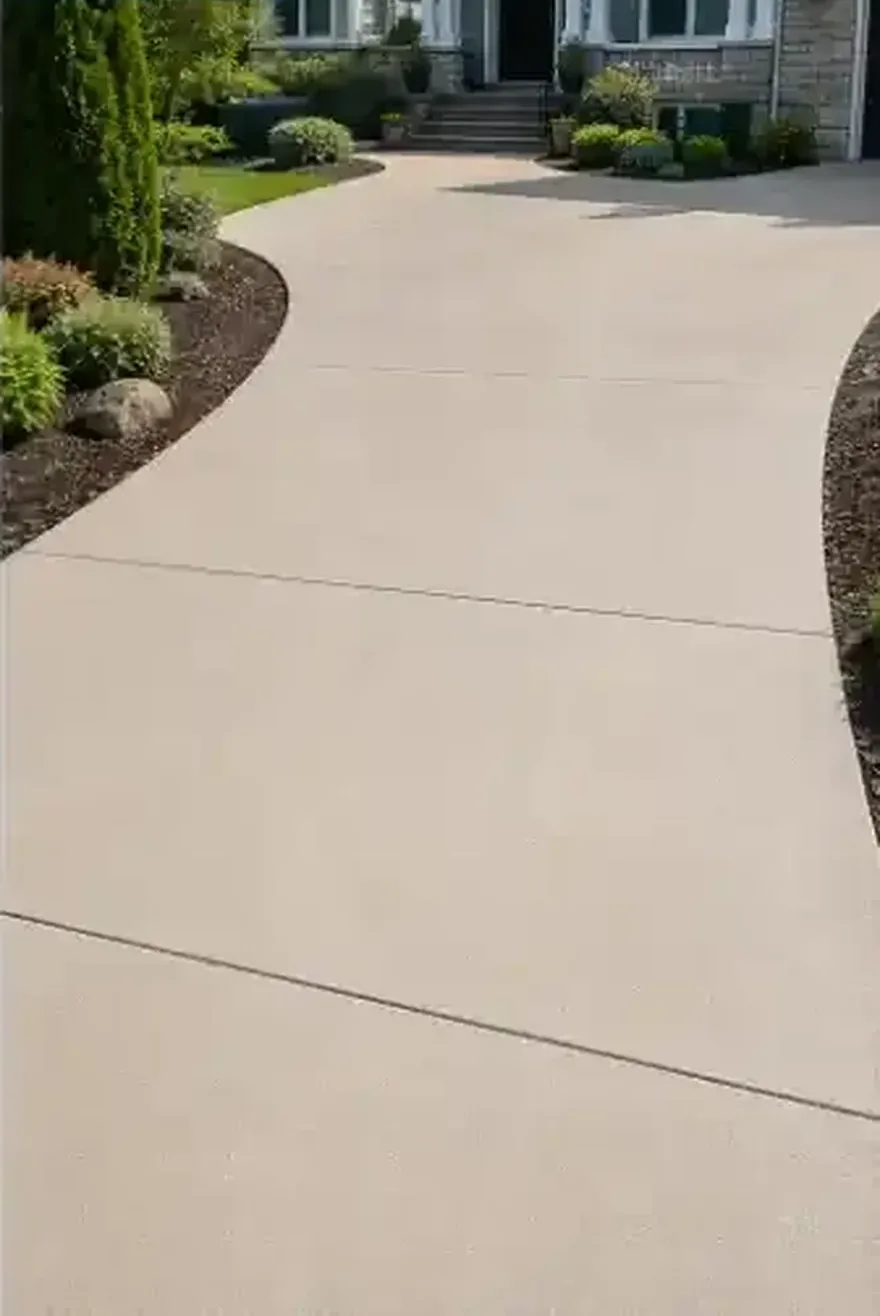
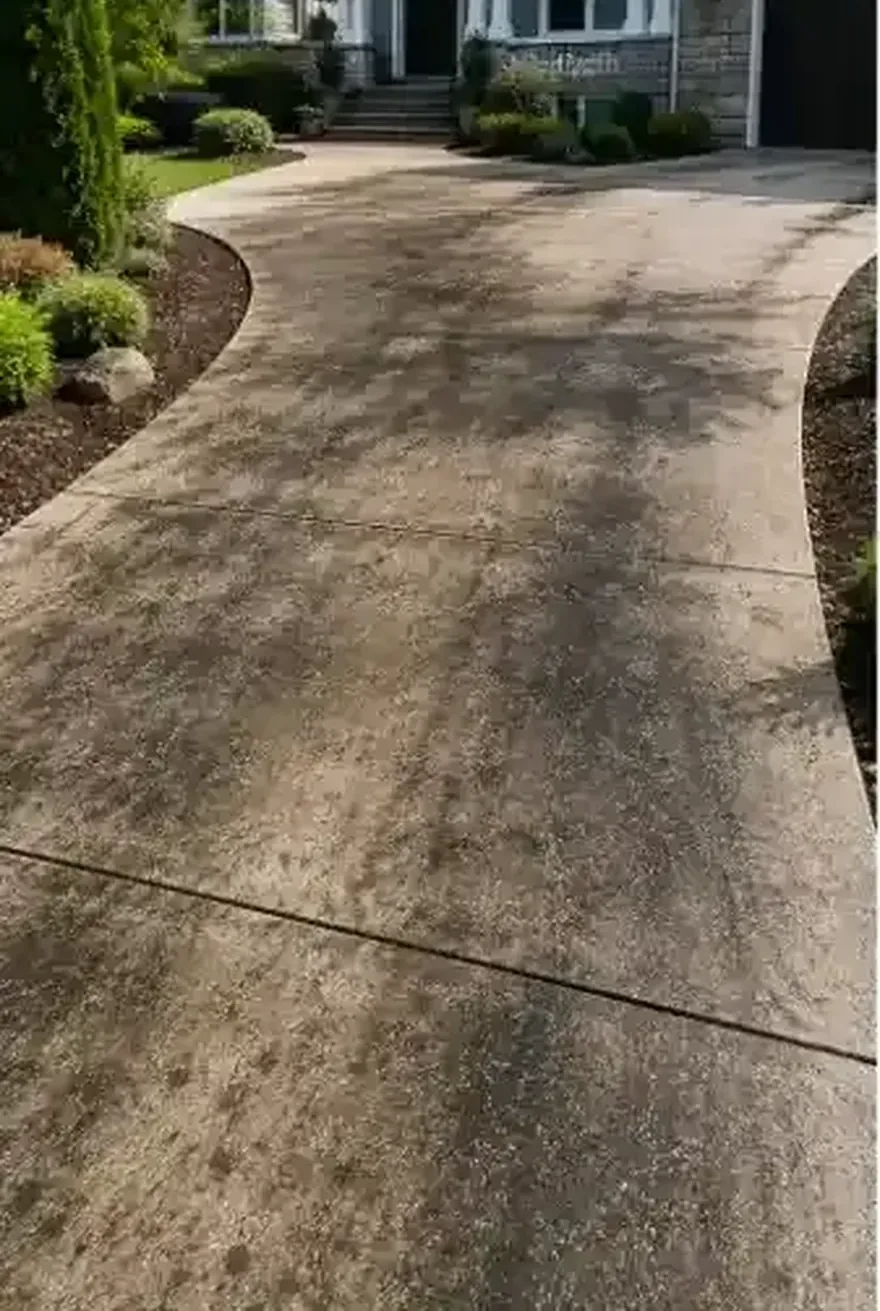 BEFOREAFTER
Drag to compare
BEFOREAFTER
Drag to comparePaver sealing is one of those services that sounds optional until you understand what it prevents. A quality sealer does four things: it makes the paver surface stain-resistant so oil, rust, and organic stains sit on top instead of soaking in; it hardens and stabilizes the joint sand so it does not wash out in our daily summer downpours; it inhibits weed and moss growth in the joints; and it enhances or protects the paver color against Florida's brutal UV.
Think of unsealed pavers like an unsealed wooden deck. They will function, but every spill, every storm, and every weed seed takes a toll that compounds over time. Sealed pavers shed water, resist staining, and hold their sand, which means the driveway or patio that looked great after cleaning still looks great two years later instead of slowly reverting.
It is important to be clear about what sealing is not: it is not a substitute for cleaning, it will not fix structural problems like sinking or heaving, and cheap sealers applied badly can do more harm than good. But done right, on properly cleaned pavers, sealing is the highest-value protection you can give a paver surface in Jacksonville.
Florida is uniquely hard on pavers. Our summer pattern of intense afternoon rain followed by blazing sun is a torture test: water drives into unsealed joints and washes sand out, then heat bakes the surface and fades color. Weeds do not take winters off here, they germinate year-round in the organic matter that collects in unsealed joints. And the fine sand base under Jacksonville pavers shifts with our heavy rains, which is why unsealed driveways develop wavy, uneven spots faster here than in drier climates.
Salt air near the beaches adds another factor, accelerating surface wear on unsealed pavers. And our oak trees drop tannin-rich leaves and pollen that stain unsealed pavers far more aggressively than sealed ones. Every one of Florida's paver enemies is blunted significantly by a good sealer.
This is why we recommend sealing more strongly here than a contractor in, say, Ohio would. In Jacksonville, an unsealed paver driveway is on a fast track to weeds, stains, sand loss, and fading. Sealing is not an upsell, it is the appropriate maintenance for the climate.
Sealers fall into two main families. Penetrating sealers soak into the paver and protect from within without changing the appearance. They are invisible once cured, which appeals to homeowners who love the natural look of their pavers. They offer excellent stain protection and do not peel or flake, but they do not enhance color or add sheen.
Film-forming sealers sit on top of the paver, creating a protective coating. They come in natural matte finishes and glossy wet-look finishes that deepen colors dramatically. That wet look is popular on Jacksonville pool decks and driveways, but film-forming sealers demand more careful application and maintenance: applied too thick or on damp pavers, they can turn white or peel, which is one of the most common sealer failures we are called to fix.
We generally recommend water-based sealers for most Jacksonville homes: lower odor, easier cleanup, and more forgiving application in our humidity. Solvent-based sealers offer a richer enhancement but are fussier and smellier. The right choice depends on your pavers, your aesthetic preference, and how the area is used, which is exactly what we discuss during an estimate. Call Professor Pressure Washing at (904) 938-5900 and we will recommend honestly rather than pushing the most expensive option.
Sealing over dirty pavers is the cardinal sin of this trade, because sealer locks in whatever is underneath. The process must start with a thorough professional cleaning that removes all algae, mold, dirt, and previous sealer residue. Then the joints are addressed: old, depleted sand is cleaned out and fresh sand, ideally polymeric sand that hardens when wet, is swept into the joints.
Timing and dryness are everything. Pavers must be completely dry before sealing, which in Jacksonville humidity means waiting at least 24 to 48 hours after cleaning, longer if it rains. Sealer applied to damp pavers traps moisture and turns milky white, a failure that is expensive to strip and redo. We watch the weather and the pavers, not just the calendar.
Application is typically two thin coats with proper drying between them, not one thick coat. Then the sealer needs cure time, usually 24 hours before foot traffic and 48 to 72 hours before vehicles. A rushed job skips these waits, and the results show it within months. When you hire this work, ask about dry times: the answer tells you whether the contractor actually understands sealing.
In Jacksonville's sun and rain, expect a quality sealer to last two to three years on a driveway and three to four on a less-trafficked patio or pool deck. You will know it is wearing when water stops beading on the surface, stains start setting faster, or weeds return to the joints with enthusiasm. Resealing is straightforward when the previous job was done right: clean, touch up sand, and apply fresh coats.
Between sealings, maintenance is simple. Rinse occasionally, pull weeds promptly before roots disturb the sand, and clean spills sooner rather than later. Avoid harsh chemicals and pressure washing sealed pavers aggressively, which wears the sealer prematurely. A garden hose and a broom handle most routine care.
If your pavers have never been sealed, the best time is right after a professional cleaning, when the surface is pristine and the joints are ready for fresh sand. Professor Pressure Washing handles the full sequence, cleaning, re-sanding, and sealing, across Jacksonville. Call (904) 938-5900 and we will assess your pavers and give you a straight recommendation on whether sealing makes sense for your situation.
Yes, in most cases. Sealing protects against stains, stabilizes joint sand, inhibits weeds, and preserves color, all of which matter more in Florida's rain and sun. The one exception is pavers with structural problems like severe sinking, which should be repaired first since sealer will not fix movement.
Typically two to three years on driveways and three to four years on patios and pool decks in Jacksonville's climate. Intense sun and daily summer rain wear sealer faster here than in milder climates. Water beading on the surface is the easy test: when it stops beading, it is time to reseal.
Unsealed pavers stain more easily, lose joint sand to rain, grow weeds in the joints, and fade in the sun. The pavers still function, but they age visibly faster and cost more to restore later. Sealing is preventive maintenance that pays for itself in avoided restoration.
San Marco's 1920s–40s Mediterranean Revival homes need a gentle touch. Here's how to clean brick, stucco and historic wood without damage.
Read More →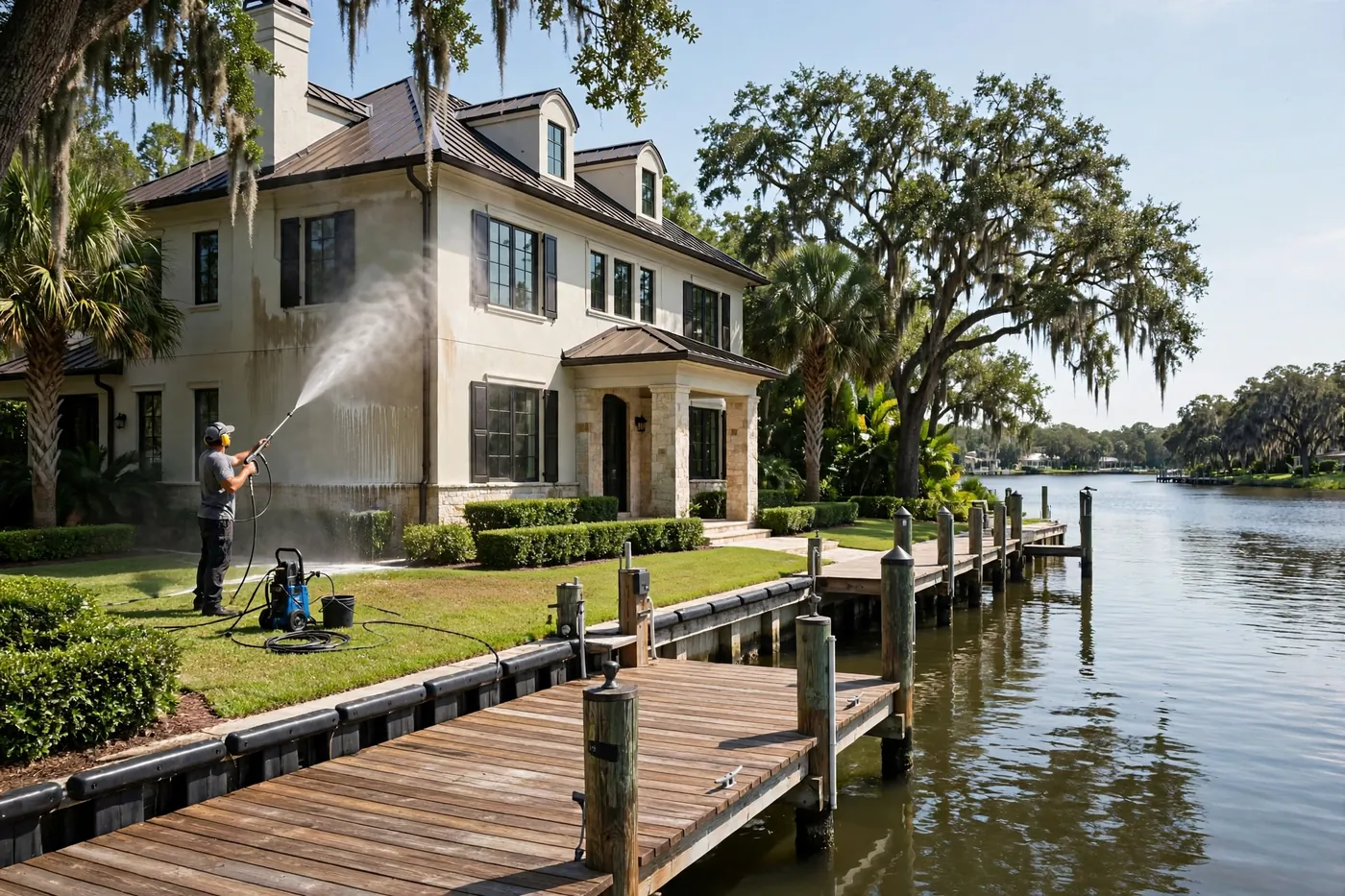
Ortega's riverfront estates face salt air, river humidity and dock grime. A complete guide to waterfront exterior cleaning.
Read More →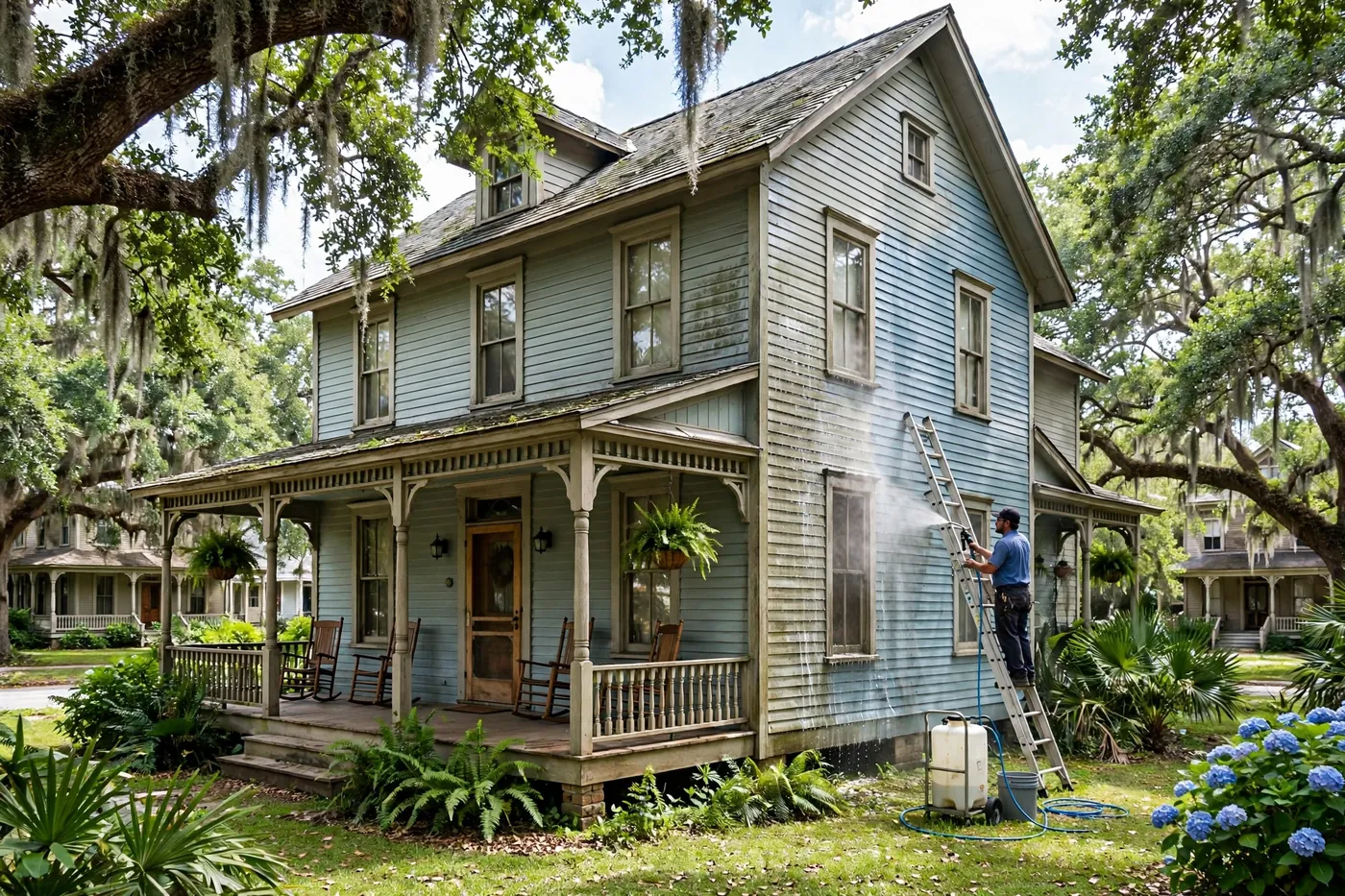
Springfield's century-old homes need soft washing, not brute force. How to restore historic siding safely.
Read More →Call now for a free estimate and same-day service in Jacksonville, FL. Open 24/7.