
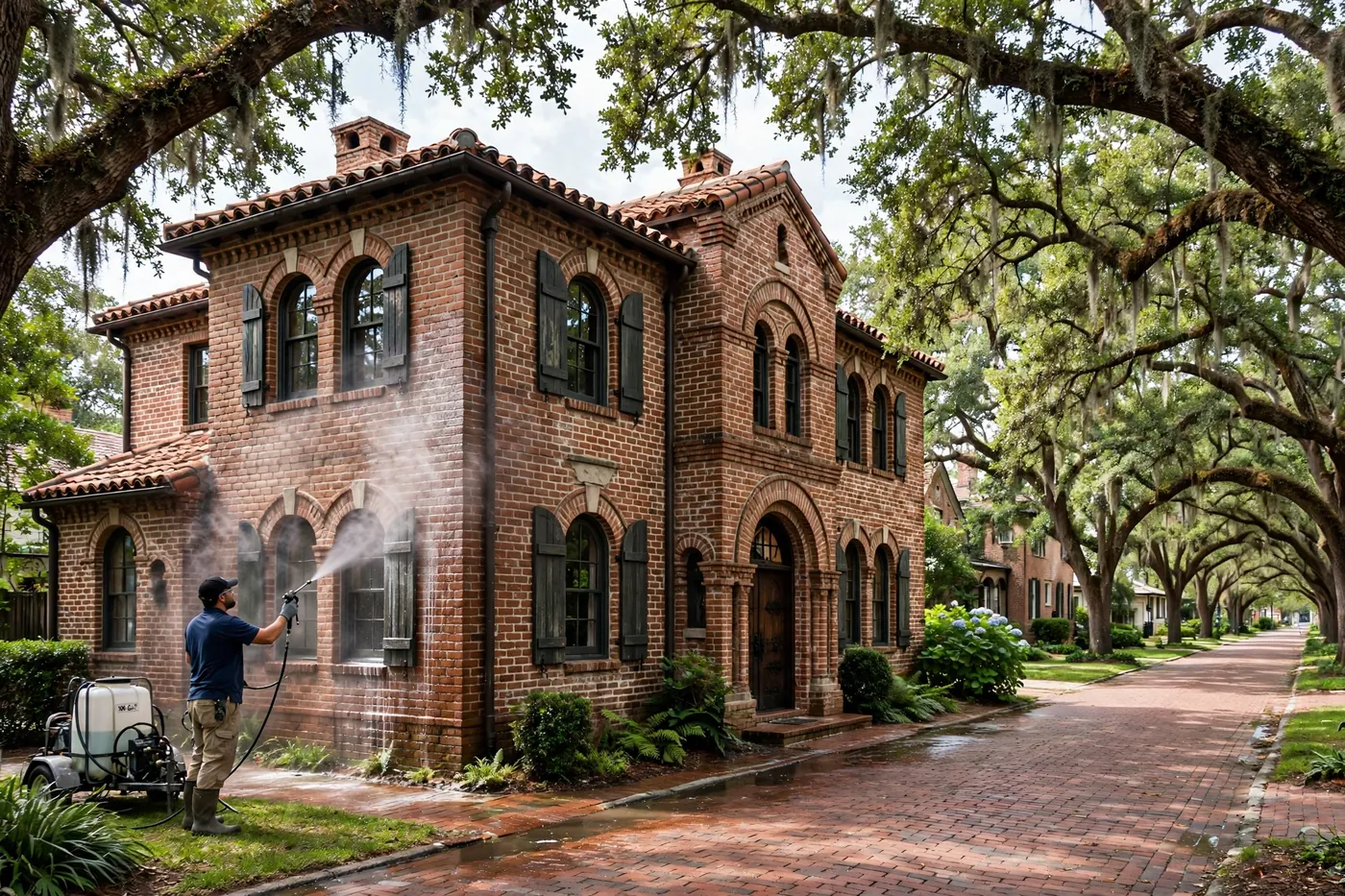
Pressure Washing in San Marco: Brick, Stucco & Historic Homes
San Marco's 1920s–40s Mediterranean Revival homes need a gentle touch. Here's how to clean brick, stucco and historic wood without damage.
Read More →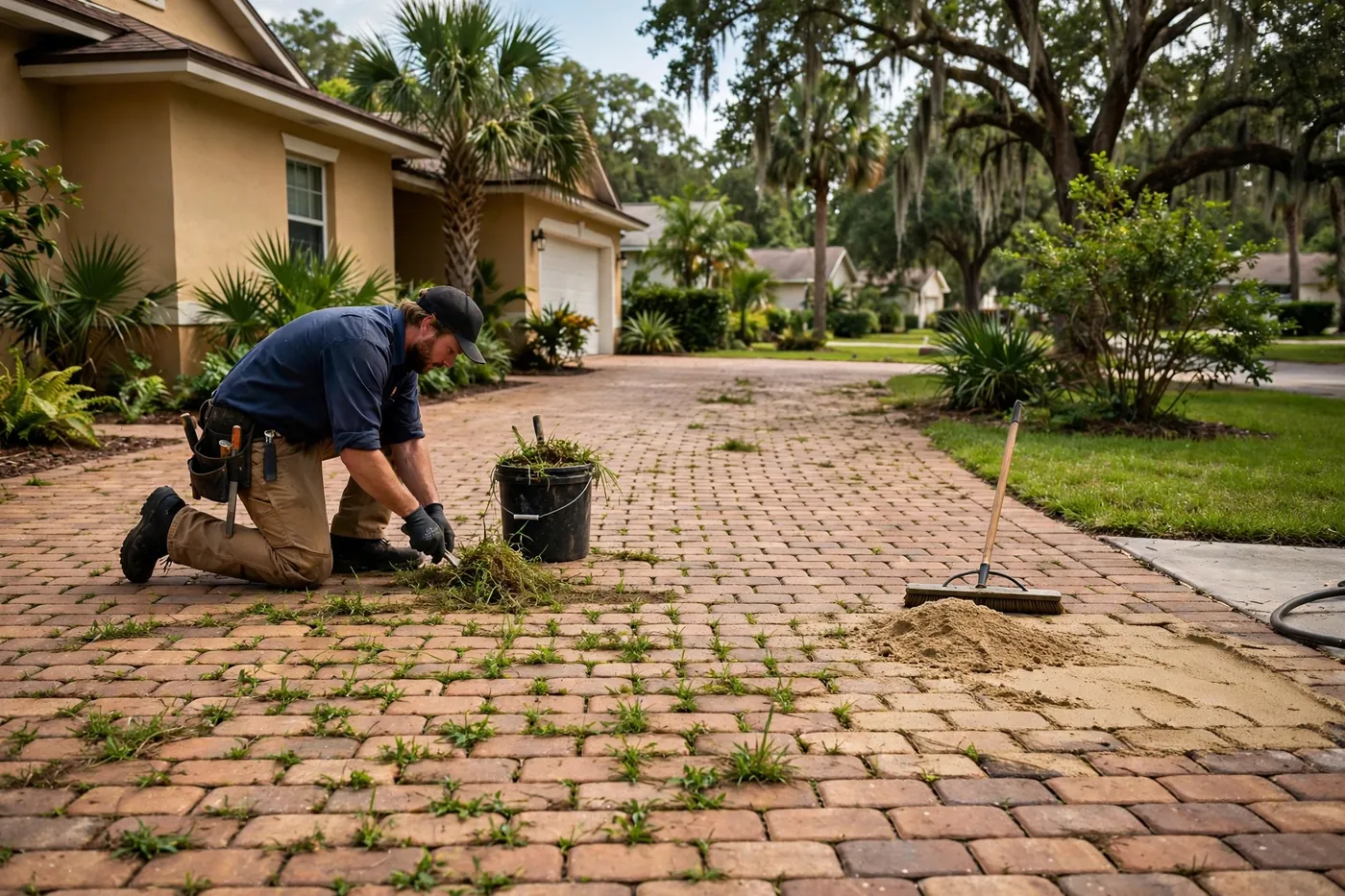
Weeds, sunken spots, lost sand: full paver driveway restoration, not just a surface wash.
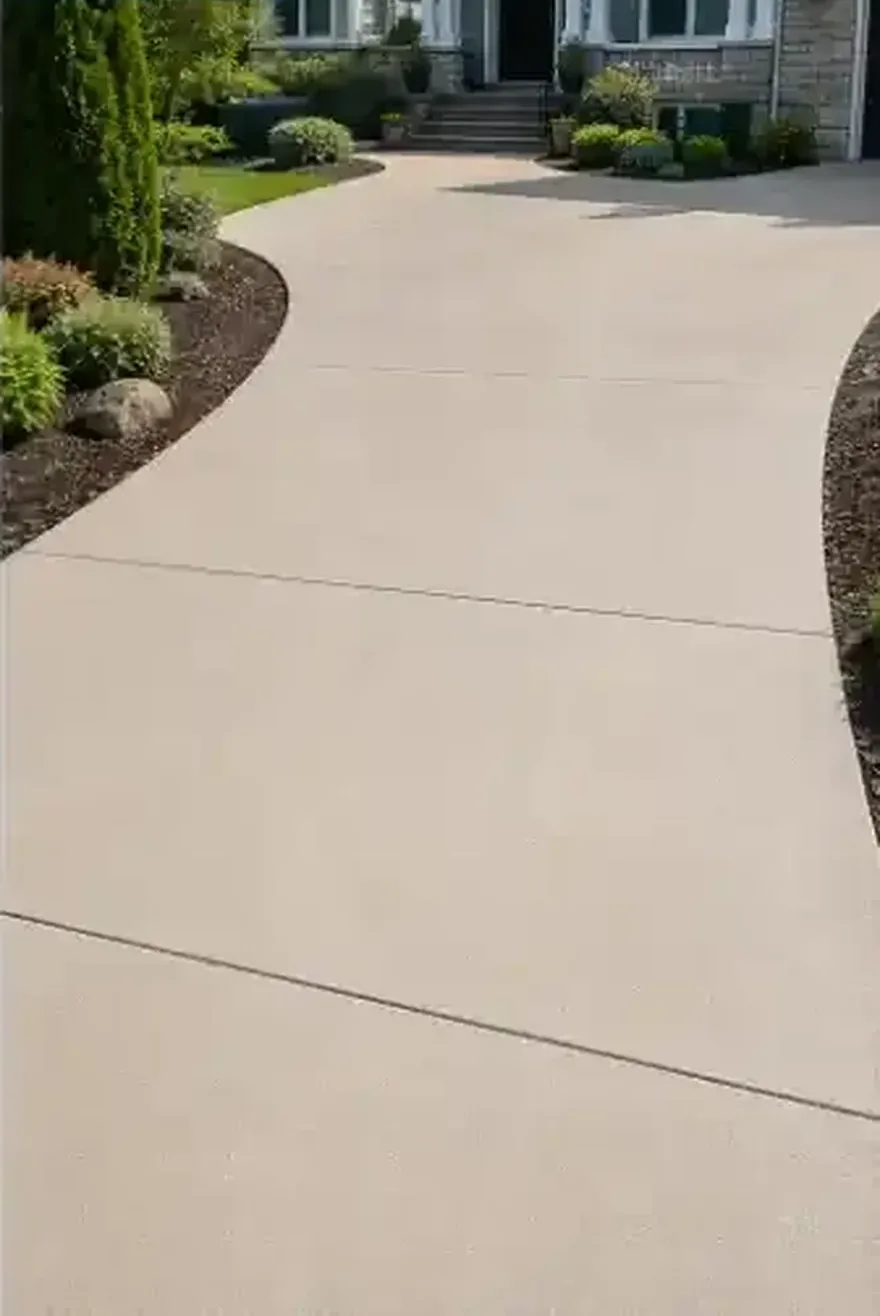
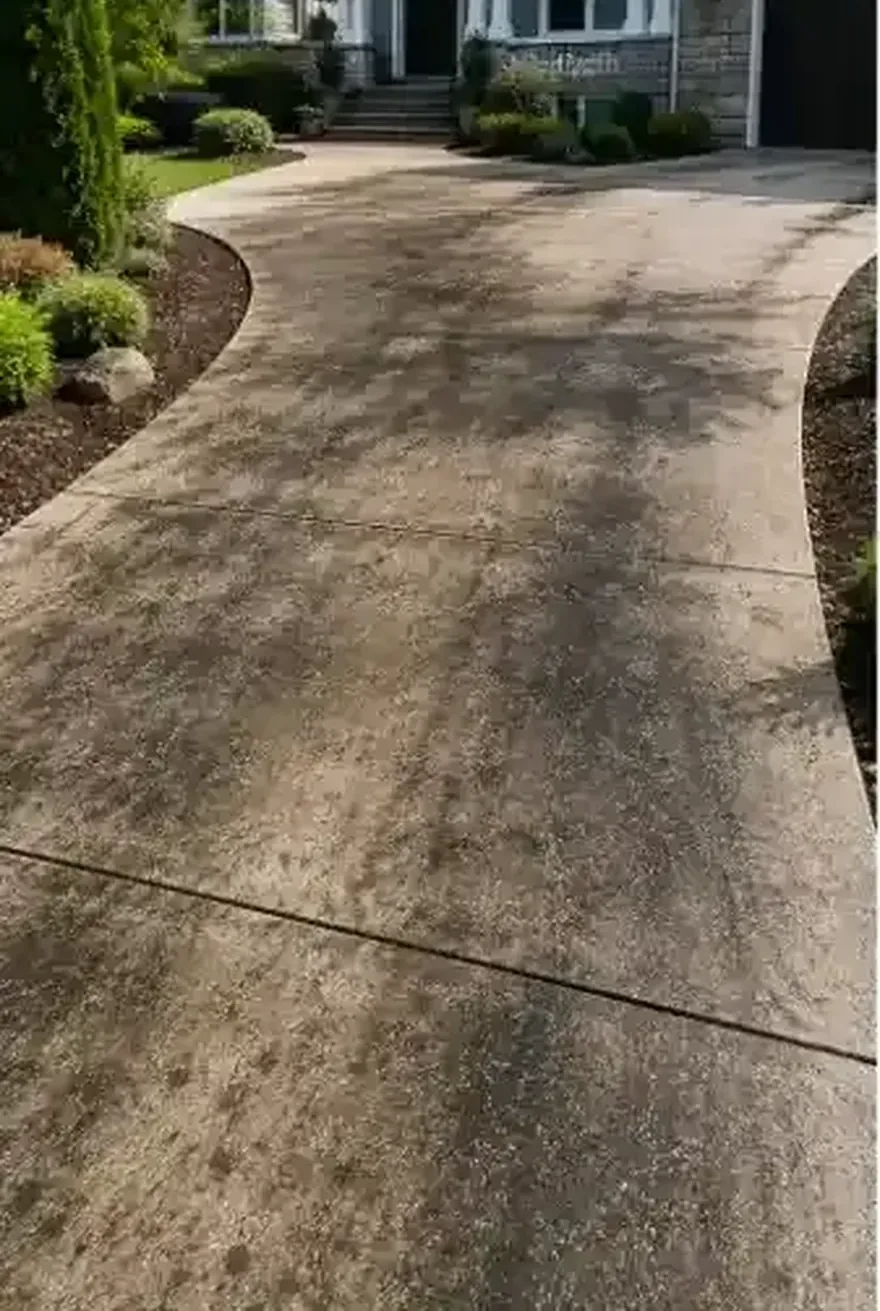 BEFOREAFTER
Drag to compare
BEFOREAFTER
Drag to compareA paver driveway is a system, not a surface. Individual bricks sit on a compacted base with sand-filled joints locking them together, and every part of that system needs attention. A quick blast with a pressure washer cleans the tops of the pavers while ignoring, or actively damaging, everything that makes the driveway function: the joint sand washes out, weeds get trimmed but not killed, and the underlying issues keep developing.
Jacksonville is especially hard on paver systems. Our intense summer rains erode joint sand relentlessly, our sandy soils shift, and weeds germinate year-round in the organic matter that collects in depleted joints. Ants excavate sand with industrial enthusiasm. The result is the familiar progression: first weeds, then wobbling pavers, then sunken spots and spreading stains.
Real paver care means restoration, not just washing: deep cleaning, weed and ant treatment, joint re-sanding, and sealing. Each step builds on the last, and skipping steps is why so many paver driveways look tired again within months of a cheap wash. If your pavers have weeds, sand loss, or uneven spots, you need restoration, and this guide explains exactly what that involves.
It starts innocently: a few weeds in the joints. But weeds are a symptom of sand loss, because intact, filled joints leave no room for seeds to establish. As Jacksonville rains wash sand out, joints open up, organic debris collects, and weeds move in. Their roots then widen the joints further, accelerating the cycle. Meanwhile, ants excavate sand from below, creating voids that let pavers rock and settle.
Surface cleaning alone resets none of this. A pressure washer trims the weeds at the surface while leaving roots intact, and the high pressure actually blasts out more of the remaining sand, making the underlying problem worse. This is the most common paver mistake we see: repeated washing without re-sanding, each round leaving the driveway structurally weaker.
Breaking the cycle requires addressing the joints, not just the paver faces. That means killing weeds and ants down to the root, removing the depleted joint material, and installing fresh sand, preferably polymeric sand that hardens on contact with water and resists both washout and weed intrusion. Only then does the driveway have a foundation worth sealing.
Professional paver restoration follows a specific sequence, and order matters. First, a deep cleaning with commercial equipment and appropriate detergents removes years of algae, mold, dirt, and old sealer residue from both paver faces and joints. This is more thorough than a maintenance wash, because everything applied later needs a pristine surface to bond to.
Second, vegetation treatment: weeds and moss are killed to the root, not just trimmed. Third, re-sanding: fresh sand, ideally polymeric, is swept deep into every joint and compacted, then activated with a controlled misting. This step alone transforms how the driveway feels underfoot, no more rocking pavers. Fourth, and critically, the pavers must dry completely, 24 to 48 hours minimum in our humidity, before the final step.
Fifth is sealing, which locks the fresh sand in place, resists staining, inhibits future weed growth, and enriches the paver color. The full process typically spans several days including dry times, which is why legitimate restoration costs more than a wash and delivers incomparably more. When Professor Pressure Washing restores a paver driveway, this is the process, no shortcuts, call (904) 938-5900 and we will walk you through it.
Paver driveways collect the same stains as concrete, oil, rust, tannin, with one addition that puzzles many homeowners: efflorescence, the white powdery crust that blooms on paver surfaces. Efflorescence is mineral salts drawn up through the pavers by moisture from our high water table, and it is especially common on newer installations. It looks alarming but is usually cosmetic, and professional cleaning removes it, though it may recur until the pavers fully cure.
Oil and rust on pavers need the same targeted chemistry as on concrete, degreasers for petroleum, acid-based treatments for rust, with the added caution that harsh chemicals can damage joint sand and surrounding areas. This is another reason restoration is sequenced: stains are treated during the deep-clean phase, before fresh sand goes in.
One honest note: deeply saturated oil stains in pavers can sometimes be improved but not erased, because individual pavers absorb contaminants deeply. In extreme cases, replacing a handful of the worst pavers, which is straightforward since pavers are modular, achieves what chemistry cannot. We will tell you upfront which situation you are in.
After restoration, maintenance is simple but non-negotiable. Keep the driveway blown clear of leaves and debris, because organic matter sitting in joints is where weeds start. Pull any weed the moment you see it, before roots establish. Rinse oil drips and spills promptly; on sealed pavers, most wipe right up. And avoid harsh chemicals or aggressive pressure washing, which wear sealer prematurely.
Plan on resealing every two to three years in Jacksonville's climate, with a light cleaning and joint touch-up at the same time. This maintenance cycle costs a fraction of restoration and keeps the driveway perpetually in that just-restored state. Think of restoration as the reset button and maintenance as keeping it pressed.
If your paver driveway has reached the weeds-and-sand-loss stage, restoration will transform it. Professor Pressure Washing has been restoring Jacksonville paver driveways since 2015, and the before-and-after difference is one of the most dramatic in our trade. Call (904) 938-5900 for an assessment, and we will give you an honest read on whether your pavers need full restoration or just a good cleaning.
Weeds grow where joint sand has washed out, leaving gaps filled with organic debris where seeds establish. Jacksonville's heavy rains erode sand quickly, and once weeds root, they widen joints further. Lasting repair means killing weeds to the root, re-sanding joints with polymeric sand, and sealing, not just surface washing.
Often, yes. Because pavers are modular, individual sunken pavers can usually be lifted, the base re-leveled and compacted, and the pavers reset. Widespread sinking may indicate base failure needing more extensive work. An honest assessment distinguishes the two, and we provide that before quoting.
Yes, absolutely. Pressure washing inevitably removes joint sand, and cleaning without re-sanding leaves joints open to weeds, ants, and shifting. Re-sanding with polymeric sand after deep cleaning is an essential part of proper paver care, and it must happen before sealing.
San Marco's 1920s–40s Mediterranean Revival homes need a gentle touch. Here's how to clean brick, stucco and historic wood without damage.
Read More →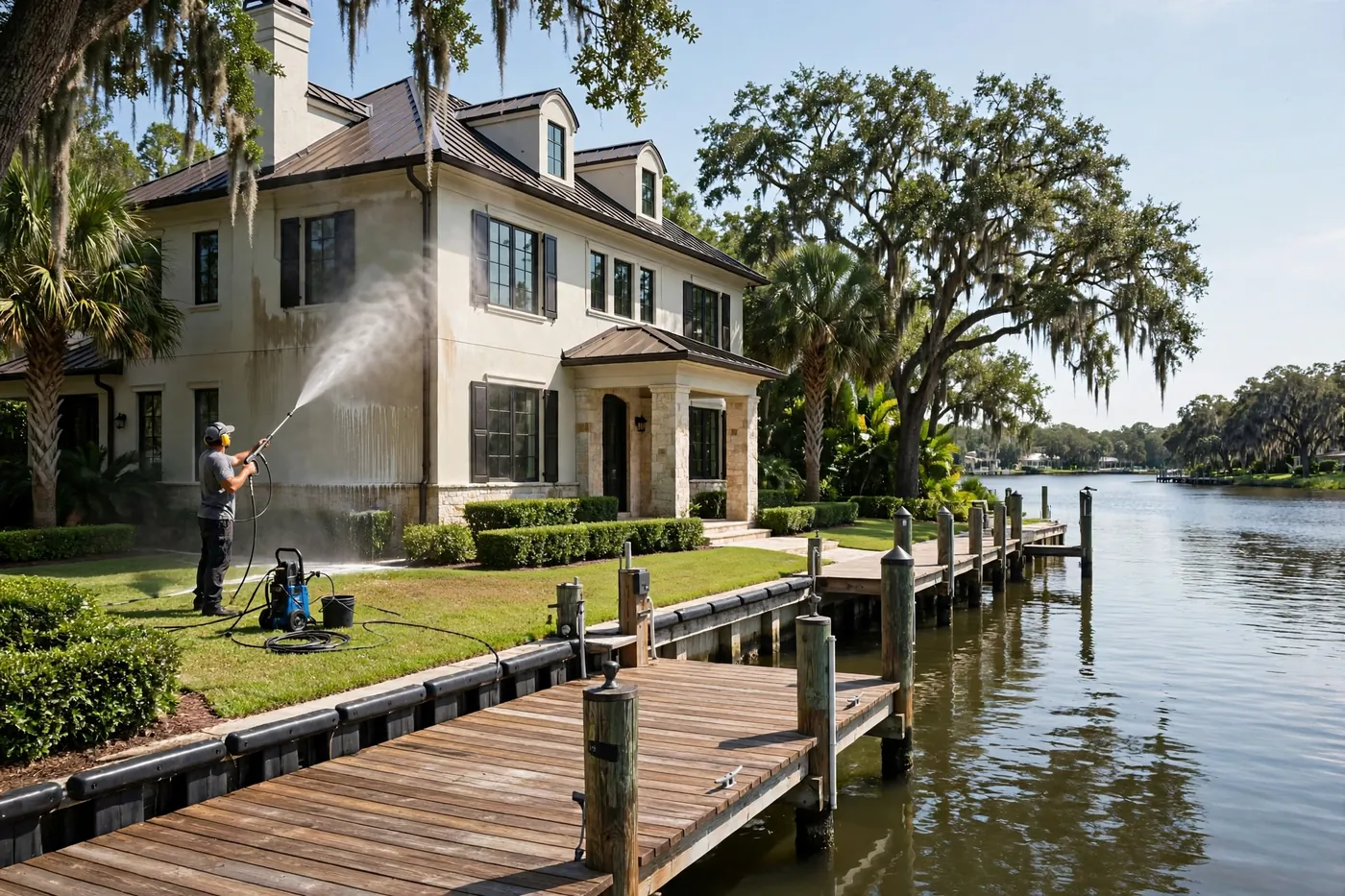
Ortega's riverfront estates face salt air, river humidity and dock grime. A complete guide to waterfront exterior cleaning.
Read More →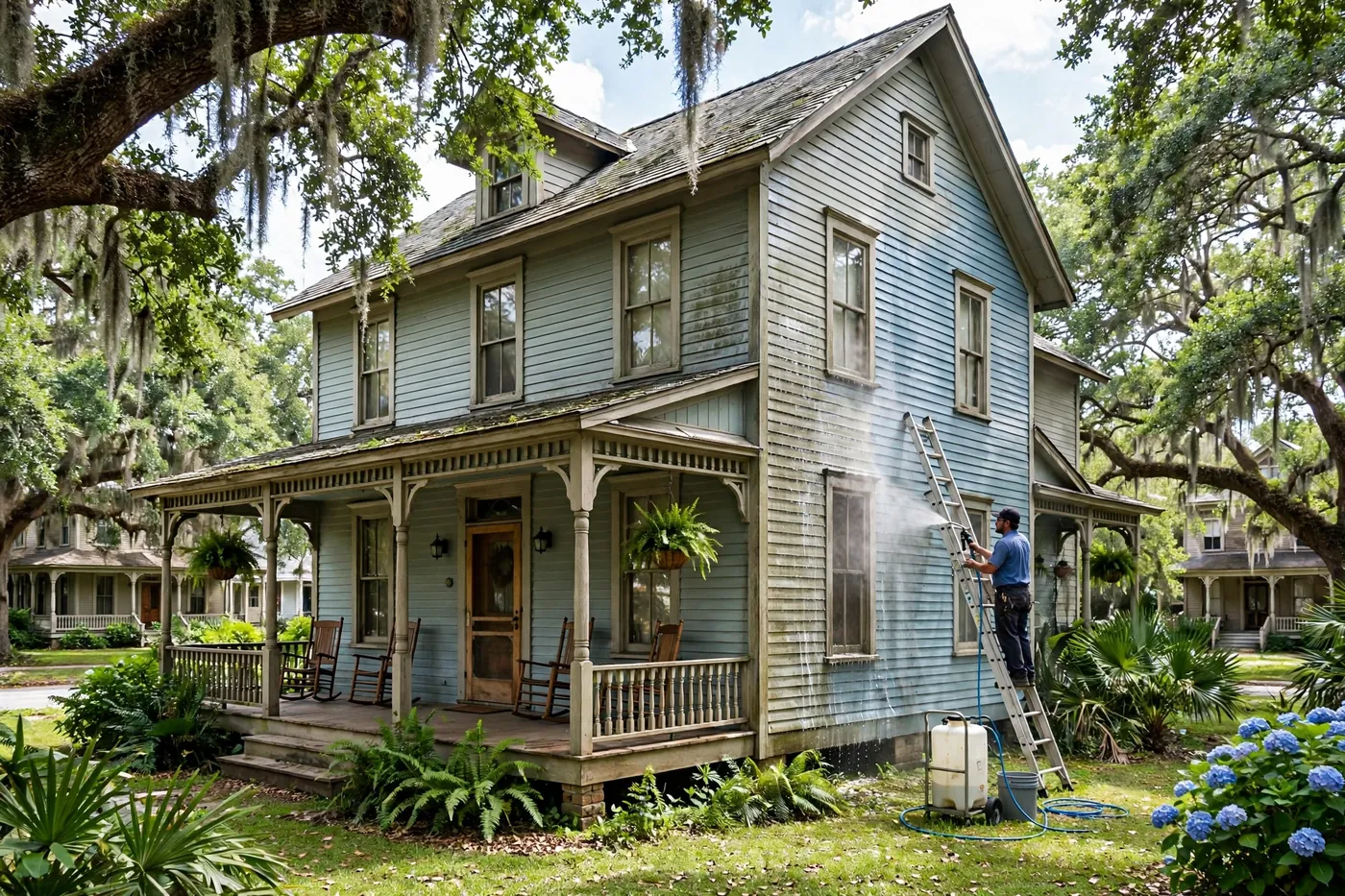
Springfield's century-old homes need soft washing, not brute force. How to restore historic siding safely.
Read More →Call now for a free estimate and same-day service in Jacksonville, FL. Open 24/7.