
Pressure Washing in San Marco: Brick, Stucco & Historic Homes
San Marco's 1920s–40s Mediterranean Revival homes need a gentle touch. Here's how to clean brick, stucco and historic wood without damage.
Read More →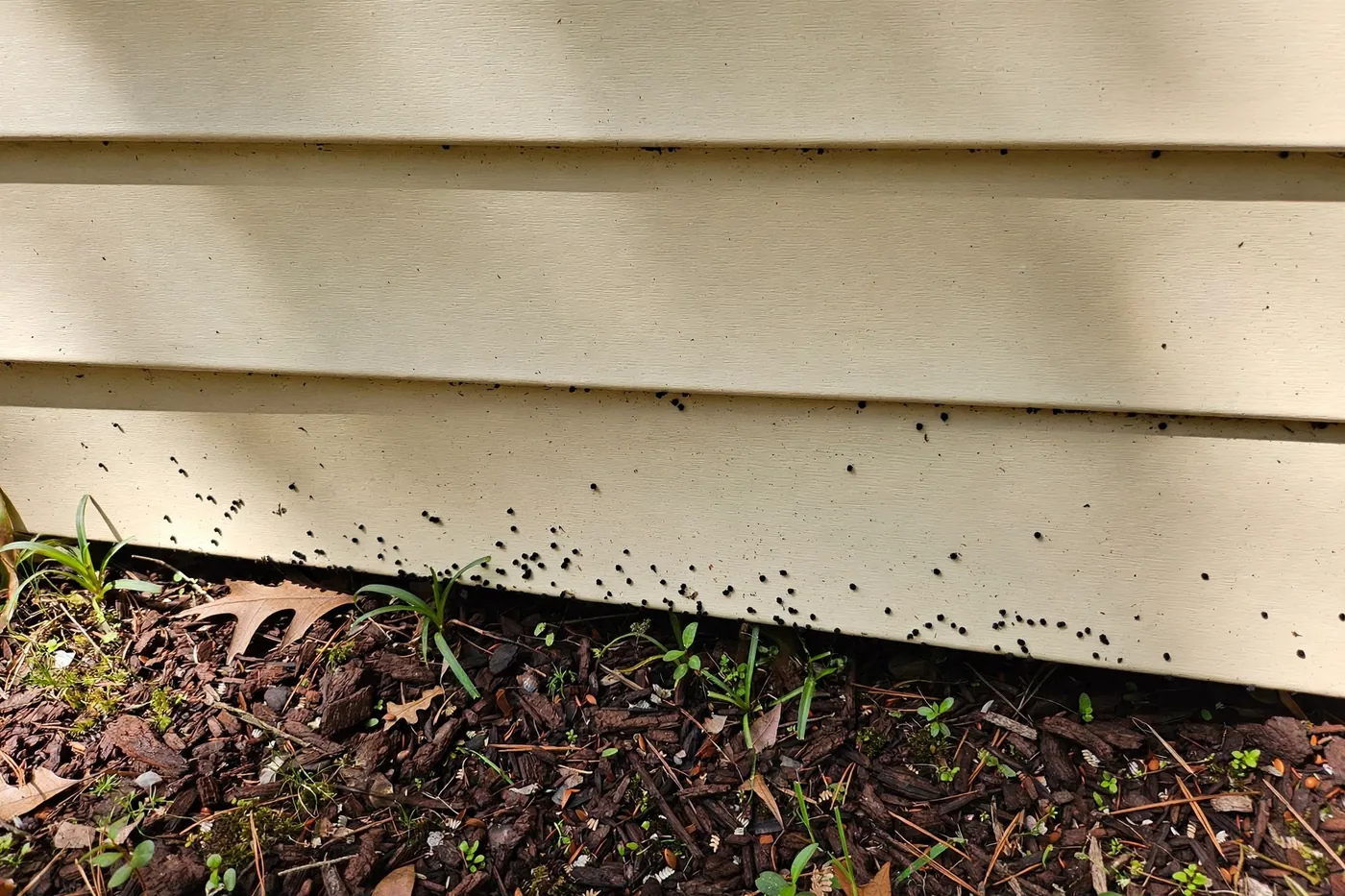
Those tiny black dots that won't wash off? It's artillery fungus from your mulch — and here's the honest truth about removal.
 BEFOREAFTER
Drag to compare
BEFOREAFTER
Drag to compareLook closely at the siding on the shady side of your house — especially the first two or three feet above your mulch beds. See those tiny black dots, each about the size of a pinhead, stuck to the surface like miniature tar specks? They don't wipe off. They don't wash off with a garden hose. And if you've already paid for a pressure washing that left them behind, you're not imagining things and your contractor wasn't necessarily incompetent.
What you're looking at is artillery fungus — Sphaerobolus stellatus, also called shotgun fungus. It lives in wood mulch, particularly the shredded hardwood mulch that's standard in Jacksonville landscaping, and it reproduces by firing its spore masses up to 20 feet through the air. Those sticky black dots on your siding, your white vinyl fence, your car parked in the driveway — they're spore packets, glued on with a biological adhesive that's remarkably tough.
Jacksonville is prime artillery fungus territory for a simple reason: the fungus thrives in warm, humid, shady conditions, which describes roughly every mulched bed in Duval County from March through October. The fresh shredded mulch that looks so good when the landscapers put it down is the highest-risk kind — artillery fungus colonizes new wood mulch aggressively in its first year. If your beds were mulched this spring and the dots appeared this summer, that's not a coincidence.
Here's the honest truth most companies won't tell you: standard pressure washing — even good soft washing — usually cannot fully remove artillery fungus spots. The spore masses bond to surfaces with an adhesive that resists water, detergents, and most cleaning chemistry. A pressure washer can blast the dark cap off, but the sticky base often remains as a faint dot, and cranking up the pressure to remove it completely risks damaging the siding underneath.
This is a chemistry problem, not a pressure problem. The adhesive is designed by nature to survive rain, wind, and time — it's how the fungus ensures its spores stay put until conditions are right. Bleach-based house wash solutions, which dissolve algae and mildew beautifully, barely touch artillery fungus adhesive. We've tested the full range of professional approaches, and we owe you candor about the results.
So what does that mean for your home? It means any contractor who promises that a standard house wash will 'get all those black dots off' is either inexperienced or overselling. The dots can be dramatically improved — often 70 to 90 percent removed with the right treatment — but complete eradication from every spore without replacing the siding is genuinely difficult. We'd rather tell you that upfront than disappoint you after.
What works best is a multi-step approach: first, a professional soft wash to remove all the algae, mildew, and grime around the spots, which makes the remaining dots far less noticeable. Then, targeted treatment of the spots themselves — careful manual removal with plastic scrapers on durable surfaces, or specialized cleaning agents applied to small areas. On vinyl siding, which is non-porous, results are best; on porous surfaces like stucco or painted wood, the adhesive penetrates deeper and complete removal is harder.
What doesn't work: blasting them with high pressure (damages siding, leaves the adhesive base anyway), painting over them without removal (the dots telegraph through new paint within months — painters hate artillery fungus for this reason), or ignoring them (they accumulate year after year, and a siding face that starts with a dozen dots can have hundreds within a few seasons).
The single most effective 'treatment' is actually prevention at the source — which brings us to the mulch itself. If you're fighting artillery fungus, the battle is won or lost in the flower bed, not on the siding. A wash handles the symptoms; changing the mulch handles the disease.
Since artillery fungus lives in wood mulch, the most effective prevention is changing what you mulch with. The fungus strongly prefers fresh shredded hardwood bark — the most common and cheapest mulch in Jacksonville. Alternatives it colonizes far less readily include pine bark nuggets (larger pieces, less surface area), pine straw (the traditional Southern choice, and nearly immune), eucalyptus or cedar mulch (naturally resistant), and stone or rubber mulch (no wood, no fungus).
If you love the look of shredded hardwood, you have two more options. First, let it age: artillery fungus activity peaks in the first year after mulch is laid and declines significantly as the mulch decomposes. Top-dressing with a thin fresh layer annually is worse than replacing aged mulch outright. Second, keep mulch from piling against the house — a 6-inch mulch-free gap at the foundation, or a strip of stone or pine straw directly against the siding, breaks the spore's firing range to your walls.
Also consider the microclimate. Artillery fungus loves shade and moisture, so beds on the north side of the house under oak canopy are the highest-risk zones in any Jacksonville yard — which, not coincidentally, is exactly where the dots appear on siding. Improving drainage and airflow in those beds, and avoiding overwatering, makes the environment less hospitable. You won't eliminate the fungus entirely — it's native to our soils — but you can reduce it from a plague to a nuisance.
For a light case — a few dozen dots on vinyl siding — a careful homeowner can make real progress with a plastic putty knife, some patience, and a follow-up wash. Work in the shade, keep the surface wet, and don't gouge. But be realistic about the time involved: what looks like a quick job becomes hours of meticulous picking once you're up close, and missing the adhesive base means the shadow remains.
Call a professional when the infestation is heavy (hundreds of dots), when the siding is stucco or painted wood (where aggressive removal damages the surface), or when you want the whole picture handled at once — the wash, the spot treatment, and honest advice about your mulch. At Professor Pressure Washing, artillery fungus jobs start with an honest assessment: we'll show you what we can remove, what will likely remain, and what mulch changes will prevent the next round. No promises we can't keep.
If those black dots are winning the war on your siding, call (904) 938-5900. We'll give you the straight story — what we can clean, what the mulch is doing, and what it'll take to keep them from coming back. Ten years in Jacksonville has taught us that honesty about artillery fungus earns more trust than any oversold guarantee.
Those dots are artillery fungus (Sphaerobolus stellatus), also called shotgun fungus — a wood-decay fungus that lives in mulch and fires sticky spore packets up to 20 feet onto nearby surfaces. It's especially common in Jacksonville because the fungus thrives in warm, humid, shady conditions, and fresh shredded hardwood mulch — the area's most popular mulch — is its favorite habitat. The dots appear most heavily on siding above mulch beds, typically within the first year after fresh mulch is laid.
Only partially, and any contractor who promises complete removal from a standard wash is overselling. The spore masses bond with a biological adhesive that resists water, detergents, and bleach-based cleaners — pressure can remove the dark cap but often leaves the sticky base. Realistic results are 70 to 90 percent improvement through a combination of professional soft washing plus targeted manual or chemical spot treatment. Complete eradication without siding replacement is genuinely difficult, and we'd rather tell you that honestly upfront.
Change the mulch — it's the source. Pine bark nuggets, pine straw, cedar, or eucalyptus mulch resist the fungus far better than shredded hardwood, and stone or rubber mulch eliminate it entirely. Keep a mulch-free gap at the foundation, avoid piling fresh mulch against the house, and improve drainage and airflow in shady north-side beds where the fungus thrives. Letting mulch age also helps, since artillery fungus activity peaks in the first year after application.
San Marco's 1920s–40s Mediterranean Revival homes need a gentle touch. Here's how to clean brick, stucco and historic wood without damage.
Read More →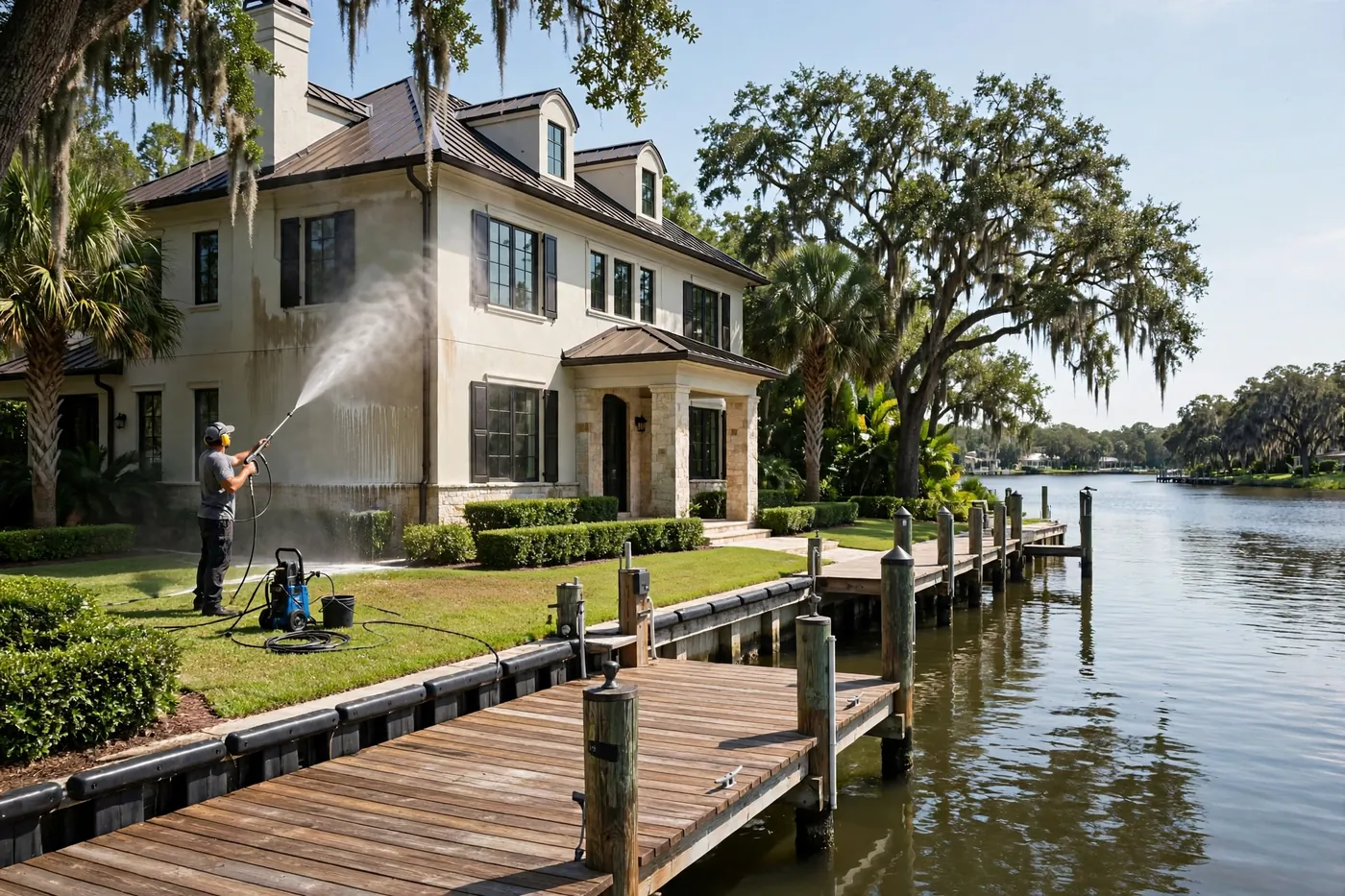
Ortega's riverfront estates face salt air, river humidity and dock grime. A complete guide to waterfront exterior cleaning.
Read More →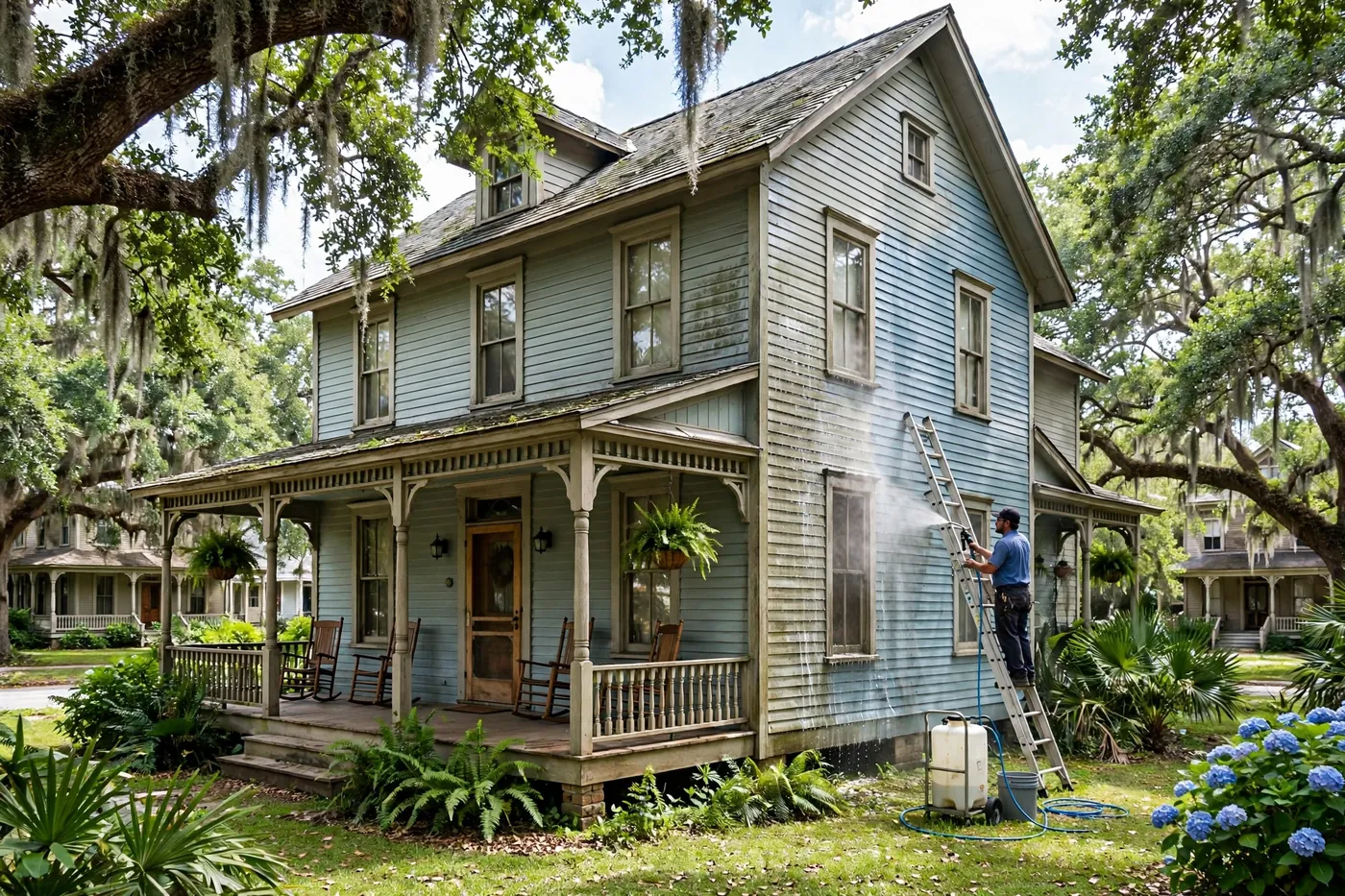
Springfield's century-old homes need soft washing, not brute force. How to restore historic siding safely.
Read More →Call now for a free estimate and same-day service in Jacksonville, FL. Open 24/7.