
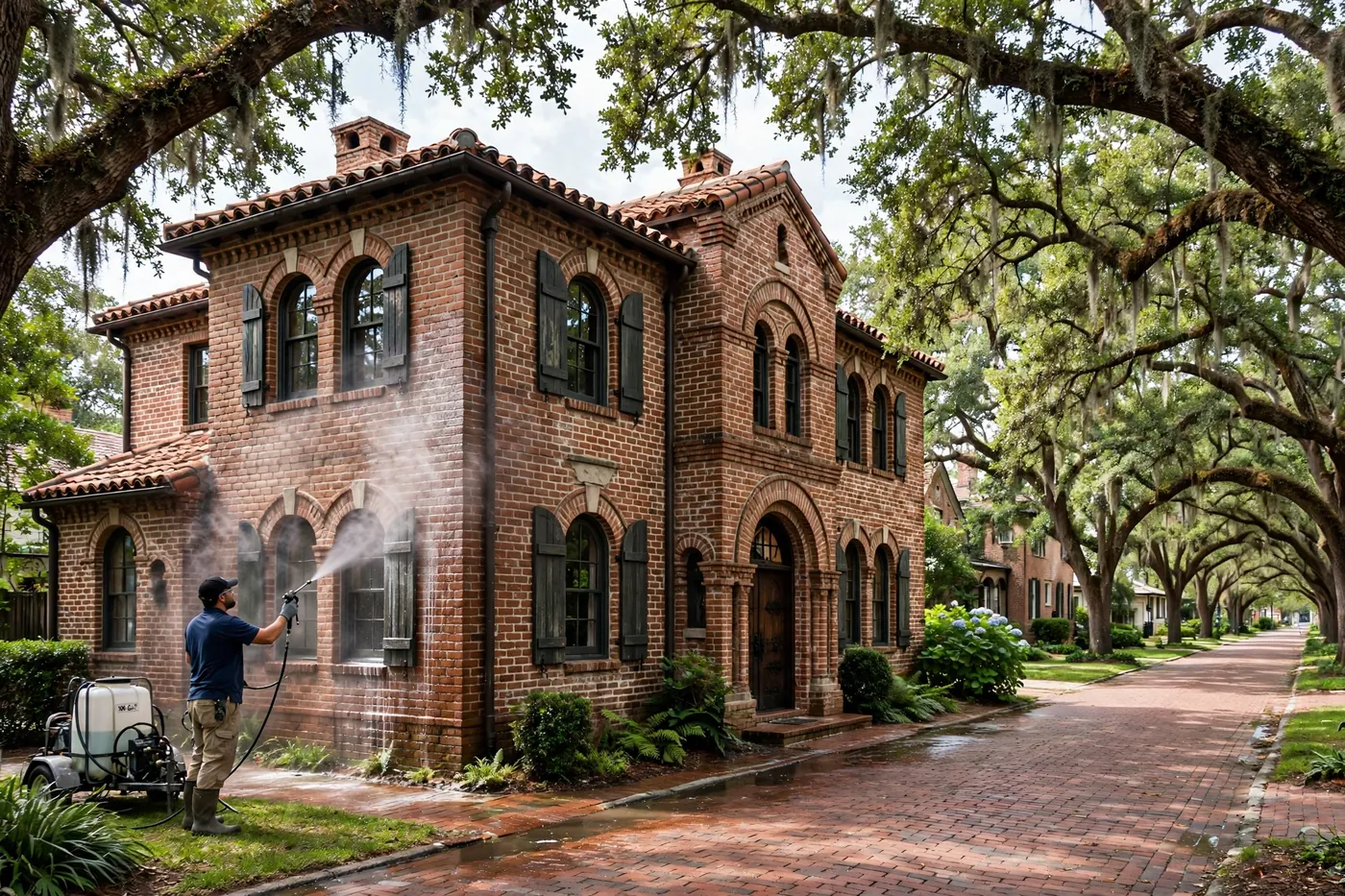
Pressure Washing in San Marco: Brick, Stucco & Historic Homes
San Marco's 1920s–40s Mediterranean Revival homes need a gentle touch. Here's how to clean brick, stucco and historic wood without damage.
Read More →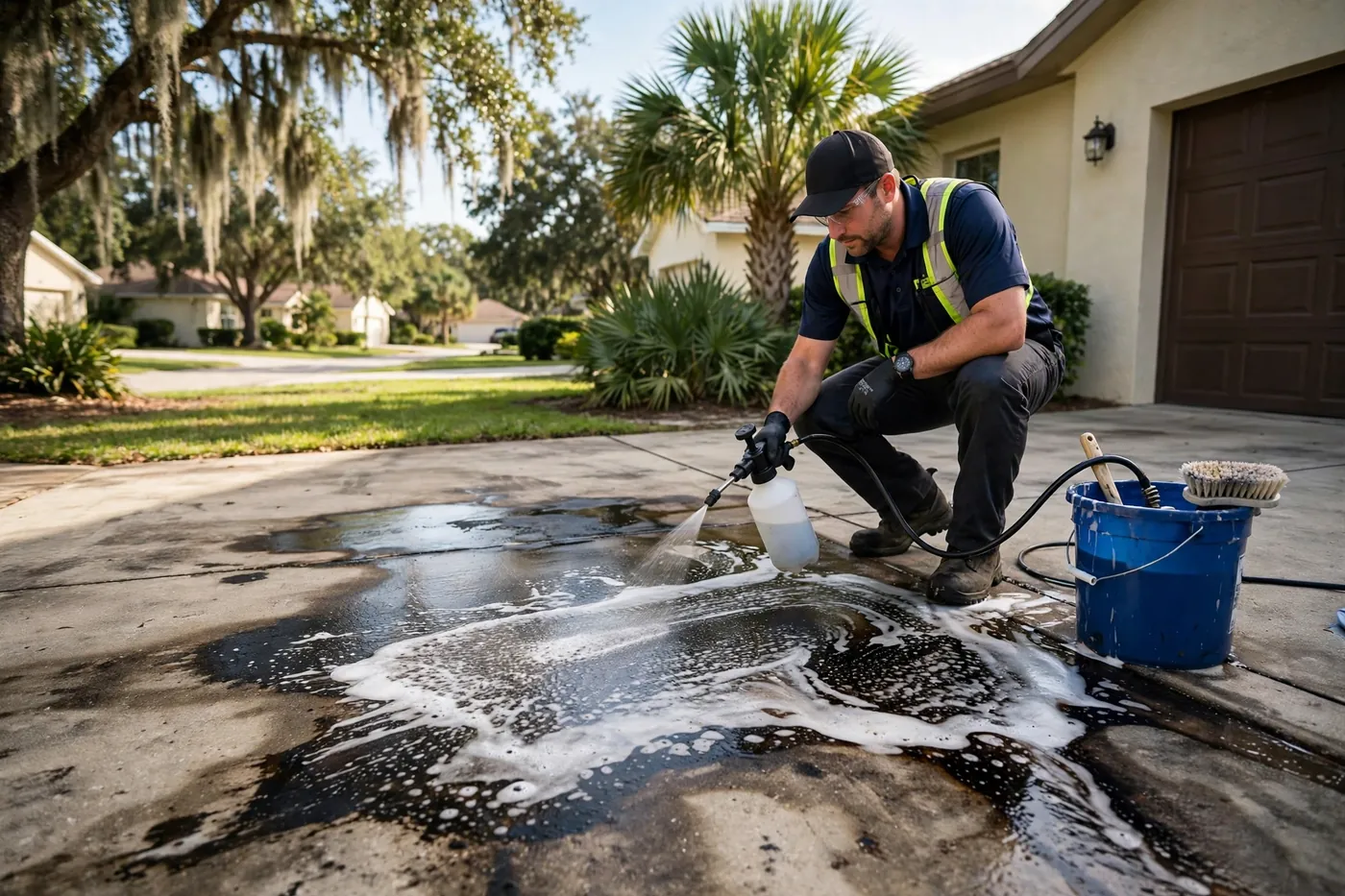
Jacksonville driveways collect a unique cocktail: motor oil, oak tannin and well-water rust. Each needs different treatment.
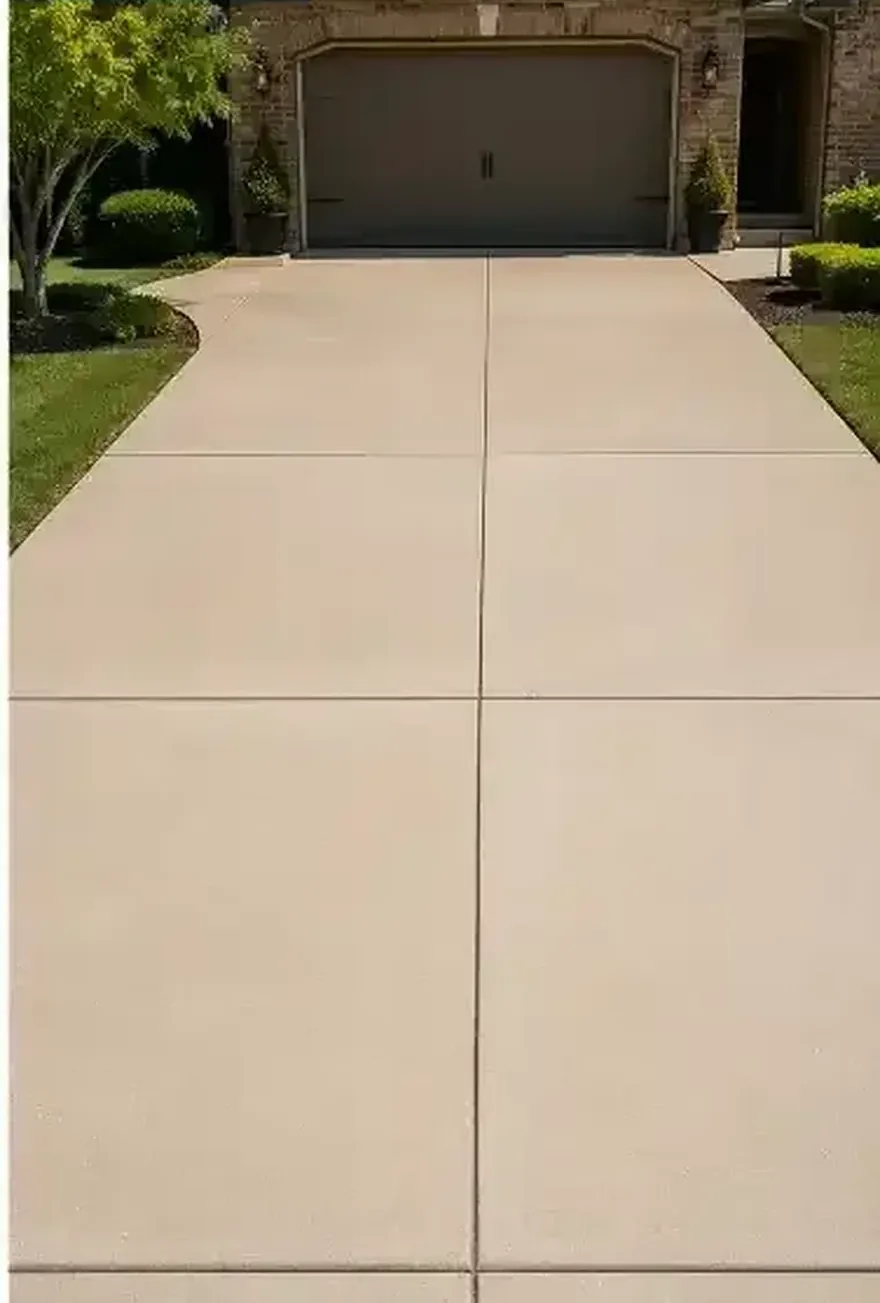
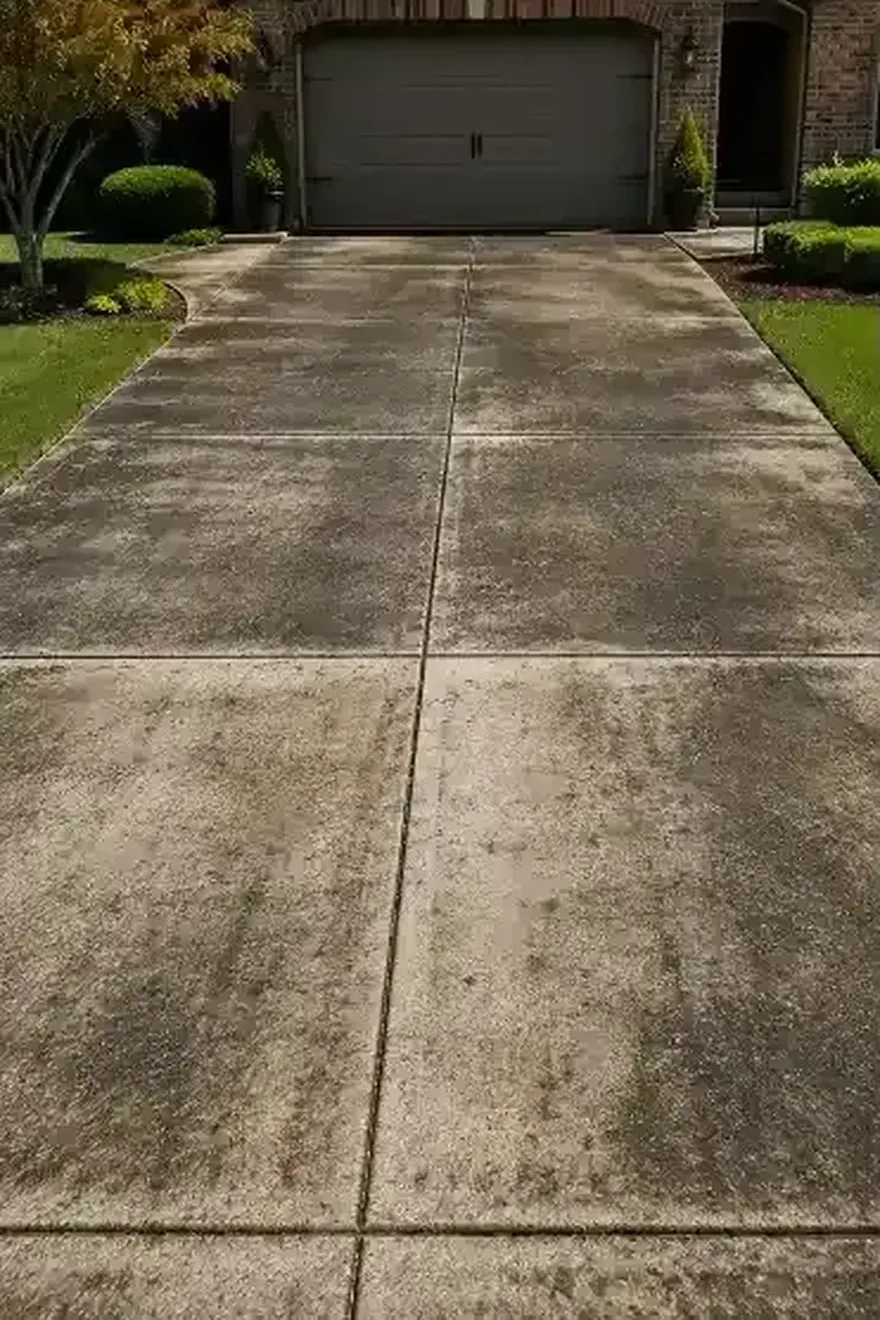 BEFOREAFTER
Drag to compare
BEFOREAFTER
Drag to compareEvery Jacksonville driveway tells a story in stains, and around here the story usually has three chapters. First, motor oil and automotive fluids, from daily-driven cars, the boat you maintain in the driveway, or the lawn equipment you service on the concrete. Second, tannin, the brown-black staining our live oaks inflict through leaves, acorns, and bark, worse under the mature canopy streets of Riverside, San Marco, and Ortega. Third, rust, from well-water irrigation and iron-rich fertilizers that paint orange arcs across the concrete.
What makes Jacksonville unusual is how often all three appear on the same driveway. A typical scenario: oil spots where cars park, tannin staining under the oak at the driveway's edge, and rust tinting where the sprinklers overshoot. Each stain has different chemistry, which means each needs different treatment. The all-too-common approach of blasting everything with maximum pressure fails on all three, just in different ways.
Understanding which stain you are looking at is the first step to removing it. Black, greasy, sometimes rainbow-sheened when wet: oil. Brown to black, often in leaf-shaped patterns or under trees: tannin. Bright orange to reddish-brown: rust. Once you can read the stains, the treatment plan practically writes itself.
Fresh oil is an emergency, but a manageable one. Blot, do not wipe, then cover with an absorbent like cat litter, baking soda, or a commercial absorbent, and let it sit overnight to pull oil out of the concrete's pores. For a recent spill, this plus a good degreaser often removes nearly all trace. Speed is everything: oil that has sat for a day is ten times harder to remove than oil addressed in an hour.
Old, set-in oil stains are a different project. The oil has penetrated deep into the porous concrete, and surface cleaning barely touches it. Professional treatment uses commercial degreasers with dwell time to emulsify the oil, often combined with hot water, which is dramatically more effective on petroleum than cold water. Stubborn spots may need poultice treatments that draw oil out over hours.
Here is the honest truth professionals should tell you: very old, deep oil stains sometimes cannot be removed completely. We can typically fade them 80 to 95 percent, to the point where you have to look for the shadow to find it. Anyone promising 100 percent removal of a decade-old stain is selling something. What we promise at Professor Pressure Washing is the maximum improvement the stain will allow, and we will tell you upfront what to expect. Call (904) 938-5900 for an honest assessment.
Tannin is the natural dye in oak leaves, acorns, bark, and the organic matter that collects under our live oaks. When it gets wet, it leaches out and stains concrete a deep brown or black that looks disturbingly like oil. Driveways under mature oaks in neighborhoods like Ortega, Riverside, and Mandarin often develop tannin staining so dark that homeowners assume the concrete is permanently ruined.
The good news is that tannin responds well to treatment. It is an organic stain, so alkaline cleaners and oxygenated solutions break it down effectively, especially with some dwell time. Unlike oil, tannin rarely penetrates as deeply, so even dark staining usually lifts dramatically. The challenge is volume: under a big oak, new tannin arrives every fall, so this is maintenance, not a one-time fix.
Prevention helps more than people expect. Keep gutters clear so tannin-rich water is not sheeting across the driveway, blow leaves and acorns off promptly in fall, and consider sealing the concrete after cleaning, which makes future tannin wash off far more easily. A sealed driveway under an oak is a manageable situation; an unsealed one is a recurring project.
Rust we cover in detail in our rust removal guide, but the short version is that orange staining needs acid-based chemistry, typically oxalic acid treatments, because pressure alone cannot dissolve iron oxide. On driveways with multiple stain types, the order of treatment matters: degrease oil first, since oil can shield other stains from chemical treatments, then address tannin with alkaline cleaners, then treat rust with acids, neutralizing between steps.
This layered approach is why combination-stain driveways are genuinely professional-level work. The chemicals used for each stain type can interfere with each other, dwell times differ, and rinsing between steps is critical. Done in the wrong order, you can set a stain deeper or waste expensive product.
If your driveway has the full Jacksonville cocktail, that is exactly the kind of job we handle regularly. We diagnose the stains, sequence the treatments correctly, and get the maximum possible improvement in a single visit. It is satisfying work, watching three different stains surrender one after another, and it is one of the transformations our customers comment on most.
A few habits prevent most driveway staining. Use drip pans or cardboard under vehicles that mark their territory. Clean spills immediately rather than this weekend. Keep up with leaf blowing under oaks. Adjust sprinklers to stop overspraying concrete. And seriously consider sealing your driveway after a professional cleaning: sealer is the single best defense against all three stain types, because it keeps contaminants on the surface where they can be cleaned instead of letting them soak into the pores.
Call a professional when stains have set, when multiple stain types overlap, when you have tried consumer products without success, or when you simply want it done right the first time. What takes a homeowner three weekends of trial and error, we usually resolve in a few hours with commercial equipment and chemistry.
Professor Pressure Washing has been cleaning Jacksonville driveways since 2015, and stain removal is a specialty, not an afterthought. From Southside to the Beaches, we have seen every stain this city produces. Call (904) 938-5900, tell us what you are looking at, and we will give you a straight answer about what it will take to fix it.
Honestly, not always. Fresh oil usually comes out completely, but oil that has soaked into concrete for years can typically be faded 80 to 95 percent, sometimes leaving a faint shadow. Hot water and commercial degreasers achieve far more than cold water and consumer products. Be wary of anyone promising 100 percent removal of ancient stains.
Tannin is a natural dye found in oak leaves, acorns, and bark. When wet, it leaches onto concrete and leaves brown to black stains, often in leaf patterns under trees. It is an organic stain that responds well to alkaline cleaners, unlike oil or rust which need different chemistry.
Yes. Effective oil removal requires professional degreasers with proper dwell time, and often hot water. We use commercial products, apply them correctly, and rinse thoroughly so there is no residue left on your concrete or running into your landscaping.
San Marco's 1920s–40s Mediterranean Revival homes need a gentle touch. Here's how to clean brick, stucco and historic wood without damage.
Read More →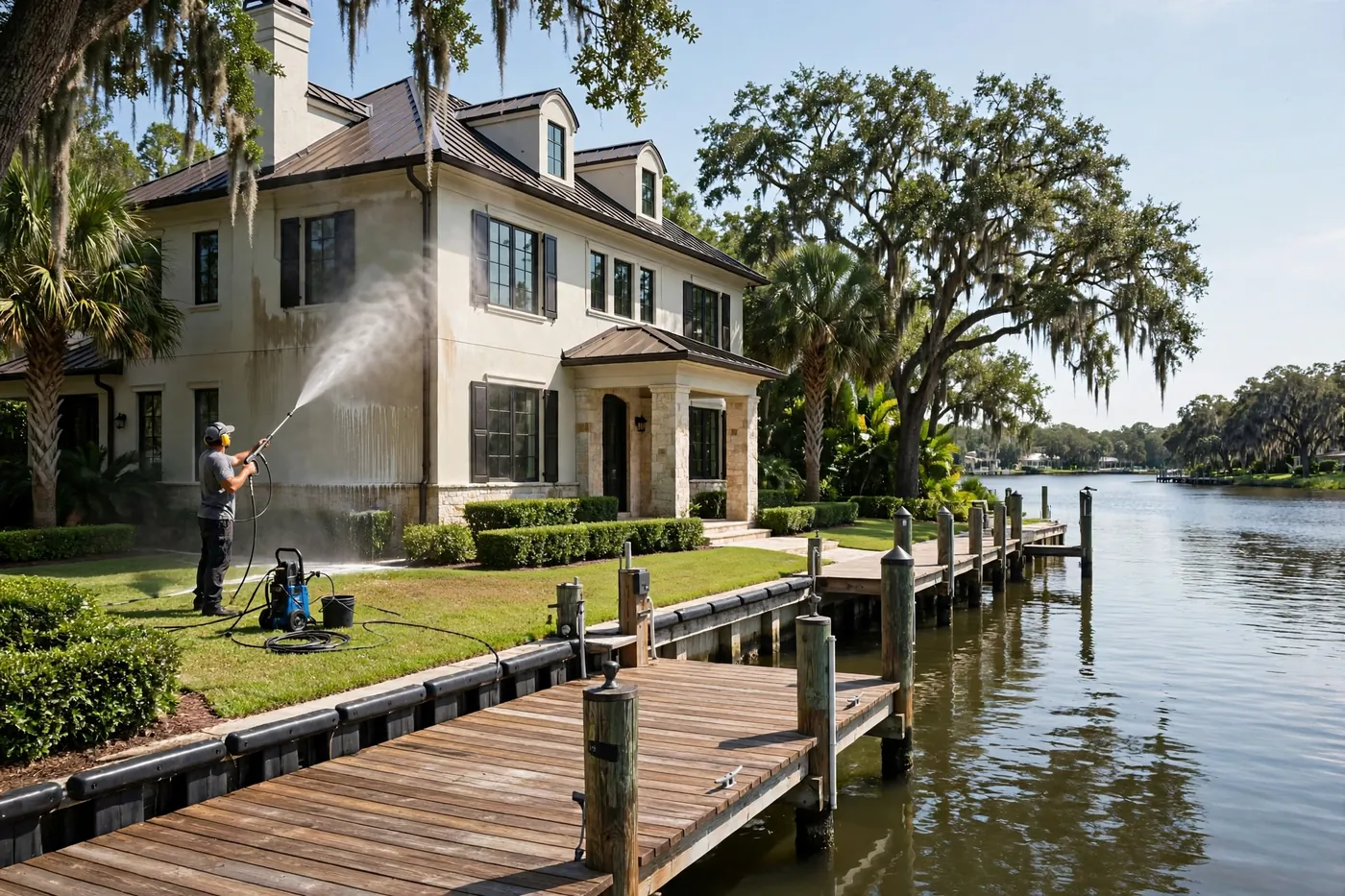
Ortega's riverfront estates face salt air, river humidity and dock grime. A complete guide to waterfront exterior cleaning.
Read More →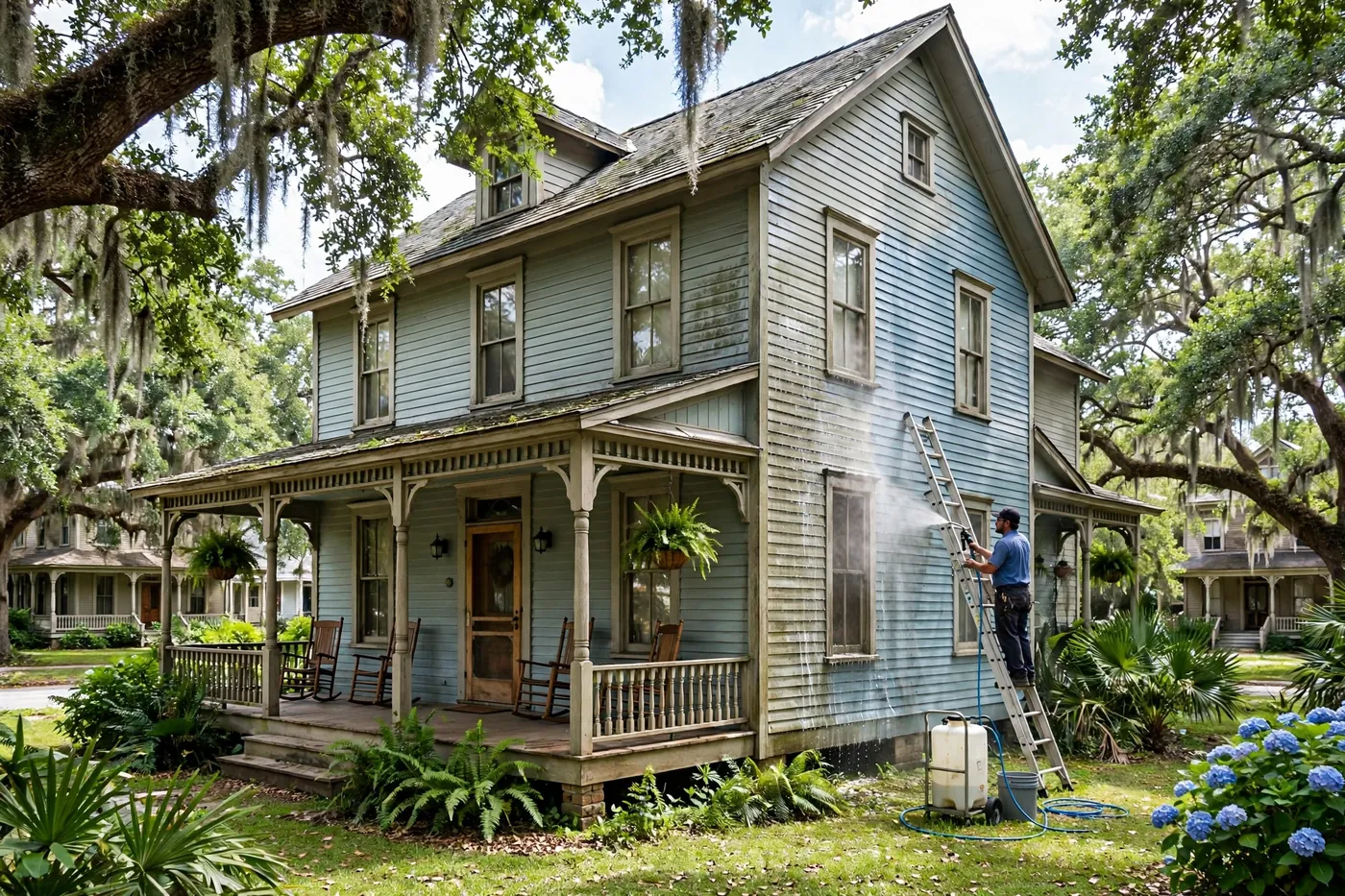
Springfield's century-old homes need soft washing, not brute force. How to restore historic siding safely.
Read More →Call now for a free estimate and same-day service in Jacksonville, FL. Open 24/7.