
Pressure Washing in San Marco: Brick, Stucco & Historic Homes
San Marco's 1920s–40s Mediterranean Revival homes need a gentle touch. Here's how to clean brick, stucco and historic wood without damage.
Read More →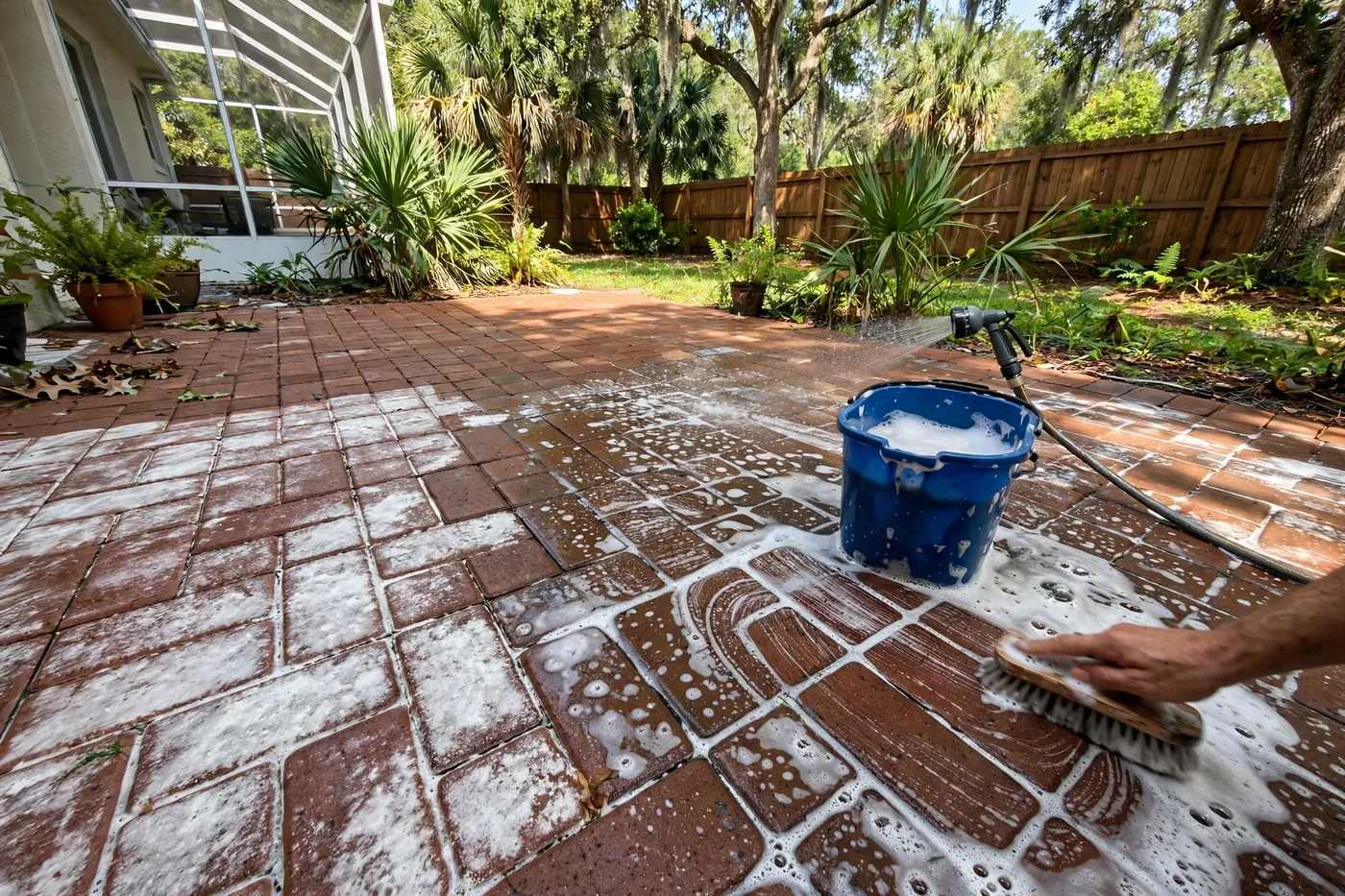
That white powdery crust on your pavers is efflorescence — mineral salts drawn out by Florida's water table.
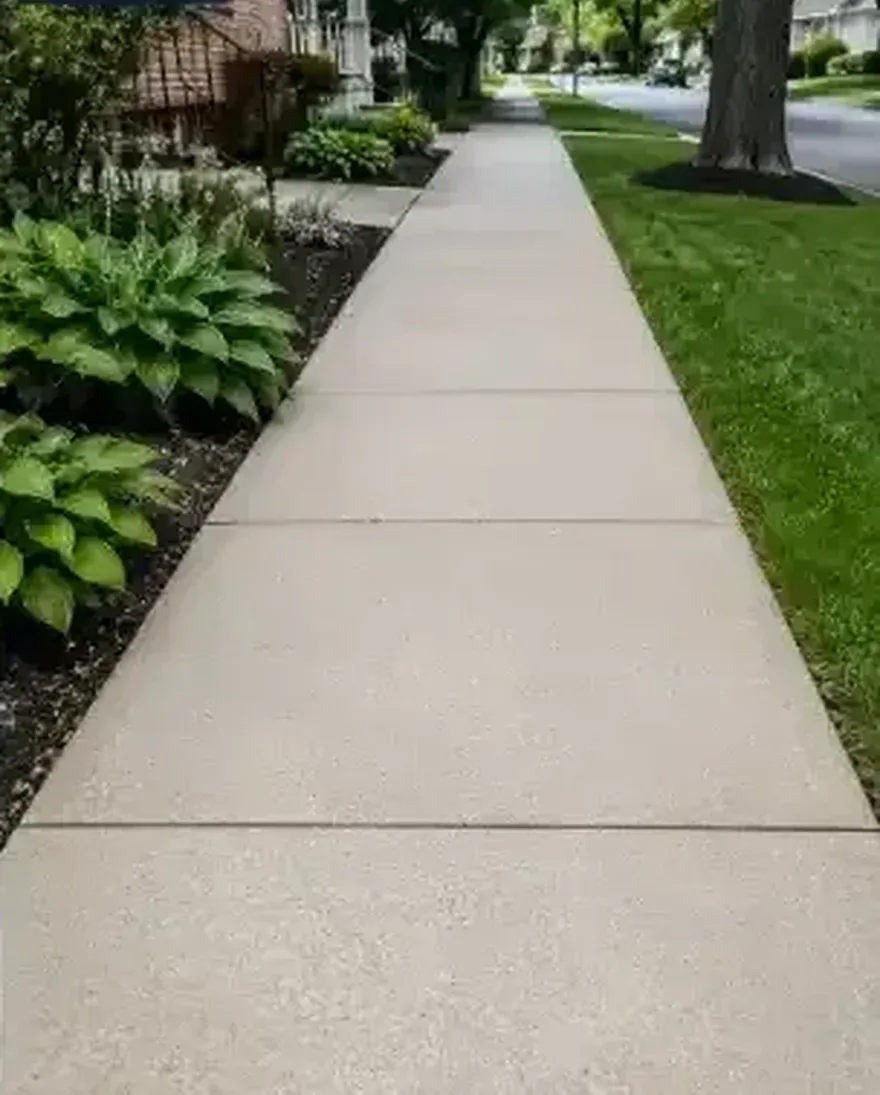
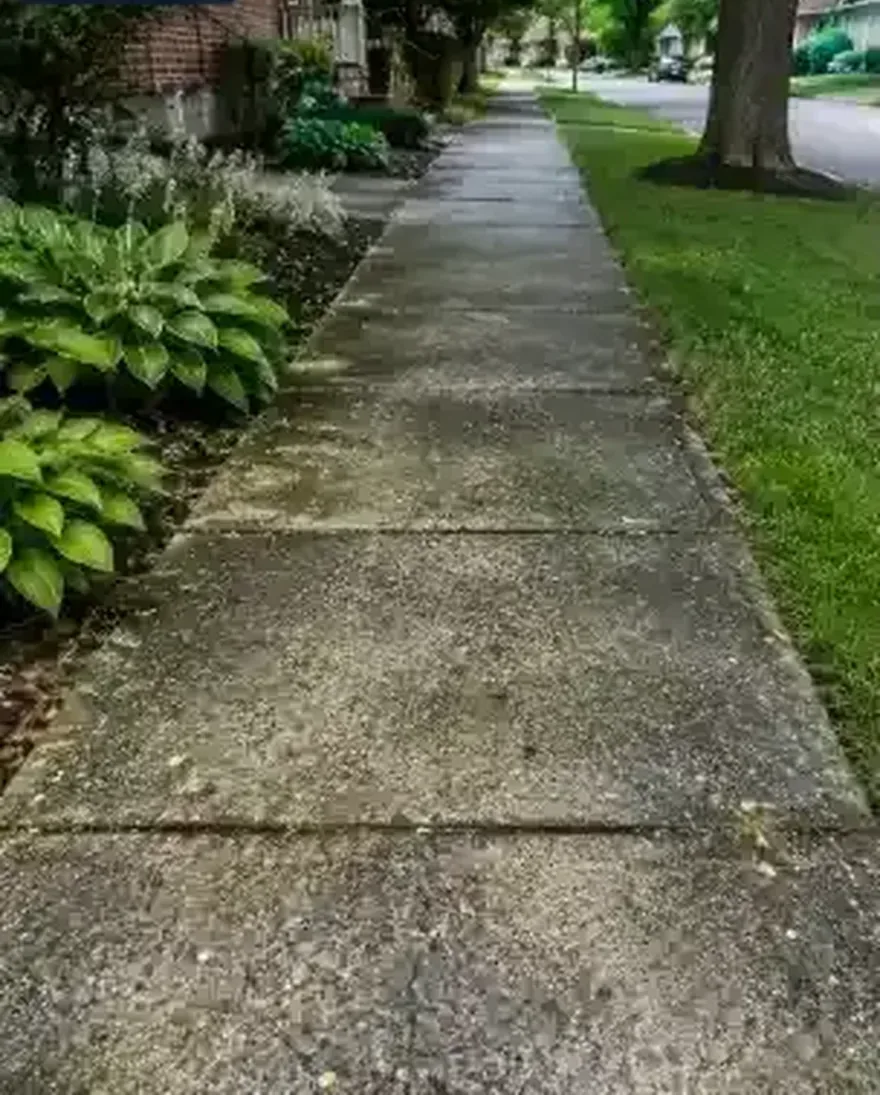 BEFOREAFTER
Drag to compare
BEFOREAFTER
Drag to compareThe white powdery bloom spreading across your paver patio or driveway is called efflorescence, and despite looking like mold or paint splatter, it is neither. It is mineral salts — mostly calcium carbonate — that were inside the concrete or pavers all along. Water migrates through the material, dissolves those salts, carries them to the surface, and evaporates, leaving the salt behind as a white crust. The pavers are not defective and the concrete is not failing; this is chemistry doing what chemistry does.
Efflorescence is most common on newer installations, typically in the first year or two, because fresh concrete and pavers hold the most soluble salts. But in Jacksonville it can appear on older surfaces too, whenever the moisture equation changes — a new irrigation pattern, a season of heavy rain, or a change in drainage. It shows up worst on darker pavers, where the white contrast is stark, which is why owners of charcoal and espresso pavers notice it first and panic hardest.
Here is the reassuring part for anyone searching efflorescence removal Jacksonville: it is a surface deposit, it is removable, and in most cases it is not damaging anything. The less reassuring part is that scrubbing it with water alone often makes it look worse temporarily, because you are just re-wetting the salts. Proper removal takes the right approach, which is what the rest of this guide covers.
Jacksonville is practically designed to produce efflorescence. The water table sits high — in many neighborhoods you hit water a few feet down — so moisture is constantly wicking upward through paver base material and concrete slabs. Add our humidity, our daily summer thunderstorms, and irrigation systems that run whether it rained or not, and you have a nonstop moisture pump driving salts to the surface.
New construction makes it worse. Fresh paver installations go in over base material that has never been compacted by time, irrigation gets installed and immediately starts soaking everything, and the pavers themselves are at peak salt content. Drive through Nocatee or any new Durbin community and you will see efflorescence ghosting on patios that are barely a year old. It is so common here that experienced installers warn homeowners about it upfront.
Saltwater proximity adds a twist near the coast — from Jacksonville Beach to Amelia Island, airborne salt contributes its own deposits that mingle with the calcium salts. The treatment is the same, but coastal efflorescence can be more persistent because the salt supply never really stops.
The professional approach starts with diagnosis, because not every white stain is efflorescence — hard-water scale from irrigation looks similar but needs different chemistry. Real efflorescence gets an acidic treatment: a controlled phosphoric or sulfamic acid wash that dissolves the calcium salts without harming the pavers when done correctly. The key words are controlled and correctly, because the same acids that dissolve efflorescence will etch concrete and burn pavers if misapplied.
This is genuinely not a DIY-friendly job. Box-store muriatic acid is far stronger than what the situation needs, and we have seen homeowners etch permanent tiger-stripes into their patios trying to save a service call. Our process: pre-wet the surface, apply the treatment at the right dilution, agitate, dwell briefly, and rinse thoroughly — then neutralize. The whole patio gets treated evenly so you do not end up with clean spots surrounded by haze.
After treatment, the pavers typically look dramatically better immediately — the original color comes back like someone turned the saturation up. We always do a test area first on older or delicate pavers, because while the chemistry is safe for standard concrete pavers, some natural stone and specialty finishes need a gentler variant.
The honest answer: it can, and in Florida it often does at least a little. Efflorescence is driven by moisture movement, and as long as water keeps migrating through the material, new salts keep arriving at the surface. A cleaning removes the visible deposit; it does not change the moisture dynamics underneath. Most of our customers see a major improvement that lasts, with maybe a light recurrence in the worst moisture spots.
What dramatically reduces recurrence is sealing. A quality penetrating sealer does not trap moisture — that is a common myth — but it does slow the migration of water and dissolved salts to the surface while making the surface far easier to clean. On a new paver installation, we recommend cleaning off the initial efflorescence bloom and then sealing, in that order. Sealing over active efflorescence just locks the white crust under the sealer, which looks terrible.
Drainage and irrigation adjustments help too. If a downspout dumps onto the patio or a sprinkler head mists it daily, fixing that does more for long-term prevention than any chemical. We point these things out during every efflorescence job because we would rather solve it than sell you the same cleaning twice.
The ideal sequence for pavers with efflorescence: professional cleaning to remove the deposits, a drying period of a few days, then a penetrating sealer applied to clean, dry pavers. The sealer deepens the color, resists staining from leaves and rust, and makes future efflorescence far less likely to take hold. On pool decks it also adds the safety benefit of reducing that slippery biofilm buildup.
Not all sealers are equal, and the wrong one is worse than none — topical film-forming sealers can trap moisture and turn milky in Florida's humidity, which is why we recommend penetrating sealers for most Jacksonville applications. The sealer needs reapplication every few years depending on sun exposure and traffic, but it is straightforward maintenance, not a major project.
If you are staring at white-crusted pavers right now, Professor Pressure Washing can diagnose whether it is efflorescence or hard-water scale, remove it properly, and seal the surface so it stays beautiful. Family-owned in Jacksonville since 2015 — call (904) 938-5900 for an honest assessment. We will tell you if it is a simple clean or if sealing makes sense, and we will never sell you either one you do not need.
Water migrating through concrete or pavers dissolves natural mineral salts inside the material and deposits them on the surface as it evaporates, leaving a white crust. Jacksonville's high water table, humidity, heavy rains, and irrigation make it especially common here, particularly on installations less than two years old.
It can, since cleaning removes the deposit but not the moisture movement that causes it. A penetrating sealer applied after cleaning dramatically reduces recurrence, as do drainage and irrigation fixes. We recommend cleaning first, then sealing — never sealing over active efflorescence.
In most cases no — it is a cosmetic surface deposit, not structural damage. But improper removal attempts can cause real harm: strong acids etch concrete and specialty finishes. Professional treatment at the right dilution removes it safely, which is why we always test first.
San Marco's 1920s–40s Mediterranean Revival homes need a gentle touch. Here's how to clean brick, stucco and historic wood without damage.
Read More →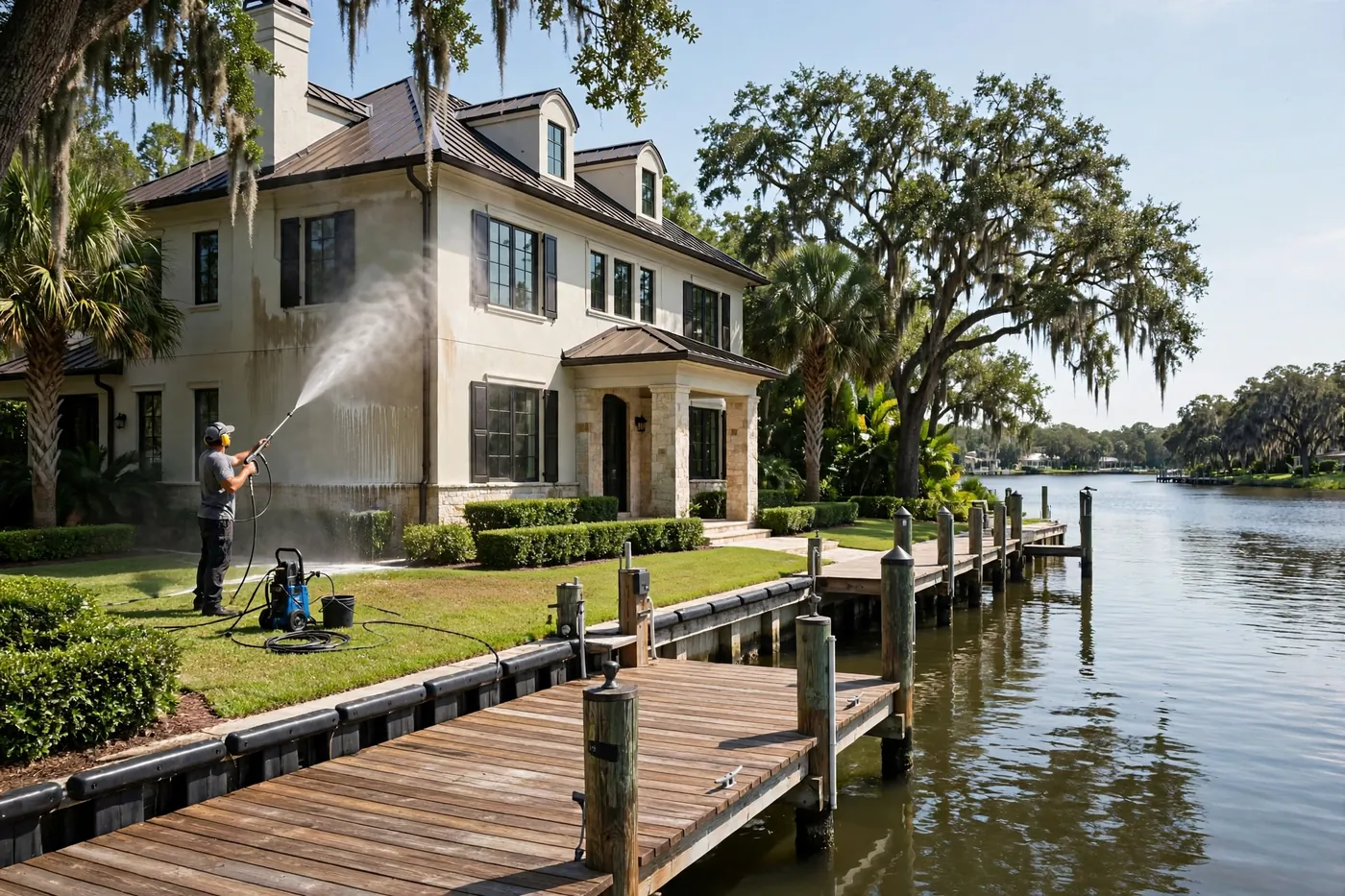
Ortega's riverfront estates face salt air, river humidity and dock grime. A complete guide to waterfront exterior cleaning.
Read More →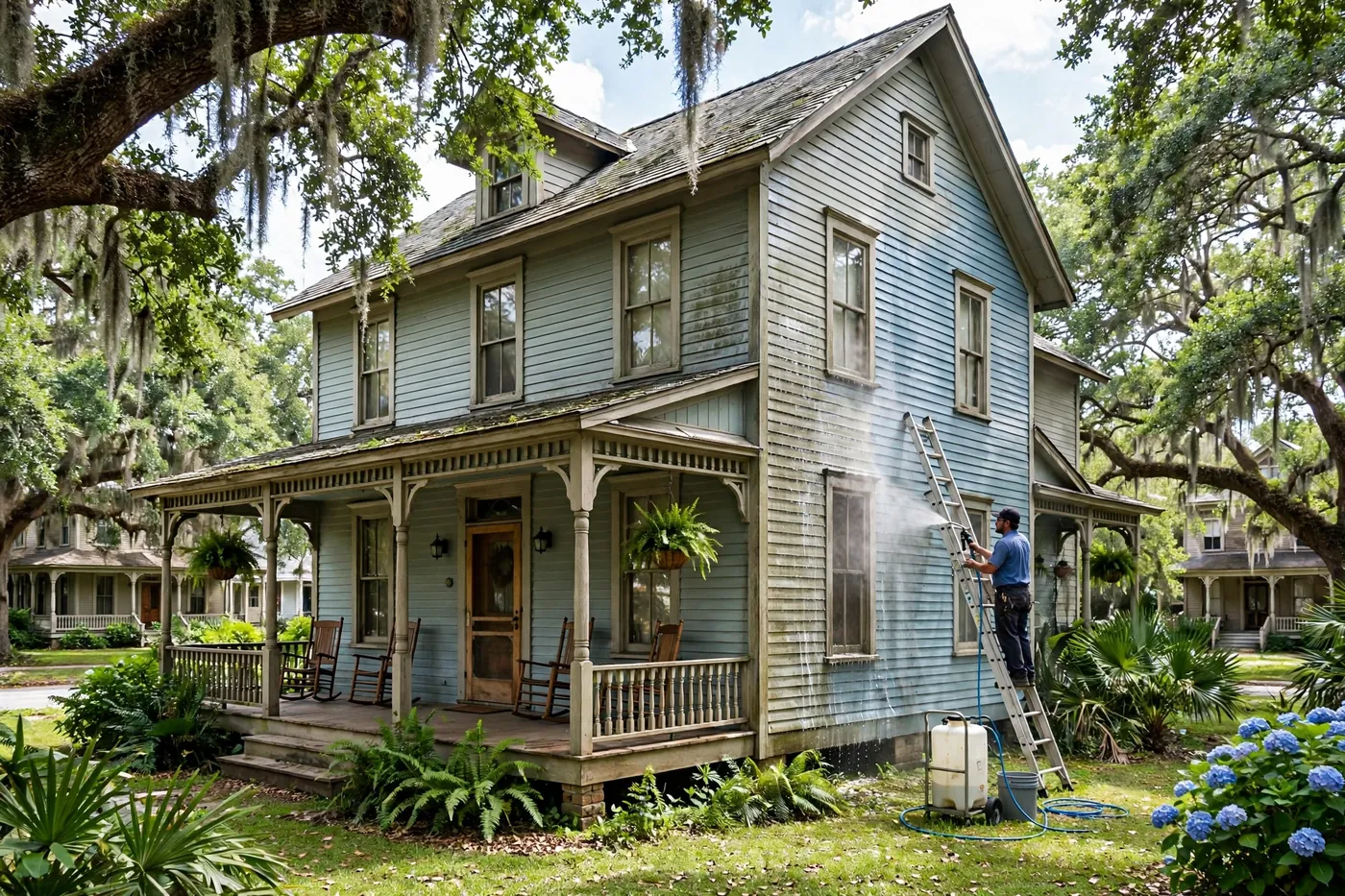
Springfield's century-old homes need soft washing, not brute force. How to restore historic siding safely.
Read More →Call now for a free estimate and same-day service in Jacksonville, FL. Open 24/7.