
Pressure Washing in San Marco: Brick, Stucco & Historic Homes
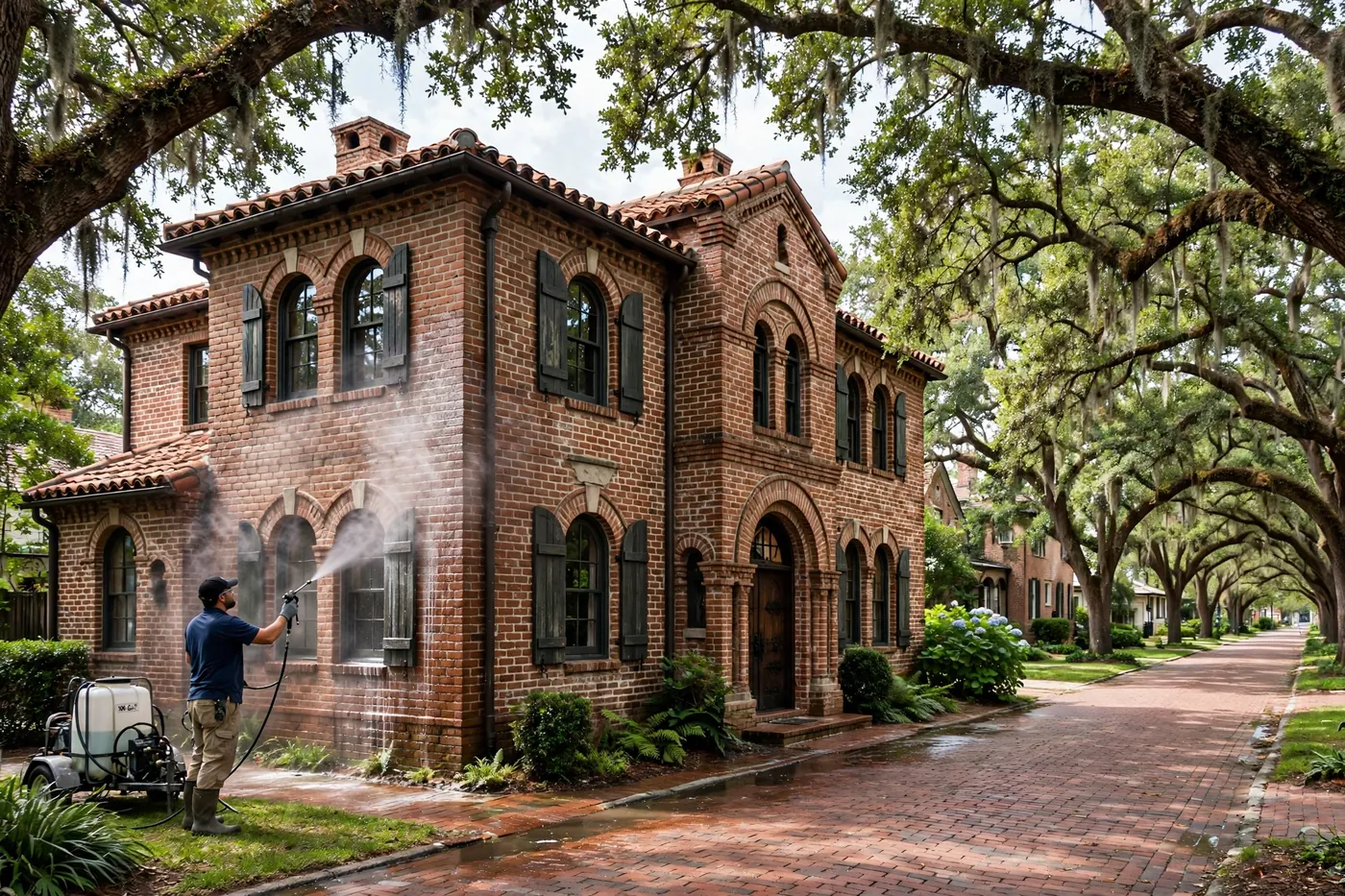
San Marco's 1920s–40s Mediterranean Revival homes need a gentle touch. Here's how to clean brick, stucco and historic wood without damage.
Read More →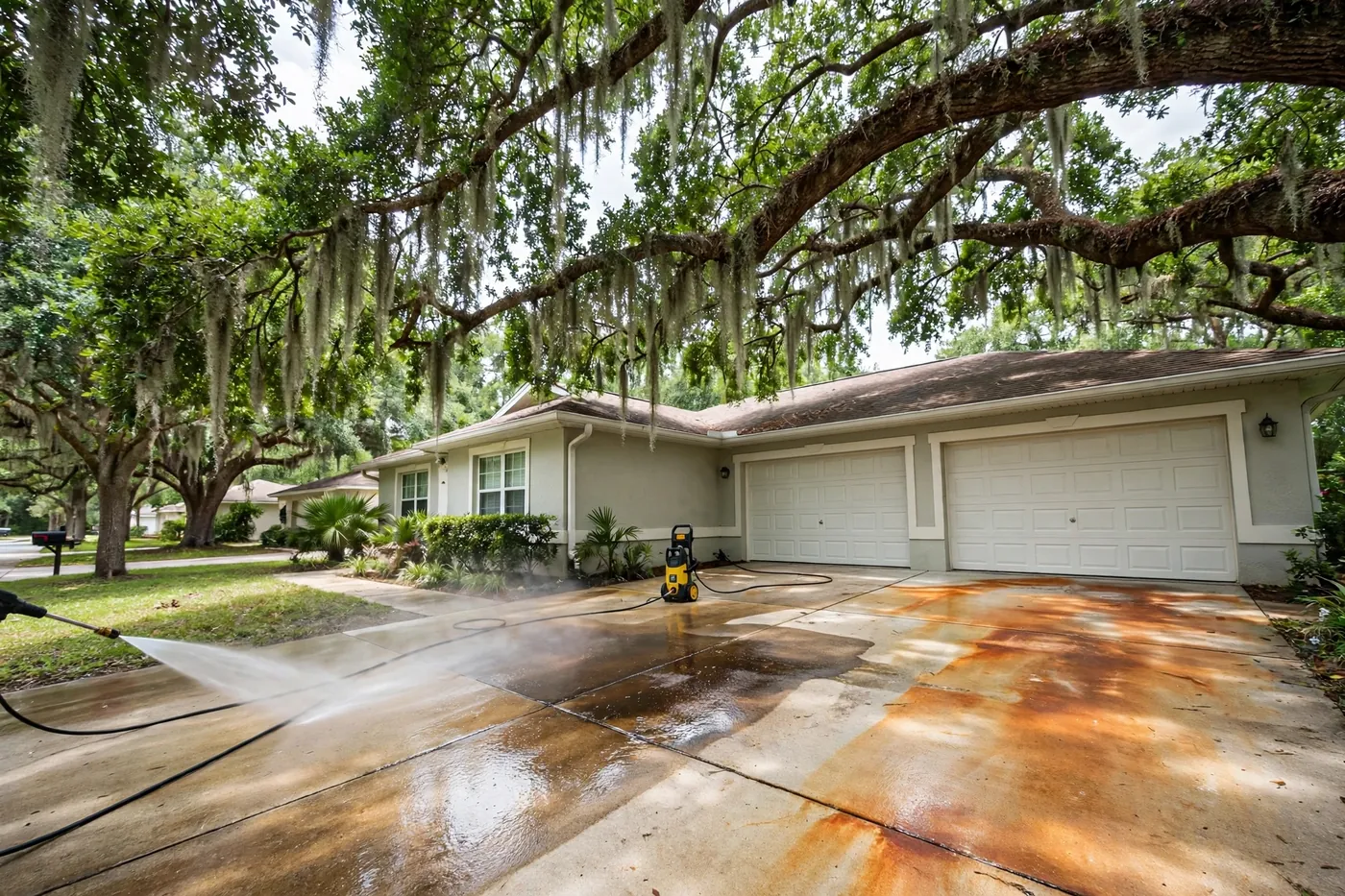
Oak canopy shade plus well-water irrigation equals tannin and rust. The Fleming Island exterior guide.
 BEFOREAFTER
Drag to compare
BEFOREAFTER
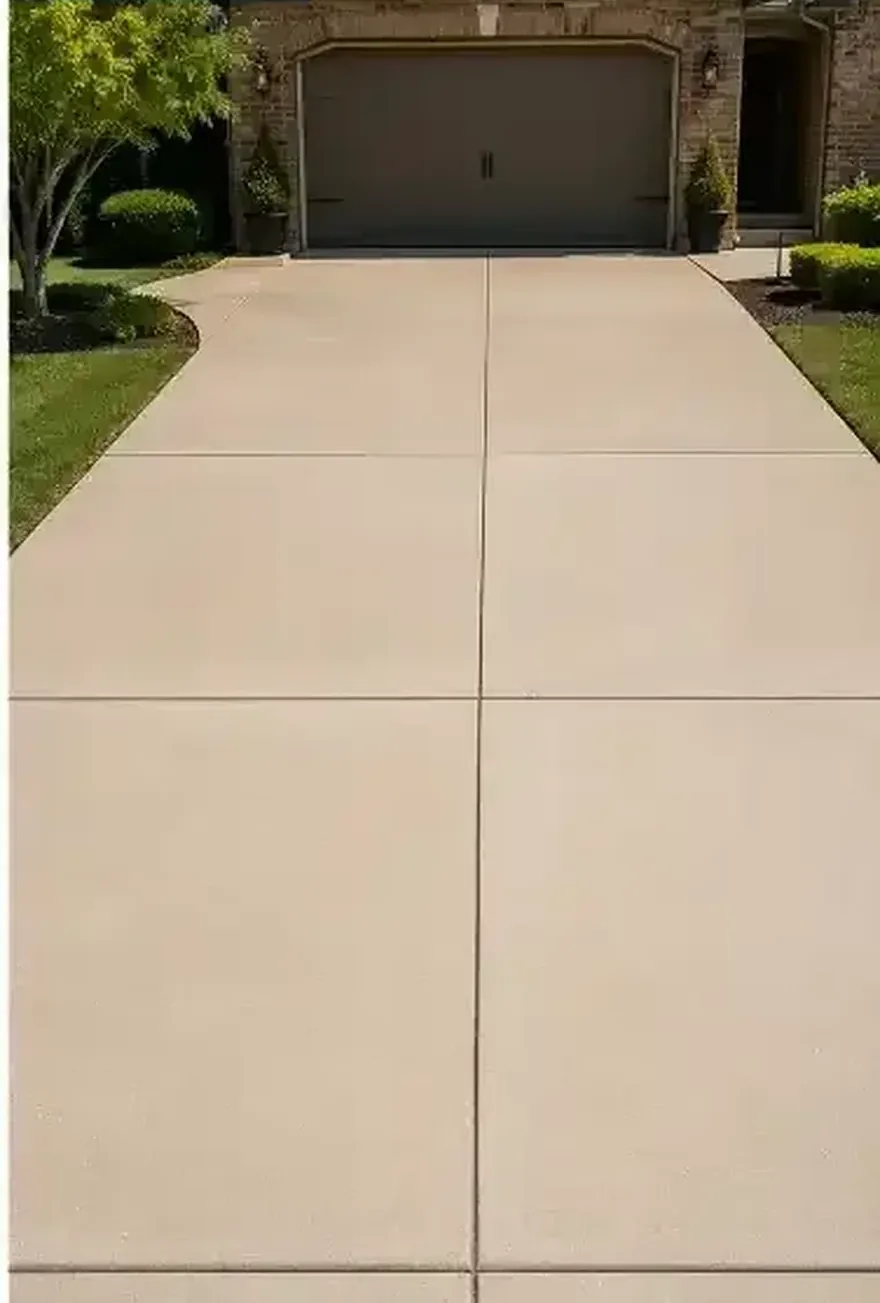
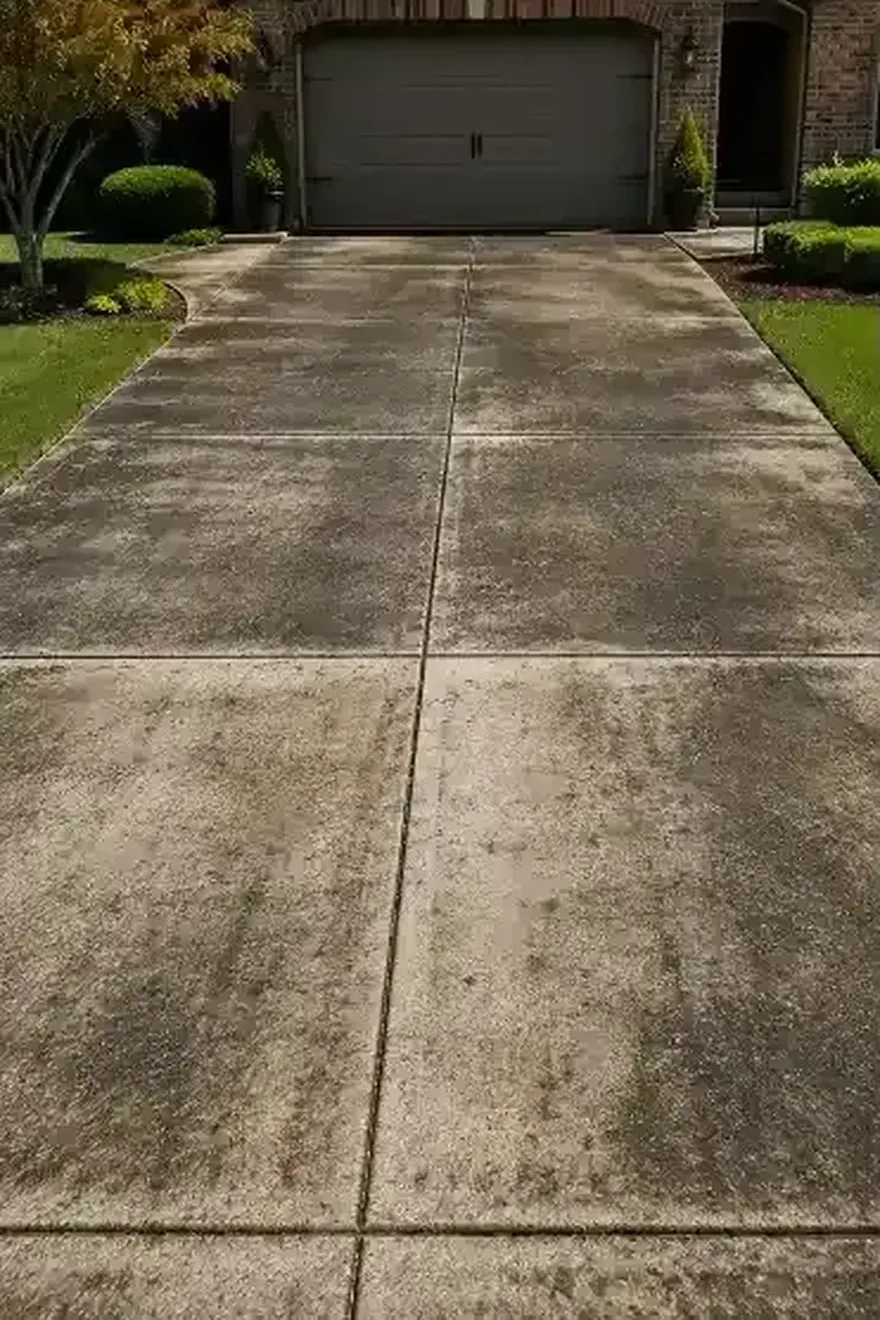
Drag to compareIf your concrete looks like someone spilled pumpkin soup across it, you are looking at iron — and in Fleming Island, the iron usually comes from your own sprinkler system. Large parts of the area, from the neighborhoods along US-17 to the streets backing up to Black Creek and Doctors Lake, run on private wells or reclaimed water with high iron content. Every morning the irrigation mists the driveway edge, the sidewalk, and the lower walls, and the iron oxidizes into those unmistakable orange-brown stains.
People searching for pressure washing Fleming Island FL are often staring at exactly this and assuming the concrete is ruined. It is not. Iron staining is a surface chemical deposit, not structural damage, and it responds very well to the right treatment. But it will not respond to plain water at any pressure — iron oxide laughs at pressure washers. It needs a chemical approach, which is why the DIY attempts usually end in frustration.
The tell that it is irrigation iron and not something else: the staining follows the arc of your sprinkler heads. You will see it heaviest within a few feet of the heads, fading as you move away, often in a neat fan pattern. If that describes your driveway, keep reading — the fix is straightforward.
The second half of Fleming Island's exterior story is written by the live oaks. The canopy here is magnificent — streets where the branches meet overhead — and it creates a perfect storm for exterior staining. Oak leaves and acorns steep tannin into everything below them every time it rains, leaving brown tea-colored stains on driveways, fences, and roofs. The deep shade keeps surfaces damp for days after a storm, and damp plus Florida heat equals algae.
North-facing walls under the canopy are the worst of it. We regularly see siding in Fleming Island that is green from top to bottom on the shaded side while the sunny side looks nearly new. That is not a defect in your siding — it is just biology doing what biology does in a humid subtropical canopy. Soft washing with the right detergents kills it completely, and the difference on a shaded wall is genuinely startling.
Gutters deserve a mention here too. Oak catkins, leaves, and pollen pack gutters solid by late spring, and overflowing gutters sheet dirty water down the siding in stripes. If your siding has vertical streak stains, check the gutters before you blame the siding.
Removing iron stains takes chemistry, not force. We apply a specialized rust-removal treatment that dissolves the iron oxide, let it dwell, then rinse it away — usually at moderate pressure that is completely safe for the concrete. Watching an orange driveway turn back to gray in minutes is one of the more satisfying transformations in this business.
Here is the honest-limits part: very old, very deep iron staining can leave a faint shadow even after treatment, especially on older, more porous concrete that has been absorbing iron for a decade. We will do a test area first and show you exactly what to expect before you commit to the whole driveway. In the large majority of cases, though, the result is dramatic — driveways that looked permanently ruined come back to essentially new.
One thing we will not do is crank up the pressure to compensate. High pressure on a rust stain just etches the concrete around the stain while leaving the iron behind, giving you a permanently scarred driveway that is still orange. Chemistry first, always.
Cleaning the rust is only half the job if the sprinklers keep laying down fresh iron every morning. The permanent fix is at the irrigation system, and you have a few options. A whole-house iron filter on a well system stops the staining at the source — it is an investment, but so is re-cleaning the driveway every year. At minimum, have an irrigation tech adjust head angles and arcs so they are not misting the driveway, sidewalk, and house walls.
Reclaimed water users have fewer options since you cannot filter the utility supply, but redirecting heads still helps enormously. Even moving the spray pattern six inches off the concrete cuts new staining by most of it. And if you are on well water, get the iron level tested — knowing your parts per million tells you whether treatment will be a one-time reset or something to plan around.
We are happy to coordinate timing: get the irrigation adjusted, then call (904) 938-5900 and we will clean up years of staining in a single visit. Doing it in that order means you only pay for the deep clean once.
For a typical Fleming Island home under the oaks, every twelve to eighteen months keeps exteriors looking sharp. If you are on well water with high iron, consider having the driveway treated on its own cycle — sometimes annually — while the house siding goes longer. And the single best time of year here is late spring, after the oaks finish dropping catkins and pollen but before hurricane season's daily rains.
Professor Pressure Washing has been family-owned in Jacksonville since 2015, and well-water rust plus oak tannin is a combination we know cold. Call (904) 938-5900 and we will start with a test spot on your worst stain — you will see the result before you spend a dollar on the full job.
Almost certainly iron from irrigation water. Much of Fleming Island runs on wells or reclaimed water with high iron content, and daily sprinkler misting oxidizes into orange-brown stains in a fan pattern following your sprinkler arcs. It is a surface deposit, not concrete damage, and it cleans off with the right treatment.
Yes — anywhere the mist lands regularly: lower siding, brick, fences, and pool decks. The same iron that stains the driveway stains everything else in the spray pattern. Adjusting head angles away from the house is the cheapest prevention there is.
With chemistry, not pressure. We apply a rust-dissolving treatment, let it dwell, and rinse at moderate pressure. High pressure would etch the concrete while leaving the iron behind, so we never go that route. A test spot first shows you exactly what to expect.
San Marco's 1920s–40s Mediterranean Revival homes need a gentle touch. Here's how to clean brick, stucco and historic wood without damage.
Read More →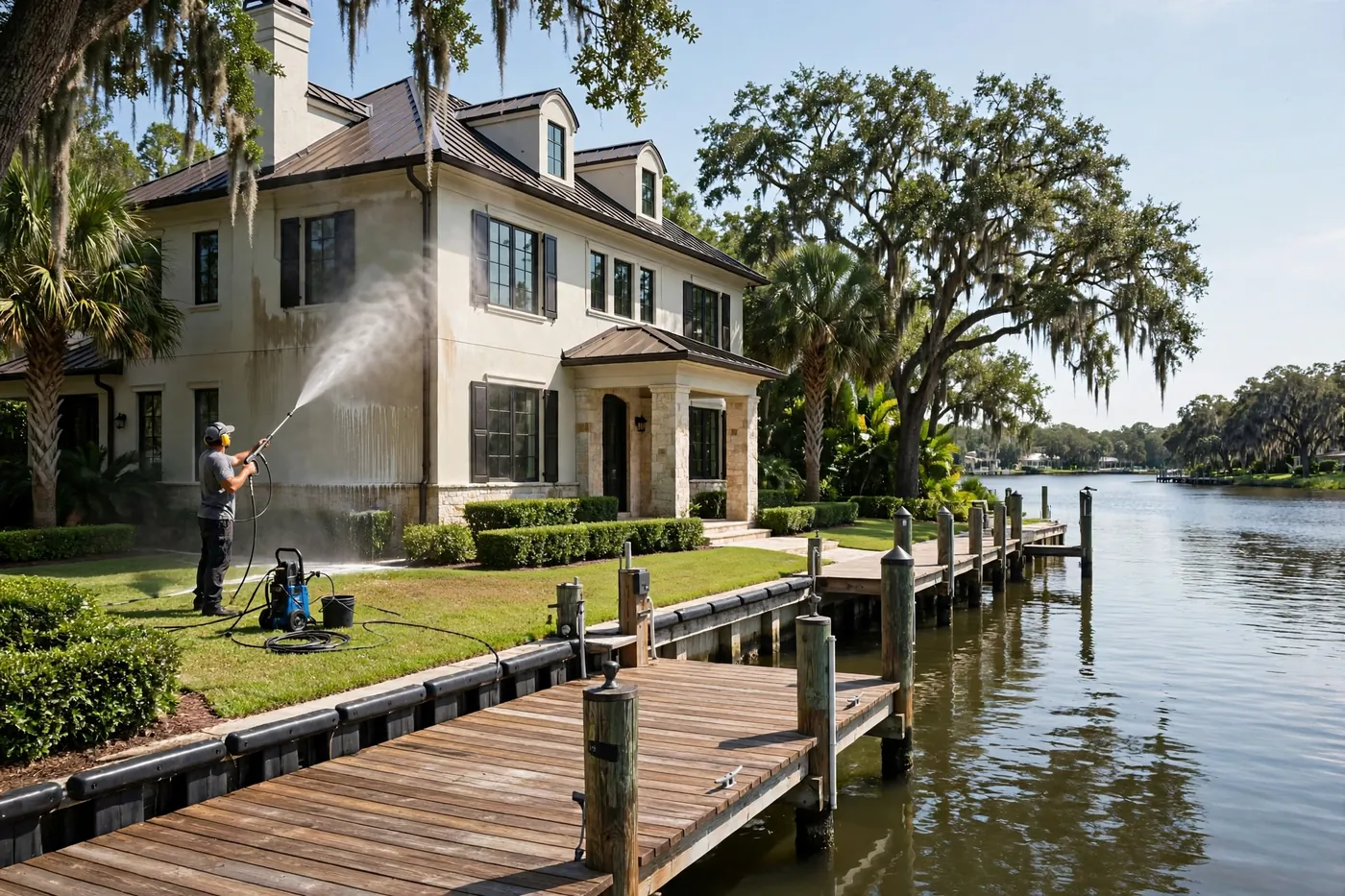
Ortega's riverfront estates face salt air, river humidity and dock grime. A complete guide to waterfront exterior cleaning.
Read More →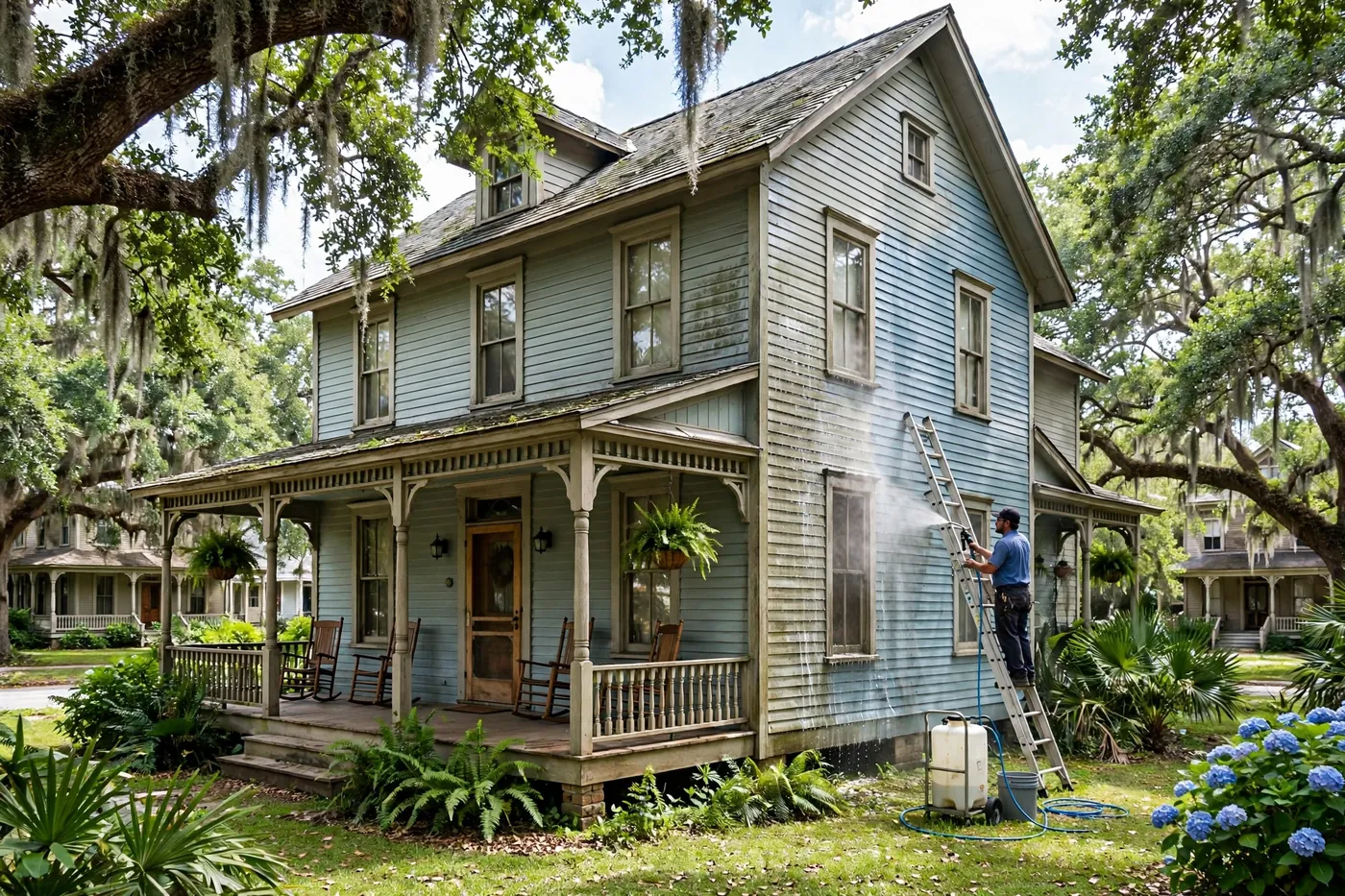
Springfield's century-old homes need soft washing, not brute force. How to restore historic siding safely.
Read More →Call now for a free estimate and same-day service in Jacksonville, FL. Open 24/7.