
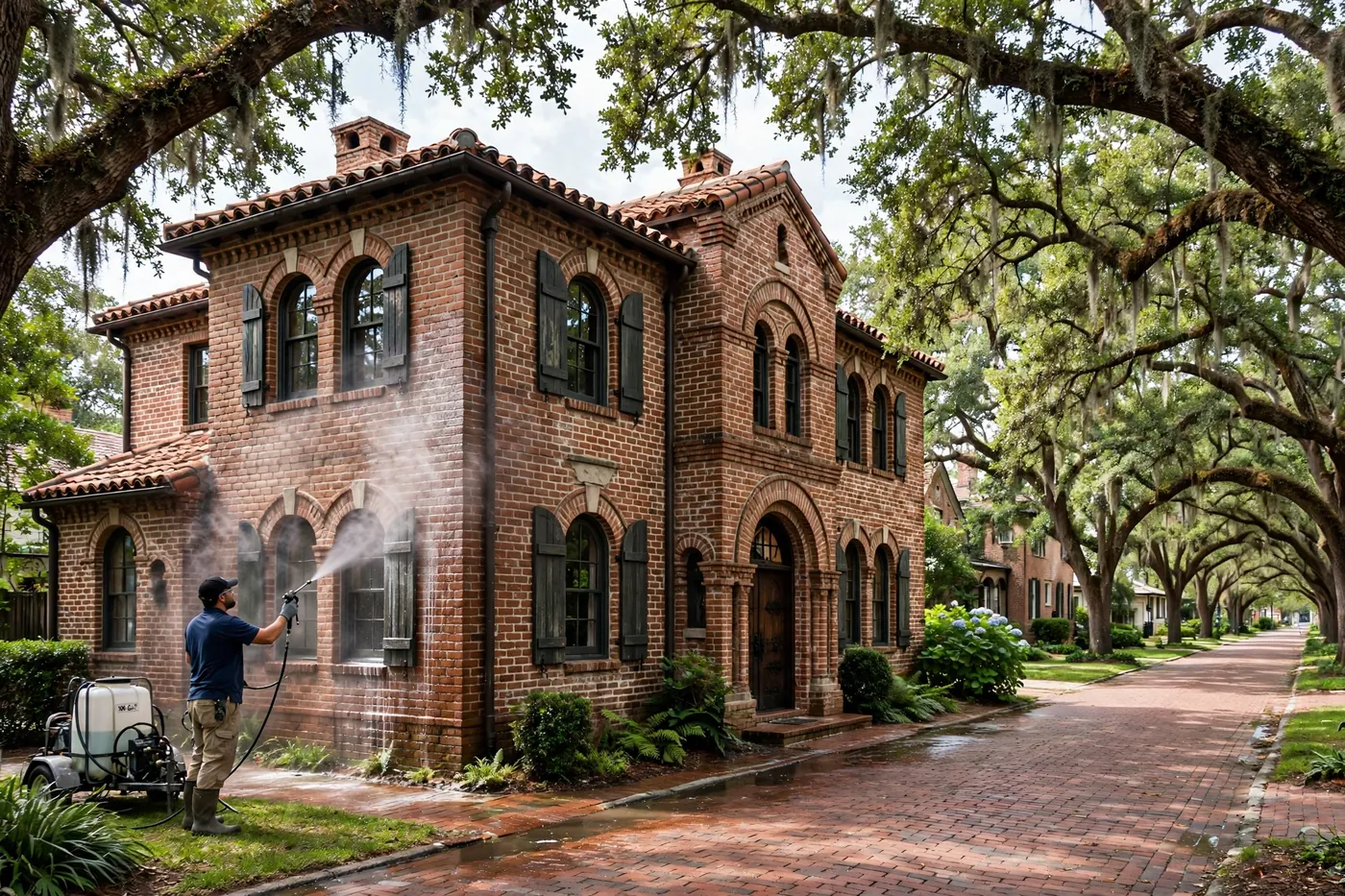
Pressure Washing in San Marco: Brick, Stucco & Historic Homes
San Marco's 1920s–40s Mediterranean Revival homes need a gentle touch. Here's how to clean brick, stucco and historic wood without damage.
Read More →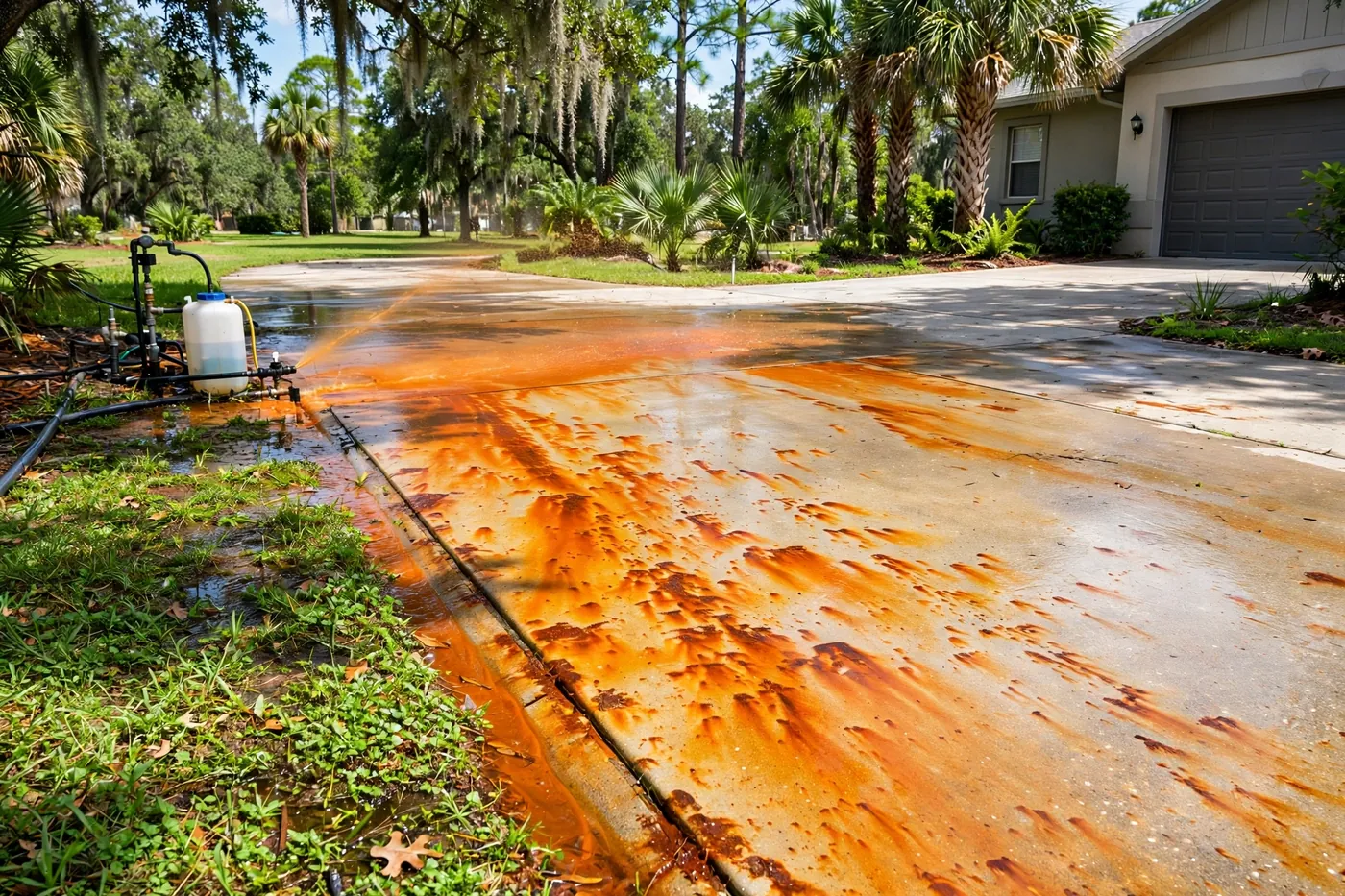
Well-water irrigation leaves orange rust across driveways. The chemistry of real rust removal.
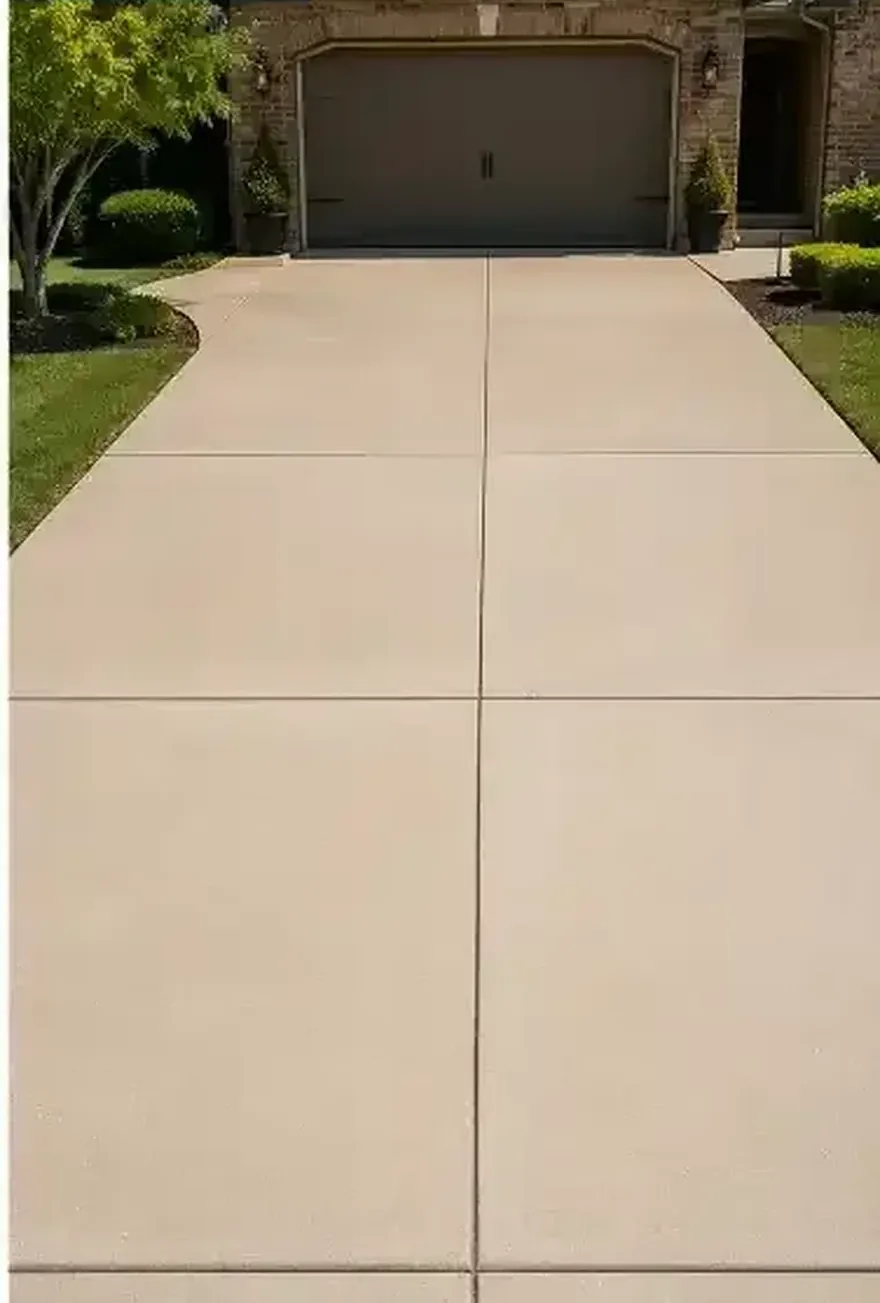
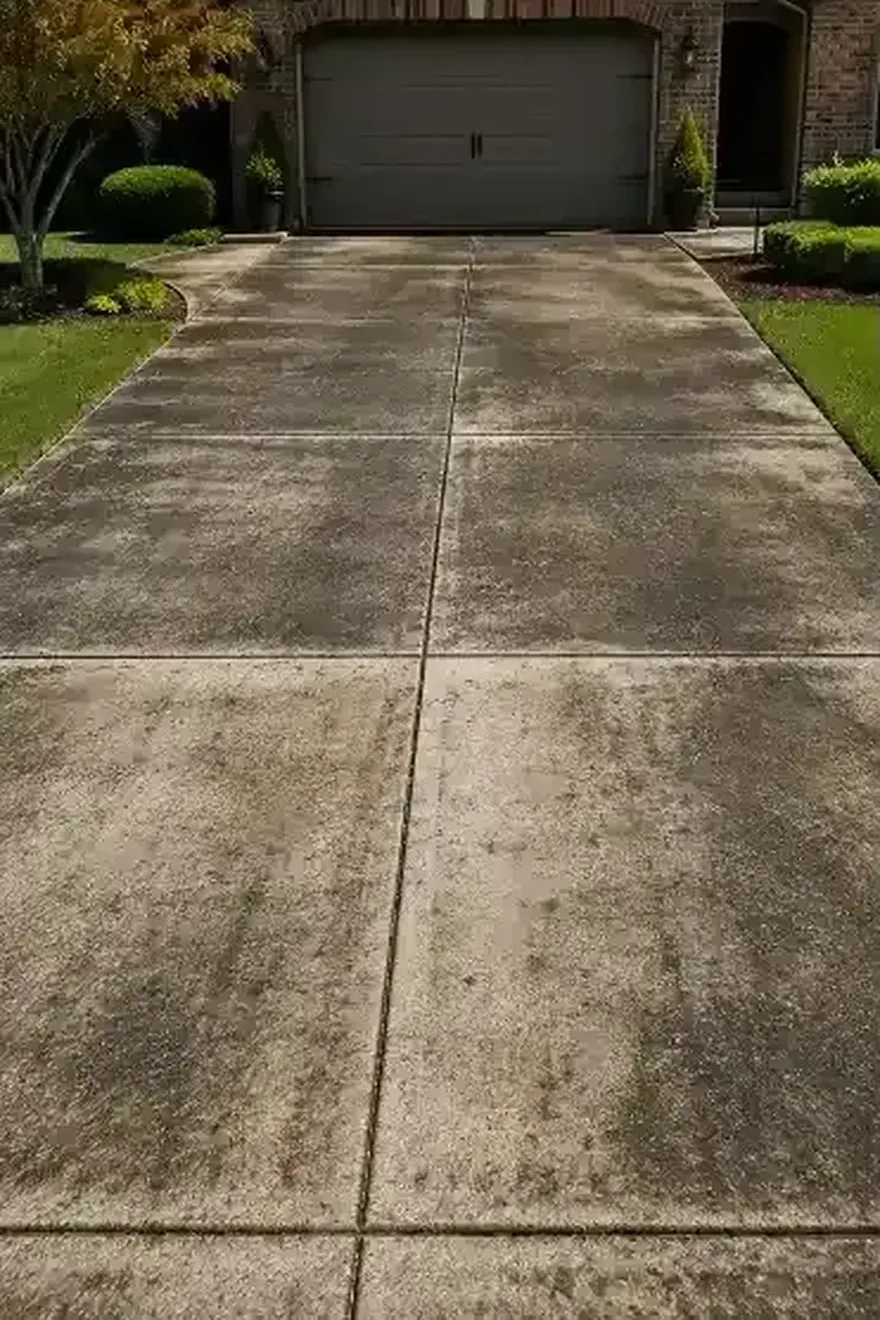 BEFOREAFTER
Drag to compare
BEFOREAFTER
Drag to compareIf you drive through neighborhoods in Clay County, western Duval, or out toward Julington Creek and Fleming Island, you will notice it everywhere: driveways, sidewalks, and curbs streaked with bright orange stains. The culprit is usually well water. Much of the groundwater in Northeast Florida carries dissolved iron, and when it is sprayed across concrete day after day by an irrigation system, the iron oxidizes and leaves rust staining that gets darker and more stubborn with time.
Well water is not the only source. Lawn fertilizers containing iron do the same thing, which is why you sometimes see perfect orange arcs matching a sprinkler pattern, or rust blooms around the edges of a fertilized lawn. Metal also contributes: rusty battery acid from a leaking car battery, fertilizer spreaders left on the driveway, even the metal wheels on a trash can can leave rust marks that spread with every rain.
The key insight is that rust staining is a chemical problem, not a dirt problem. The orange you see is iron oxide bonded to the concrete itself. Understanding that is the difference between wasting a weekend with a pressure washer and actually solving it.
This is the most common frustration we hear: I pressure washed three times and the orange is still there. Of course it is. Pressure washing removes things sitting on top of concrete, dirt, algae, loose grime. Rust is chemically bonded to the concrete's surface through oxidation. No amount of water pressure dissolves iron oxide, and cranking up the PSI just etches the concrete while the rust laughs at you.
We have seen driveways where someone went at rust stains with a turbo nozzle and 4,000 PSI. The rust was still there, and now the concrete had permanent swirl marks carved into it. Water is simply the wrong tool for this job, the same way water will not remove rust from a piece of steel. You need chemistry, not force.
This is worth understanding because it protects you from bad advice. Any company that promises to blast your rust stains away with pressure alone either does not understand the chemistry or is hoping you will not notice when the stains are still there after they leave. Real rust removal is a chemical treatment, full stop.
Professional rust removal uses acid-based cleaners, most commonly built around oxalic acid, which is specifically effective at dissolving iron oxide without destroying the concrete underneath. The process starts with a thorough cleaning to remove surface dirt, because the treatment needs direct contact with the stain. Then the rust remover is applied and given dwell time to work, sometimes with light agitation on stubborn areas.
Deep or old stains often need multiple applications. Each round dissolves another layer of the iron oxide, and you can literally watch the orange fade with each pass. After treatment, the area is neutralized and rinsed thoroughly. The chemistry is safe for the concrete when done correctly, but it demands respect: these are real acids, and concentration, dwell time, and neutralization all matter.
This is genuinely a job where professional handling pays for itself. The products available to homeowners are weaker, slower, and easier to misuse, and the strong stuff requires knowledge to apply safely around plants, pets, and adjacent surfaces. When Professor Pressure Washing handles rust removal, we bring commercial-grade treatments and the experience to use them correctly, call (904) 938-5900 and we will assess what your stains need.
Removing rust without addressing the source is like bailing a boat without plugging the leak. If well water is the cause, the real fix is treating the water: an iron filtration system on your irrigation well, or a rust inhibitor injection system that prevents the iron from oxidizing on contact. These systems are common in the areas around Jacksonville with high-iron wells, and any reputable well company can test your water and recommend the right setup.
Simpler steps help too. Adjust sprinkler heads so they are not overshooting onto the driveway and sidewalks, which is the single most common preventable cause we see. If fertilizer is the culprit, switch to an iron-free formulation near hard surfaces, and sweep up granules that land on concrete before they get wet. For driveways already cleaned, a quality concrete sealer makes future staining slower to set and easier to remove.
Be honest with yourself about the source before spending money on removal. We always ask customers where they think the rust is coming from, because treating stains from a well you have not filtered means we will be back next year. Fix the source, then remove the stains, in that order, and the results actually last.
You can buy rust removers at the hardware store, and for a small, fresh stain they sometimes work. But there are real risks. Muriatic acid, which some guides recommend, is far too aggressive for most concrete: it etches the surface, exposes aggregate, and leaves a permanently rough, discolored patch that looks worse than the rust did. Even oxalic-based consumer products can damage surrounding grass and plants if they run off, and they require careful handling.
Professionals bring stronger, better-targeted chemistry, plus the judgment that comes from treating hundreds of driveways. We know how many applications a stain needs, when to stop, how to protect your landscaping, and how to neutralize properly. We also carry the liability insurance that matters if something goes wrong, which is worth more than people realize when acids are involved.
For small, recent stains, DIY is a reasonable gamble. For the widespread orange staining that well water leaves across a whole driveway, call Professor Pressure Washing at (904) 938-5900. We have been solving Jacksonville's rust problems since 2015, and we will give you a straight answer about what your stains will take.
In Jacksonville, the most common cause is well water with high iron content sprayed by irrigation systems. Lawn fertilizer containing iron is another frequent culprit, as are leaking car batteries and metal objects left on concrete. The orange color is iron oxide, actual rust, bonded to the concrete surface.
No. Pressure washing removes surface dirt but cannot dissolve iron oxide, which is chemically bonded to the concrete. Rust requires acid-based chemical treatment, typically oxalic acid formulations, with proper dwell time and neutralization. Blasting rust with high pressure just damages the concrete.
Address the source: install iron filtration or a rust inhibitor on well-fed irrigation, adjust sprinkler heads to stop overspray onto concrete, and switch to iron-free fertilizer near hard surfaces. Sealing the concrete after treatment also slows future staining.
San Marco's 1920s–40s Mediterranean Revival homes need a gentle touch. Here's how to clean brick, stucco and historic wood without damage.
Read More →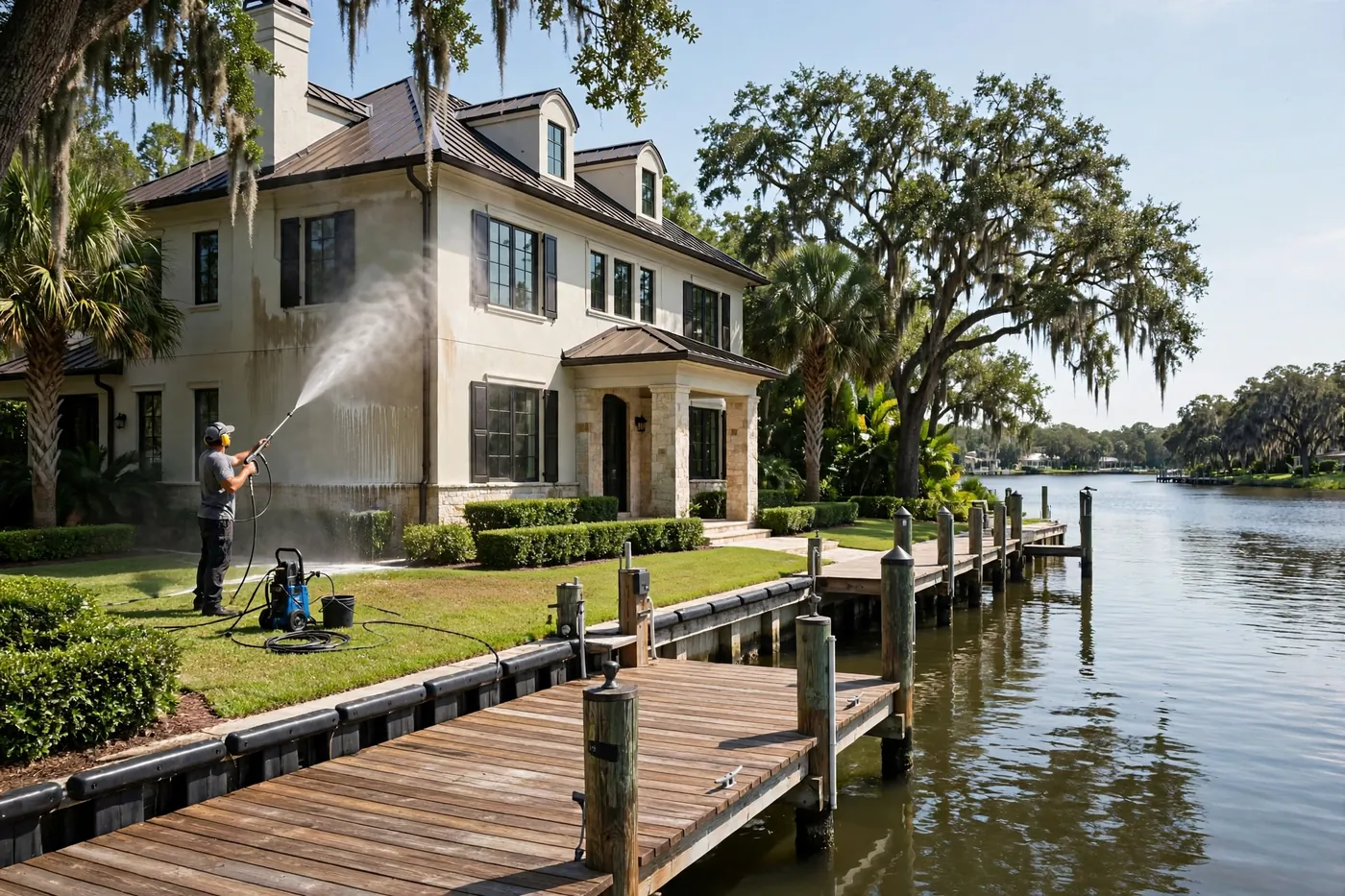
Ortega's riverfront estates face salt air, river humidity and dock grime. A complete guide to waterfront exterior cleaning.
Read More →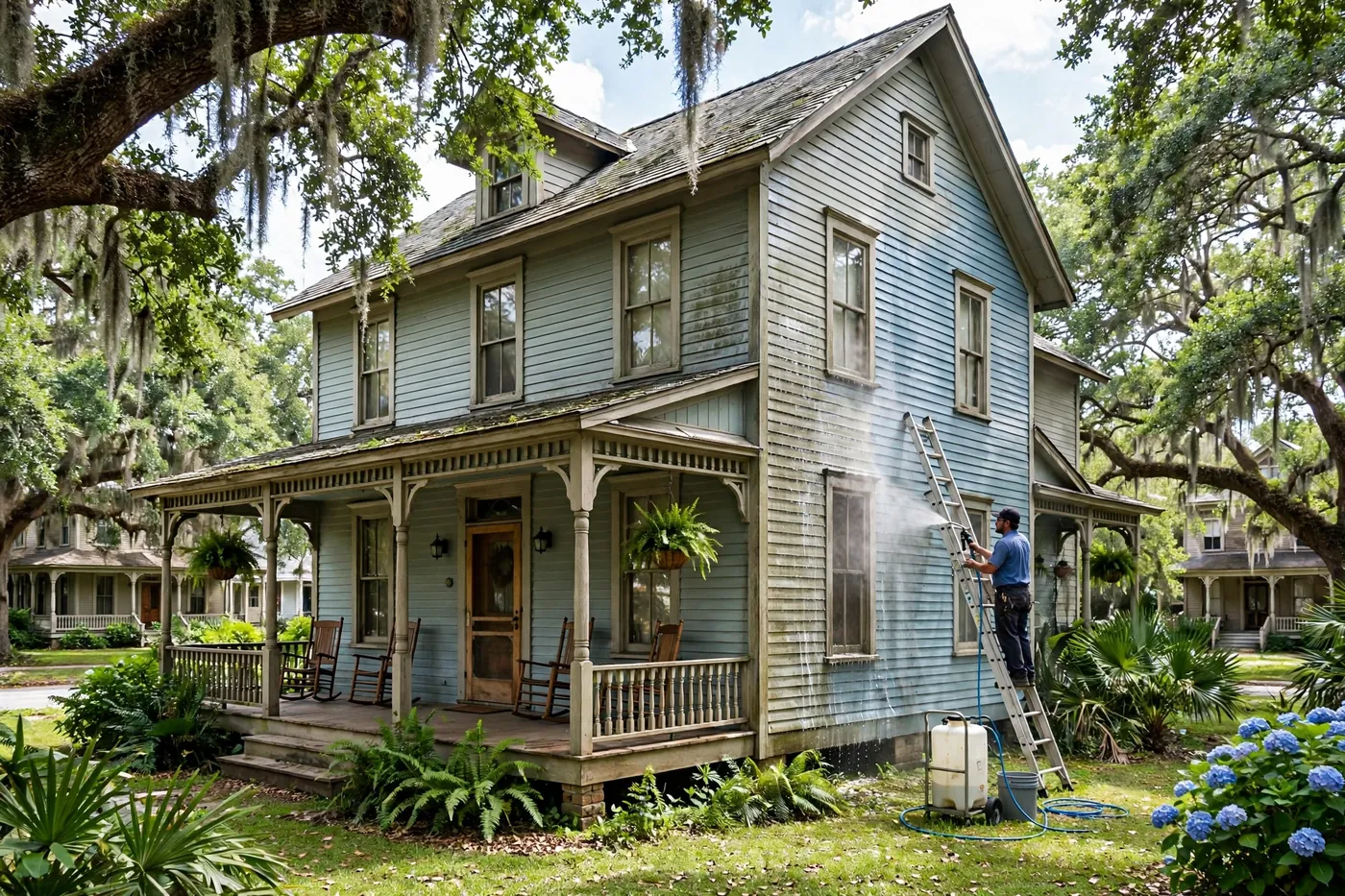
Springfield's century-old homes need soft washing, not brute force. How to restore historic siding safely.
Read More →Call now for a free estimate and same-day service in Jacksonville, FL. Open 24/7.