
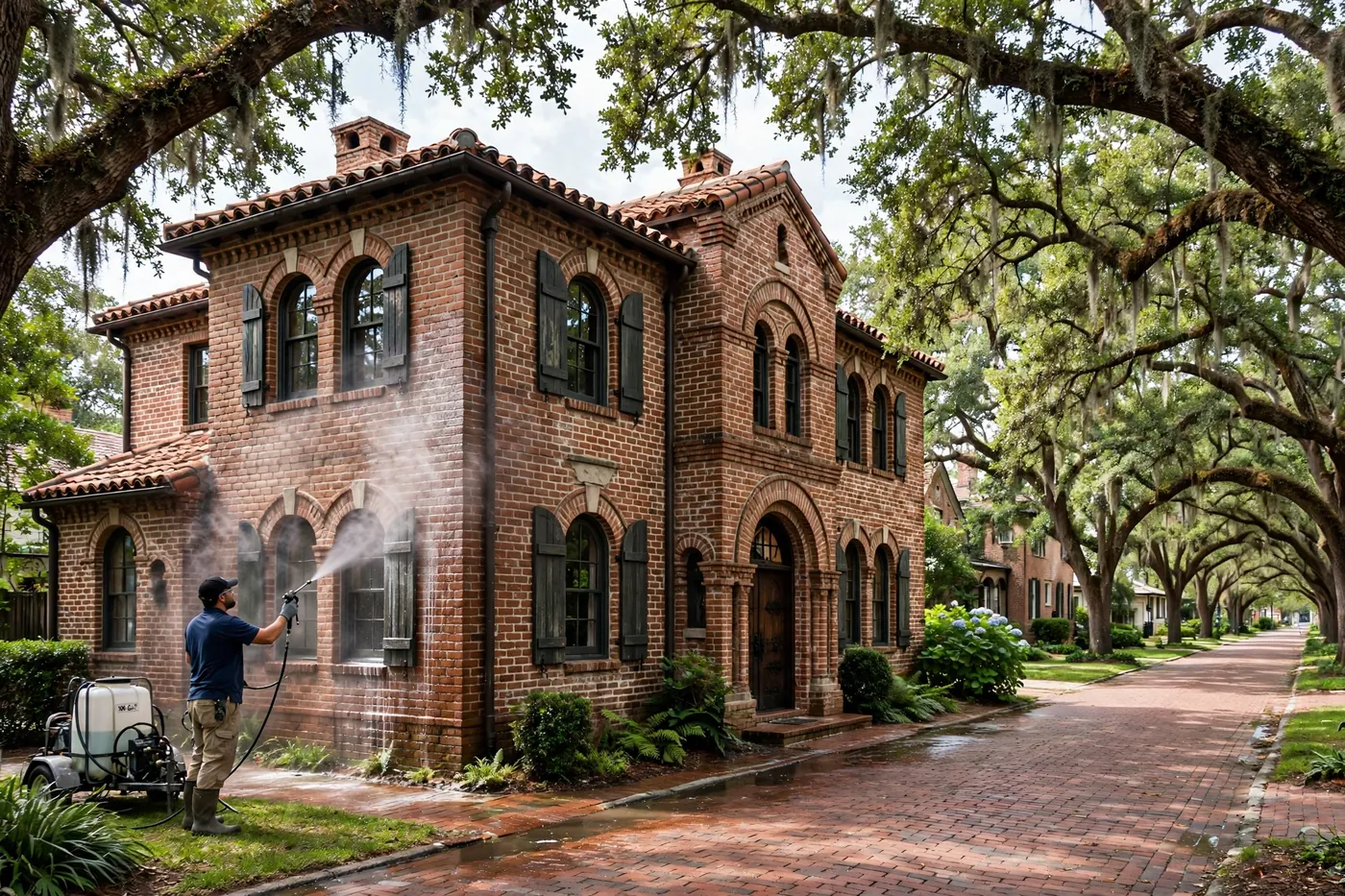
Pressure Washing in San Marco: Brick, Stucco & Historic Homes
San Marco's 1920s–40s Mediterranean Revival homes need a gentle touch. Here's how to clean brick, stucco and historic wood without damage.
Read More →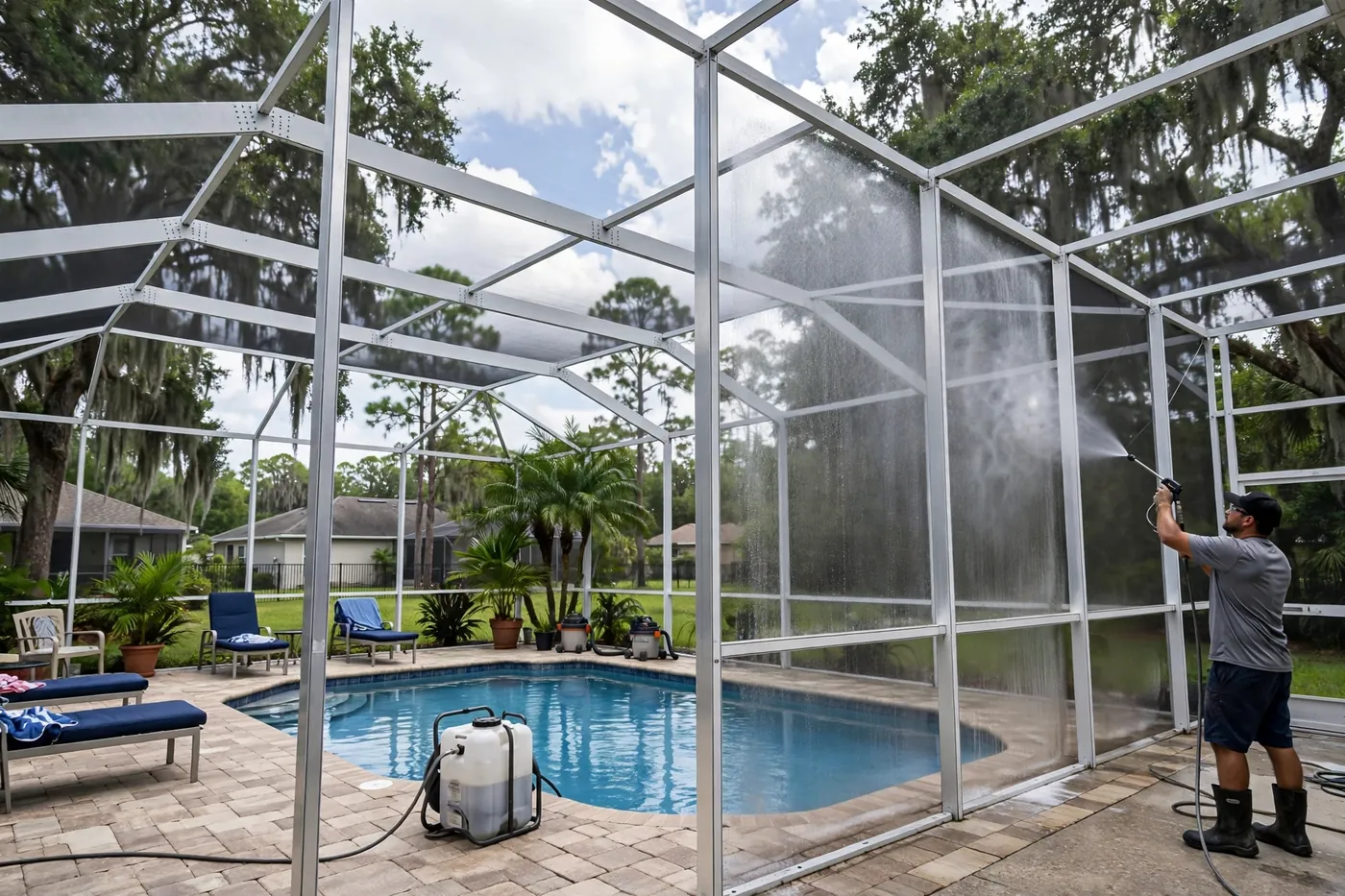
Your pool cage faces algae, oxidation and screen rot. How pros clean enclosures without tearing screens.
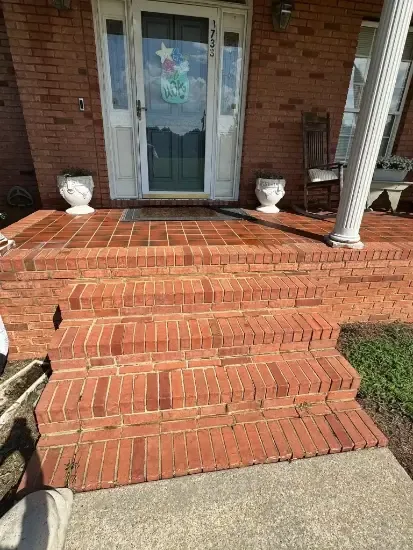
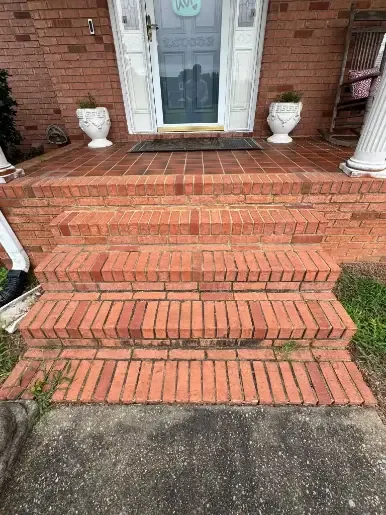 BEFOREAFTER
Drag to compare
BEFOREAFTER
Drag to compareJacksonville pool enclosures lead hard lives. The aluminum frames collect a green-black film of algae and mold, fed by pool humidity on the inside and oak pollen and St. Johns River moisture on the outside. The screens themselves trap a gray haze of pollen, dust, and salt air that slowly dims the sunlight over your pool. From a distance it just looks dull; up close it is a thriving ecosystem.
Then there is oxidation — the chalky white powder that forms on aging aluminum frames. It is the metal's natural corrosion response to our salt air and humidity, and once it starts, it spreads. Light oxidation cleans off and looks dramatically better. Heavy oxidation, where the finish is gone and the metal is pitted, is permanent — cleaning reveals the damage rather than hiding it, which is why honest companies warn you before starting.
The screens also suffer dry rot in our UV blast. Screens older than seven or eight years get brittle, and that matters enormously for cleaning — which brings us to the question every Jacksonville pool owner asks: will pressure washing tear my screens? The honest answer depends entirely on method, and it is the difference between a pro job and a disaster.
Screens tear when high-pressure water hits them directly. A standard pressure washer at 2,500 PSI will shred a pool screen in a second — it is mesh, not concrete. This is the number one cause of enclosure damage in Jacksonville, and it is almost always a DIY job or a bargain operator who treated the cage like a driveway. A single torn panel costs 150 to 250 dollars to rescreen; a whole cage runs into the thousands.
Professionals clean enclosures with soft-wash methods: specialized detergents applied at garden-hose pressure — sometimes literally through a pump sprayer — that dissolve algae and grime chemically, followed by a gentle rinse. The water never hits the screen with force. It is slower than blasting, and it is the only safe way. Any company that proposes pressure washing your screens at high pressure does not understand the job.
Age matters too. A reputable company inspects screens before starting and warns you about brittle sections. If your screens are past their life, we will tell you straight: cleaning will improve them, but fragile screens can fail during even gentle washing, and rescreening first may be the smarter spend. Professor Pressure Washing has cleaned Jacksonville enclosures since 2015 — call (904) 938-5900 and we will give you an honest assessment before we touch a panel.
The aluminum frame needs different treatment than the screens. Oxidation and algae on frames respond well to soft-wash detergents plus a soft brush on stubborn spots — the mechanical agitation that screens cannot take is fine on metal. Fasteners and screws get special attention; the rust bleeding from a hundred tiny screws is what makes many cages look worse than they are, and targeted treatment clears it.
Here is the honest-limits part. Cleaning cannot fix: screens with dry rot (they need replacement), frames with deep pitting where the finish is gone, or structural issues like loose footings and bent beams from storm damage. A good company identifies these during the estimate and tells you what cleaning will and will not achieve. If someone promises your 20-year-old cage will look new, they are selling, not assessing.
What cleaning can do is remarkable, though: remove years of algae and pollen haze, brighten frames dramatically, clear rust bleed, and restore the light coming through. Most Jacksonville pool owners are shocked at how much brighter the pool area feels afterward. It is one of the highest satisfaction-per-dollar services we do — when it is done with the right method.
In Jacksonville's climate, plan on enclosure cleaning every 12 to 18 months. Homes under heavy oak canopy in Mandarin or near the river in Ortega may need it yearly — the shade and humidity accelerate growth. Beach-area cages in Jacksonville Beach and Ponte Vedra collect salt film faster and benefit from annual attention too. If you can write your name in the pollen haze on the screens, you are overdue.
Pricing for a standard pool enclosure in Jacksonville typically runs 150 to 350 dollars depending on size, condition, and whether frames need heavy oxidation treatment. Whole-property packages that bundle the enclosure with the house wash and pool deck usually offer the best value, since the crew and equipment are already on site.
Between professional cleanings, you can extend the results by rinsing screens with a garden hose every few months — no pressure washer, just the hose — to knock off pollen before it bonds. Avoid bleach-heavy DIY mixes on frames; they accelerate corrosion on aluminum. And trim back any branches touching the cage: constant contact wears screens and feeds them organic debris. Small habits, big difference in how long the professional clean lasts.
Yes — high-pressure water shreds pool screens instantly, and it is the most common cause of enclosure damage in Jacksonville. Professionals use soft-wash methods: detergents applied at garden-hose pressure that dissolve grime chemically, followed by a gentle rinse. Never let anyone blast your screens at high pressure.
Every 12 to 18 months in Jacksonville's climate; yearly for homes under oak canopy, near the river, or at the beaches where salt and humidity accelerate growth. A garden-hose rinse between professional cleanings extends the results.
Algae and mold fed by pool humidity inside and pollen, oak debris, and river moisture outside. Aluminum oxidation — the chalky white powder — is the metal's corrosion response to salt air. Both respond well to soft-wash treatment; deep pitting from advanced oxidation is permanent.
San Marco's 1920s–40s Mediterranean Revival homes need a gentle touch. Here's how to clean brick, stucco and historic wood without damage.
Read More →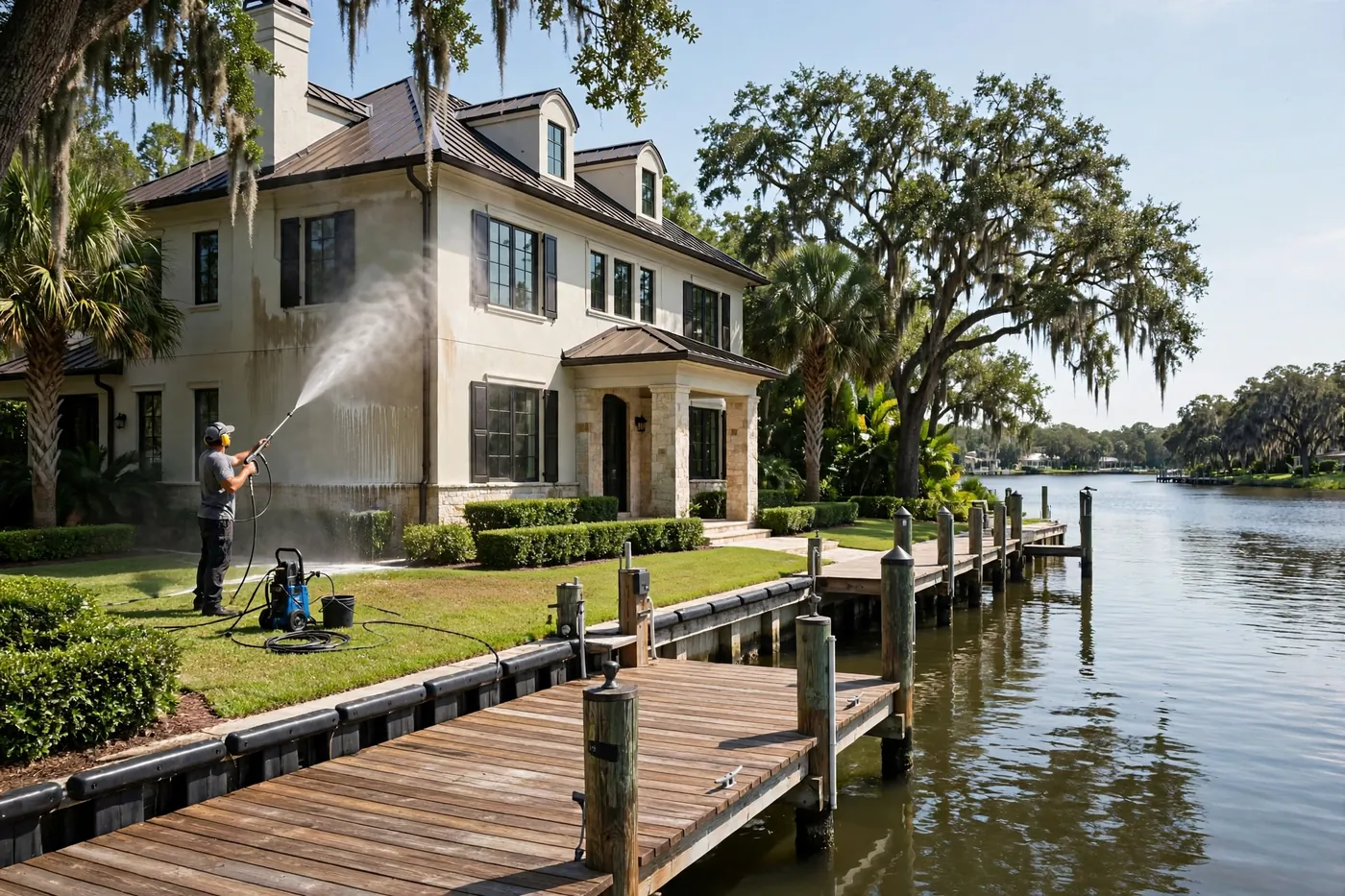
Ortega's riverfront estates face salt air, river humidity and dock grime. A complete guide to waterfront exterior cleaning.
Read More →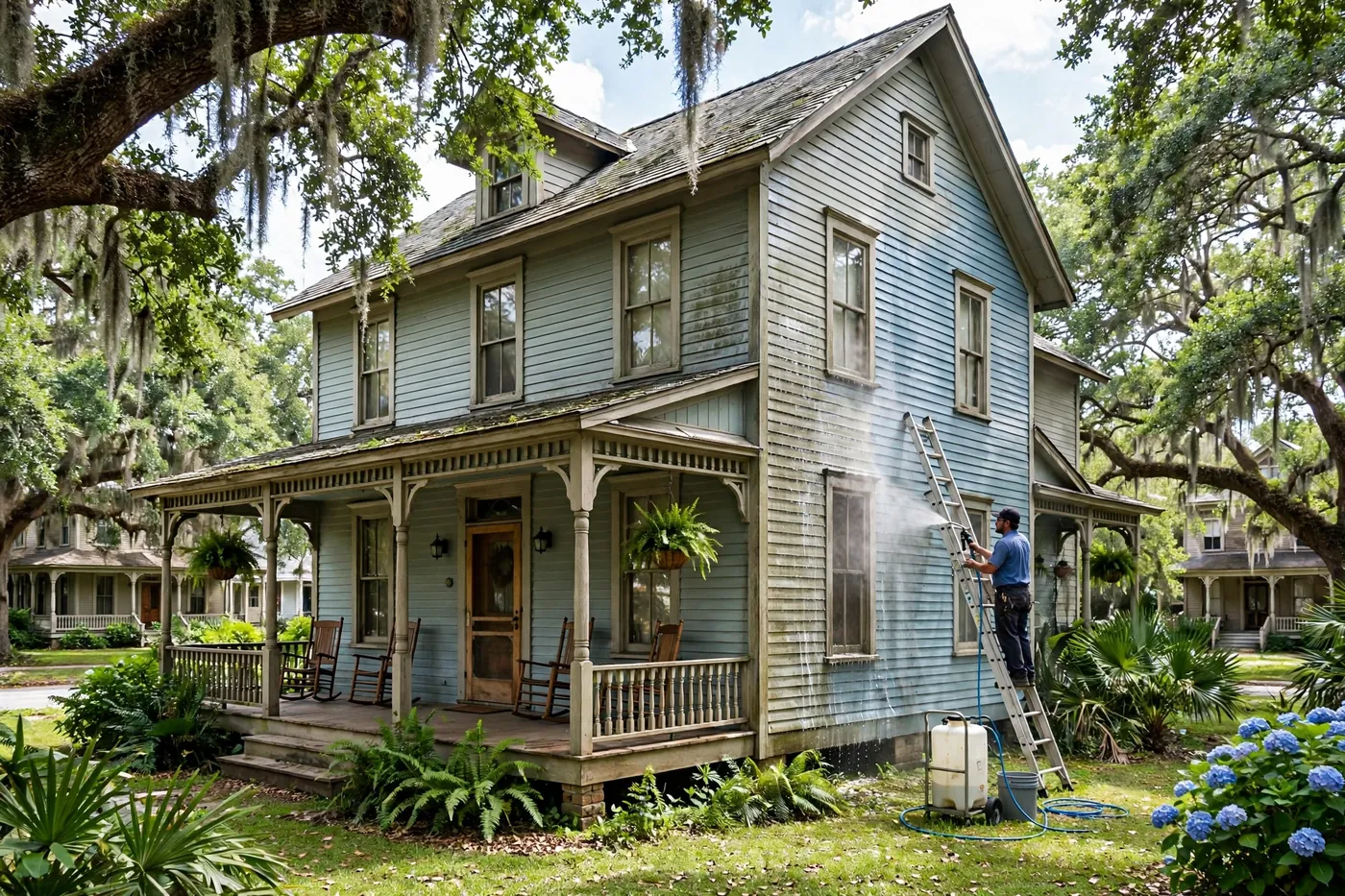
Springfield's century-old homes need soft washing, not brute force. How to restore historic siding safely.
Read More →Call now for a free estimate and same-day service in Jacksonville, FL. Open 24/7.