
Pressure Washing in San Marco: Brick, Stucco & Historic Homes
San Marco's 1920s–40s Mediterranean Revival homes need a gentle touch. Here's how to clean brick, stucco and historic wood without damage.
Read More →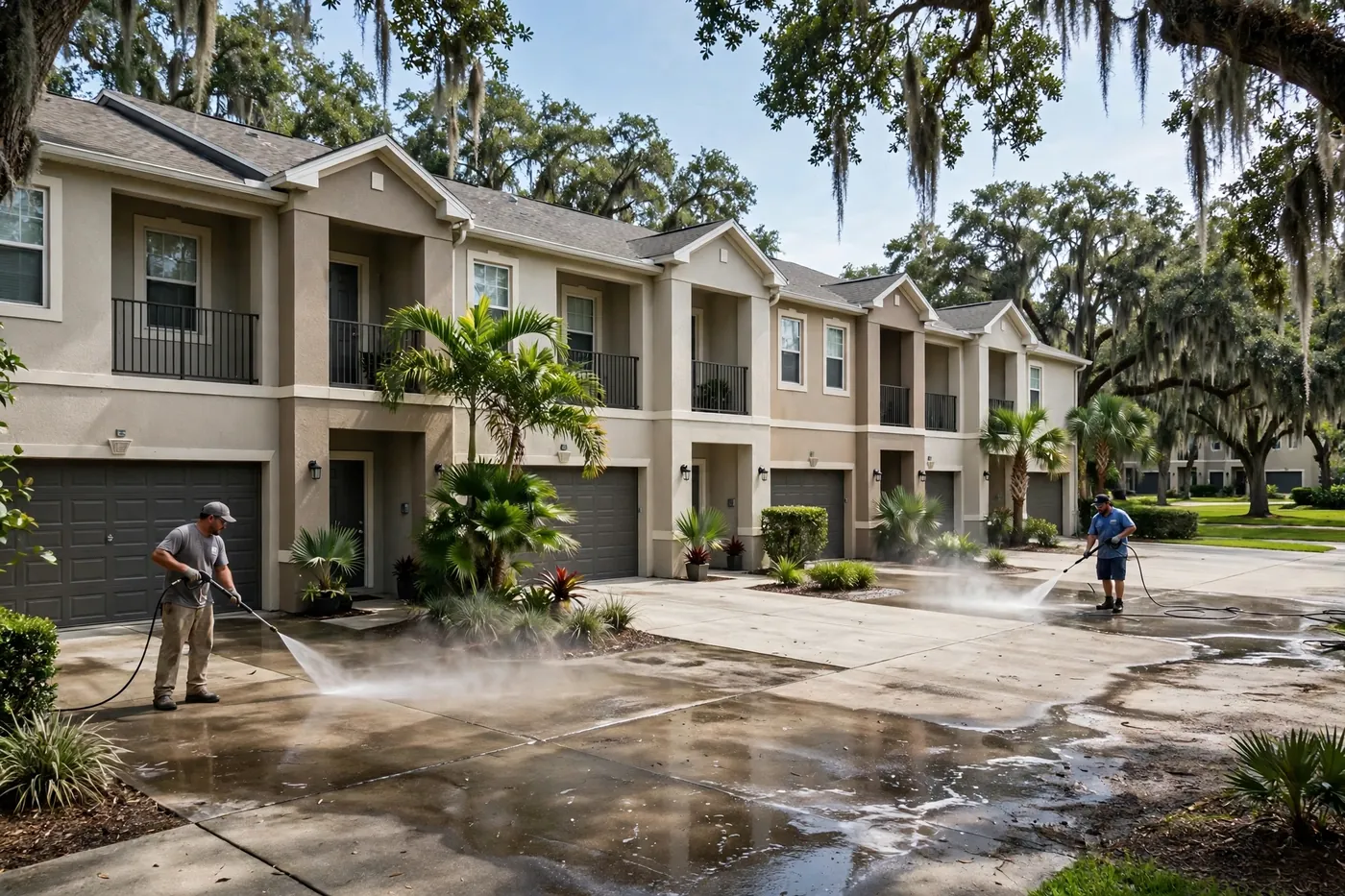
Shared walls, shared driveways, one contract: how townhome communities handle exterior cleaning.
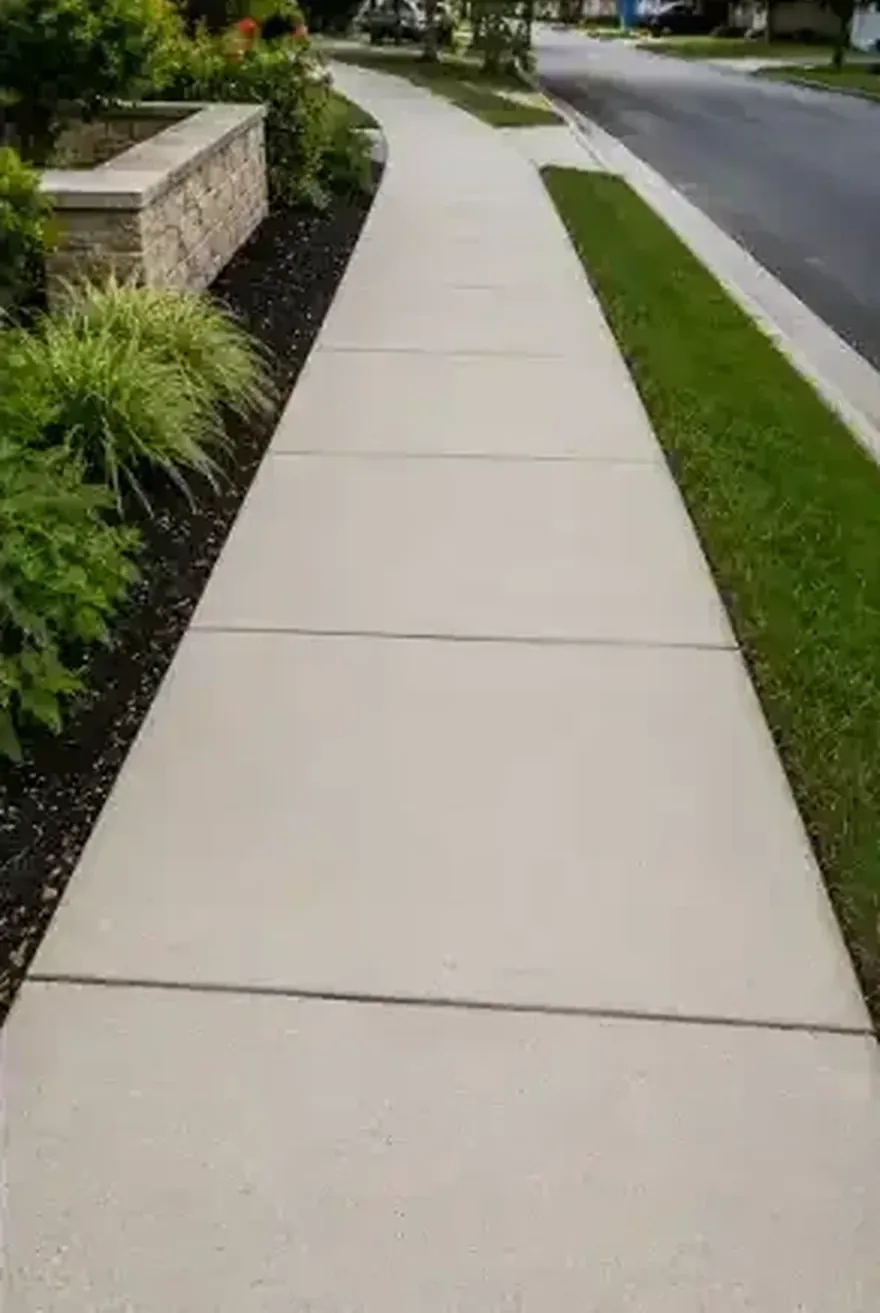
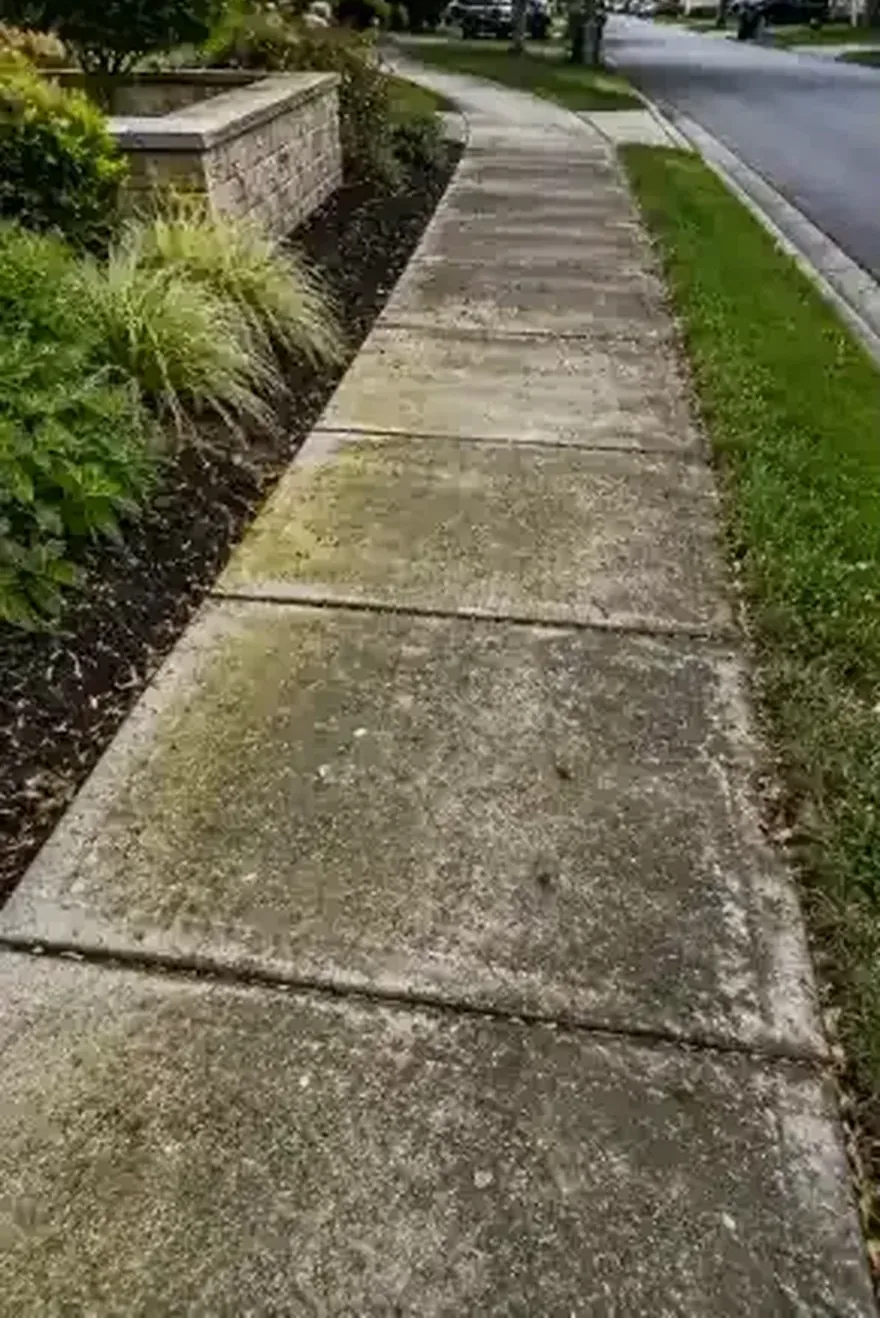 BEFOREAFTER
Drag to compare
BEFOREAFTER
Drag to compareTownhome living in Jacksonville — from the communities along Southside Boulevard to the newer developments in Nocatee and eTown — means shared everything: shared walls, shared driveways, shared roofs, shared courtyards. When one owner pressure washes and the neighbor does not, the property line becomes a visible dirt line, and the whole row looks worse than if nobody had washed at all.
There is also a practical problem with piecemeal washing: overspray does not respect property lines. Washing one townhome inevitably wets the neighbor's walls, windows, and landscaping. Doing it unit by unit means constant coordination headaches, repeated mobilizations, and inevitably, disputes about who splattered whose car. The physics of attached housing demands a coordinated approach.
That is why most Jacksonville townhome HOAs handle exterior cleaning as a community contract rather than leaving it to individual owners. One vendor, one schedule, uniform results across every unit — and a per-unit cost far below what any owner would pay alone. It is one of the clearest cases in property maintenance where collective action beats individual effort on both price and outcome.
A typical townhome washing contract covers all building exteriors — siding or stucco, trim, and shared walls — plus common driveways, sidewalks, breezeways, and often the community's entry features and fencing. The HOA board or property manager bids it out every one to three years, and the winning vendor washes the entire community on a set schedule, usually annually in Jacksonville's climate.
Pricing works on bulk economics. Washing fifty townhomes individually might cost 300 dollars per unit retail — 15,000 total. As a single community contract, the same work often bids at 150 to 200 per unit, because the crew mobilizes once, works continuously down the rows, and uses water and equipment efficiently. HOAs in Baymeadows, Southside, and the Beaches routinely see 30 to 40 percent savings versus individual hiring.
The contract should specify method as well as scope. Jacksonville's townhomes are overwhelmingly stucco and vinyl — both soft-wash surfaces. An HOA that hires the cheapest high-pressure bidder to save money often ends up with cracked stucco across forty units and a special assessment for repairs. Boards should require soft-wash methods in the bid specs and verify insurance at the one-million-dollar level, just as individual homeowners should.
In most Jacksonville townhome communities, routine exterior washing is an HOA operating expense, funded through monthly dues — the same bucket as landscaping and common-area maintenance. Owners do not pay per wash; the cost is baked into the budget the board approves annually. This is the cleanest model and the most common one.
When washing has been deferred for years and the buildup is severe, some HOAs fund the initial restoration as a special assessment, then fold ongoing maintenance into the regular budget. Boards sometimes ask whether owners can opt out and hire their own — the answer should be no, because opt-outs recreate exactly the patchwork problem the contract solves, and they complicate the vendor's workflow around skipped units.
Transparency prevents the usual fights. The board should share the bid comparison, the scope, and the per-unit math with owners before signing. When owners see that the community contract costs them 12 dollars a month versus 300 dollars individually, approval is rarely controversial. The disputes start when boards sign vague contracts — so insist on written scope, method, and schedule, the same standards any smart homeowner would demand.
The logistics make or break a community wash. A good vendor works with the property manager on a notification plan: every unit gets written notice at least a week out, with the specific day their building is scheduled, what to move (patio furniture, grills, potted plants, cars), and what to close (windows — washing forces mist through the tiniest gaps). Jacksonville's afternoon thunderstorms mean schedules need rain-day flexibility built in.
Cars are the number one headache. Shared driveways must be clear for the crew to work and to avoid overspray on vehicles. The notice should state clearly where to park on wash day, and the board should enforce it — one holdout's SUV in the driveway delays the whole row. Pets are number two: dogs need to be inside, because the equipment is loud and the detergents, while biodegradable, are not drinking water.
For the vendor's part, professionalism shows in the details: crews that protect landscaping, keep noise to reasonable hours, and leave each building cleaner than they found it — including wiping down the inevitable light overspray on windows. Professor Pressure Washing has run community contracts for Jacksonville HOAs since 2015; call (904) 938-5900 and we will walk your board through scope, scheduling, and per-unit pricing with no obligation.
A complete community scope covers: all exterior walls including shared walls, trim and fascia, front entries and stoops, shared driveways and walkways, breezeways and stairwells, community fencing, entry monuments, and mailbox kiosks. In Jacksonville, pool areas and amenity buildings are often included for communities that have them. Everything gets the same method — soft wash for buildings, surface cleaners for concrete.
Standard exclusions, which boards should understand upfront: interior courtyards or patios with owner belongings that cannot be moved, roofs (a separate specialty with different pricing), and private decks or lanais that owners have enclosed — those are usually owner responsibility. Windows typically get a rinse but not a detailed window cleaning; true window detailing is a separate trade.
The final walkthrough matters as much as the wash. A professional vendor walks the property with the manager afterward, addresses any misses on the spot, and provides before-and-after documentation for the board's records. That documentation protects everyone — it proves the work was done and establishes the baseline for next year's contract. Communities that treat exterior washing as an ongoing program, not a one-time event, keep their curb appeal — and their property values — consistently ahead of the communities that do not.
The board or property manager bids the work as a single community contract every one to three years, covering all units on a set schedule — usually annually in Jacksonville. Owners get written notice with their building's day, what to move, and where to park. Bulk scheduling cuts per-unit cost 30 to 40 percent versus individual hiring.
Usually the HOA, funded through monthly dues as an operating expense — the same bucket as landscaping. Deferred communities sometimes fund the first restoration via special assessment, then fold maintenance into the budget. Individual opt-outs are discouraged because they recreate the patchwork problem.
You do not — you wash the whole community uniformly under one contract, so there are no property-line dirt lines and no disputes. The vendor works continuously down the rows with the same method on every unit, which is faster, cheaper per unit, and produces consistent results across the community.
San Marco's 1920s–40s Mediterranean Revival homes need a gentle touch. Here's how to clean brick, stucco and historic wood without damage.
Read More →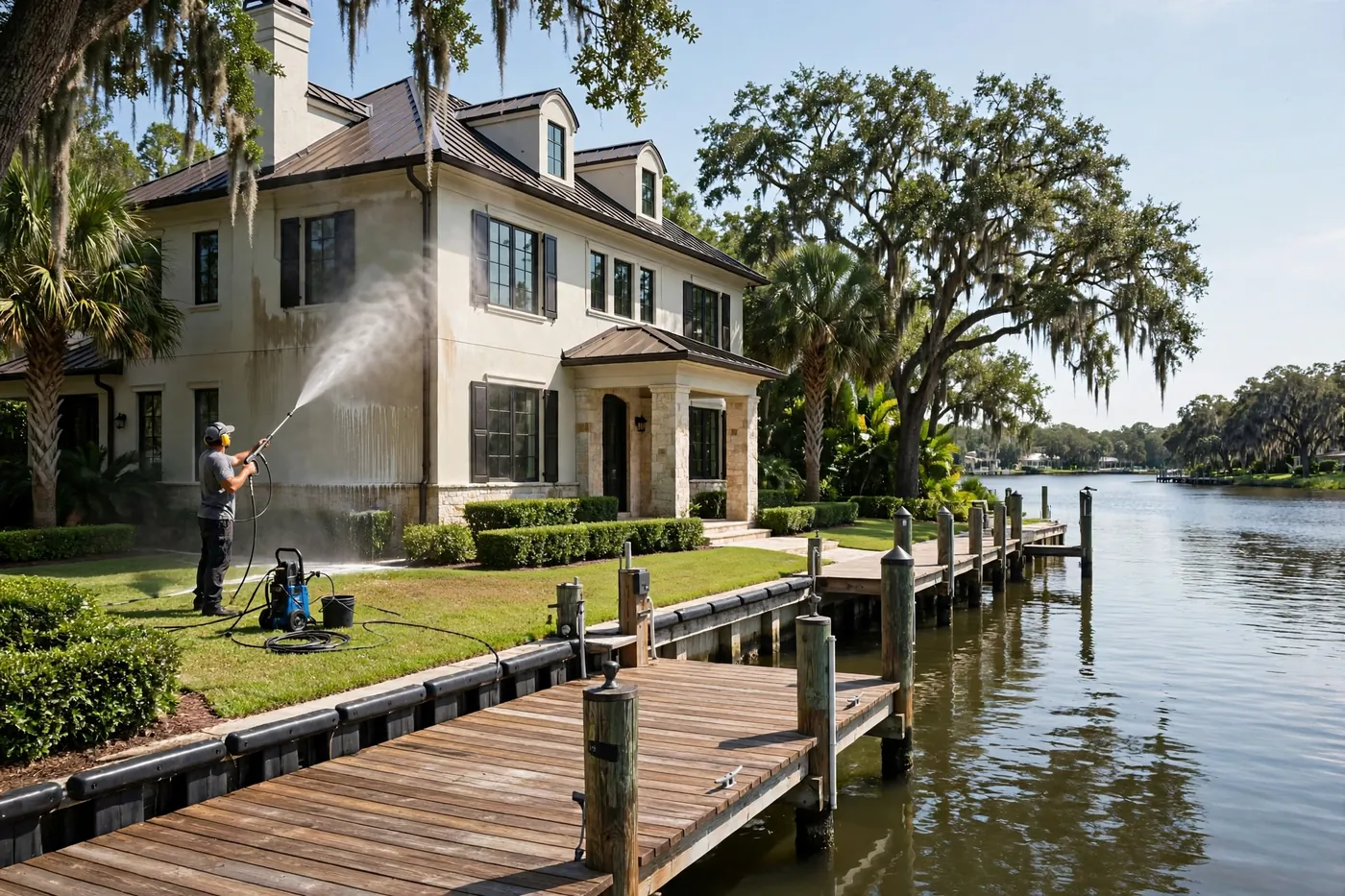
Ortega's riverfront estates face salt air, river humidity and dock grime. A complete guide to waterfront exterior cleaning.
Read More →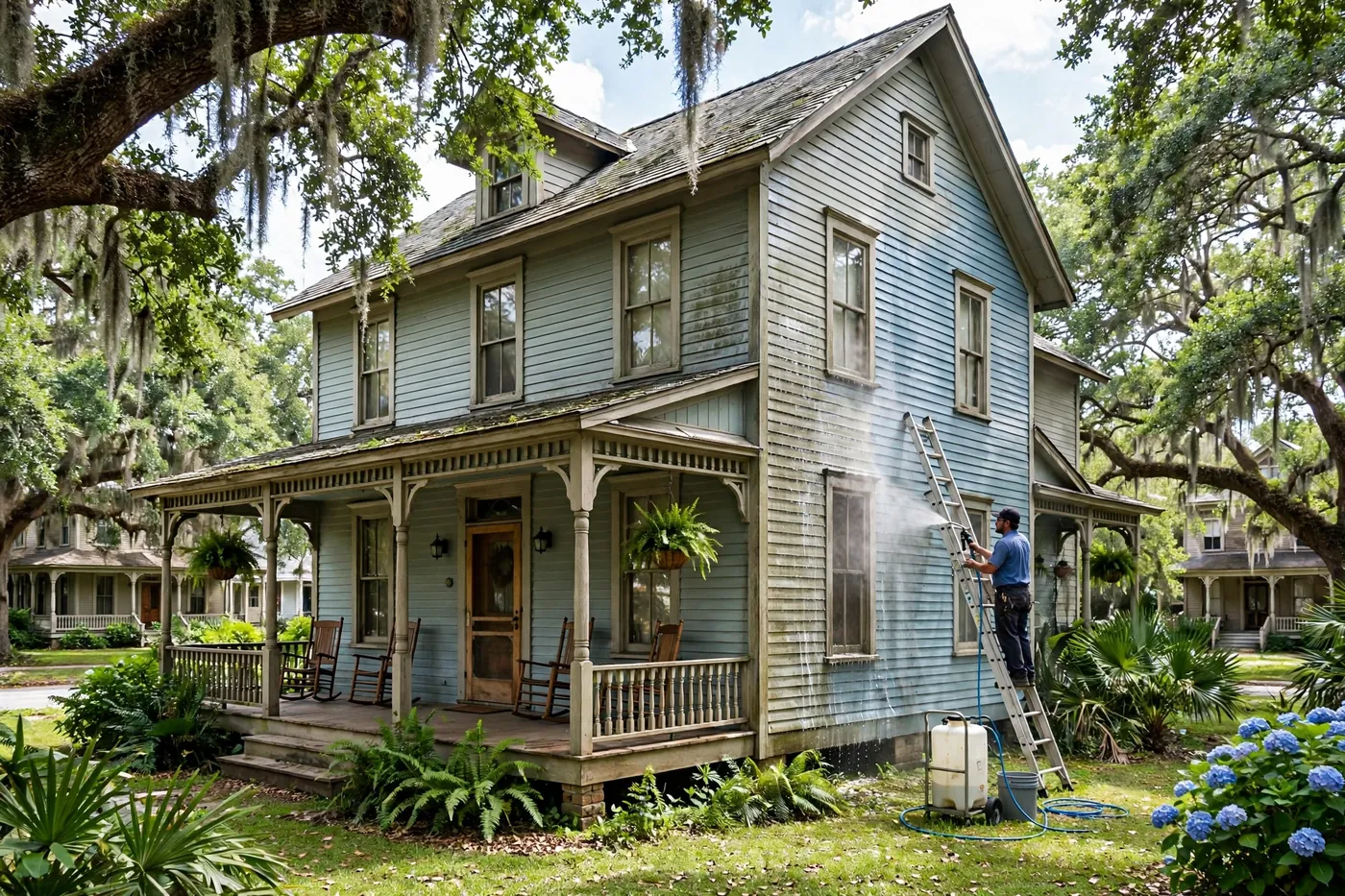
Springfield's century-old homes need soft washing, not brute force. How to restore historic siding safely.
Read More →Call now for a free estimate and same-day service in Jacksonville, FL. Open 24/7.