
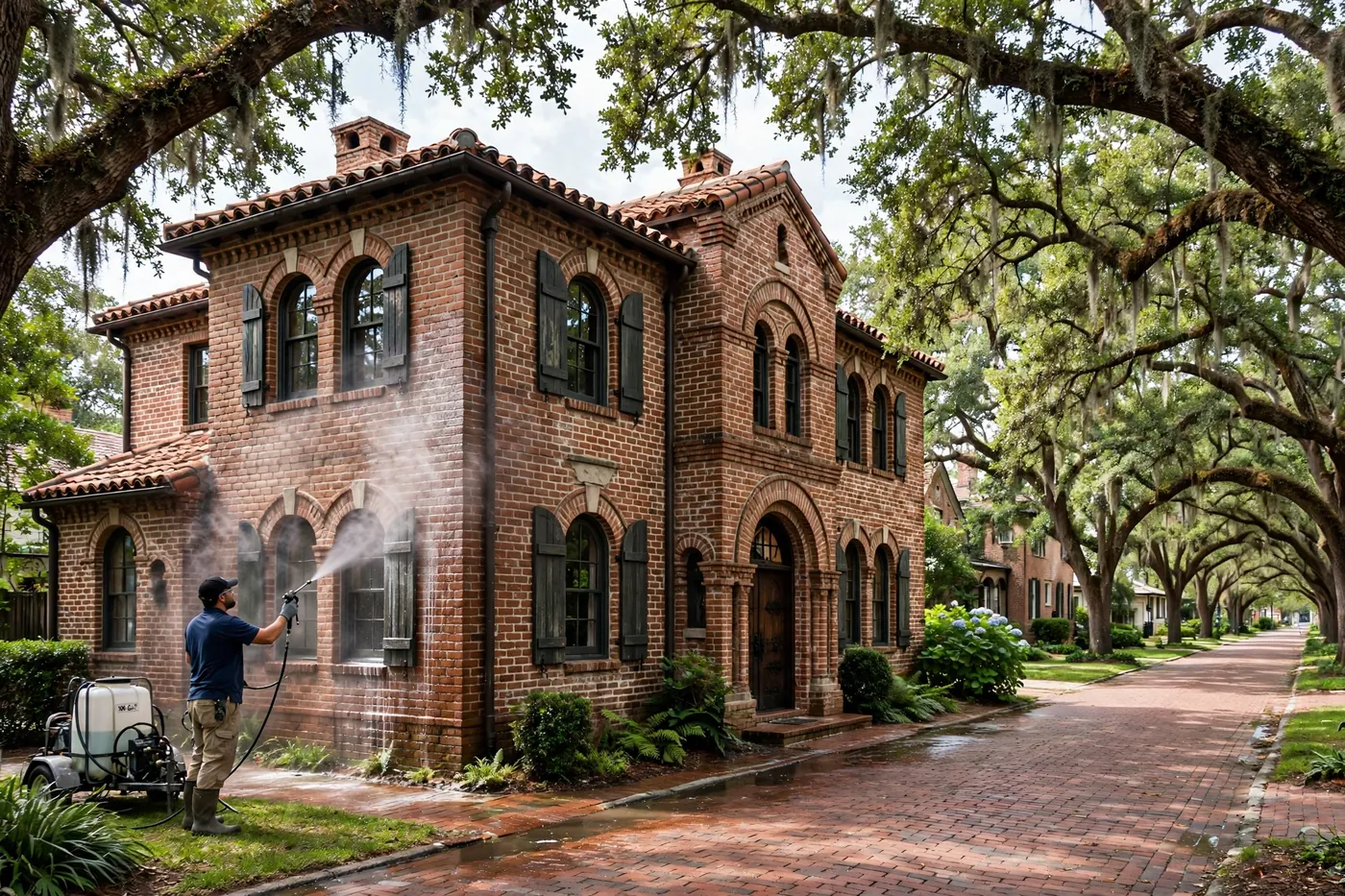
Pressure Washing in San Marco: Brick, Stucco & Historic Homes
San Marco's 1920s–40s Mediterranean Revival homes need a gentle touch. Here's how to clean brick, stucco and historic wood without damage.
Read More →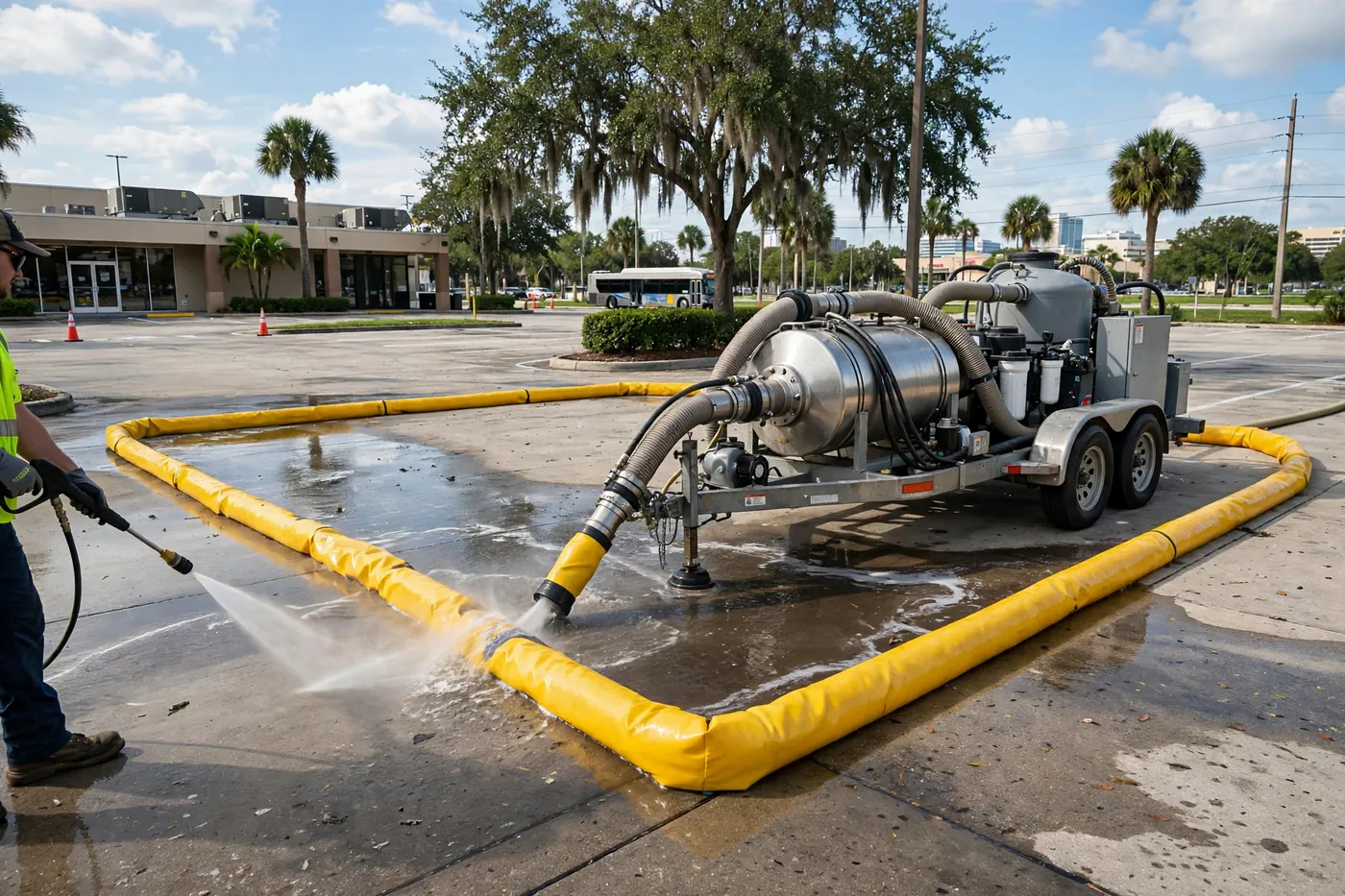
Capturing wash water before it hits the drain: when reclamation is required and how it works.
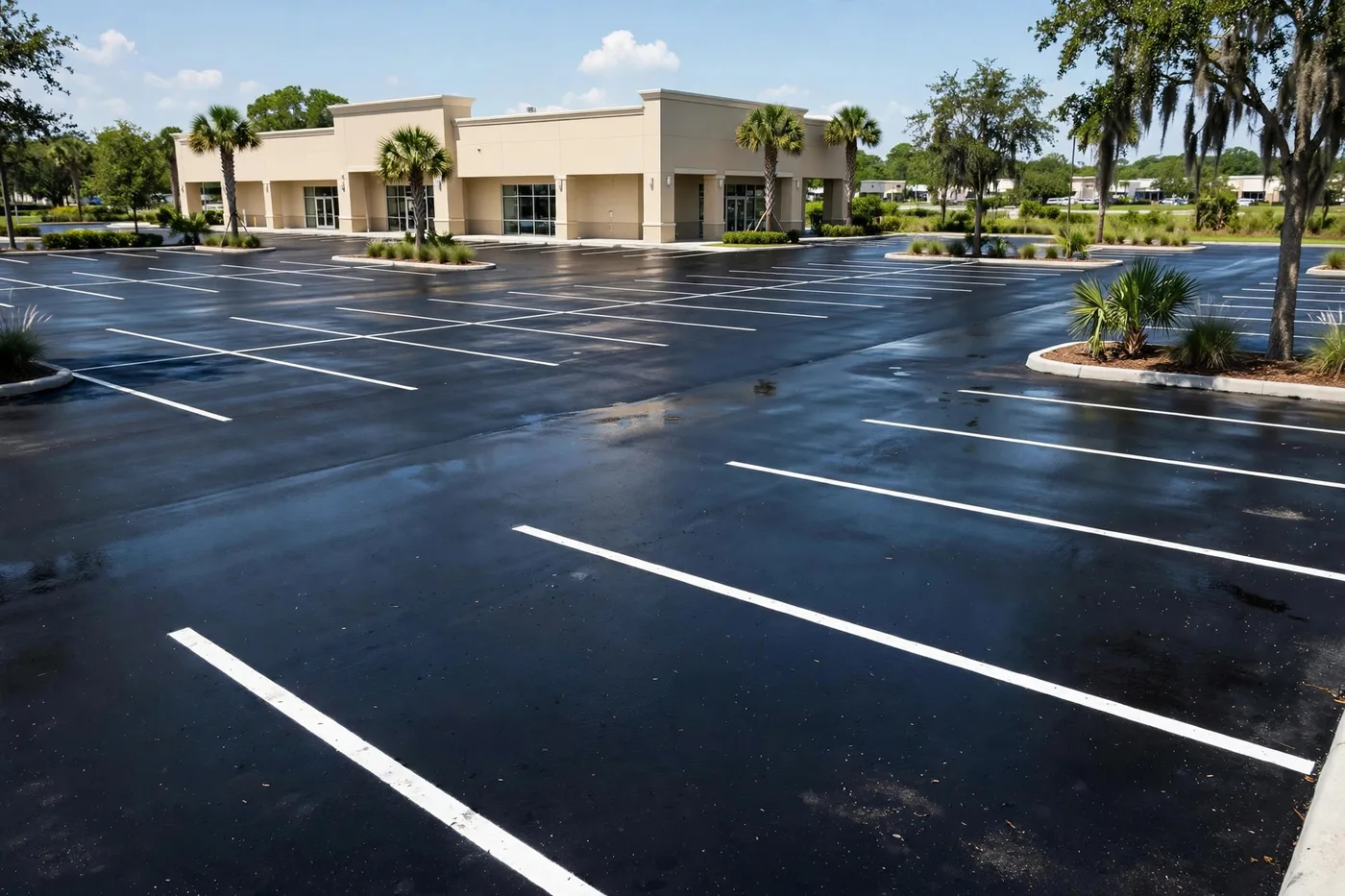
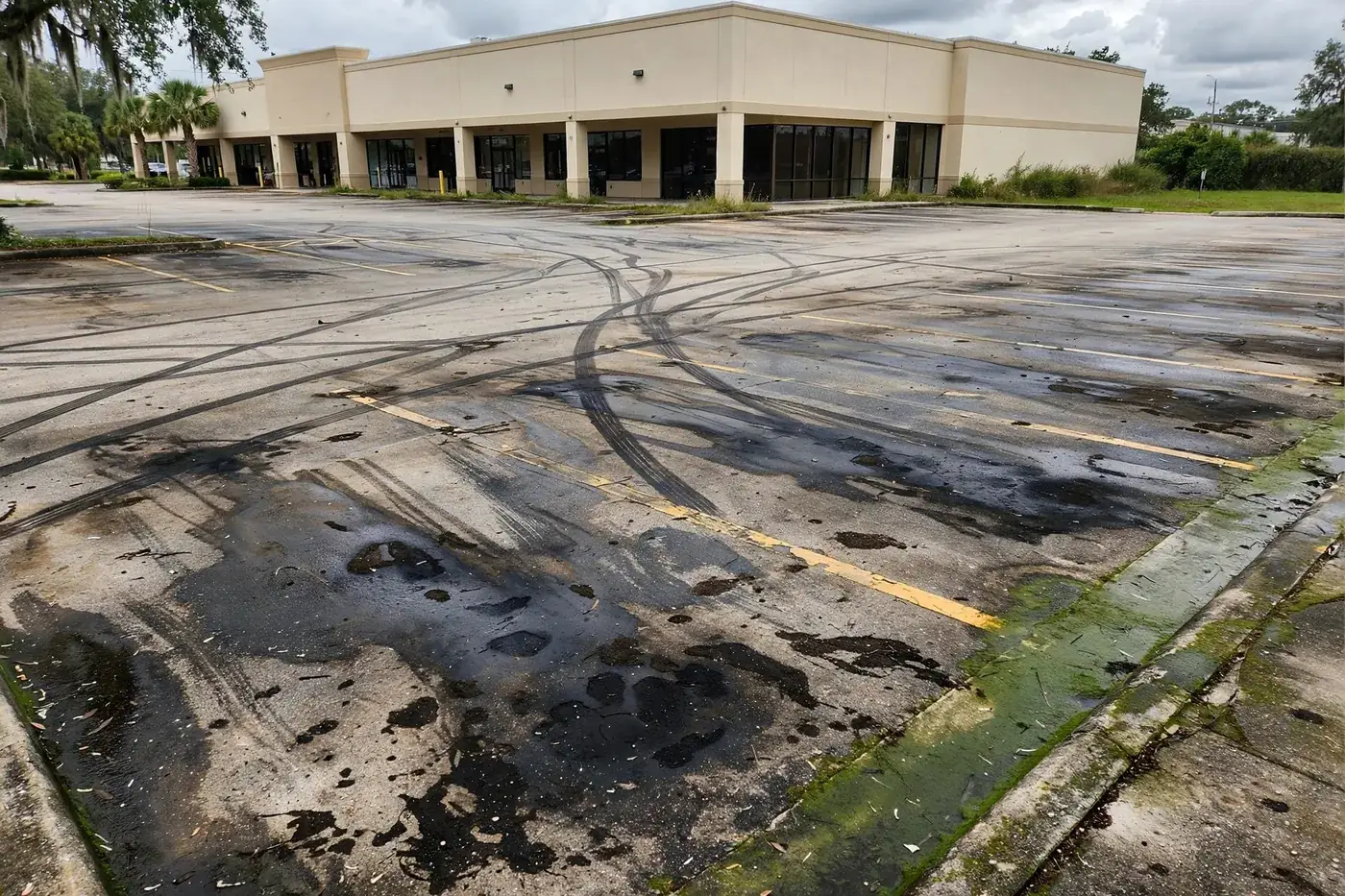 BEFOREAFTER
Drag to compare
BEFOREAFTER
Drag to compareWater reclamation in pressure washing means capturing the dirty wash water before it flows into a storm drain, and either filtering it for reuse or disposing of it properly. It is done with a combination of containment berms — low rubber dams that ring the work area — and vacuum recovery systems that suck up the water as fast as the pressure washer puts it down. The recovered water goes into a holding tank on the truck instead of down the street.
This is different from normal residential washing, where rinse water soaks into your lawn or evaporates off your driveway. Reclamation is for situations where the water carries contaminants — oil, grease, heavy metals, detergents — or where the volume is large enough that runoff would reach a storm drain. The storm drains in Jacksonville do not lead to a treatment plant. They lead directly to the St. Johns River, its tributaries, and the Intracoastal.
For a homeowner washing a house in Mandarin, reclamation is overkill — the mild detergents used in soft washing break down quickly and the volumes are small. But for a gas station on Beach Boulevard, a restaurant grease pad in San Marco, or a parking lot in Southside, reclamation is not optional. It is the difference between a legal job and an environmental violation.
The legal framework comes from the federal Clean Water Act, enforced locally through the St. Johns River Water Management District and the City of Jacksonville's stormwater regulations. The core rule is simple: nothing but rain should enter a storm drain. Wash water containing oil, grease, detergents, or sediment counts as an illicit discharge, and the fines start in the thousands per day.
In practice, reclamation is required for commercial jobs where contaminants are present: gas stations and auto shops with petroleum runoff, restaurants with grease, industrial sites, and fleet washing. It is also required any time wash water would flow directly into a storm drain inlet — which, in Jacksonville's flat terrain, is most commercial parking lots. Residential house washing with biodegradable detergents and no drain contact generally does not trigger the requirement.
Property managers should know that liability can flow uphill. If your contractor in Baymeadows washes your parking garage and the oily runoff hits the drain, the property owner can share the enforcement exposure. This is why professional commercial bids in Jacksonville include reclamation explicitly — it is a compliance line item, not an upsell. If a bidder's commercial quote does not mention runoff control at all, that is a red flag about their regulatory awareness.
A reclamation job starts before the pressure washer does. The crew walks the site and maps every storm drain inlet, then either covers them with sealed mats or rings the work area with berms so water cannot reach them. On a sloped lot near the river in Ortega or San Marco, that mapping matters — water finds the drain fast on flat Jacksonville pavement.
During washing, a vacuum boom or surface vacuum follows the wash path, recovering water continuously. For large flat areas like parking lots, crews use vacuum surface cleaners that wash and recover in a single pass. The recovered water goes into a baffled holding tank on the truck, where solids settle. Some advanced rigs filter and recycle the water back through the pressure washer, cutting freshwater use dramatically.
Afterward, the water is either discharged to a sanitary sewer connection (with permission — never a storm drain) or hauled to an approved disposal facility. The job file documents the whole chain: where water was captured, how much, and where it went. For commercial clients, that documentation is the compliance proof if the city or SJRWMD ever asks questions. It is unglamorous work, and it is exactly what separates professional commercial operators from a guy with a pressure washer.
Reclamation adds real cost: the containment equipment, the vacuum systems, the slower pace of capture-as-you-go washing, and disposal fees. On a commercial job, expect reclamation to add 20 to 40 percent to the washing cost compared to a wash-and-let-it-run approach. For a mid-size Jacksonville parking lot, that might mean the difference between an 800-dollar wash and an 1,100-dollar compliant wash.
That premium is cheap compared to the alternative. SJRWMD and City of Jacksonville stormwater enforcement can levy fines starting around 1,000 dollars per day per violation, and federal Clean Water Act penalties go far higher for knowing discharges. One bad wash at a gas station on Atlantic Boulevard can cost more in fines than a decade of compliant washing.
For residential customers, the takeaway is simpler: you almost certainly do not need reclamation, and any residential bidder who tries to charge you for it is padding the quote. But if you manage commercial property — restaurants, retail, offices, HOAs with large common areas — make sure reclamation is in the bid and in the contract. Professor Pressure Washing handles compliant commercial washing across Jacksonville; call (904) 938-5900 and we will scope your site's runoff requirements honestly.
Water reclamation means capturing dirty wash water with berms and vacuum systems before it reaches a storm drain, then filtering or disposing of it properly. Jacksonville storm drains flow untreated to the St. Johns River, so contaminated wash water cannot legally go down them.
It is required for commercial jobs with contaminants — gas stations, restaurants, auto shops, industrial sites — and whenever wash water would flow directly into a storm drain. Standard residential house washing with biodegradable detergents does not trigger the requirement.
Yes — typically 20 to 40 percent more than a non-compliant wash, covering containment equipment, vacuum recovery, slower work pace, and disposal. It is far cheaper than stormwater fines, which start around 1,000 dollars per day per violation.
San Marco's 1920s–40s Mediterranean Revival homes need a gentle touch. Here's how to clean brick, stucco and historic wood without damage.
Read More →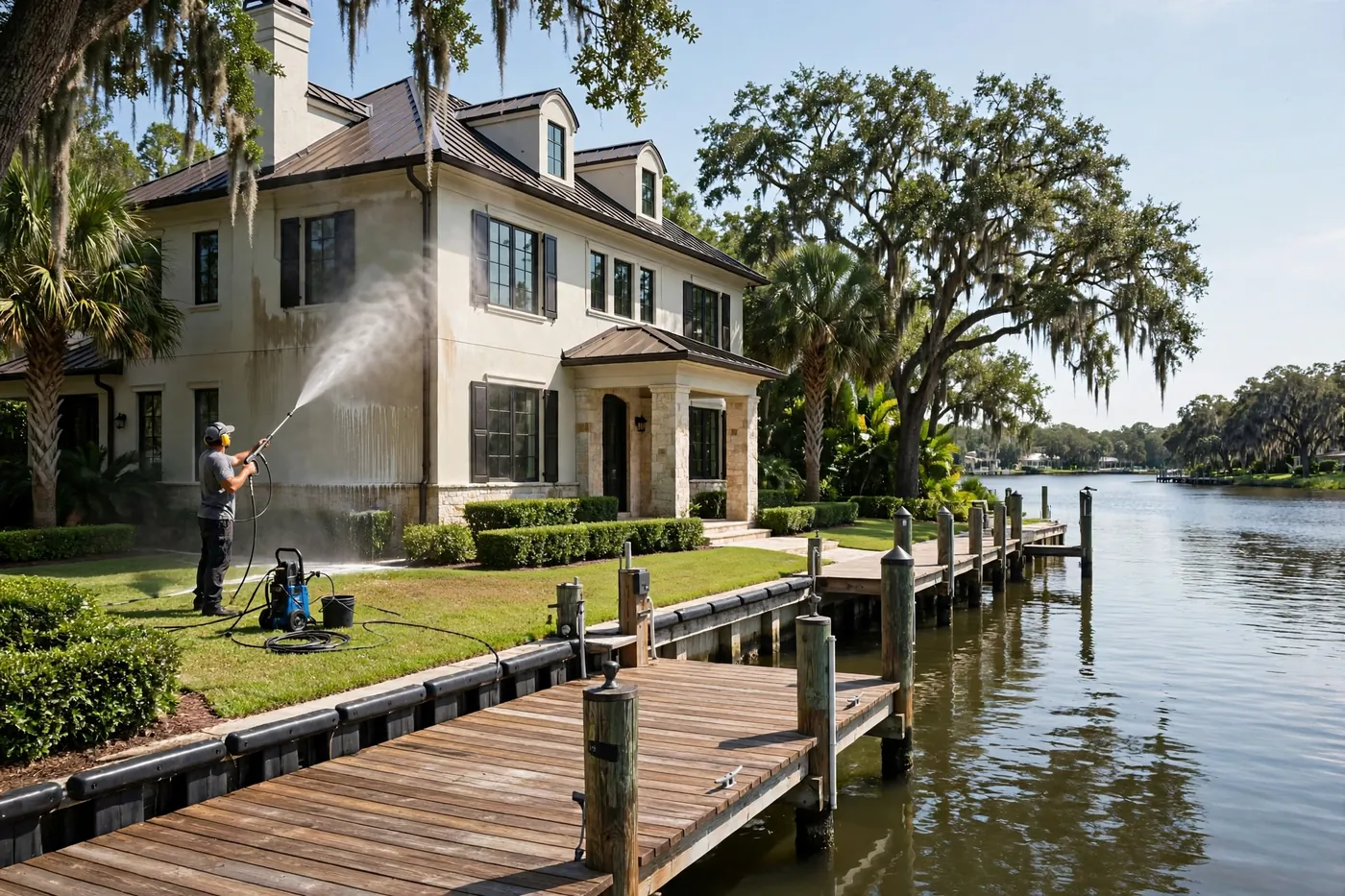
Ortega's riverfront estates face salt air, river humidity and dock grime. A complete guide to waterfront exterior cleaning.
Read More →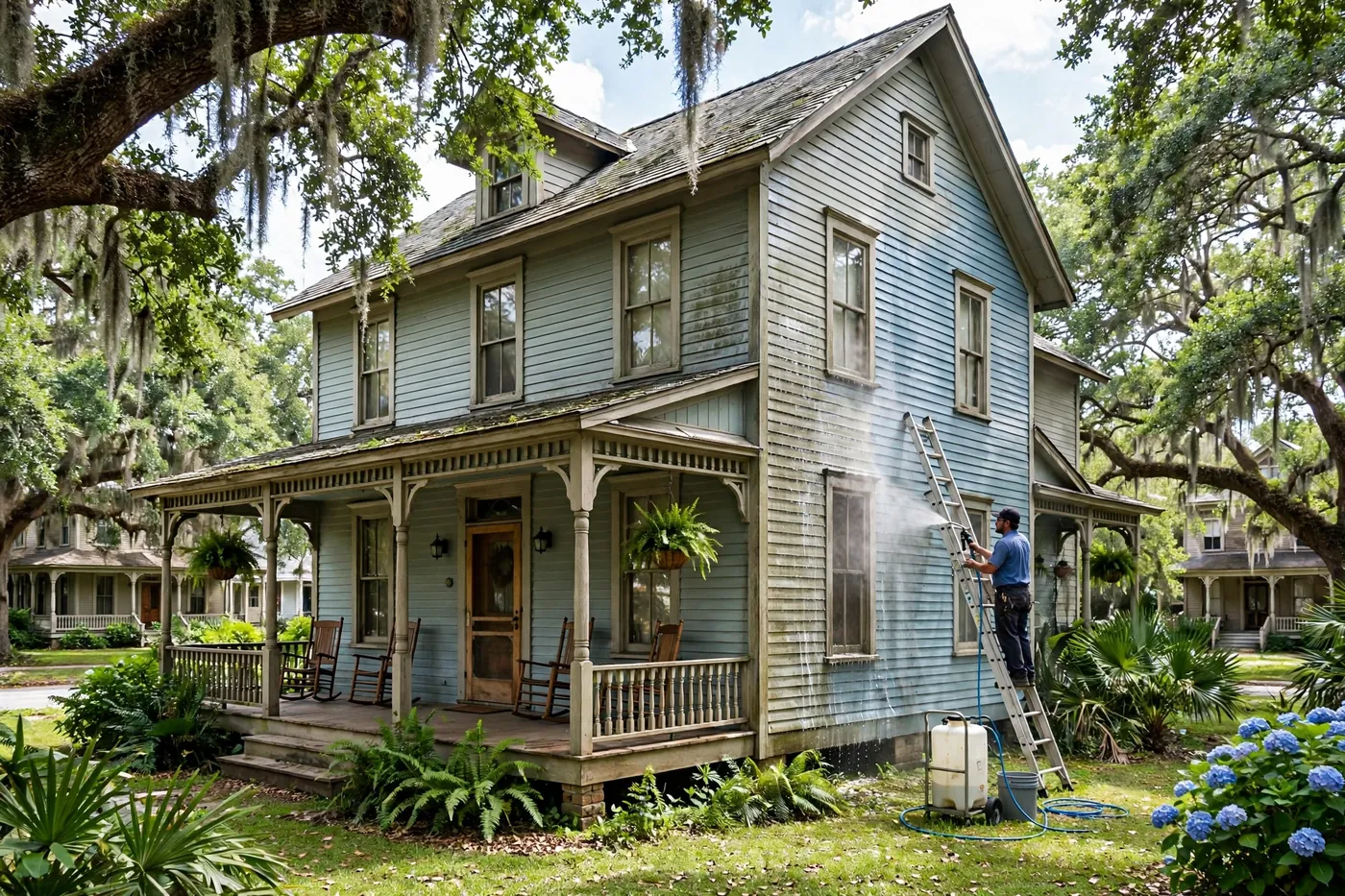
Springfield's century-old homes need soft washing, not brute force. How to restore historic siding safely.
Read More →Call now for a free estimate and same-day service in Jacksonville, FL. Open 24/7.